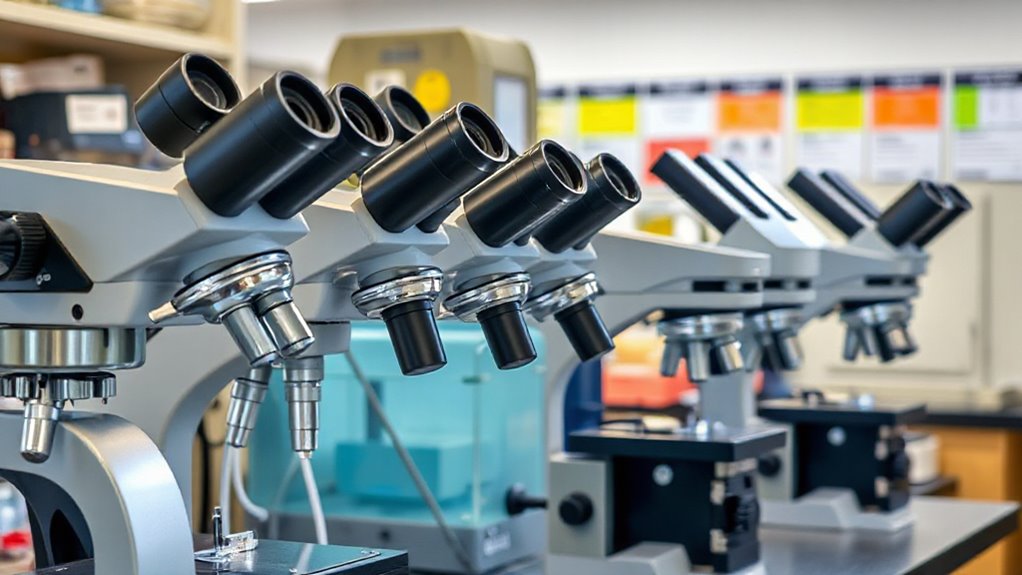

A binocular research microscope needs more than high magnification numbers on the box — the models that actually perform well in this comparison combine achromatic objectives, a true mechanical stage, and steady dual or LED illumination. The OMAX 40X–2000X with Mechanical Stage earns my best overall pick for pairing lab-grade optics with a full-size stage at a mid-tier price, while the AmScope B120C-E1 stands out for its built-in USB camera and the SWIFT SW380B for its upgrade-friendly condenser and five-objective turret. The core tradeoff in this category is between professional features and budget accessibility: cheap kits inflate magnification claims with plastic optics, while genuine research-grade stands cost more and weigh more. Optical quality and stage control matter far more than a 5000X claim you’ll rarely use meaningfully. Keep reading for the full breakdown of all 12 models.

Get the latest gadgets delivered free — and shop member deals
- Fast, free delivery on millions of items
- Access to Prime Big Deal Days deals on October 6–7
- Prime Video, Amazon Music and more included
Complete the kit



Key Takeaways
- Magnification claims above 2000X were the least reliable spec across the lineup — models advertising 5000X rely on eyepiece stacking that produces dim, unusable images, while the best performers capped useful magnification near 2000X with achromatic objectives.
- A true mechanical stage separated research-capable models from hobbyist kits more than any other feature; the OMAX and SWIFT options with dual control knobs made slide scanning practical, an advantage the stageless budget models couldn’t match.
- The AmScope B120C-E1’s included 1.0MP USB camera made it the only model ready for documentation out of the box, a deciding factor for students and lab workers who need to capture images.
- Siedentopf-style adjustable interpupillary heads on the SWIFT, OMAX, and AmScope models fit more users comfortably than fixed-hinge binocular heads on cheaper units, which matters for shared lab settings.
- Kits bundling slides, stains, and accessories (PalliPartners, JECONE) offered the easiest entry point for beginners and kids, but their optics and focusing precision lag behind the dedicated research stands.
| PalliPartners Compound Binocular Microscope Kit |  | Best for Home Learning | Magnification range: 100x–2000x | Objectives: 4x, 10x, and 40x | Eyepiece: WF25x | VIEW ON AMAZON | See Our Full Breakdown |
| Binocular Compound Microscope, 40X–5000X |  | Best for Eyepiece Flexibility | Magnification range: 40X–5000X | Objectives: 4X, 10X, 40X, and 100X achromatic | Eyepieces: WF10X and WF25X; additional 2X eyepiece included | VIEW ON AMAZON | See Our Full Breakdown |
| Binocular Compound Microscope, 40X–2000X, with Dual Mechanical Stages and Coaxial Focus |  | Best for Controlled Slide Positioning | Magnification range: 40X–2000X | Objectives: 4X, 10X, and 40X achromatic | Illumination: Dual LED with adjustable brightness | VIEW ON AMAZON | See Our Full Breakdown |
| SWIFT SW350B Compound Binocular Microscope, 40X–2500X |  | Best for Ergonomic Shared Viewing | Model: SW350B | Magnification levels: 40X, 100X, 250X, 400X, 1000X, and 2500X | Eyepieces: Wide-field 10X and 25X | VIEW ON AMAZON | See Our Full Breakdown |
| OMAX 40X–2000X Binocular Compound Microscope with Mechanical Stage |  | Best for Detailed Slide Work | Magnification range: 40X–2000X | Eyepieces: WF10X and WF20X | Objectives: Achromatic DIN 4X, 10X, 40X spring, and 100X spring oil | VIEW ON AMAZON | See Our Full Breakdown |
| JECONE Binocular Microscope for Adults and Kids, 40X–2500X with Dual LED Illumination and Accessories |  | Best Family and Beginner Kit | Brand: JECONE | Magnification: 40X–2500X across six levels | Eyepieces: WF25X and 10X | VIEW ON AMAZON | See Our Full Breakdown |
| OMAX M82ES-SCP100-SAA50 LED Binocular Compound Microscope, 2000X |  | Best Overall Research Value | Total magnification: 40X–2000X, 8 levels | Eyepieces: Widefield WF10X and WF20X | Objectives: Achromatic DIN 4X, 10X, 40X(S), 100X(S, Oil) | VIEW ON AMAZON | See Our Full Breakdown |
| Binocular Compound Microscope, 40X–2500X, with WF10x and WF25x Eyepieces, Dual LED Lighting, and Mechanical Stage |  | Best Budget Dual-Lighting Pick | Type: Binocular compound microscope | Magnification: 40X–2500X | Eyepieces: WF10x and WF25x | VIEW ON AMAZON | See Our Full Breakdown |
| 40X–2500X Binocular Compound Microscope with Achromatic Objectives |  | Best Portable Lab Kit | Magnification: 40X–2500X | Eyepieces: WF10X and WF25X | Objectives: 4X, 10X, 40X, 100X achromatic | VIEW ON AMAZON | See Our Full Breakdown |
| Celestron Labs CB2000CF Compound Binocular Microscope |  | Best Brand-Backed Lab Workhorse | Maximum magnification: 2000x | Magnification levels: 40x, 80x, 100x, 200x, 400x, 800x, 1000x, 2000x | Eyepieces: 10x and 20x; 10x includes pointer | VIEW ON AMAZON | See Our Full Breakdown |
| AmScope B120C-E1 LED Binocular Compound Microscope, 40X-2500X Magnification, with 1.0MP USB Camera |  | Best Budget Digital Workflow Pick | Brand: AmScope | Model: B120C-E1 | Type: Binocular Compound Microscope | VIEW ON AMAZON | See Our Full Breakdown |
| SWIFT SW380B Binocular Compound Lab Microscope, 40X–2500X |  | Best Ergonomics for Long Sessions | Brand: SWIFT | Model: SW380B | Type: Binocular Compound Lab Microscope | VIEW ON AMAZON | See Our Full Breakdown |
| binocular research microscope | Illumination | Eyepieces | Objectives | Condenser |
|---|---|---|---|---|
| PalliPartners Compound Binocul | Adjustable top and bottom LED | — | 4x, 10x, and 40x | — |
| Binocular Compound Microscope | Adjustable LED | WF10X and WF25X; additional 2X eyepiece included | 4X, 10X, 40X, and 100X achromatic | Abbe spotlight condenser |
| Binocular Compound Microscope | Dual LED with adjustable brightness | — | 4X, 10X, and 40X achromatic | — |
| SWIFT SW350B Compound Binocula | Adjustable LED | Wide-field 10X and 25X | 4 DIN achromatic objectives | Manually adjustable Abbe condenser |
| OMAX 40X–2000X Binocular Compo | Adjustable transmitted LED | WF10X and WF20X | Achromatic DIN 4X, 10X, 40X spring, and 100X spring oil | NA 1.25 Abbe condenser with iris diaphragm |
| JECONE Binocular Microscope fo | Upper and lower LED with adjustable dimmer | WF25X and 10X | — | — |
| OMAX M82ES-SCP100-SAA50 LED Bi | Transmitted LED, adjustable intensity | Widefield WF10X and WF20X | Achromatic DIN 4X, 10X, 40X(S), 100X(S, Oil) | NA1.25 Abbe with iris diaphragm |
| Binocular Compound Microscope | — | WF10x and WF25x | — | — |
| 40X–2500X Binocular Compound M | LED | WF10X and WF25X | 4X, 10X, 40X, 100X achromatic | Abbe condenser |
| Celestron Labs CB2000CF Compou | Adjustable lower halogen | 10x and 20x; 10x includes pointer | — | Abbe condenser with iris diaphragm |
| AmScope B120C-E1 LED Binocular | LED with fly-eye lens (daylight-balanced) | — | — | — |
| SWIFT SW380B Binocular Compoun | — | Wide-field 10X and 25X glass | — | — |
More Details on Our Top Picks
PalliPartners Compound Binocular Microscope Kit
The PalliPartners kit is the most education-focused pick here: it pairs 100x–2000x magnification with prepared and blank slides, collecting tools, and a phone clip for documenting observations. Its top and bottom LED lighting lets learners switch between opaque objects and translucent slide specimens, a flexibility the OMAX 40X–2000X model’s transmitted lighting does not offer. The included Bluetooth remote can also help capture phone images without touching the setup. That breadth makes this a practical choice for guided home study or classroom activities, though the 25x eyepiece and 2x Barlow account for the high stated ceiling; the listing gives less information about the optical system than the OMAX. Buyers should also plan to supervise younger users, and the missing size and weight details make storage harder to judge.
Pros:- Top and bottom LEDs support both opaque objects and translucent specimens
- Includes prepared and blank slides for immediate activities and future samples
- Phone clip and Bluetooth remote support hands-free image capture
- Coaxial coarse and fine focus provide separate control for finding and sharpening a specimen
Cons:- The stated 2000x maximum relies on a 25x eyepiece and 2x Barlow, so the headline range alone does not describe optical detail
- Adult guidance is recommended for younger users
- Dimensions and weight are not provided
Best for: Parents and educators who want a binocular microscope kit with slides and tools for guided specimen activities
Not ideal for: Buyers prioritizing clearly detailed optical specifications or needing to confirm the microscope will fit a specific desk or storage space
- Magnification range:100x–2000x
- Objectives:4x, 10x, and 40x
- Eyepiece:WF25x
- Barlow lens:2x
- Illumination:Adjustable top and bottom LED
- Focus:Coaxial coarse and fine focus
- Slides:10 prepared and 18 blank
- Safety certification:SGS certified
Our verdict“Choose the PalliPartners kit for guided home or classroom learning that benefits from included slides, collection tools, and dual lighting.”
Binocular Compound Microscope, 40X–5000X
This model offers the broadest stated magnification range in this group, pairing 4x, 10x, 40x, and 100x achromatic objectives with WF10x and WF25x eyepieces plus an additional 2x eyepiece. That combination gives learners more ways to configure a view than the SWIFT SW350B, which lists six fixed magnification levels. The Abbe condenser and adjustable LED also give users control over specimen lighting, while the 45-degree head supports a more comfortable viewing posture during extended sessions. The 5000x figure is a headline maximum, though, and by itself does not establish that a specimen will show more useful detail than at lower magnifications. The slide count is unspecified, and the mix of eyepieces may take more setup than a simpler classroom kit.
Pros:- Four achromatic objectives include a 100x option
- WF10x and WF25x eyepieces plus an additional 2x eyepiece offer configuration choices
- Abbe condenser and adjustable LED support control over illumination
- Inclined binocular head, carrying case, and phone adapter support extended study and image capture
Cons:- The stated 5000x maximum does not by itself indicate how much useful specimen detail is visible
- The listing does not specify how many prepared slides are included
- Multiple eyepiece choices can add setup complexity for new users
Best for: Advanced students and hobbyists who want multiple objective and eyepiece combinations for exploring prepared slides
Not ideal for: Beginners who want a simple setup or buyers who need a confirmed slide quantity before choosing a kit
- Magnification range:40X–5000X
- Objectives:4X, 10X, 40X, and 100X achromatic
- Eyepieces:WF10X and WF25X; additional 2X eyepiece included
- Viewing head:Binocular, 45-degree inclined
- Illumination:Adjustable LED
- Condenser:Abbe spotlight condenser
- Stage dimensions:4.33 x 4.33 inches
- Included accessories:Phone adapter, prepared slides, dust cover, carrying case, and tools
Our verdict“Pick this model if you want a wide selection of objectives and eyepieces and are comfortable judging magnification beyond its headline maximum.”
Binocular Compound Microscope, 40X–2000X, with Dual Mechanical Stages and Coaxial Focus
The defining reason to choose this microscope is its dual mechanical stage, which gives the user controlled movement across a slide instead of relying only on hand repositioning. Paired with coaxial coarse and fine focus, it suits students who need to relocate small details and bring them into focus systematically. Its 4x, 10x, and 40x achromatic objectives cover a practical range up to a stated 2000x, while adjustable dual LEDs and a five-color filter bar allow lighting changes for different viewing conditions. Compared with the PalliPartners kit, it supplies fewer described learning accessories and lacks its top-lighting feature, but it makes stage control the central strength. The product data do not specify eyepiece details, dimensions, or weight, so buyers seeking a fully documented setup have less to work with.
Pros:- Dual mechanical stages help move a slide in a controlled way
- Coaxial coarse and fine focus support both quick acquisition and sharper adjustment
- Dual LED illumination supports viewing objects and specimens
- Adjustable brightness and five-color filter bar provide lighting options
Cons:- Eyepiece specifications are not provided
- The listing does not provide dimensions or weight
- Included slides and other learning accessories are not specified
Best for: Students and hobbyists who spend time scanning prepared slides and want mechanical control over specimen position
Not ideal for: Families looking for a ready-to-use activity kit with prepared slides, collection tools, and phone accessories
- Magnification range:40X–2000X
- Objectives:4X, 10X, and 40X achromatic
- Illumination:Dual LED with adjustable brightness
- Focus:Coaxial coarse and fine focus
- Filter:Five-color filter bar
- Stages:Dual mechanical stages
- Type:Binocular compound microscope
Our verdict“Choose this model for controlled slide scanning and focusing, especially if stage movement matters more than bundled learning accessories.”
SWIFT SW350B Compound Binocular Microscope, 40X–2500X
The SWIFT SW350B earns its place through a viewing setup designed for repeated slide work: its rotatable Siedentopf head has a 30-degree tilt, and the mechanical stage helps keep slide handling orderly. Its six listed magnification levels reach 2500x, giving a more clearly defined set of viewing steps than the Binocular Compound Microscope 40X–5000X, whose higher stated ceiling depends on a mix of eyepieces. The interchangeable 10x and 25x eyepieces let users choose between a more moderate view and greater magnification, while an adjustable Abbe condenser supports illumination control. This is better suited to established slide study than to a bundled beginner kit: the supplied details do not mention slides, phone imaging, or other teaching accessories. The listing also gives no specific drawback, so I would weigh its less-documented kit contents before buying.
Pros:- Rotatable Siedentopf head with 30-degree tilt supports adjustable viewing posture
- Interchangeable 10X and 25X eyepieces provide two viewing configurations
- Six listed magnification levels reach 2500X
- Mechanical stage and adjustable Abbe condenser support controlled slide viewing
Cons:- The provided product information does not specify included slides or learning accessories
- No phone adapter or image capture accessory is listed
- The supplied description does not identify a specific build or optical limitation
Best for: Students, lab users, and hobbyists who share a microscope and value an adjustable viewing position with a mechanical stage
Not ideal for: First-time buyers who need included slides and activity tools, or shoppers who require detailed information about accessories
- Model:SW350B
- Magnification levels:40X, 100X, 250X, 400X, 1000X, and 2500X
- Eyepieces:Wide-field 10X and 25X
- Objectives:4 DIN achromatic objectives
- Head:Rotatable Siedentopf binocular; 30-degree tilt
- Illumination:Adjustable LED
- Condenser:Manually adjustable Abbe condenser
- Stage:Double-layer mechanical stage with slide holder
Our verdict“Choose the SW350B for adjustable, repeated slide viewing when ergonomics and a mechanical stage matter more than a large accessory bundle.”
OMAX 40X–2000X Binocular Compound Microscope with Mechanical Stage
The OMAX is the most fully specified choice here for buyers focused on prepared-slide work. Its double-layer X-Y mechanical stage offers a defined travel range of 70 × 30 mm, while the NA 1.25 Abbe condenser with iris diaphragm gives users concrete controls for managing transmitted light. A swiveling 45-degree binocular head and adjustable interpupillary distance also make it easier to set up for different viewers than a fixed viewing arrangement. Compared with the SWIFT SW350B, OMAX provides more detail about its stage and condenser, plus a substantial supply of blank slides and cover slips; the SWIFT lists more magnification steps. OMAX tops out at a stated 2000x and uses transmitted illumination, so it is less suited to opaque objects than the PalliPartners kit. Its warranty return-shipping terms may also leave some logistics to the buyer.
Pros:- X-Y mechanical stage with specified 70 × 30 mm travel supports deliberate slide scanning
- NA 1.25 Abbe condenser and iris diaphragm provide light control
- Swiveling binocular head and 55–75 mm interpupillary adjustment accommodate different users
- Includes blank slides, cover slips, and lens cleaning paper
Cons:- Transmitted LED illumination is less suited to opaque objects than the PalliPartners model’s top and bottom lighting
- Maximum stated magnification is 2000X, below the SWIFT SW350B’s listed 2500X
- Return shipping may be the buyer’s responsibility under the warranty terms
Best for: Hobbyists and students preparing their own specimens who want a documented mechanical stage, condenser, and basic slide supplies
Not ideal for: Buyers who want to view opaque objects with top lighting or need magnification steps above the listed 2000X
- Magnification range:40X–2000X
- Eyepieces:WF10X and WF20X
- Objectives:Achromatic DIN 4X, 10X, 40X spring, and 100X spring oil
- Viewing head:45° inclined, 360° swiveling binocular
- Interpupillary distance:55–75 mm
- Stage:Double-layer X-Y mechanical stage, 115 × 125 mm; 70 × 30 mm travel
- Condenser:NA 1.25 Abbe condenser with iris diaphragm
- Illumination:Adjustable transmitted LED
- Included accessories:100 blank slides, 100 cover slips, and 50 sheets of lens cleaning paper
Our verdict“Pick the OMAX for controlled transmitted-light slide work and included preparation supplies, provided its 2000X ceiling fits your needs.”
JECONE Binocular Microscope for Adults and Kids, 40X–2500X with Dual LED Illumination and Accessories
This option stands out for family usability rather than lab-grade precision. The combination of upper and lower LED illumination means kids can examine leaves and insects without slide preparation, something the transmitted-light-only OMAX M82ES-SCP100-SAA50 cannot do. A five-color filter wheel, phone holder, and bundled slides make it genuinely ready out of the box for shared, casual exploration. The rotating 45° inclined head also makes group viewing easier than a fixed-head design. Where it falls short is documentation: unlike the OMAX, the listing gives no mechanical stage or dimension details, so precise slide tracking at high magnification is likely limited. Compared with the Celestron Labs CB2000CF, it trades all-metal lab build quality for accessibility and accessories — a reasonable swap if the audience is a household, not a researcher.
Pros:- Dual upper and lower LED lighting handles both opaque and translucent specimens
- Six magnification levels from 40X to 2500X
- Includes slides, coverslips, toolkit, and a phone holder
- Rotating, inclined head with adjustable interpupillary distance suits shared family use
Cons:- No mechanical stage details, limiting precise slide positioning at high power
- No published dimensions or weight to judge build quality or desk footprint
Best for: Families and beginners who want a complete, ready-to-use kit for mixed slide and solid-specimen viewing
Not ideal for: Students or hobbyists who need precise slide control — the vague stage specifications limit high-magnification work
- Brand:JECONE
- Magnification:40X–2500X across six levels
- Eyepieces:WF25X and 10X
- Objective lenses:4X, 10X, and 100X
- Illumination:Upper and lower LED with adjustable dimmer
- Filter wheel:Five colors: yellow, red, blue, green, purple
- Viewing head:360° rotating, 45° inclined binocular
- Focus:Coarse and fine focus knobs
Our verdict“A sensible family-first pick if you value included accessories and flexible lighting over laboratory precision.”
OMAX M82ES-SCP100-SAA50 LED Binocular Compound Microscope, 2000X
This model makes the strongest case in the lineup for serious work at a mid-range price point. The double-layer X-Y mechanical stage with scales and the NA1.25 Abbe condenser with iris diaphragm are the features that separate genuine research capability from marketing magnification claims. Compared with the generic 40X–2500X model (B0CCNZFJ61), the OMAX gives you eight magnification levels with achromatic DIN objectives and dual diopter adjustment — meaning two users can share the scope without constant refocusing. The accessory bundle is unusually generous: 50 prepared slides, 100 blanks, immersion oil, and lens paper. The honest tradeoff is that the 1000X and 2000X settings require immersion oil, which is messy and demands technique, and unlike the JECONE, it offers no top lighting for opaque specimens.
Pros:- Eight magnification levels with achromatic DIN objectives up to 2000X
- Double-layer mechanical stage with X-Y scales for precise specimen tracking
- NA1.25 Abbe condenser with iris diaphragm for contrast control
- Exceptional accessory bundle: 50 prepared slides, 100 blank slides, immersion oil, and lens paper
Cons:- Top magnifications require immersion oil, which is messy and needs practice
- Transmitted LED only — no incident lighting for opaque specimens
Best for: Biology students and amateur researchers who want lab-grade optics and stage control without a professional budget
Not ideal for: Younger beginners or casual users — the oil-immersion high powers and binocular setup add complexity monocular kits avoid
- Total magnification:40X–2000X, 8 levels
- Eyepieces:Widefield WF10X and WF20X
- Objectives:Achromatic DIN 4X, 10X, 40X(S), 100X(S, Oil)
- Stage:Double-layer X-Y mechanical, 115mm x 125mm; 70mm x 30mm travel
- Condenser:NA1.25 Abbe with iris diaphragm
- Illumination:Transmitted LED, adjustable intensity
- Power supply:AC/DC adapter 7.5V/7.5W, input 100-240V
Our verdict“The most complete research package here for anyone ready to handle oil-immersion technique.”
Binocular Compound Microscope, 40X–2500X, with WF10x and WF25x Eyepieces, Dual LED Lighting, and Mechanical Stage
Positioned below the OMAX M82ES-SCP100-SAA50, this model’s main draw is dual LED lighting at a lower price — the same top-and-bottom flexibility as the JECONE, but paired with a mechanical stage with a movable scale that the JECONE’s listing can’t confirm. Wide-angle binocular viewing with both WF10x and WF25x eyepieces keeps extended sessions comfortable for students. The honest limitation is the 2500X claim itself: reaching that figure means pairing the 25X eyepiece with the 100X objective, and without stated condenser or objective quality — unlike the achromatic optics on the B0FY51M8CP — the top-end image is likely dim and soft. Still, for coursework under 400X, it covers the fundamentals with coaxial coarse and fine focus, which many budget scopes omit.
Pros:- Adjustable upper and lower LED lighting for both specimen types
- Mechanical stage with movable scale for controlled slide movement
- Wide-angle binocular viewing with two eyepiece options
- Coaxial coarse and fine focus knobs
Cons:- 2500X maximum magnification claim lacks supporting optical specifications
- No objective or condenser quality details, making high-power performance uncertain
Best for: Students and hobbyists on a tight budget who want dual lighting and a mechanical stage for routine low-to-mid magnification work
Not ideal for: Anyone expecting sharp results at extreme magnification — the 2500X figure lacks the optical backing to deliver usable images
- Type:Binocular compound microscope
- Magnification:40X–2500X
- Eyepieces:WF10x and WF25x
- Lighting:Adjustable dual LED, upper and lower
- Focus:Coaxial coarse and fine
- Stage:Mechanical stage with movable scale
Our verdict“A capable budget workhorse for everyday student magnifications if you ignore the headline 2500X number.”
40X–2500X Binocular Compound Microscope with Achromatic Objectives
This pick differentiates itself through achromatic optics plus portability — a combination none of the others in this batch offer. Four achromatic objectives reduce the color fringing that plagues budget scopes like the generic B0CCNZFJ61, and an Abbe condenser with a double-layer X-Y mechanical stage brings it close to the OMAX M82ES-SCP100-SAA50’s core specification set at a simpler level. The standout practical detail is the included carry case, which makes this the natural choice for fieldwork, teaching between locations, or shared lab storage. It also ships with immersion oil, dust cover, and lens paper — the maintenance items most kits skip. The tradeoff: pushing toward 2500X demands careful illumination and focus tuning, and there’s no top light, so opaque specimens are off the menu unlike the dual-LED JECONE.
Pros:- Four achromatic objectives reduce color fringing across the magnification range
- Double-layer mechanical X-Y stage with Abbe condenser
- Included carry case protects the scope during transport
- Ships with immersion oil, dust cover, and lens paper for ongoing maintenance
Cons:- High magnifications require careful focusing and illumination adjustment for usable images
- No user feedback available to confirm long-term reliability
Best for: Mobile educators, field researchers, and students who need achromatic optics that travel safely between locations
Not ideal for: Users focused on opaque specimens — transmitted LED only means no incident lighting option
- Magnification:40X–2500X
- Eyepieces:WF10X and WF25X
- Objectives:4X, 10X, 40X, 100X achromatic
- Condenser:Abbe condenser
- Stage:Double-layer mechanical X-Y stage
- Illumination:LED
- Included accessories:Carry case, slides, cover slips, immersion oil, dust cover, lens paper
Our verdict“The best choice when research-grade optics need to move — the carry case makes it uniquely portable.”
Celestron Labs CB2000CF Compound Binocular Microscope
This model is better suited to buyers who prioritize established brand support and build consistency. Celestron backs it with a 2-year US warranty and unlimited technical support — a safety net none of the unbranded alternatives like the B0FY51M8CP provide — and the all-metal body with fully achromatic objectives across all four magnifications is honestly specified. The pointer-equipped 10x eyepiece is a thoughtful teaching detail, letting an instructor mark a specimen for a student, which the OMAX M82ES-SCP100-SAA50 doesn’t include. The notable tradeoff is halogen illumination: warmer color rendering than LED, but hotter running, shorter bulb life, and eventual replacement cost. There’s also no digital imaging path, unlike camera-equipped models elsewhere in this roundup, so documentation means holding a phone to the eyepiece.
Pros:- Four fully achromatic objective lenses with eight magnification levels up to 2000X
- All-metal construction with a fully mechanical stage
- 2-year US warranty with unlimited support
- 10x eyepiece includes a pointer for teaching and specimen marking
Cons:- Halogen illumination runs hotter, uses more power, and requires eventual bulb replacement
- No digital imaging features for documentation or sharing
Best for: Educators and institutional buyers who want documented specifications, a real warranty, and long-term manufacturer support
Not ideal for: Users wanting modern convenience — halogen lighting and the absence of any digital imaging feel dated next to LED rivals
- Maximum magnification:2000x
- Magnification levels:40x, 80x, 100x, 200x, 400x, 800x, 1000x, 2000x
- Eyepieces:10x and 20x; 10x includes pointer
- Objective lenses:4x, 10x, 40x, 100x fully achromatic
- Stage:Fully mechanical
- Illumination:Adjustable lower halogen
- Condenser:Abbe condenser with iris diaphragm
- Warranty:2-year US warranty
Our verdict“The safest long-term ownership choice for classrooms that value warranty support over cutting-edge lighting.”
AmScope B120C-E1 LED Binocular Compound Microscope, 40X-2500X Magnification, with 1.0MP USB Camera
This model stands out as the cheapest way into a complete digital documentation setup — optics, camera, and analysis software arrive in one box. The fly-eye LED illumination is the genuinely smart design choice here: it spreads daylight-balanced light evenly across the field, which matters more for consistent specimen viewing than raw magnification numbers. Compared with the SWIFT SW380B, which offers superior ergonomics but no camera at a similar tier, the B120C-E1 trades comfort for capability — you get image capture and measurement tools the SW380B simply lacks. The tradeoff is real, though: a 1.0 MP sensor is adequate for documentation slides and lab reports, but anyone publishing or presenting high-detail images will hit its ceiling fast. Windows-only software further narrows the audience.
Pros:- USB camera and software included for digital capture and analysis without buying extras
- Fly-eye LED lens delivers even, daylight-balanced illumination across the field
- Full 40X–2500X magnification range for the price of many optics-only competitors
- Versatile enough for classroom, clinic, and hobby use
Cons:- 1.0 MP camera resolution is outdated and limits image detail for serious documentation
- Bundled software runs on Windows only, leaving Mac users without a native option
Best for: Students, teaching labs, and small clinics that need digital image capture on a tight budget
Not ideal for: Mac users and researchers who need high-resolution images for publication — the camera and software can’t support that workflow
- Brand:AmScope
- Model:B120C-E1
- Type:Binocular Compound Microscope
- Magnification:40X–2500X
- Illumination:LED with fly-eye lens (daylight-balanced)
- Camera:1.0 MP USB microscope camera
- Software:Professional microscopy software (Windows)
Our verdict“Buy it if you want an all-in-one optical-plus-digital package at entry cost; skip it if your imaging needs go beyond basic documentation.”
SWIFT SW380B Binocular Compound Lab Microscope, 40X–2500X
Where most microscopes in this roundup treat the viewer as an afterthought, the SW380B is built around comfort during extended sessions. The Siedentopf rotatable head with a 30-degree tilt keeps your neck in a neutral position — a genuine advantage over fixed-head options like the OMAX 40X–2000X when you’re at the bench for hours. Interchangeable 10X and 25X wide-field eyepieces push the ceiling to 2500X while letting you dial in eye relief, and the interpupillary adjustment holds focus while you adapt, so you’re not refocusing every time a colleague looks through it. Compared with the AmScope B120C-E1, you give up the bundled camera — everything here is optical. That focus pays off in viewing quality and comfort, but anyone needing digital output will have to add a camera separately.
Pros:- Rotatable Siedentopf head with 30-degree tilt reduces neck strain and enables shared viewing
- Interchangeable 10X and 25X wide-field eyepieces for flexible magnification up to 2500X
- Interpupillary distance adjusts without losing focus, ideal for multiple users
- Research-grade optics suited to professional lab work
Cons:- No included camera or imaging capability, unlike camera-bundled competitors
- Premium build and optics place it above basic student-level options in cost
Best for: Researchers, clinicians, and serious hobbyists who spend long hours at the eyepiece or share one scope across a team
Not ideal for: Buyers who need image capture out of the box — there’s no camera, so documentation requires a separate purchase
- Brand:SWIFT
- Model:SW380B
- Type:Binocular Compound Lab Microscope
- Magnification:40X–2500X
- Head:Rotatable Siedentopf binocular
- Eyepieces:Wide-field 10X and 25X glass
- Head Tilt:30 degrees
- Focusing:Adjustable interpupillary distance without losing focus
Our verdict“This is the pick for professionals and shared labs that value viewing comfort and optical quality over digital extras.”

How We Picked
I evaluated each microscope as a binocular research instrument first, judging optical quality (achromatic versus basic objectives, eyepiece type, condenser with iris diaphragm), mechanical refinement (true mechanical stage with coaxial controls, fine-focus precision), illumination design (LED intensity, Abbe condenser, field diaphragm), and ergonomics (Siedentopf head, adjustable tension, interpupillary range). Because most buyers can’t inspect these units in person before purchasing, I prioritized features that predict real lab performance — objective glass quality, stage construction, and illumination alignment — over accessory counts and inflated magnification figures.
The ranking logic follows a simple hierarchy: research-grade stands with mechanical stages rank above kits, because stage control and optical correction are what make long sessions at 400X–1000X productive. Within the top tier, I separated models by extras that change workflow — the AmScope’s camera, the SW380B’s condenser and turret capacity, the OMAX M82ES bundle — and slotted value and beginner picks by how much genuine capability they deliver per dollar. Every model included earns a specific role; none is here as filler.
| binocular research microscope | Condenser | Stage |
|---|---|---|
| PalliPartners Compound Binocul | — | — |
| Binocular Compound Microscope | Abbe spotlight condenser | — |
| Binocular Compound Microscope | — | — |
| SWIFT SW350B Compound Binocula | Manually adjustable Abbe condenser | Double-layer mechanical stage with slide holder |
| OMAX 40X–2000X Binocular Compo | NA 1.25 Abbe condenser with iris diaphragm | Double-layer X-Y mechanical stage, 115 × 125 mm; 70 × 30 mm travel |
| JECONE Binocular Microscope fo | — | — |
| OMAX M82ES-SCP100-SAA50 LED Bi | NA1.25 Abbe with iris diaphragm | Double-layer X-Y mechanical, 115mm x 125mm; 70mm x 30mm travel |
| Binocular Compound Microscope | — | Mechanical stage with movable scale |
| 40X–2500X Binocular Compound M | Abbe condenser | Double-layer mechanical X-Y stage |
| Celestron Labs CB2000CF Compou | Abbe condenser with iris diaphragm | Fully mechanical |
| AmScope B120C-E1 LED Binocular | — | — |
| SWIFT SW380B Binocular Compoun | — | — |
Factors to Consider When Choosing Binocular Research Microscope
Choosing a binocular research microscope comes down to matching optical and mechanical capability to your actual workload. These are the factors that most often make or break a purchase in this category.Optical Quality Beats Magnification Numbers
The most common mistake buyers make is chasing the highest magnification figure. Anything above 2000X exceeds the useful resolving limit of a compound microscope’s optical system — images become dim, soft, and dependent on perfect staining and immersion oil. What actually determines image quality is the objective set: achromatic objectives correct color fringing and produce sharp contrast at 400X and 1000X, which is where most real biological work happens. A 40X–2000X scope with four achromatic objectives will outperform a 5000X claim built on a 25X eyepiece stacked onto basic glass. Compare objective quality and condenser design before looking at the top magnification number at all.
Mechanical Stage or Nothing for Research Work
A mechanical stage with coaxial X-Y controls lets you move a slide in measured increments without touching it — indispensable for scanning specimens, returning to a specific field, and working at high magnification where the tiniest nudge shifts the view entirely. Stageless or clip-only stages force you to push the slide by hand, which is frustrating at 100X and nearly impossible at 1000X. Dual mechanical stages, like those on the OMAX and dual-stage models in this roundup, add a second slide holder for comparing two specimens side by side. If your budget forces a choice, spend it on the stage before accessories.
Illumination and Condenser Design
LED illumination is now standard for good reason: cool-running, long-lasting, and color-accurate for living specimens. But the condenser matters as much as the light source. An Abbe condenser with an iris diaphragm concentrates light properly for high-magnification work and lets you control contrast — without one, 1000X images turn muddy. Dual LED systems that illuminate from both above and below (as on the JECONE and dual-LED models) are genuinely useful for opaque specimens, though serious translucent-slide work only needs strong bottom lighting. Check whether the condenser is focusable and includes filter holders if you plan phase-adjacent techniques.
Head Ergonomics for Long Sessions
Binocular viewing already reduces eye strain over monocular, but head design varies. Siedentopf-style heads adjust interpupillary distance without changing eye tube length, keeping focus consistent between users — a real advantage in shared labs and classrooms. Fixed-hinge heads cost less but can shift focus when adjusted. Also look at diopter adjustment on at least one eyepiece, which corrects for differences between your eyes and prevents headaches during extended sessions. A 30-degree incline with 360-degree rotation is the comfortable standard for seated work.
Kits Versus Dedicated Stands
Bundled accessories — slides, coverslips, stains, phone adapters — look attractive but rarely reflect the microscope’s true quality. Accessories cost dollars; optics and mechanics determine value. A kit makes sense for a beginner or a household with kids who need something to examine on day one. For coursework, clinical-style work, or serious hobby research, a bare dedicated stand from OMAX, SWIFT, or AmScope delivers better glass and mechanics for similar money. One useful middle path: buy the bare quality stand and add a starter slide set separately, which costs little and avoids compromising on the instrument itself.
Camera and Documentation Needs
If you’ll need to photograph or record specimens — for coursework, documentation, or sharing — decide on imaging before buying. The AmScope B120C-E1’s built-in trinocular-style camera port with included 1.0MP camera removes the hassle of rigging a phone over an eyepiece. Adding a camera later requires either a trinocular head or an eyepiece-tube adapter, which works but degrades image quality slightly. A 1.0MP sensor is adequate for documentation and screen viewing, though it won’t produce publication-grade images. Match the imaging path to your real output needs rather than assuming more megapixels is always better.
Frequently Asked Questions
Is 5000X magnification actually useful on a compound microscope?
Almost never. The practical resolving limit of an optical compound microscope sits around 2000X, because beyond that point the image is magnified but no additional detail is resolved — you get bigger blur, not more information. Models advertising 5000X typically achieve it by pairing a 25X eyepiece with a 100X oil objective, which pushes total magnification up while light transmission and sharpness drop. If you genuinely need to see structures beyond 2000X, that requires electron microscopy, not a bigger number on a compound scope. A well-aligned 2000X system with achromatic objectives will show you dramatically more than a strained 5000X setup.
Do I need a mechanical stage, or are slide clips enough?
For anything beyond casual low-magnification viewing, a mechanical stage is one of the highest-impact upgrades you can get. Slide clips require you to nudge the slide by hand, which becomes nearly unworkable at 400X and above, where the field of view is small enough that any touch jumps past your specimen. A mechanical stage with coaxial X-Y knobs lets you glide across a specimen methodically, retrace your path, and share exact fields with colleagues. If two people will compare notes on the same slide, or you’ll do any counting or mapping work, the stage stops being optional. The models in this roundup with mechanical stages — the OMAX, SWIFT, AmScope, and dual-stage options — are ranked above stageless units for exactly this reason.
Which of these microscopes is best for a college biology or microbiology course?
For coursework that involves stained slides, oil immersion work, and long lab sessions, the OMAX 40X–2000X and SWIFT SW380B are the strongest fits because they combine achromatic objectives, mechanical stages, and Siedentopf heads at student-accessible prices. If your course requires submitting images, the AmScope B120C-E1 becomes the better choice since its USB camera handles documentation immediately. The beginner kits with bundled accessories work for intro-level survey classes, but students who progress to microbiology will outgrow them quickly. Consider whether the course requires oil-immersion 1000X work — if it does, confirm the model includes a 100X oil objective and a condenser capable of supporting it.
Can these binocular microscopes work for kids, or are they too advanced?
Binocular compound scopes are usable by motivated kids around age 10 and up, but the right model depends on supervision level. The JECONE and PalliPartners kits are designed with this audience in mind — bundled prepared slides, simpler focusing, and accessories that create immediate engagement without needing to prepare specimens. Handing a child a research-grade stand with oil immersion objectives risks damage and wastes its precision. A dual-LED model also helps, since top illumination lets kids examine coins, insects, and leaves rather than only transparent slides. For family sharing across ages, a mid-tier model like the SW350B balances durability with enough capability to grow into.
What does a 1.0MP USB camera actually get me on the AmScope B120C-E1?
A 1.0MP camera produces images roughly 1280×960 pixels — enough for lab reports, class presentations, documentation folders, and live viewing on a screen, which is genuinely useful for teaching or recording what you observed. What it won’t deliver is print-quality or publication-grade microscopy; the sensor is modest compared with dedicated scientific cameras costing far more. The real value is convenience: the camera is integrated at the scope’s third optical port, so it doesn’t occupy an eyepiece or require phone-mounted improvisation, and you can capture images without disrupting your visual workflow. If your needs are documentation and sharing rather than research imaging, it covers the job well. Buyers who never need images can skip it and save money with a standard binocular model like the SW380B.
Conclusion
My best overall pick is the OMAX 40X–2000X with Mechanical Stage, because it delivers the core research package — achromatic objectives, coaxial stage control, solid illumination, and an ergonomic head — at a price that leaves room in a lab or student budget. For best value, the SWIFT SW350B hits the sweet spot between capability and cost, trading the top-end condenser of its sibling SW380B for a more accessible price. The best premium choice is the AmScope B120C-E1, whose USB camera and refined optical path make it the most complete working instrument here for anyone who documents specimens. Beginners and families should start with the JECONE or PalliPartners kits, which trade optical refinement for everything a newcomer needs in one box. For a first serious lab scope with room to grow, the SW380B’s five-objective turret and upgradeable condenser make it the smart long-term buy. Match the purchase to your workload, not the magnification number, and any of these will serve you well.
Fall Picks
fall essentials
As an affiliate, we earn on qualifying purchases.