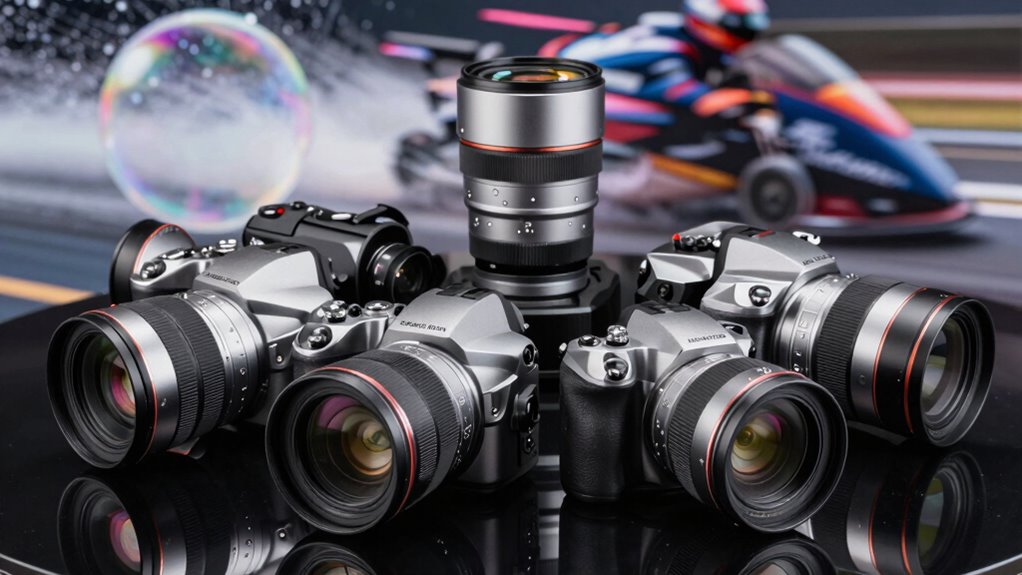

High speed cameras come in far more varieties than most buyers expect, and the right pick depends heavily on what you’re freezing in time. For slow-motion motion analysis like golf swings or sports mechanics, the SVPRO USB Camera 1080P 120fps stands out as the best overall choice thanks to its usable resolution at high frame rates and a manual zoom lens that lets you frame a moving subject precisely. If your priority is raw frame rate over resolution, the Arducam VGA Global Shutter modules deliver up to 800fps at reduced resolutions for a fraction of what dedicated slow-motion gear costs. The main tradeoff in this category is always frame rate versus resolution — almost every camera here forces you to sacrifice one for the other — plus the choice between global and rolling shutters, which determines whether fast motion appears distorted. Read on for the full breakdown of what each model does well and who should skip it.

Get the latest gadgets delivered free — and shop member deals
- Fast, free delivery on millions of items
- Access to Prime Big Deal Days deals on October 6–7
- Prime Video, Amazon Music and more included
Complete the kit



Key Takeaways
- Frame rate claims are resolution-dependent across this entire lineup: the Arducam modules hit 800fps only at QQVGA, while the SVPRO holds 120fps at full 1080P — a much more practical balance for human-motion analysis.
- Global shutter sensors (the monochrome CS-mount camera and both Arducam modules) avoid the motion distortion that rolling shutter cameras like the SVPRO and 4K USB 3.0 model exhibit on fast-moving subjects.
- Monochrome sensors capture noticeably more detail in low light than their color equivalents — a real advantage for indoor swing analysis and machine vision, but a dealbreaker if you need color output.
- Lens flexibility matters more than sensor specs for framing fast action: the CS-mount camera and SVPRO’s 3.6-10mm manual zoom offer control the fixed wide-angle Arducam cannot match.
- Sub-1MP machine vision cameras like the HT-SUA33GC trade resolution for speed and low cost, making them right for technical applications but wrong for any kind of video production or coaching review.
| Global Shutter USB Monochrome Camera with 5–50mm CS-Mount Lens |  | Best Overall | Sensor: Monochrome CMOS | Shutter: Global | Max frame rate: 640 fps at 160×120 (MJPEG) | VIEW ON AMAZON | See Our Full Breakdown |
| 4K USB 3.0 High-Speed Camera with 71° No-Distortion Lens, 12MP, 1080P@230fps |  | Best for Color and Detail | Resolution: 12MP (3000P max) | Frame rate: 230fps @ 1080P; 60fps @ 2160P; 30fps @ 4K | Lens: 71° HFOV no-distortion | VIEW ON AMAZON | See Our Full Breakdown |
| HT-SUA33GC-T 0.3MP USB 3.0 Color Machine Vision Camera |  | Best for Developers and Automation | Model: HT-SUA33GC-T | Resolution: 0.3MP color | Max shooting speed: 790 fps | VIEW ON AMAZON | See Our Full Breakdown |
| Arducam VGA Global Shutter USB Camera Module, 800 FPS@QQVGA High Speed Monochrome UVC Webcam |  | Best for Precision Measurement | Sensor: 0.3MP CMOS monochrome global shutter | Max frame rate: 800 fps @ QQVGA (240 fps reported over USB 2.0) | Video capture resolution: VGA | VIEW ON AMAZON | See Our Full Breakdown |
| Arducam VGA Global Shutter USB Camera Module, 800 FPS@QQVGA, Monochrome Wide Angle UVC Webcam |  | Best for Wide-Area Coverage | Sensor: 0.3MP VGA CMOS global shutter | Max frame rate: 800 fps @ QQVGA | Lens field of view: 166° (diagonal) | VIEW ON AMAZON | See Our Full Breakdown |
| SVPRO USB Camera 1080P 120fps High Speed Camera for Golf Swing, 12MP 4K Webcam with 3.6-10mm Manual Zoom Lens |  | Best for Golf Swing Analysis | Resolution: 1080p video, 3840×3040 still images | Frame Rate: Up to 120fps at 1080p (programmable) | Sensor: 1/2.3″ 12MP Sony IMX577 | VIEW ON AMAZON | See Our Full Breakdown |
| high speed camera | Sensor | Max frame rate | Lens | Compatibility |
|---|---|---|---|---|
| Global Shutter USB Monochrome | Monochrome CMOS | 640 fps at 160×120 (MJPEG) | 5–50mm CS-mount varifocal, manual focus and aperture | Windows, Linux, macOS, Android, Raspberry Pi |
| 4K USB 3.0 High-Speed Camera w | — | — | 71° HFOV no-distortion | Windows, Linux, Mac, PC, Jetson Nano |
| HT-SUA33GC-T 0.3MP USB 3.0 Col | 1/5.6-inch global shutter | — | — | — |
| Arducam VGA Global Shutter USB | 0.3MP CMOS monochrome global shutter | 800 fps @ QQVGA (240 fps reported over USB 2.0) | — | — |
| Arducam VGA Global Shutter USB | 0.3MP VGA CMOS global shutter | 800 fps @ QQVGA | — | — |
| SVPRO USB Camera 1080P 120fps | 1/2.3" 12MP Sony IMX577 | — | 3.6-10mm manual zoom, focus, and aperture (3X optical zoom) | Windows, Linux, macOS, Android, Raspberry Pi |
More Details on Our Top Picks
Global Shutter USB Monochrome Camera with 5–50mm CS-Mount Lens
This option stands out for flexibility more than raw speed. While its 640 fps ceiling at 160×120 trails the Arducam modules’ 800 fps, it holds 210 fps at full 640×480 — a resolution where most budget high-speed cameras collapse to double digits. That combination makes it the most usable all-around pick here. The 5–50mm varifocal CS-mount lens is the real differentiator: compared with the fixed wide-angle Arducam units, it lets a buyer zoom in on a golf ball impact zone or tighten framing on a production line without moving the camera. The global shutter keeps fast subjects distortion-free, and driver-free UVC operation across Windows, Linux, macOS, Android, and even Raspberry Pi gives it the broadest platform reach in this lineup. The tradeoff is monochrome-only output and frame rates that fall sharply as resolution climbs.
Pros:- Global shutter eliminates motion distortion on fast subjects
- Varifocal 5–50mm lens allows framing control without repositioning the camera
- Maintains 210 fps at usable 640×480 resolution
- Driver-free UVC support including Raspberry Pi and Android
Cons:- Top 640 fps speed only available at very low 160×120 resolution
- Monochrome imaging only — no color capture
Best for: Tinkerers and motion analysts who need adjustable framing and solid mid-resolution frame rates across many platforms
Not ideal for: Anyone needing color footage — the monochrome sensor rules out color-identification work
- Sensor:Monochrome CMOS
- Shutter:Global
- Max frame rate:640 fps at 160×120 (MJPEG)
- Frame rates by resolution:420 fps @ 320×240; 210 fps @ 640×480; 120 fps @ 1280×800
- Lens:5–50mm CS-mount varifocal, manual focus and aperture
- Interface:USB, UVC-compatible
- Compatibility:Windows, Linux, macOS, Android, Raspberry Pi
Our verdict“The most versatile pick in this roundup for buyers who want speed plus framing control across many devices.”
4K USB 3.0 High-Speed Camera with 71° No-Distortion Lens, 12MP, 1080P@230fps
Most cameras in this roundup sacrifice resolution for speed, but this model delivers 12MP color imaging with 230 fps at 1080P — a balance nothing else here matches. Where the Arducam 800 fps modules top out at 0.3MP monochrome, this camera produces footage detailed enough for golf swing analysis, sports coaching, and machine vision where color and clarity actually matter. The 71° no-distortion lens keeps straight lines straight, which matters for AI perception and measurement work that a fisheye lens like the 166° Arducam would ruin. USB 3.0 provides the bandwidth that USB 2.0 competitors lack, and UVC plug-and-play support extends to Jetson Nano for embedded AI builds. The compromise: at 4K it drops to 30 fps, so this is a 1080P high-speed camera with a 4K photo mode, not a true 4K slow-motion rig.
Pros:- 230 fps at full 1080P — rare speed at a usable resolution
- Full color 12MP imaging for analysis where color matters
- No-distortion 71° lens preserves geometry for measurement and AI work
- USB 3.0 bandwidth with UVC plug-and-play including Jetson Nano
Cons:- 4K recording capped at 30 fps
- Overkill and more complex than needed for general webcam or video call use
Best for: Coaches, sports analysts, and machine vision developers who need color footage and sharp detail at high frame rates
Not ideal for: Buyers chasing maximum slow-motion speed — 230 fps is far below the 800 fps specialist modules
- Resolution:12MP (3000P max)
- Frame rate:230fps @ 1080P; 60fps @ 2160P; 30fps @ 4K
- Lens:71° HFOV no-distortion
- Interface:USB 3.0, UVC plug and play
- Compatibility:Windows, Linux, Mac, PC, Jetson Nano
Our verdict“The clear choice when high-speed footage needs to be in color and detailed enough for real analysis.”
HT-SUA33GC-T 0.3MP USB 3.0 Color Machine Vision Camera
This camera is built for people who write code against their hardware. Unlike the driver-free Arducam modules, the HT-SUA33GC-T ships with SDKs for Windows and Linux plus bindings for C++, C#, Java, Python, Delphi, and OpenCV, making it the natural fit for custom inspection software and automated production lines. Its external trigger and flash sync support — shared with the Arducam units but paired here with a proper SDK — allows frame capture timed precisely to a machine cycle rather than free-running video. Speed reaches 790 fps on a global shutter sensor, competitive with the Arducams, and USB 3.0 avoids their USB 2.0 reporting bottleneck. It’s also one of the few ultra-high-speed options here with a color sensor. The cost of that specialization is stark: 0.3MP resolution, Windows/Linux only, and no weather sealing — it belongs bolted to a fixture indoors, not on a tripod at a sporting event.
Pros:- 790 fps continuous shooting on a global shutter sensor
- Full SDK with multi-language support including Python and OpenCV
- External trigger and flash sync for machine-timed capture
- Color sensor despite the ultra-high-speed design
Cons:- Low 0.3MP resolution limits usable detail
- No macOS or Android support, and not water resistant
Best for: Engineers building automated inspection or machine vision systems with custom software
Not ideal for: Mac users and hobbyists — platform support is Windows/Linux only and setup assumes programming knowledge
- Model:HT-SUA33GC-T
- Resolution:0.3MP color
- Max shooting speed:790 fps
- Sensor:1/5.6-inch global shutter
- Connectivity:USB 3.0 Type B
- Lens mount:C-mount
- Supported OS:Windows, Linux
- Software support:VC/C++, VB.NET, C#, Java, Python, OpenCV
Our verdict“A developer’s tool first and foremost — pick it when you need to program the camera into a larger system.”
Arducam VGA Global Shutter USB Camera Module, 800 FPS@QQVGA High Speed Monochrome UVC Webcam
When the goal is freezing extremely fast events — a shutter click, a spring release, a droplet — this module’s 800 fps at QQVGA is the fastest capture in the roundup, narrowly edging the HT-SUA33GC-T’s 790 fps. Its 69° horizontal lens matches roughly the geometry of the 4K USB 3.0 camera’s 71° no-distortion optic, so subjects stay undistorted and measurable — a real advantage over the fisheye variant below for precision measurement and inspection. The metal enclosure with external trigger and ROI support makes it at home in embedded and industrial builds, and the onboard ISP handles processing on-device. The honest caveat: USB 2.0 means software often reports only 240 fps despite the sensor’s capability, and at 0.3MP monochrome the output is data, not pretty footage. It also demands strong lighting to perform.
Pros:- Fastest capture in the roundup at 800 fps
- Global shutter with pixel-level exposure consistency for measurement
- Undistorted 69° lens keeps geometry reliable for analysis
- Compact metal enclosure with external trigger and ROI configuration
Cons:- USB 2.0 descriptor limits reported frame rate to 240 fps in software
- Low 0.3MP monochrome resolution requiring well-lit conditions
Best for: Engineers and researchers measuring very fast mechanical events frame by frame
Not ideal for: Anyone wanting shareable color video — output is low-res monochrome data, not footage
- Sensor:0.3MP CMOS monochrome global shutter
- Max frame rate:800 fps @ QQVGA (240 fps reported over USB 2.0)
- Video capture resolution:VGA
- Field of view:69° (H)
- IR filter:650 nm
- Connectivity:USB 2.0 UVC
- Compatible OS:Windows, Linux, macOS
- Weight:0.08 kg
Our verdict“The pick for measuring ultra-fast motion accurately when image detail matters less than timing.”
Arducam VGA Global Shutter USB Camera Module, 800 FPS@QQVGA, Monochrome Wide Angle UVC Webcam
This module is the situational alternative to the standard Arducam above: same 0.3MP global shutter sensor, same 800 fps ceiling, but a 166° diagonal fisheye lens that sees nearly everything in front of it. That makes it the better fit when the camera can’t be positioned close to the action — monitoring a full production cell, capturing a wide workbench, or watching an entire small room for motion events. Where the 69° sibling excels at framing a single fast subject for measurement, the fisheye trades geometric accuracy for coverage, so straight-line measurement work goes out the window at the frame edges. Everything else carries over: onboard ISP, plug-and-play UVC across Windows, Linux, and macOS, metal enclosure with external trigger and ROI, and multi-format recording. The same USB 2.0 reporting limit and low monochrome resolution apply, and its narrower ISO range of 100–800 makes it even more dependent on good lighting.
Pros:- 800 fps capture matching the fastest options here
- 166° wide-angle lens covers a full scene from a single mounting point
- Global shutter eliminates motion distortion for event detection
- Plug-and-play UVC with metal enclosure, external trigger, and ROI support
Cons:- Fisheye distortion makes accurate edge-to-edge measurement unreliable
- USB 2.0 limits reported frame rate to 240 fps in software
- Monochrome 0.3MP output with a narrow 100–800 ISO range
Best for: Automation setups and embedded projects that need to monitor a wide area from one fixed camera
Not ideal for: Precision measurement work — the fisheye distortion compromises edge geometry and its ISO range demands strong lighting
- Sensor:0.3MP VGA CMOS global shutter
- Max frame rate:800 fps @ QQVGA
- Lens field of view:166° (diagonal)
- Connectivity:USB 2.0 UVC
- Compatible OS:Windows, Linux, macOS
- ISO range:100–800
- File formats:MP4, AVI, MOV, JPEG
- Weight:0.07 kg
Our verdict“Choose this over the 69° Arducam when seeing the whole scene beats measuring one subject precisely.”
SVPRO USB Camera 1080P 120fps High Speed Camera for Golf Swing, 12MP 4K Webcam with 3.6-10mm Manual Zoom Lens
Most cameras in this roundup chase raw frame rate — the Arducam 800 FPS modules and the 230fps 4K USB 3.0 camera both outpace it on paper — but this SVPRO stands out for balancing speed with usable color detail. Its Sony IMX577 sensor delivers 1080p at 120fps, which is enough to freeze a golf swing at impact while still capturing 12MP color stills for swing-frame analysis. The bundled 3.6-10mm manual zoom lens is the real differentiator: compared with the fixed-lens Arducam modules, you can frame a golfer at variable distances without repositioning the camera or buying extra optics.
The tradeoffs are real, though. Software matters more than buyers expect — QuickTime and some default apps cap frame rates below 120fps, so you’ll need compatible capture software to hit rated speed. And the manual focus/iris lens, great for a locked-down simulator bay, is tedious if you want a set-and-forget autofocus webcam.
Pros:- 120fps at 1080p captures full-color golf swing motion, not just silhouettes
- 3X manual optical zoom lens lets you frame subjects at different distances without moving the camera
- 12MP Sony IMX577 sensor produces detailed stills for frame-by-frame analysis
- Driver-free UVC plug-and-play works across Windows, Linux, macOS, Android, and Raspberry Pi
Cons:- Some capture software (including QuickTime) limits frame rate below the rated 120fps
- Manual-only focus and aperture demand adjustment effort, with no autofocus option
Best for: Golfers and coaches building a swing-analysis or simulator setup who need color video at variable framing distances
Not ideal for: Buyers chasing extreme frame rates for scientific motion capture — the Arducam 800fps monochrome modules capture far faster motion detail
- Resolution:1080p video, 3840×3040 still images
- Frame Rate:Up to 120fps at 1080p (programmable)
- Sensor:1/2.3″ 12MP Sony IMX577
- Lens:3.6-10mm manual zoom, focus, and aperture (3X optical zoom)
- Connection:USB (UVC plug-and-play, no drivers)
- Compatibility:Windows, Linux, macOS, Android, Raspberry Pi
- Use Cases:Golf swing analysis, sports analysis, machine vision, 3D scanning, industrial inspection
Our verdict“This is the pick if you want a color high-speed camera with a flexible zoom lens for golf and sports analysis, and you should skip it if maximum frame rate or autofocus matters more than color and framing flexibility.”
How We Picked
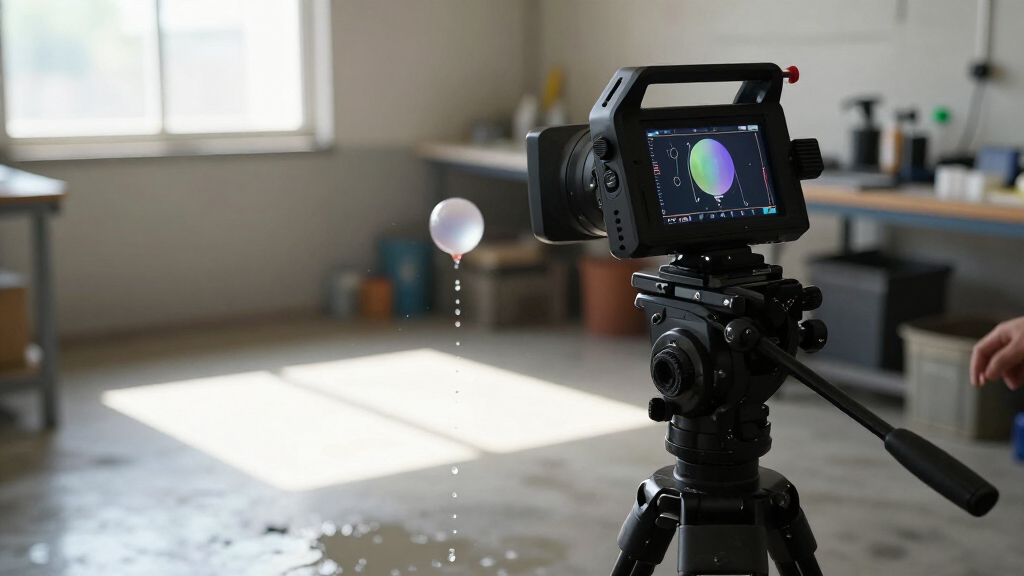
I ranked these cameras on four buyer-relevant factors: real-world frame rate at usable resolutions, shutter type and motion fidelity, lens flexibility, and connectivity and software compatibility. A camera that advertises a headline frame rate at a tiny resolution was judged on what it actually delivers for analysis work, not its marketing peak. Global shutter models scored higher on motion fidelity because they eliminate the rolling-shutter distortion that ruins measurements of fast rotation and vibration.
Lens options separated the middle of the pack from the top: interchangeable CS-mount glass and manual zoom ranges let you frame a subject precisely, while fixed wide-angle lenses lock you into one working distance. I also weighed platform support — every pick here is a UVC-class USB device that works on Windows and Linux without proprietary drivers, which keeps long-term ownership simple. Rankings reflect which tradeoffs most buyers in slow-motion analysis, machine vision, and sports coaching can actually live with.
| high speed camera | Compatibility | Connectivity |
|---|---|---|
| Global Shutter USB Monochrome | Windows, Linux, macOS, Android, Raspberry Pi | — |
| 4K USB 3.0 High-Speed Camera w | Windows, Linux, Mac, PC, Jetson Nano | — |
| HT-SUA33GC-T 0.3MP USB 3.0 Col | — | USB 3.0 Type B |
| Arducam VGA Global Shutter USB | — | USB 2.0 UVC |
| Arducam VGA Global Shutter USB | — | USB 2.0 UVC |
| SVPRO USB Camera 1080P 120fps | Windows, Linux, macOS, Android, Raspberry Pi | — |
Factors to Consider When Choosing High Speed Cameras
Before choosing a high speed camera, it helps to understand the tradeoffs that shape this entire category — most disappointing purchases here come from mismatched expectations, not bad hardware.Frame Rate Versus Resolution: The Tradeoff That Defines Everything
Every camera in this class trades resolution for speed, and manufacturers advertise the number that flatters them most. A camera quoted at 800fps may only achieve that at QQVGA — roughly 160×120 pixels, fine for tracking a dot on a vibration table but useless for analyzing a golf swing. Conversely, a camera holding 120fps at 1080P produces footage you can actually review with a coach, measure joint angles on, or show a client. My advice: start from the question “what will I be looking at?” and work backwards to the minimum resolution that makes that subject legible, then find the highest frame rate available at that resolution. Buyers who skip this step and chase peak frame-rate numbers are the ones who end up returning cameras. Also check whether the camera drops to a lower bit depth or crops the sensor at high speeds — both quietly reduce image quality beyond what the resolution figure suggests.
Global Shutter Versus Rolling Shutter
Shutter type matters more in high speed work than in any other type of photography. A rolling shutter reads the sensor line by line, so a fast-moving object changes position mid-scan — golf club shafts appear to bend, propellers warp, and vibrating machinery looks like jelly. A global shutter captures every pixel simultaneously, preserving true geometry, which is why machine vision and scientific applications almost always demand it. If you’re measuring anything — swing plane, vibration amplitude, ballistic trajectory — global shutter is close to non-negotiable. If you’re producing slow-motion video for visual review rather than measurement, a rolling shutter camera at higher resolution is often the better use of your budget. The distortion is real but rarely ruins footage meant for human eyes rather than software.
Color Versus Monochrome Sensors
Monochrome sensors skip the color filter array that sits over most camera sensors, and that filter absorbs roughly two-thirds of the incoming light. The result: monochrome cameras deliver dramatically better low-light performance and sharper fine detail than equivalent color models, which matters enormously for indoor sports analysis under typical gym lighting, or for machine vision tasks where you control the lighting anyway. Color is worth paying for when human interpretation drives the workflow — coaching sessions, content creation, documentation. A common mistake is assuming monochrome footage is “worse” — for measurement and dim environments it’s frequently the stronger choice. Many technical users deliberately run monochrome and add their own LED lighting for maximum sensitivity.
Lens Mount and Focal Flexibility
The lens determines your working distance, field of view, and how much of the frame your subject fills — arguably as important as the sensor behind it. CS-mount cameras accept an enormous ecosystem of interchangeable lenses, from wide angles to long telephotos, and give you aperture control for lighting flexibility. Manual zoom lenses, like the SVPRO’s 3.6-10mm range, offer a practical middle ground: enough adjustment to frame different setups without buying extra glass. Fixed-lens modules such as the wide-angle Arducam are locked to one field of view, which is fine for a permanently mounted inspection station but frustrating if your subject distance varies. If you plan to analyze swings, vibrations, or anything at unpredictable distances, budget for lens flexibility from day one — retrofitting is rarely possible on fixed-lens modules.
Interface, Bandwidth, and Software
All six cameras here use USB with UVC-class compliance, meaning they work as standard webcams on Windows and Linux without proprietary drivers — a genuine advantage for longevity and for integration into existing analysis software. But bandwidth still constrains performance: USB 3.0 is a practical requirement for high frame rates at meaningful resolutions, and plugging a USB 3.0 camera into a USB 2.0 port will silently throttle your frame rate. Check cable length too, since USB 3.0 signal integrity degrades beyond a few meters and active extension cables add cost. On the software side, verify that your analysis tool — whether it’s swing-analysis apps, OpenCV-based machine vision code, or simple capture software — can actually access the frame rates and raw formats the camera supports. A camera that streams beautifully in its manufacturer’s demo app but not in your workflow is a poor buy regardless of its sensor.
Frequently Asked Questions
Is 120fps enough for golf swing analysis, or do I need 800fps?
For most golf coaching, 120fps at 1080P is genuinely sufficient — it gives you roughly 15 frames during a typical downswing, enough to see face angle at impact and swing path. The 800fps-class cameras achieve that speed only at very low resolutions, so while you get far more frames, each one carries far less detail, and at QQVGA you may struggle to clearly see the club face at all. Where 800fps wins is very fast, small-scale motion: club head rotation through impact, vibration analysis, or ball spin studies where the subject is close and tightly framed. If your workflow involves a coach and player reviewing footage together on a screen, resolution usually beats raw speed. If it involves measuring micro-motions in software, the high-frame-rate monochrome route makes sense.
Why do so many high speed cameras use monochrome sensors instead of color?
The color filter array over a standard sensor blocks most incoming light — each pixel only receives red, green, or blue information, and software reconstructs the rest. Removing that filter lets a monochrome sensor gather roughly two to three times more light, which translates directly into faster shutter speeds at usable exposure in the same lighting. For machine vision and scientific measurement, color adds almost nothing while costing sensitivity and fine detail — edges and textures are sharper without the demosaicing process. Color matters when a human interprets the footage or when you’re distinguishing objects by hue. That’s why the market splits cleanly: technical cameras go monochrome, coaching and content cameras stay color. Match the sensor to whether software or people will consume the output.
What does global shutter actually do for me, and when can I skip it?
A global shutter exposes every pixel at the same instant, while a rolling shutter scans the sensor line by line over several milliseconds. At high speeds, that scan time means the top of a swinging club is captured later than the bottom — shafts appear to flex, and fast rotation looks warped. If you’re measuring geometry — swing plane, vibration shape, ballistic paths — global shutter keeps those measurements honest, which is why industrial and scientific cameras almost universally use it. If you’re producing slow-motion video for visual review, a rolling shutter’s distortion is usually cosmetic and rarely misleads the eye. The pragmatic rule: measurement demands global shutter, watching doesn’t. Note that global shutter sensors at consumer prices tend to be lower resolution, so you’re trading pixel count for geometric accuracy.
Can I use these cameras with normal software, or do I need special tools?
All six picks are UVC-class USB devices, which means Windows and Linux treat them as standard webcams — no proprietary drivers, and they’ll appear in ordinary capture software, video calls, and most swing-analysis applications immediately. That said, the default camera settings often cap the frame rate; you may need to switch the camera into an MJPEG or H.264 mode in your software’s settings to unlock 120fps or higher, since uncompressed YUV streams exceed USB bandwidth at those rates. Machine vision users typically go further, accessing the camera through OpenCV or dedicated SDKs for raw control over exposure and trigger timing. Before buying, confirm your intended application can select the resolution-and-framerate combination you actually need, because some consumer apps only expose default webcam modes.
How much does lighting matter for high speed capture?
Lighting matters more in high speed work than in almost any other imaging task, because each frame’s exposure time shrinks as frame rate rises — at 800fps you have well under two milliseconds per frame to gather light. Indoor gyms and garages, where most swing analysis happens, often force cameras into noisy, grainy footage purely from insufficient illumination. Adding bright, flicker-free LED lighting is usually the cheapest upgrade to image quality you can make, often more impactful than stepping up to a pricier sensor. Monochrome sensors help here too, since their greater light sensitivity buys back some of that lost exposure time. Also avoid ordinary fluorescent or cheap fixtures, which flicker at mains frequency and create banding across high-speed footage that’s difficult to remove afterwards.
Conclusion
The right pick here depends less on which camera is “best” and more on what you’re pointing it at. For best overall, the SVPRO 1080P 120fps with manual zoom offers the most usable balance of speed, resolution, and framing flexibility — it’s the pick I’d hand to anyone analyzing human motion. For best value, the Arducam 800fps global shutter module delivers genuine high-speed capture at a price that makes experimentation reasonable, provided tiny resolutions meet your needs. For technical and measurement work, the Global Shutter USB Monochrome CS-Mount camera is the strongest choice — its interchangeable lens system and shutter fidelity suit machine vision and scientific setups. The 4K USB 3.0 model fits buyers who want maximum still-image detail with a fast 1080P mode, while the HT-SUA33GC serves budget-conscious fixed-installation inspection tasks. If you’re new to high speed capture entirely, start with the SVPRO: it behaves like a normal webcam, works with software you already have, and will teach you what you actually need before you spend more.
Fall Picks
fall essentials
As an affiliate, we earn on qualifying purchases.