Finding the right oscilloscope for a lab setting involves balancing performance, usability, and budget. The Siglent SDS814X HD stands out as the best overall choice thanks to its high-resolution 12-bit sampling and four-channel design, making it versatile for complex testing. For those prioritizing portability, the Rigol DHO814 offers 100MHz bandwidth with four channels in a compact form. Meanwhile, the FNIRSI 1013D Plus provides an affordable touchscreen interface suitable for beginners. The main tradeoffs in this category include balancing bandwidth, channel count, and advanced features versus ease of use and cost. Continue reading for a detailed breakdown to find the best fit for your lab needs.

Get the latest gadgets delivered free with Prime
- Fast, free delivery on millions of items
- Prime Video, Amazon Music and more included
- Member-only deals all year
Complete the kit



Key Takeaways
- Higher channel counts and bandwidths are essential for complex testing but often come at a higher price.
- Touchscreen interfaces and portability options make oscilloscopes more accessible for less experienced users.
- Built-in signal generators and advanced decoding features add versatility but may increase the device’s complexity and cost.
- Resolution (such as 12-bit) significantly impacts the clarity of measurements, especially for detailed signals.
- Budget-friendly models often trade off bandwidth and advanced features, making them more suitable for basic applications.
| Siglent SDS814X HD 12-bit Mixed Signal Oscilloscope (4 Channel / 100 MHz) |  | Best Overall for High-Resolution Mixed Signal Analysis | Bandwidth: 100 MHz | Channels: 4 analog, 16 digital (requires options) | Resolution: 12-bit | VIEW ON AMAZON | See Our Full Breakdown |
| Hantek DSO2D15 Digital Storage Oscilloscope, 150MHz Bandwidth, 2 Channels |  | Best Value for Versatile Communication and Embedded Testing | Bandwidth: 150 MHz | Channels: 2 | Package Weight: 6.33 Pounds | VIEW ON AMAZON | See Our Full Breakdown |
| FNIRSI 1013D Plus 100MHz Oscilloscope, 2 Channel Touchscreen |  | Best for Portability and Basic Electronics Testing | Sampling Rate: 1 GSa/s | Bandwidth: 100 MHz | Display: 7-inch TFT touchscreen | VIEW ON AMAZON | See Our Full Breakdown |
| RIGOL DHO924S Oscilloscope with Built-in Signal Generator, 250MHz, 12-Bit |  | Best for High-Speed Debugging and Signal Validation | Bandwidth: 250 MHz | Channels: 4 analog | Sampling Rate: 1.25 GSa/s | VIEW ON AMAZON | See Our Full Breakdown |
| Hantek DSO5102P Digital Storage Oscilloscope 100MHz 2CH |  | Best for Educational and Entry-Level Troubleshooting | Bandwidth: 100 MHz | Channels: 2 | Display: 7-inch TFT LCD | VIEW ON AMAZON | See Our Full Breakdown |
| Rigol DHO804 Portable Digital Oscilloscope, 70MHz, 4 Channels, 12-Bit Resolution | 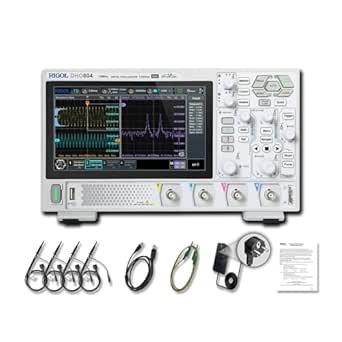 | Best for Portable High-Resolution Analysis | Bandwidth: 70 MHz | Channels: 4 | Resolution: 12-bit | VIEW ON AMAZON | See Our Full Breakdown |
| FNIRSI DPOS350P 4-in-1 350MHz Digital Oscilloscope, 2 Channel, 1 GSa/s |  | Best for Versatile Field Testing and Multi-Function Use | Bandwidth: 350 MHz | Sampling Rate: 1 GSa/s | Channels: 2 | VIEW ON AMAZON | See Our Full Breakdown |
| Rigol DS1054Z Digital Oscilloscope, 50MHz, 4 Channel, 1GSa/s |  | Best for Budget-Friendly Education and Basic Debugging | Frequency: 50 MHz | Channels: 4 | Sample Rate: 1 GSa/s | VIEW ON AMAZON | See Our Full Breakdown |
| Siglent Technologies SDS1104X-E 100MHz Digital Oscilloscope, 4 Channels, Standard Decoder | 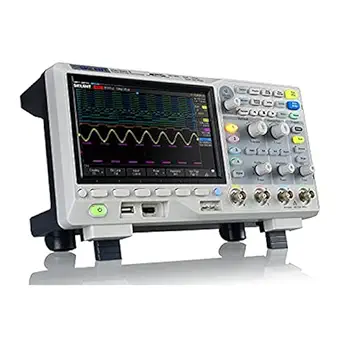 | Best for Protocol Development and Detailed Digital Signal Analysis | Frequency: 100 MHz | Channels: 4 | Sample Rate: 1 GSa/s | VIEW ON AMAZON | See Our Full Breakdown |
| HANMATEK 110MHz Bandwidth Digital Oscilloscope with 2 Channels and 7-inch TFT-LCD Screen |  | Best for Compact, Professional Field Testing | Bandwidth: 110 MHz | Sampling Rate: 500 MS/s | Channels: 2 | VIEW ON AMAZON | See Our Full Breakdown |
| RIGOL DHO814 Portable Digital Oscilloscope, 100MHz, 4 Channels, 12-Bit Resolution |  | Best for Field Troubleshooting and Versatile Lab Use | Bandwidth: 100 MHz | Channels: 4 | Resolution: 12-bit | VIEW ON AMAZON | See Our Full Breakdown |
| oscilloscopes for lab | Channels | Bandwidth | Memory Depth | Sampling Rate |
|---|---|---|---|---|
| Siglent SDS814X HD 12-bit Mixe | 4 analog, 16 digital (requires options) | 100 MHz | 50Mpts | — |
| Hantek DSO2D15 Digital Storage | 2 | 150 MHz | — | — |
| FNIRSI 1013D Plus 100MHz Oscil | — | 100 MHz | — | 1 GSa/s |
| RIGOL DHO924S Oscilloscope wit | 4 analog | 250 MHz | 50 Mpts | 1.25 GSa/s |
| Hantek DSO5102P Digital Storag | 2 | 100 MHz | — | — |
| Rigol DHO804 Portable Digital | 4 | 70 MHz | up to 25 Mpts | 1.25 GSa/s |
| FNIRSI DPOS350P 4-in-1 350MHz | 2 | 350 MHz | 47 Kpts | 1 GSa/s |
| Rigol DS1054Z Digital Oscillos | 4 | — | 24 Mpts | — |
| Siglent Technologies SDS1104X- | 4 | — | — | — |
| HANMATEK 110MHz Bandwidth Digi | 2 | 110 MHz | — | 500 MS/s |
| RIGOL DHO814 Portable Digital | 4 | 100 MHz | 25 Mpts | 1.25 GSa/s |
More Details on Our Top Picks
Siglent SDS814X HD 12-bit Mixed Signal Oscilloscope (4 Channel / 100 MHz)
The Siglent SDS814X HD stands out for offering a combination of high-resolution 12-bit analog and digital signals within a versatile 4-channel setup, making it ideal for detailed electronics analysis. Compared with the RIGOL DHO924S, it provides comparable bandwidth but excels in waveform clarity thanks to its higher resolution, although it requires additional options for digital channels, which adds complexity. Its large 7-inch touchscreen simplifies operation, especially for labs where detailed signal inspection is routine. The high waveform capture rate ensures no rapid transient is missed, supporting advanced debugging. However, the setup can be complex, and digital channels demand extra investment. This makes it well-suited for experienced engineers needing detailed, mixed-signal insights, but less ideal for beginners or labs with budget constraints.
Pros:- High-resolution 12-bit analog/digital conversion for detailed signals
- Large, intuitive 7-inch touch screen for easy control
- Fast waveform capture rates up to 80,000 waveforms per second
Cons:- Digital channels require additional options and accessories
- Complex setup may challenge less experienced users
- No integrated digital channels in base configuration
Best for: Electronics labs requiring detailed mixed-signal analysis and high-resolution data capture
Not ideal for: Educational environments or budget-conscious labs where simplicity and lower cost are priorities
- Bandwidth:100 MHz
- Channels:4 analog, 16 digital (requires options)
- Resolution:12-bit
- Memory Depth:50Mpts
- Waveform Capture Rate:80,000 wfm/s (normal), 500,000 wfm/s (sequence)
Our verdict“This oscilloscope is best for professional electronics labs where detailed mixed-signal testing outweighs setup complexity.”
Hantek DSO2D15 Digital Storage Oscilloscope, 150MHz Bandwidth, 2 Channels
The Hantek DSO2D15 offers a compelling mix of affordability and features, including 150MHz bandwidth, making it a strong contender for labs focused on communication protocols and embedded system debugging. Unlike the FNIRSI 1013D Plus, which emphasizes portability and touchscreen ease, the DSO2D15 balances performance with cost, making it suitable for both educational and professional settings. Its support for arbitrary waveform output and protocol decoding broadens its testing capabilities. Yet, its lack of touchscreen interface and limited bandwidth may restrict applications involving very high-frequency signals or fast-paced environments. It’s an excellent choice for those needing versatile, budget-friendly testing, but less suited for ultra-high-speed or industrial-grade testing where maximum bandwidth and interface sophistication are essential.
Pros:- Supports arbitrary waveform output and multiple trigger modes
- Decodes serial protocols, increasing testing versatility
- Cost-effective for diverse technical applications
Cons:- Limited to 150MHz bandwidth, restricting high-frequency testing
- No touchscreen interface, which may slow operation
- Basic interface may challenge new users
Best for: Educational institutions and small labs focused on communication and embedded system testing on a budget
Not ideal for: High-frequency research or industrial-grade labs needing bandwidths over 150MHz
- Bandwidth:150 MHz
- Channels:2
- Package Weight:6.33 Pounds
Our verdict“Ideal for budget-conscious labs seeking versatile, multi-protocol testing, but not for ultra-high-speed applications.”
FNIRSI 1013D Plus 100MHz Oscilloscope, 2 Channel Touchscreen
The FNIRSI 1013D Plus is designed for on-the-go testing, offering a portable, lightweight platform with a 7-inch touchscreen that simplifies operation. Its 100MHz bandwidth and 1 GSa/s sampling rate support everyday electronics troubleshooting and repair tasks. Compared with larger, more complex oscilloscopes like the RIGOL DHO924S, it sacrifices some advanced features for portability and ease of use. Its waveform storage, high-voltage protection, and multiple trigger options make it suitable for fieldwork or educational purposes. However, its limited channels and battery life of only four hours can hinder longer or more complex tests. This makes it perfect for technicians needing a portable solution but less suitable for high-frequency research or extensive data collection in a lab setting.
Pros:- Portable and lightweight for field use
- High-resolution touchscreen simplifies operation
- Built-in waveform storage and high-voltage tolerance
Cons:- Limited to 2 channels, restricting complex analysis
- Battery life of only 4 hours limits prolonged testing
- Advanced features may require a learning curve
Best for: Field technicians and electronics students needing a portable, easy-to-use scope
Not ideal for: High-speed research or complex signal analysis requiring multiple channels and extended operation
- Sampling Rate:1 GSa/s
- Bandwidth:100 MHz
- Display:7-inch TFT touchscreen
- Storage:1 GB (up to 1000 screenshots)
- Battery:6000 mAh (4 hours)
Our verdict“This scope is best for portable, straightforward electronics testing, but less suited for high-frequency or multi-channel demanding labs.”
RIGOL DHO924S Oscilloscope with Built-in Signal Generator, 250MHz, 12-Bit
The RIGOL DHO924S combines high bandwidth and resolution with an integrated 25 MHz signal generator, making it ideal for high-speed debugging and validation in research or industrial environments. Its 250MHz bandwidth and 1.25 GSa/s sampling rate outperform many other scopes like the Hantek DSO2D15, especially when precise, detailed analysis of fast signals is required. The built-in generator simplifies testing setups, and remote control options support automation. However, its complex interface can be a challenge for newcomers, and the lack of slow sweep or roll modes limits some advanced data analysis. This scope suits labs needing both high-speed data capture and integrated signal generation but might overwhelm users unfamiliar with advanced features.
Pros:- High bandwidth and 12-bit resolution for detailed analysis
- Built-in 25 MHz signal generator enhances testing versatility
- Remote control via USB, LAN, and HDMI supports automation
Cons:- Complex interface may require training to operate efficiently
- Additional digital channels need separate probes
- No slow sweep or roll modes for long-term data viewing
Best for: Research and industrial labs requiring high bandwidth and integrated signal generation capabilities
Not ideal for: Educational environments or small hobbyist labs focused on simple signal observation
- Bandwidth:250 MHz
- Channels:4 analog
- Sampling Rate:1.25 GSa/s
- Resolution:12-bit
- Memory Depth:50 Mpts
- Built-in Signal Generator:25 MHz
Our verdict“This oscilloscope is optimal for advanced, high-speed testing environments where integrated signal generation and automation are valued.”
Hantek DSO5102P Digital Storage Oscilloscope 100MHz 2CH
The Hantek DSO5102P offers a straightforward, portable solution for basic electronics troubleshooting, featuring a large 7-inch color display for clear waveform visualization. Its 100MHz bandwidth and 1 GSa/s sampling rate support common measurement tasks in educational or hobbyist labs. Compared with the FNIRSI 1013D Plus, it provides a slightly larger display and USB upgrade options, making it versatile for beginners. The automatic measurement features simplify data collection, but the limited bandwidth and lack of advanced triggering options restrict its use in high-frequency or complex signal scenarios. It’s a practical choice for entry-level or educational settings but not for advanced research or industrial testing demanding higher bandwidths and features.
Pros:- Large, high-resolution color display for easy waveform viewing
- Supports waveform storage and USB upgrades for flexibility
- Automatic measurement functions improve accuracy
Cons:- Limited to 100MHz bandwidth, restricting high-frequency analysis
- Designed primarily for entry-level users, lacking advanced features
- No mention of deep memory or complex trigger options
Best for: Educational institutions and hobbyist technicians needing a reliable, easy-to-use scope
Not ideal for: High-frequency or industrial applications requiring deep memory or advanced triggering
- Bandwidth:100 MHz
- Channels:2
- Display:7-inch TFT LCD
- Resolution:800 x 480
- Waveform Storage:Over 1000 waveforms
- Sample Rate:1 GSa/s
Our verdict“Suitable for basic troubleshooting and educational use, but insufficient for high-speed or complex signal analysis.”
Rigol DHO804 Portable Digital Oscilloscope, 70MHz, 4 Channels, 12-Bit Resolution
The Rigol DHO804 stands out for delivering high-resolution, detailed signal analysis in a portable form. Its 12-bit resolution and 1.25 GSa/s sampling rate make it suitable for precise measurements, especially compared to less capable models like the Rigol DS1054Z, which offers only 50 MHz bandwidth but more traditional features. While the DHO804’s portability is advantageous for fieldwork, its weight approaches 3.92 pounds, potentially limiting ease of carry during extended use. The touch screen and multiple connectivity options add to its versatility, but the complex interface may pose a learning curve. The limited bandwidth might restrict its usefulness for very high-frequency signals, making it ideal for lab and field environments requiring detail over extreme frequency. Overall, this scope offers a compelling balance of resolution and mobility for professionals needing portable, detailed measurements.
Pros:- High resolution and sampling rate for detailed signal analysis
- Portable with a compact design for field and lab use
- Multiple connectivity options including LAN, USB, HDMI
Cons:- Relatively high weight for a portable device
- Complex interface may require a learning curve
- Limited bandwidth for very high-frequency signals
Best for: Engineers and technicians who need high-resolution, portable measurements in both lab and field environments.
Not ideal for: Users primarily working with signals above 70 MHz or requiring ultra-light equipment for extended field use.
- Bandwidth:70 MHz
- Channels:4
- Resolution:12-bit
- Sampling Rate:1.25 GSa/s
- Memory Depth:up to 25 Mpts
- Display:7-inch touch screen
Our verdict“This scope is well-suited for professionals needing portable, high-resolution analysis within a 70 MHz bandwidth limit.”
FNIRSI DPOS350P 4-in-1 350MHz Digital Oscilloscope, 2 Channel, 1 GSa/s
The FNIRSI DPOS350P excels in offering multiple functions—oscilloscope, spectrum analyzer, signal generator, and more—in a compact, portable package. Its 350 MHz bandwidth and 1 GSa/s sampling rate surpass the capabilities of the Rigol DS1054Z, making it more suitable for high-frequency work. The 7-inch touchscreen simplifies operation, but its array of features introduces a steep learning curve for newcomers. The device’s 8000 mAh battery enables extended use in the field, though the restriction to 2 channels might limit complex testing scenarios compared to 4-channel models like the Siglent SDS1104X-E. Its spectrum analysis and frequency response testing are particularly beneficial for RF applications, but the complex interface may challenge less experienced users. If versatile, high-frequency field measurement is your goal, this model warrants serious consideration.
Pros:- Versatile 4-in-1 functionality including spectrum and frequency analysis
- Long-lasting battery suitable for extended fieldwork
- High bandwidth and sampling rate for detailed analysis
Cons:- Complex features require user familiarity
- Limited to 2 channels, potentially restrictive for advanced testing
Best for: RF engineers and field technicians needing multi-functional testing with high bandwidth and portability.
Not ideal for: Users needing more than two channels or simple, straightforward scope functions for basic troubleshooting.
- Bandwidth:350 MHz
- Sampling Rate:1 GSa/s
- Channels:2
- Display:7-inch touchscreen
- Memory Depth:47 Kpts
- FFT Range:200 KHz–350 MHz
Our verdict“Ideal for RF specialists and field engineers who value multi-functionality and portability over multi-channel complexity.”
Rigol DS1054Z Digital Oscilloscope, 50MHz, 4 Channel, 1GSa/s
The Rigol DS1054Z remains a popular choice for entry-level and educational labs due to its affordability and feature set. Its 50 MHz bandwidth is sufficient for many basic troubleshooting tasks, but it falls short for high-frequency applications compared to models like the Siglent SDS1104X-E. The scope’s 1 GSa/s sampling rate and 24 Mpts memory allow for detailed waveform capture, and its serial bus decoding supports debugging of communication protocols. The interface, while comprehensive, can be somewhat complex for beginners, requiring some familiarization. Its multiple connectivity options, including USB and LAN, make data transfer straightforward. This model offers a solid balance of features and price for those starting in electronics or educational settings, but it may need upgrading for advanced RF or high-speed digital work.
Pros:- Affordable with a comprehensive feature set
- High-speed waveform capture and deep memory
- Supports serial bus decoding for protocol analysis
Cons:- Limited to 50 MHz bandwidth, restricting high-frequency work
- Interface complexity may challenge new users
Best for: Students, educators, and hobbyists seeking a cost-effective scope for basic diagnostics and learning.
Not ideal for: Professionals requiring high bandwidth or advanced measurement capabilities for high-speed digital or RF signals.
- Frequency:50 MHz
- Channels:4
- Sample Rate:1 GSa/s
- Memory Depth:24 Mpts
Our verdict“A reliable starter scope that balances affordability with essential features for educational and basic troubleshooting needs.”
Siglent Technologies SDS1104X-E 100MHz Digital Oscilloscope, 4 Channels, Standard Decoder
The Siglent SDS1104X-E offers a balanced package with 100 MHz bandwidth and four channels, making it suitable for more detailed digital and analog signals. Its support for multiple protocols such as I2C, SPI, UART, CAN, and LIN enhances its appeal for embedded development and debugging, especially against the Rigol DS1054Z, which has a narrower bandwidth. The optional MSO digital channels and USB AWG modules extend its versatility, but these are add-ons that may increase overall cost. Its heavier weight of 4 kg indicates a more robust build suitable for lab environments. The scope’s deep memory, advanced triggering, and protocol decoding make it better suited for complex digital systems, though some features require additional purchase. It makes a compelling choice for engineers focused on digital signals and protocol analysis.
Pros:- Supports multiple communication protocols with standard decoding
- Options for additional digital channels and USB AWG modules
- Reliable brand with deep feature set for digital analysis
Cons:- Heavier package weight may affect portability
- Some advanced features require optional purchases
Best for: Embedded system developers and digital engineers needing detailed protocol decoding and high-resolution analysis.
Not ideal for: Hobbyists or basic troubleshooting users who don’t require extensive protocol support or higher bandwidth.
- Frequency:100 MHz
- Channels:4
- Sample Rate:1 GSa/s
- Standard Decoder:I2C, SPI, UART/RS232, CAN, LIN
Our verdict“Best suited for digital engineers and developers needing comprehensive protocol decoding and digital signal analysis.”
HANMATEK 110MHz Bandwidth Digital Oscilloscope with 2 Channels and 7-inch TFT-LCD Screen
The HANMATEK 110MHz combines a sizable 7-inch high-resolution LCD with a portable design, making it ideal for on-site waveform analysis. Its 500 MS/s sampling rate provides decent detail for many lab tasks, while the dual channels cover typical measurement needs. Compared to the 4-channel models like the Siglent SDS1104X-E, it offers fewer channels but emphasizes portability and ease of use. The device supports multiple measurement functions and USB storage, catering well to field technicians who need quick, reliable data collection. Its relatively low power consumption and lightweight form factor make it highly portable, though the complex features might require user familiarity. This scope works well for field engineers and technicians needing a reliable, portable testing tool.
Pros:- Large, high-res 7-inch color display
- Decent bandwidth and sampling rate for detailed analysis
- Lightweight and portable for field use
Cons:- Limited to 2 channels, less flexible for complex testing
- Complex features may need user training
- Power consumption, though low, still requires stable power sources
Best for: Field technicians and engineers who prioritize portability and straightforward waveform analysis.
Not ideal for: Users requiring high channel counts or advanced digital protocol decoding for complex digital systems.
- Bandwidth:110 MHz
- Sampling Rate:500 MS/s
- Channels:2
- Display Size:7 inches
- Display Resolution:800 x 480 pixels
- Waveform Storage:not less than 16 groups
Our verdict“A solid portable scope for field testing where high resolution and ease of use are priorities over channel count.”
RIGOL DHO814 Portable Digital Oscilloscope, 100MHz, 4 Channels, 12-Bit Resolution
The RIGOL DHO814 stands out for its combination of portability and high-resolution measurement, making it a strong choice for technicians who need detailed signals on the go. Its 12-bit resolution offers finer vertical detail compared to the 8- or 10-bit options like the Hantek DSO2D15, which might miss subtle signal nuances. The large 7-inch touch display simplifies complex analysis, especially when paired with advanced protocol decoding and trigger features, surpassing basic models like the FNIRSI 1013D Plus. However, its 100 MHz bandwidth limits its use for very high-frequency signals, and the device’s interface may be somewhat complex for beginners unfamiliar with advanced features. Compared to the Rigol DHO924S with higher bandwidth, the DHO814 sacrifices some frequency range for portability and resolution, making it better suited for detailed troubleshooting rather than high-frequency testing. This model makes the most sense for lab professionals who need a portable, high-res scope capable of multi-protocol analysis but are comfortable with a slightly steeper learning curve.
Pros:- High 12-bit vertical resolution for detailed signal analysis
- Portable and rugged design suitable for field work
- Supports multiple protocol decoding and advanced triggering
Cons:- Limited to 100 MHz bandwidth, restricting high-frequency applications
- Complex interface might be challenging for beginners
- Higher price point compared to basic models
Best for: Lab technicians and engineers who require portable, detailed signal analysis during troubleshooting in both lab and field environments.
Not ideal for: Beginners or users needing to analyze signals above 100 MHz, who would find the bandwidth limiting and the interface complex.
- Bandwidth:100 MHz
- Channels:4
- Resolution:12-bit
- Sampling Rate:1.25 GSa/s
- Memory Depth:25 Mpts
- Display:7-inch touch screen
Our verdict“This oscilloscope is ideal for experienced lab and field technicians needing detailed, portable analysis within its frequency range.”

How We Picked
In selecting these oscilloscopes for labs, I prioritized performance factors such as bandwidth, sample rate, and channel count, which directly impact measurement accuracy and capability. Build quality and reliability were essential, given the demanding environment of a lab. Ease of use, including interface design and feature set, was also considered, especially for educational or research settings. Cost-value was another key aspect, balancing features against affordability. Products were ranked based on how well they combine these factors to suit various lab needs, from advanced research to educational use.Factors to Consider When Choosing Oscilloscopes For Labs
Choosing the right oscilloscope for a lab requires understanding several critical factors. Beyond specs, consider how the device will integrate into your workflow, the complexity of the signals you’ll measure, and your budget. This guide explores key considerations to help you make an informed decision and avoid common pitfalls when selecting lab oscilloscopes.Bandwidth and Sample Rate
Bandwidth determines the highest frequency signal the oscilloscope can accurately measure, while sample rate affects how precisely signals are reconstructed. For most lab applications, a bandwidth of at least 100MHz is recommended, but higher frequencies may be necessary for RF or high-speed digital work. Choosing a scope with a sufficient sample rate ensures you capture transient events without aliasing, which is crucial for accurate diagnostics.
Channel Count and Input Options
The number of channels directly impacts the scope’s ability to analyze multiple signals simultaneously. Four channels are common in lab scopes, allowing for more complex experiments. Consider whether your application requires differential inputs, trigger options, or specialized connectors, as these features can enhance measurement flexibility but may add to the cost and complexity.
Resolution and Display
Higher resolution, such as 12-bit sampling, provides more detailed and reliable measurements, especially with low-voltage signals. A large, clear display with a touchscreen interface can simplify operation and improve precision. Avoid scopes with low resolution or cramped displays, as these can hinder accurate readings and slow down your workflow.
Build Quality and Portability
In a lab environment, durability and stability are vital. Look for scopes with robust construction, good heat dissipation, and reliable internal components. Portability can be beneficial if your lab setup moves frequently or if you need to take equipment into the field. However, portable models may sacrifice some features or performance for size and weight.
Additional Features and Value
Features like built-in signal generators, decoding capabilities, or advanced triggering can add significant value, especially in research or complex troubleshooting. However, these extras can inflate the price and introduce complexity. Always evaluate whether these features align with your specific needs to avoid paying for capabilities you won’t use.
Frequently Asked Questions
Is higher bandwidth always better for lab oscilloscopes?
While higher bandwidth allows measurement of faster signals, it is not always necessary for every lab application. For digital signals below 100MHz, a scope with lower bandwidth might suffice and save costs. However, if you’re working with RF or high-speed digital circuits, opting for a scope with greater bandwidth ensures more accurate readings and future-proofing. Assess your specific signals and choose accordingly.
Should I prioritize a scope with more channels or higher bandwidth?
The decision depends on your typical testing scenarios. More channels enable simultaneous analysis of multiple signals, which is essential for complex digital circuits. Higher bandwidth is critical when dealing with high-frequency RF signals or very fast digital signals. In many lab setups, a balance of both—such as four channels with 100-250MHz bandwidth—offers the most flexibility without excessive cost.
Are portable oscilloscopes suitable for lab use?
Portable oscilloscopes can be highly convenient for labs that require mobility or fieldwork. They often feature compact designs and battery operation, which improve flexibility. However, they may lack some advanced features or higher bandwidth found in benchtop models. For routine lab work, a portable scope is best suited for supplementary tasks or quick diagnostics rather than detailed high-speed analysis.
How important is a touchscreen interface in a lab oscilloscope?
A touchscreen can significantly speed up operation and make complex settings easier to navigate, especially for beginners or those working in fast-paced environments. It can improve measurement accuracy by providing intuitive controls. Still, some professionals prefer traditional knobs and buttons for precise adjustments, so consider your comfort with touch interfaces and the scope’s overall usability before choosing.
What additional features should I consider beyond basic measurements?
Features like built-in signal generators, waveform decoding, advanced triggering, and math functions can expand a scope’s capabilities. These are particularly valuable in research, troubleshooting, or complex digital/analog analysis. However, they also increase the scope’s price and complexity. Evaluate whether these extras align with your work to ensure you’re investing in features that genuinely improve your workflow.
Conclusion
For most labs, the Siglent SDS814X HD offers the best overall balance of performance, resolution, and versatility, making it ideal for advanced research and detailed diagnostics. If budget is a primary concern, the Hantek DSO2D15 provides solid functionality at a more affordable price, suited for educational or basic testing. Those seeking portability and ease of use might prefer the Rigol DHO814, especially in dynamic or field lab environments. For beginners or small-scale projects, the FNIRSI 1013D Plus offers a straightforward, touchscreen interface. Ultimately, your choice should reflect your specific testing needs, signal types, and budget constraints, ensuring you select a model that enhances your lab’s productivity and precision.