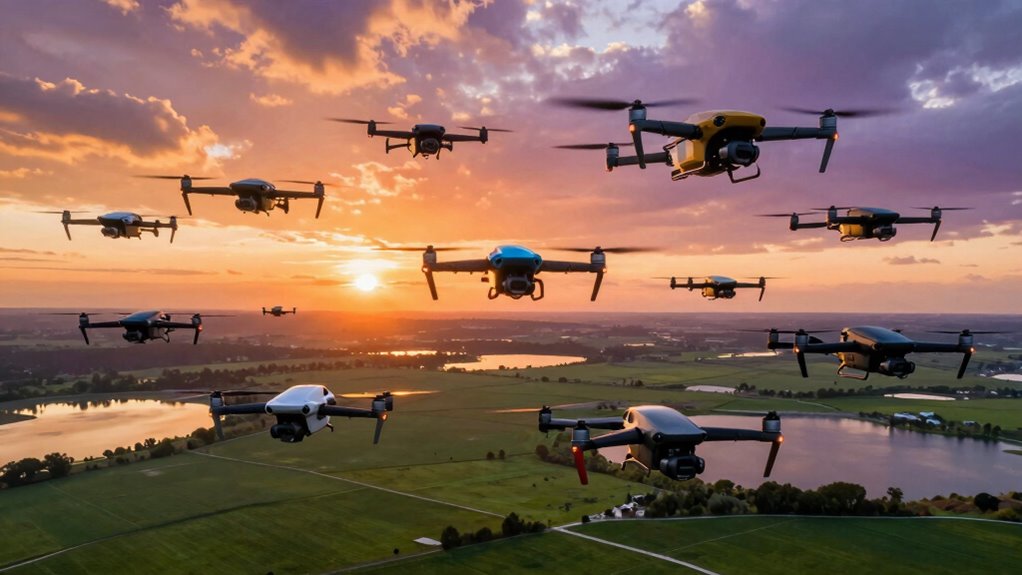

Among these professional photography drones, the DJI Mavic 4 Pro is my best overall pick for image flexibility, while the DJI Air 3S is a strong choice for photographers who want a capable aircraft without moving up to the largest premium option. The DJI Mini 5 Pro stands out when a compact, sub-249-gram design matters. The central tradeoff is between camera versatility and portability, with flight time, controller features, and obstacle sensing shaping the choice too. Some models here are better suited to recreational or entry-level use than demanding paid assignments. Read on for the full comparison, buying advice, and recommendations by photographer type.

Get the latest gadgets delivered free — and shop member deals
- Fast, free delivery on millions of items
- Access to Prime Big Deal Days deals on October 6–7
- Prime Video, Amazon Music and more included
Complete the kit



Key Takeaways
- The DJI Mavic 4 Pro leads for camera versatility, while its larger, premium setup is more drone than some travel photographers need.
- The DJI Air 3S offers a capable middle ground for photographers who want a more advanced platform than the Mini models without choosing the flagship Mavic.
- The DJI Mini 5 Pro is the compact standout for location work where portability and a sub-249-gram aircraft are priorities.
- Battery bundles change how practical a drone is on a shoot: the Mini 3 and Mini 5 Pro Fly More kits and the Mini 5 Pro Fly More Combo Plus include multiple batteries, while individual configurations differ.
- Several Ruko, Bwine, and generic 4K models emphasize flight time or bundled controls, but headline resolution alone does not establish professional image quality or workflow suitability.
| DJI Mavic 4 Pro Drone with DJI RC 2 |  | Best Premium Pick | Main camera: 100MP Hasselblad | Video: 6K/60fps HDR | Tele cameras: Dual | VIEW ON AMAZON | See Our Full Breakdown |
| Ruko U11MINI 4K Drone with 5.5-Inch Touchscreen Remote |  | Best Value Touchscreen Setup | Camera sensor: 1/2-inch CMOS | Photo resolution: 8K / 48 MP effective | Video: 4K at 30 fps, MP4 | VIEW ON AMAZON | See Our Full Breakdown |
| DJI Mini 4K Drone with 4K UHD Camera | 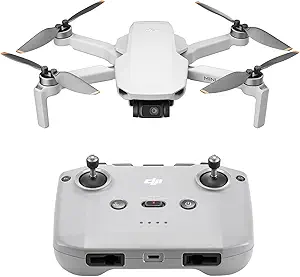 | Best Ultralight Workhorse | Weight: Under 249 g | Camera: 4K UHD | Gimbal: 3-axis | VIEW ON AMAZON | See Our Full Breakdown |
| Bwine F7GB2 Pro Drone with 4K Camera and 3-Axis Gimbal |  | Best Endurance on a Budget | Camera: 4K (2160P), detachable | Gimbal: 3-axis | Digital zoom: 5x | VIEW ON AMAZON | See Our Full Breakdown |
| GPS Drone with 4K UHD Camera and 3-Axis Gimbal |  | Best Starter Bundle | Camera: 4K UHD, 110° wide angle | Camera angle: 90° electronically adjustable | Gimbal: 3-axis | VIEW ON AMAZON | See Our Full Breakdown |
| DJI Mini 5 Pro Fly More Combo with DJI RC 2 | 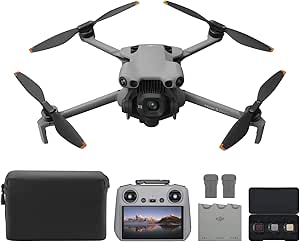 | Best Overall | Camera sensor: 1-inch CMOS | Video resolution: 4K/60fps HDR | Still resolution: 50 MP | VIEW ON AMAZON | See Our Full Breakdown |
| DJI Mini 3 Fly More Combo with DJI RC and 3 Batteries |  | Best Value Combo | Weight: Under 249 g | Video: 4K HDR | Gimbal: 3-axis mechanical with true vertical rotation | VIEW ON AMAZON | See Our Full Breakdown |
| SKYROVER X1 Drone with Camera Combo with Screen Controller |  | Best Budget Screen-Controller Pick | Video: 4K/60fps HDR, 4K/100fps slow motion | Photo: 48MP (8K) | Sensor: 1/1.32″ CMOS, f/1.7 aperture | VIEW ON AMAZON | See Our Full Breakdown |
| Ruko Drone with 4K Camera, 8K Photo, and 96-Minute Flight Time |  | Best Budget Battery Bundle | Camera sensor: 1/2-inch 48MP CMOS | Photo resolution: 8K | Video resolution: 4K at 30 fps | VIEW ON AMAZON | See Our Full Breakdown |
| Ruko F11PRO 2 Plus Drone with 48MP Camera |  | Best Beginner GPS Pick | Camera: 48MP, 1/2-inch CMOS sensor | Photo resolution: 8K | Video resolution: 4K at 30 fps | VIEW ON AMAZON | See Our Full Breakdown |
| Bwine F7MINI Drone with 4K Video, 8K Photo Camera and 3-Axis Gimbal |  | Best Budget Sub-250g Option | Weight: Under 249g | Camera: 48MP 1/2″ CMOS, F1.8 aperture | Photo Resolution: 8K UHD | VIEW ON AMAZON | See Our Full Breakdown |
| DJI Mini 5 Pro Fly More Combo Plus with DJI RC 2 |  | Best Compact Professional Pick | Camera Sensor: 1-inch CMOS | Video: 4K/60fps HDR | Gimbal Rotation: 225° | VIEW ON AMAZON | See Our Full Breakdown |
| DJI Air 3S Fly More Combo with RC 2 Screen Remote Controller |  | Best Dual-Camera Workhorse | Primary Camera Sensor: 1-inch CMOS | Video: 4K/60fps HDR (dual cameras) | Dynamic Range: Up to 14 stops | VIEW ON AMAZON | See Our Full Breakdown |
| DJI Mini 4K Camera Drone Combo with Two Batteries |  | Best Starter Drone for Aspiring Photographers | Weight: Under 249 g | Camera: 4K UHD | Stabilization: 3-axis gimbal | VIEW ON AMAZON | See Our Full Breakdown |
| Ruko F11PRO 2 Drone with 6K Camera |  | Best Value for Long Flight Sessions | Video Resolution: 4K at 30 fps | Still Image Resolution: 19 MP (6K) | Gimbal: 3-axis mechanical | VIEW ON AMAZON | See Our Full Breakdown |
| professional photography drone | Weight | Gimbal | Flight time |
|---|---|---|---|
| DJI Mavic 4 Pro Drone with DJI | — | 360° Infinity Gimbal | Up to 51 minutes |
| Ruko U11MINI 4K Drone with 5.5 | Under 249 g | 3-axis mechanical brushless | — |
| DJI Mini 4K Drone with 4K UHD | Under 249 g | 3-axis | — |
| Bwine F7GB2 Pro Drone with 4K | 550 g | 3-axis | Up to 75 minutes with three batteries |
| GPS Drone with 4K UHD Camera a | — | 3-axis | — |
| DJI Mini 5 Pro Fly More Combo | 249.9 g ± 4 g (approximately) | — | — |
| DJI Mini 3 Fly More Combo with | Under 249 g | 3-axis mechanical with true vertical rotation | — |
| SKYROVER X1 Drone with Camera | Under 249 g | — | Up to 96 minutes total (3 batteries) |
| Ruko Drone with 4K Camera | Under 249 g | — | Up to 96 minutes total (three batteries, 32 minutes each) |
| Ruko F11PRO 2 Plus Drone with | — | 3-axis mechanical brushless | Up to 37 minutes per battery; 74 minutes total |
| Bwine F7MINI Drone with 4K Vid | Under 249g | 3-axis stabilized | 96 minutes total (3 batteries, 32 min each) |
| DJI Mini 5 Pro Fly More Combo | Approximately 249.9 g ± 4 g | — | Up to 52 minutes per battery |
| DJI Air 3S Fly More Combo with | — | — | — |
| DJI Mini 4K Camera Drone Combo | Under 249 g | — | — |
| Ruko F11PRO 2 Drone with 6K Ca | — | 3-axis mechanical | Up to 70 minutes with two batteries |
More Details on Our Top Picks
DJI Mavic 4 Pro Drone with DJI RC 2
For photographers whose income depends on image quality, this flagship stands apart from everything else here. The 100MP Hasselblad main camera and 6K/60fps HDR video produce files that survive heavy cropping and grading in ways the 4K output of the DJI Mini 4K or Bwine F7GB2 Pro simply cannot match. The dual tele cameras add framing flexibility that no single-camera drone in this lineup offers, and the 360° Infinity Gimbal opens creative angles that fixed-gimbal competitors lock you out of. Compared with the DJI Air 3S Fly More Combo, the Mavic 4 Pro pulls ahead on resolution, low-light sensing, and transmission range, though the Air 3S remains the smarter buy if you need multiple batteries for a full shoot day. The tradeoff is a much bigger spend, and only one battery included here.
Pros:- 100MP Hasselblad main camera with 6K/60fps HDR video
- Dual tele cameras enable detailed zoom photography without physically moving the drone
- Omnidirectional obstacle sensing that works in low light down to 0.1 lux
- Up to 51 minutes of flight time and 30 km O4+ transmission
Cons:- Only one battery included, which limits a full shooting day without extra purchases
- DJI Fly app is unavailable on Google Play and must be sideloaded from DJI’s website
Best for: Working professionals and serious enthusiasts who need flagship image quality, telephoto reach, and long-range transmission for commercial or cinematic work
Not ideal for: Hobbyists and first-time pilots — the capabilities far exceed casual needs and the cost is hard to justify for occasional flights
- Main camera:100MP Hasselblad
- Video:6K/60fps HDR
- Tele cameras:Dual
- Gimbal:360° Infinity Gimbal
- Obstacle sensing:Omnidirectional, 0.1-lux Nightscape
- Flight time:Up to 51 minutes
- Video transmission:O4+ 10-bit HDR, up to 30 km
- Controller:DJI RC 2
Our verdict“If aerial image quality is your profession rather than a hobby, this is the drone the rest of this list aspires to be — everyone else should save their money.”
Ruko U11MINI 4K Drone with 5.5-Inch Touchscreen Remote
What makes this Ruko interesting is what the controller does to the experience. A built-in 5.5-inch touchscreen means no phone mounting, no app juggling, and no battery drain on your device — a convenience that sub-$1,000 drones rarely include. Paired with a genuine 3-axis mechanical gimbal and 48MP stills, it delivers stabilized 4K/30 footage that holds its own against the DJI Mini 4K on image stability, while the two-battery bundle pushes total flight time to roughly double the Mini 4K’s single-battery runtime. Compared with the budget GPS Drone further down this list, the Ruko’s transmission range and gimbal quality are clearly a class above. Be skeptical of the 20,000-foot range claim, though — real-world obstructions will cut that figure dramatically, and serious photographers may find the plastic build less reassuring than DJI’s fit and finish.
Pros:- Integrated 5.5-inch 1080p touchscreen controller eliminates the need for a phone
- True 3-axis mechanical gimbal for stabilized footage
- Up to 64 minutes of combined flight time with two included batteries
- Assisted takeoff, landing, and return features ease the learning curve
Cons:- The 20,000-foot range figure assumes ideal open conditions and will be far shorter in practice
- Fast charging requires a PD 3.0 charger that is not confirmed as included
- Plastic construction feels less durable than premium rivals
Best for: Budget-conscious beginners who want a phone-free touchscreen controller and stabilized 4K video without flagship pricing
Not ideal for: Professionals who need proven long-range reliability and robust build quality for paying client work
- Camera sensor:1/2-inch CMOS
- Photo resolution:8K / 48 MP effective
- Video:4K at 30 fps, MP4
- Gimbal:3-axis mechanical brushless
- Controller display:5.5-inch 1080p touchscreen
- Maximum flight time:64 minutes with two batteries
- Weight:Under 249 g
- Positioning:GPS, barometric, TOF, and optical flow
Our verdict“This pick makes the most sense for newcomers who value a self-contained touchscreen setup and generous battery time at a lower price than the DJI Mini 4K.”
DJI Mini 4K Drone with 4K UHD Camera
This is the drone I would point most new aerial photographers toward, and the reason is the sub-249 g weight class. In many regions that means lighter regulatory burden, and it also means a drone you’ll actually carry — unlike the 550 g Bwine F7GB2 Pro, which demands more planning per outing. The 3-axis gimbal here is DJI’s proven stabilization, and combined with 38 kph wind resistance and a 10 km transmission range, it handles conditions that cheaper Wi-Fi-based competitors like the Bwine cannot. Where it falls short of the Ruko U11MINI is endurance: 31 minutes per battery with only one battery in the box means more downtime between flights. The DJI Mini 4K Camera Drone Combo with Two Batteries solves that, so think carefully about which bundle fits how often you fly. App sideloading is a minor annoyance rather than a dealbreaker.
Pros:- Under 249 g weight simplifies regulations and portability
- DJI-quality 3-axis gimbal stabilization for clean 4K footage
- 10 km transmission range and Level 5 wind resistance outperform budget Wi-Fi drones
- QuickShots and GPS Return to Home make polished results easy for newcomers
Cons:- Only one battery included out of the box
- DJI Fly app must be downloaded from DJI’s website rather than Google Play
- Flight rules vary by location and require checking before every trip
Best for: Travel photographers and beginners who want genuine gimbal-stabilized 4K in the lightest, most regulation-friendly package
Not ideal for: Long shooting sessions — a single included battery limits continuous coverage compared with multi-battery rivals
- Weight:Under 249 g
- Camera:4K UHD
- Gimbal:3-axis
- Maximum flight time:31 minutes per battery
- Transmission range:10 km / 32,800 ft
- Wind resistance:38 kph (Level 5)
- Maximum takeoff altitude:4,000 m
- Controller:RC-N1C
Our verdict“The most balanced entry point in this roundup — choose it when portability and trusted flight behavior matter more than raw battery count.”
Bwine F7GB2 Pro Drone with 4K Camera and 3-Axis Gimbal
Where this Bwine earns its place is sheer time in the air: up to 75 minutes across three included 2600 mAh batteries, more than any other drone in this batch. For landscape photographers who burn flights waiting on the right light, that matters more than absolute image fidelity. The detachable 4K camera on a 3-axis gimbal plus 5x digital zoom covers the fundamentals, and GPS return, follow-me, and waypoint modes give it more automated shooting tools than the DJI Mini 4K offers. That said, the 3 km Wi-Fi transmission range is a fraction of the Mini 4K’s 10 km link, and at 550 g it sits in a heavier regulatory class than every sub-249 g option here. The two-year replacement warranty is a genuine confidence booster for a budget brand, but fast charging depends on supplying your own compatible charger.
Pros:- Up to 75 minutes of combined flight time with three included batteries
- 4K camera with 3-axis gimbal and 5x digital zoom
- GPS return, follow-me, and waypoint flight modes
- Two-year replacement warranty and included carrying case
Cons:- 3 km Wi-Fi control range is far shorter than DJI’s O-series transmission links
- Fast charging requires a compatible charger that is not part of the package
- At 550 g it faces stricter regulations than sub-249 g alternatives
Best for: Hobbyist aerial photographers who prioritize maximum flight time and automated flight modes over transmission range and portability
Not ideal for: Frequent travelers and anyone in regions with strict rules on heavier drones — 550 g means more paperwork and less packing convenience
- Camera:4K (2160P), detachable
- Gimbal:3-axis
- Digital zoom:5x
- Flight time:Up to 75 minutes with three batteries
- Battery:3x 2600 mAh lithium-ion
- Maximum range:3 km
- Connectivity:Wi-Fi with app control
- Weight:550 g
Our verdict“Choose this when battery life is your bottleneck — just accept the shorter control range and heavier weight class as the cost of all that airtime.”
GPS Drone with 4K UHD Camera and 3-Axis Gimbal
positioned at the entry end of this roundup, this unnamed-brand drone bundles nearly everything a first-time pilot needs in one box: two batteries, a carrying case, a 3-axis gimbal, and an electronically adjustable camera angle for framing flexibility. The 110° wide-angle lens suits sweeping landscape shots, and Follow Me, Circle Fly, and headless modes lower the skill floor considerably. Compared with the Ruko U11MINI, the assisted flight modes are comparable, but the gap shows in the numbers: video transmission tops out at 985 feet, so live feed quality degrades long before the drone reaches its 1,640-foot maximum flight distance. The brushless motors are a welcome touch at this price — the Ruko U11MINI and Bwine F7MINI both compete here — but the gentle handling the camera controls demand suggests this is a learning tool, not a client-work machine.
Pros:- Two batteries and a carrying case included in the package
- 3-axis gimbal and 90° electronically adjustable camera angle for flexible framing
- Full suite of assisted modes: Follow Me, Circle Fly, return-to-home, headless mode
- Brushless motors improve durability and stability over brushed budget drones
Cons:- 985-foot video transmission range is much shorter than the drone’s maximum flight distance
- Camera adjustment controls require delicate handling and feel fragile
- No brand-name ecosystem or established firmware support compared with DJI or Ruko
Best for: Complete beginners who want an all-in-one starter package with spare battery and case included at minimal cost
Not ideal for: Anyone shooting beyond hobby use — the short transmission range and fiddly camera controls rule out professional or long-range work
- Camera:4K UHD, 110° wide angle
- Camera angle:90° electronically adjustable
- Gimbal:3-axis
- Maximum flight distance:1,640 ft
- Video transmission range:985 ft
- Positioning:GPS and optical flow
- Motors:Brushless
- Batteries included:2
Our verdict“A reasonable low-cost first drone for casual practice shots — plan to outgrow it if aerial photography becomes more than a weekend hobby.”
DJI Mini 5 Pro Fly More Combo with DJI RC 2
The DJI Mini 5 Pro is the pick I would point most working photographers toward, because it solves the two problems that usually force pros to carry a bigger drone: sensor size and safety in flight. The 1-inch CMOS sensor and 4K/60fps HDR output put it in a different image-quality class than the sub-250g budget options like the Ruko F11PRO 2 Plus, whose smaller sensor delivers respectable but visibly less dynamic footage in mixed light. Compared with the DJI Mini 3, the gap is even wider — omnidirectional obstacle sensing and ActiveTrack 360° mean you can confidently fly close to subjects, while 42GB of internal storage saves a shoot when you forget a microSD card. The tradeoff is cost and ecosystem friction: the DJI Fly app sideloads from DJI’s site rather than Google Play, and night flying may require permits depending on where you work.
Pros:- 1-inch CMOS sensor delivers professional-grade 4K/60fps HDR video and 50MP stills
- Omnidirectional obstacle sensing plus ActiveTrack 360° enables confident close-up and subject-tracking shots
- 42GB of internal storage protects against forgotten memory cards mid-shoot
- Combo includes DJI RC 2, three batteries, charging hub, spare propellers, and ND filters
Cons:- DJI Fly app must be sideloaded from DJI’s website rather than Google Play
- Night flights may require permits depending on local regulations
- 36-minute per-battery flight time trails some competitors’ endurance figures
Best for: Professional and enthusiast photographers who want flagship image quality in a sub-250g travel body
Not ideal for: Buyers on a tight budget — the combo price is a big step up from Ruko or SKYROVER alternatives with similar headline specs on paper
- Camera sensor:1-inch CMOS
- Video resolution:4K/60fps HDR
- Still resolution:50 MP
- Internal storage:42GB
- Maximum flight time:Up to 36 minutes
- Weight:249.9 g ± 4 g (approximately)
- Controller:DJI RC 2
- Batteries included:3
Our verdict“If image quality and flight safety matter more than saving money, this is the sub-250g drone that behaves like a professional tool.”
DJI Mini 3 Fly More Combo with DJI RC and 3 Batteries
For photographers who want the DJI ecosystem and a built-in-screen controller without paying flagship prices, the DJI Mini 3 Fly More Combo is the smartest value in this lineup. The 4K HDR camera with a true vertical-shooting gimbal handles real client work for social media deliverables — something the Ruko F11PRO 2 Plus can’t match, since its vertical framing relies on cropping rather than a mechanically rotating gimbal. The bundled DJI RC with its 5.5-inch display means no phone-mounting hassle in the field. Where it falls behind the DJI Mini 5 Pro is safety and sensor size: no omnidirectional obstacle sensing, and a smaller sensor with less dynamic range in challenging light. The headline 51-minute flight time also requires the separately sold Intelligent Flight Battery Plus, which pushes the drone above the 249g registration threshold in many regions.
Pros:- True vertical shooting via a rotating 3-axis mechanical gimbal — no cropping needed
- DJI RC controller with built-in 5.5-inch HD display eliminates phone dependency
- Combo bundles three batteries, two-way charging hub, and shoulder bag
- Level 5 wind resistance up to 38 kph keeps footage stable in gusty conditions
Cons:- The advertised 51-minute flight time requires the separately sold Battery Plus, which pushes weight above 249 g
- No obstacle avoidance sensors compared with the Mini 5 Pro or SKYROVER X1
Best for: Content creators and entry-level professionals delivering social-first vertical video on a DJI budget
Not ideal for: Photographers who need obstacle avoidance or larger-sensor low-light performance — step up to the Mini 5 Pro
- Weight:Under 249 g
- Video:4K HDR
- Gimbal:3-axis mechanical with true vertical rotation
- Maximum video transmission range:10 km
- Maximum flight time:Up to 51 minutes with Intelligent Flight Battery Plus (sold separately)
- Wind resistance:Level 5, up to 38 kph
- Controller:DJI RC with built-in 5.5-inch HD display
- Included accessories:Three batteries, two-way charging hub, shoulder bag
Our verdict“The most sensible entry into professional DJI workflows — genuine vertical-shooting capability and a screen controller at a mid-range price.”
SKYROVER X1 Drone with Camera Combo with Screen Controller
The SKYROVER X1 makes this list because it bundles two features that budget drones almost never combine: a 5.5-inch 700-nit touchscreen controller with no phone required, and 360° obstacle avoidance. Against the Ruko 4K/8K drone, which transmits to your smartphone, the X1’s dedicated bright screen is a genuine workflow advantage on sunny shoots where phone screens wash out. Its 1/1.32-inch sensor with an f/1.7 aperture is also physically larger than the Ruko’s 1/2-inch chip, which should translate into cleaner low-light footage. Compared with the DJI Mini 3, the obstacle avoidance is the standout differentiator — though DJI’s gimbal tuning, color science, and reliability remain a class above. The honest caveats: the 96-minute figure is three 32-minute batteries, not one long flight, and the 9.32-mile transmission claim will shrink considerably around interference.
Pros:- 360° obstacle avoidance plus Smart Return to Home at a budget price point
- Dedicated 5.5-inch 700-nit touchscreen controller — no phone needed
- 4K/60fps HDR video, 4K/100fps slow motion, and AI Auto Track creative modes
- Three batteries deliver up to 96 minutes of total flight time
Cons:- Individual flights cap at roughly 32 minutes per battery
- Real-world transmission range will fall short of the 9.32-mile claim in most environments
Best for: Budget-conscious creators who want a phone-free screen controller and full obstacle avoidance without DJI pricing
Not ideal for: Working professionals who depend on predictable color science and app polish — DJI’s ecosystem is still more reliable for client work
- Video:4K/60fps HDR, 4K/100fps slow motion
- Photo:48MP (8K)
- Sensor:1/1.32″ CMOS, f/1.7 aperture
- Weight:Under 249 g
- Transmission range:Up to 9.32 miles
- Controller:5.5″ HD touchscreen, 700-nit brightness
- Obstacle avoidance:360°
- Flight time:Up to 96 minutes total (3 batteries)
Our verdict“The closest a budget drone gets to a pro-style flying experience — a bright dedicated screen and full obstacle sensing for the price of a mid-range phone.”
Ruko Drone with 4K Camera, 8K Photo, and 96-Minute Flight Time
This Ruko 8K-photo drone earns its slot as the cheapest route to serious endurance: three included batteries and up to 96 minutes of combined flight time, plus a carrying case, for well under premium pricing. Compared with the Ruko F11PRO 2 Plus, it adds a third battery, a TOF sensor and optical flow for steadier indoor and low-altitude hovering, and an accessory kit — making it the better-equipped of the two for photographers who shoot long sessions. Its 8K stills from the 48MP sensor give more cropping room for print work, though the video pipeline (4K/30fps) lags behind the SKYROVER X1’s 4K/60fps and the DJI Mini 3’s HDR output. The stacking of EIS on top of the 3-axis gimbal helps, but expect some jitter in fast pans that a DJI gimbal would smooth out. And as always, the 96 minutes is marketing math — it’s three 32-minute flights, and the 20,000-foot range assumes interference-free air.
Pros:- Three smart batteries deliver up to 96 minutes of total shooting time
- 8K photo resolution from a 48MP sensor allows heavy cropping for print
- 3-axis brushless gimbal plus EIS for dual-layer stabilization
- TOF, optical flow, barometer, and GPS positioning keep hovering steady indoors and out
Cons:- The 96-minute figure is split across three batteries at 32 minutes each
- Video tops out at 4K/30fps with no HDR, behind DJI and SKYROVER rivals
- Long-range transmission depends on maintaining a clean signal in uncrowded airspace
Best for: Hobbyist photographers and new professionals who prioritize long shoot sessions and maximum accessories per dollar
Not ideal for: Videographers needing 60fps or HDR footage — the 4K/30fps ceiling limits slow-motion and high-contrast work
- Camera sensor:1/2-inch 48MP CMOS
- Photo resolution:8K
- Video resolution:4K at 30 fps
- Stabilization:3-axis brushless gimbal and EIS
- Flight time:Up to 96 minutes total (three batteries, 32 minutes each)
- Transmission range:Up to 20,000 feet (6 km)
- Weight:Under 249 g
- Included accessories:Three smart batteries, carrying case, accessory kit
Our verdict“The best endurance-per-dollar package here, best suited to stills-oriented shooters who can live without 60fps video.”
Ruko F11PRO 2 Plus Drone with 48MP Camera
The Ruko F11PRO 2 Plus is the most straightforward confidence-builder in this batch: a 3-axis mechanical gimbal, GPS-assisted one-key return, and 37 minutes per battery — the longest single-flight endurance of any Ruko here. That matters for beginners, because 37 uninterrupted minutes means more practice and more usable takes per launch, versus swapping batteries every half hour on the three-battery Ruko 8K model. Where it gives ground is in total kit value: two batteries and 74 combined minutes, no carrying case highlighted, and no true vertical shooting — a real limitation next to the DJI Mini 3’s rotating gimbal if your deliverables are social-first. Image quality from the 1/2-inch 48MP sensor is respectable daylight territory, but low-light performance trails the SKYROVER X1’s larger 1/1.32-inch sensor and brighter f/1.7 lens. Wireless OTA firmware updates are a nice quality-of-life touch that keeps the drone improving after purchase.
Pros:- 37 minutes per battery is the longest single-flight time among the Ruko options here
- 3-axis mechanical brushless gimbal produces genuinely stable 4K footage
- GPS one-key return and automatic return home reduce beginner anxiety
- Wireless OTA firmware updates keep the drone current without a computer
Cons:- Only two batteries (74 minutes total) versus three on the Ruko 8K and SKYROVER X1
- No true vertical shooting — vertical framing requires cropping
- Advertised 20,000-foot transmission range depends heavily on conditions
Best for: New drone photographers who want long single-battery flights and forgiving GPS safety features while learning
Not ideal for: Social media videographers — no true vertical gimbal shooting means cropped, lower-resolution vertical deliverables
- Camera:48MP, 1/2-inch CMOS sensor
- Photo resolution:8K
- Video resolution:4K at 30 fps
- Flight time:Up to 37 minutes per battery; 74 minutes total
- Batteries included:2
- Video transmission range:Up to 20,000 feet
- Gimbal:3-axis mechanical brushless
- Navigation:GPS-assisted with one-key and automatic return home
Our verdict“A calm, long-flying starter drone for photographers still building confidence — just don’t expect vertical-ready output or a full accessory kit.”
Bwine F7MINI Drone with 4K Video, 8K Photo Camera and 3-Axis Gimbal
Among sub-250g drones, the Bwine F7MINI stands out for value: three batteries, a hard case, and a genuine 3-axis gimbal at a price where most competitors offer only electronic stabilization. The 8K photo output from its 48MP sensor looks impressive on paper, though the 1/2″ sensor is smaller than the 1-inch CMOS in the DJI Mini 5 Pro, so low-light detail and dynamic range fall behind pricier rivals. Compared with the DJI Mini 4K Combo, the F7MINI counters with more included batteries and a longer 6km transmission range. The Level 5 wind resistance makes it usable in conditions that ground cheaper toy-class drones. Buyers should temper expectations: 4K/30fps video is fine for web work, but professionals needing 60fps or HDR grading will want to step up in this lineup.
Pros:- Under 249g with no FAA registration required
- 96 minutes of total flight time across three included batteries
- True 3-axis gimbal with Level 5 wind resistance
- Complete package including case and 2-year warranty
Cons:- Only 32 minutes per battery, requiring frequent swaps on long shoots
- Small 1/2″ sensor limits dynamic range and low-light performance
Best for: Hobbyists and content creators who want a registration-free drone with real gimbal stabilization and long total flight time on a tight budget
Not ideal for: Working professionals delivering client footage — the small sensor and 4K/30fps ceiling limit low-light and slow-motion output
- Weight:Under 249g
- Camera:48MP 1/2″ CMOS, F1.8 aperture
- Photo Resolution:8K UHD
- Video Resolution:4K/30fps
- Gimbal:3-axis stabilized
- Flight Time:96 minutes total (3 batteries, 32 min each)
- Transmission Range:20,000 ft (6 km)
- Wind Resistance:Level 5
Our verdict“A smart pick for budget-conscious creators who want stabilized aerial photos without the registration hassle or the DJI price tag.”
DJI Mini 5 Pro Fly More Combo Plus with DJI RC 2
The Mini 5 Pro is the drone that finally makes sub-250g feel professional. Its 1-inch CMOS sensor and 4K/60fps HDR output close most of the image-quality gap with the larger DJI Air 3S, while staying light enough to skip FAA registration — a combination nothing else in this roundup manages. The 52-minute flight time per Plus battery is best-in-class here, and omnidirectional obstacle sensing with forward LiDAR means pilots get collision protection the Bwine F7MINI simply lacks. True vertical shooting and 225° gimbal rotation make it practical for social-first photographers. The Fly More Combo Plus bundle — RC 2 with built-in screen, three batteries, charging hub, ND filters — removes the accessory nickel-and-diming that plagues other listings. Tradeoffs are minor but real: the DJI Fly app sideload requirement adds friction, and night flying may need permits locally.
Pros:- 1-inch CMOS sensor in a sub-250g, foldable airframe
- Up to 52 minutes of flight time per battery
- Omnidirectional obstacle sensing with forward-facing LiDAR and ActiveTrack 360°
- Complete bundle with RC 2 screen controller, three batteries, and ND filters
Cons:- DJI Fly app must be sideloaded from DJI’s website rather than Google Play
- Night flights may require permits depending on local regulations
Best for: Travel and event photographers who want flagship image quality and obstacle avoidance in a registration-free, carry-on-friendly package
Not ideal for: Anyone wanting a plug-and-play app store experience or a full-frame-class sensor for large prints — the 1-inch sensor has limits
- Camera Sensor:1-inch CMOS
- Video:4K/60fps HDR
- Gimbal Rotation:225°
- Flight Time:Up to 52 minutes per battery
- Obstacle Sensing:Omnidirectional with forward-facing LiDAR
- Internal Storage:42GB
- Weight:Approximately 249.9 g ± 4 g
Our verdict“If budget allows, this is the strongest all-around compact drone in the roundup — professional imaging without registration or bulk.”
DJI Air 3S Fly More Combo with RC 2 Screen Remote Controller
Where the Mini 5 Pro prioritizes portability, the Air 3S prioritizes versatility: a dual-camera setup with a 1-inch CMOS primary gives photographers a second focal length in a single flight, something no other drone here offers. With up to 14 stops of dynamic range, its HDR footage grades more gracefully than the Bwine or Ruko options when skies and shadows clash. The 45-minute flight time and 20km transmission make it the better choice for extended commercial shoots, and the included RC 2 with built-in screen means no phone-mounting hassle. The frustrating catch is the separately sold battery charger — an odd omission in a combo this complete, and one that can ground you on day one if overlooked. It also sacrifices the Mini 5 Pro’s registration-free weight advantage, so frequent flyers should factor in FAA paperwork.
Pros:- Dual 4K/60fps HDR cameras with 1-inch CMOS primary
- Up to 14 stops of dynamic range for demanding lighting
- 45-minute flight time and 20km video transmission
- Combo includes three batteries, charging hub, ND filters, and screen-equipped RC 2
Cons:- Battery charger is sold separately from the combo
- Heavier than sub-250g drones, requiring FAA registration
Best for: Professional shooters and videographers who need dual focal lengths, high dynamic range, and long-range transmission for paid work
Not ideal for: Casual travelers — it requires FAA registration, and the separate charger purchase makes it less turnkey than the Mini 5 Pro bundle
- Primary Camera Sensor:1-inch CMOS
- Video:4K/60fps HDR (dual cameras)
- Dynamic Range:Up to 14 stops
- Maximum Flight Time:45 minutes
- Video Transmission Range:20 km
- Obstacle Sensing:Omnidirectional with forward-facing LiDAR
- Included Accessories:Three batteries, charging hub, ND filter set, RC 2 controller
Our verdict“The most versatile imaging platform in this batch — worth the registration and extra purchase for serious dual-camera work.”
DJI Mini 4K Camera Drone Combo with Two Batteries
For photographers stepping up from a phone camera, the DJI Mini 4K is the most sensible entry point in this roundup. It delivers genuinely stabilized 4K video on a 3-axis gimbal — real DJI flight software, QuickShots automation, and GPS Return to Home — at a fraction of the Mini 5 Pro’s cost. Compared with the Bwine F7MINI, it gives up the 8K photo mode and third battery but gains DJI’s more polished flight experience and 10km transmission. It also outclasses the similarly positioned Ruko F11PRO 2 on transmission range and ecosystem maturity. The honest limitation is image quality: without a larger sensor, its footage lacks the dynamic range of the Mini 5 Pro or Air 3S, so it’s a learning tool rather than a client-delivery machine. The 62-minute combined flight time is spread across two batteries, so expect mid-session swaps.
Pros:- Stabilized 4K UHD video with 3-axis gimbal
- Up to 62 minutes of combined flight time with two batteries
- Beginner-friendly one-tap takeoff, GPS Return to Home, and QuickShots
- Sub-250g weight with no FAA registration required
Cons:- Advertised flight time is split across two batteries, not one
- DJI Fly app must be sideloaded rather than installed from Google Play
Best for: Beginners and casual hobbyists who want reliable DJI stabilization and automation features at the lowest realistic entry price
Not ideal for: Photographers chasing print-quality stills or HDR video — the small sensor can’t match the 1-inch cameras higher in this list
- Weight:Under 249 g
- Camera:4K UHD
- Stabilization:3-axis gimbal
- Video Transmission:10 km
- Wind Resistance:38 kph (Level 5)
- Maximum Flight Time:62 minutes with two batteries
- Controller:DJI RC-N1C
Our verdict“The best first drone here — buy it to learn aerial photography, then upgrade to a 1-inch-sensor model when skills outgrow it.”
Ruko F11PRO 2 Drone with 6K Camera
The Ruko F11PRO 2 earns its slot by pairing a mechanical 3-axis gimbal with 70 minutes of flight across two batteries — generous endurance for the price. Its 6K stills and 4K/30fps video sit between the Bwine F7MINI and the DJI options in capability, and its deep menu of automated modes (Waypoint Flight, Orbit, Cruise Control) gives solo photographers creative tools the DJI Mini 4K partially covers with QuickShots. The 10,000-foot transmission range, however, trails the Mini 4K’s 10km and the Air 3S’s 20km, which matters for landscape shooters working wide vistas. Build and controls are beginner-friendly, though the remote’s Type-C port is charge-only, with data hidden beneath the phone holder — a small design quirk that trips up new owners expecting a standard connection. It lacks obstacle sensing entirely, so careful piloting is non-negotiable.
Pros:- 3-axis mechanical gimbal for smooth footage
- Up to 70 minutes of total flight time with two batteries
- GPS return-to-home and beginner-friendly controls
- Extensive smart flight modes including Waypoint, Orbit, and Cruise Control
Cons:- No obstacle avoidance sensors
- Remote’s Type-C port is charge-only; data port awkwardly placed under the phone holder
Best for: Solo creators and hobbyists who want extended flight time, gimbal-stabilized 4K footage, and rich automated flight modes without paying DJI prices
Not ideal for: Commercial operators or cautious flyers — no obstacle avoidance and shorter transmission range than the DJI alternatives
- Video Resolution:4K at 30 fps
- Still Image Resolution:19 MP (6K)
- Gimbal:3-axis mechanical
- Flight Time:Up to 70 minutes with two batteries
- Transmission Range:10,000 feet
- Battery Capacity:3,200 mAh
- Features:GPS return-to-home, Follow, Waypoint, Circle Fly, Orbit, beginner mode
Our verdict“A strong mid-tier value for flight-time-hungry hobbyists, as long as you can live without obstacle avoidance and long-range transmission.”
How We Picked
I ranked these drones by how well their camera systems, stabilization, flight features, and operating experience support repeatable photography work. I gave more weight to a stabilized camera platform and useful image flexibility than to a large resolution number on its own, since sensor performance, lens options, and reliable framing matter more when the images need to hold up in editing. Portability, battery availability, controller usability, obstacle sensing, and the practical cost of maintaining a working kit also informed each position.
The DJI Mavic 4 Pro, Air 3S, and Mini 5 Pro occupy the leading positions because their feature sets are more clearly aimed at creators who need dependable aerial imaging, with each serving a different balance of capability and size. The DJI Mini 3 and Mini 4K models follow as accessible options with meaningful portability advantages, though their simpler imaging and flight systems limit demanding assignments. Ruko, Bwine, SKYROVER, and generic listings may appeal for specific bundle or endurance claims, but I ranked them lower where the listed specifications provide less evidence of the camera control and workflow flexibility professionals usually need. A product’s advertised photo resolution or flight duration was not treated as proof of superior image quality or real-world working time.
Factors to Consider When Choosing Professional Photography Drones
Professional use depends on the whole imaging workflow, not just the camera’s headline resolution. I would match the aircraft to the assignment, locations, and editing needs before comparing bundles or feature lists.
Match Camera Flexibility to the Assignment
Start with the images you need to deliver: wide establishing views, compressed perspectives, vertical content, or repeatable commercial coverage. A multi-camera aircraft can give you more framing choices without moving the drone, which helps when the subject or light changes during a shoot. A single wide camera can still be enough for property overviews or travel work, especially when portability matters more than lens choice. Do not treat a high megapixel claim as a stand-in for sensor size, lens quality, or usable detail in shadows. Check the exact camera and video specifications for the configuration you plan to buy, then consider how much cropping and color work your clients expect.
Plan for Legal Weight and Operating Rules
An aircraft’s weight can affect where and how you may fly, but a sub-249-gram label does not remove every registration, training, or location restriction. Rules depend on where you operate and can change with the job, airspace, and whether the flight is recreational or commercial. Before choosing a light model for client work, check current aviation authority guidance for your operating area and confirm what applies to your specific use. A heavier platform may offer camera or wind-handling advantages, yet it can add planning requirements. Build legal checks into project planning instead of assuming that compact size makes a flight automatically permissible.
Budget for More Than the Aircraft
A ready-to-work kit may need spare batteries, a charger, storage cards, a case, replacement propellers, and a controller that suits your workflow. Bundles vary, so compare their exact contents rather than assuming that two Fly More kits include the same gear. Extra batteries help you keep shooting between charges, but published flight time is not the same as time available for composed shots; wind, temperature, and reserve requirements affect usable airtime. Consider how quickly you can source parts and service if the aircraft is grounded before a deadline. A lower-cost aircraft can become less attractive if its support, accessories, or replacement parts are difficult to obtain.
Choose Obstacle Sensing for the Places You Fly
Obstacle sensing can reduce risk around trees, buildings, and other obstructions, but it does not replace pilot attention or guarantee that every obstacle will be detected. Thin branches, wires, glare, and poor light can challenge sensing systems. For controlled landscapes and open property work, a simpler aircraft may be sufficient if you maintain clear sightlines and conservative flight paths. For complex sites, assess which directions the system covers and whether its behavior suits your intended movements. Avoid paying for a feature based on a broad label such as 360-degree avoidance without checking what it can detect and how it responds.
Check the Editing and Delivery Workflow
Before buying, confirm the supported photo formats, video codecs, frame rates, transfer options, and compatibility with the editing software you already use. Higher video frame rates can help with motion or slow motion, while raw photo support can give more control over exposure and color in post. Controller screens can make field framing easier and reduce dependence on a phone, but a screen alone does not improve the captured image. Think through how footage moves from aircraft to backup storage and then to the client. A drone that produces technically impressive files may still slow you down if its transfer, file handling, or color workflow does not fit your production setup.
Frequently Asked Questions
Which drone in this roundup is the strongest choice for paid photography work?
I would start with the DJI Mavic 4 Pro if the job benefits from flexible camera options and a more advanced platform. The Air 3S is a sensible alternative when its capabilities fit the assignment and you prefer a different size and kit balance. For travel or locations where carrying a larger aircraft is a burden, the Mini 5 Pro is the more portable pick. Your client deliverables, local flight rules, and editing needs should decide among them. None of these choices removes the need to verify operating requirements for each job.
Is a sub-249-gram drone suitable for professional assignments?
It can be, particularly for travel, location scouting, and work where a small kit is valuable. The Mini 5 Pro combines that compact category with features aimed at more capable imaging, while smaller entry-level models may be limiting for demanding deliverables. Weight alone does not determine image quality, wind handling, or suitability for a particular client. It also does not automatically exempt a flight from local rules. Check both the project brief and current aviation requirements before relying on a lightweight aircraft.
Should I choose a drone with the highest advertised photo resolution?
Not on that number alone. Resolution can help when cropping, but camera sensor performance, lens quality, stabilization, exposure control, and image processing all shape the final photograph. Some models in this roundup advertise 8K photos or high megapixel counts, yet those labels do not tell you how much fine detail the camera captures in real conditions. Compare full camera specifications and look for sample files from the exact model if image delivery is central to your work. Your editing software and required output size matter too.
How many batteries should I plan to bring to a full shoot?
There is no fixed number that suits every assignment: travel time, wind, temperature, subject access, and the number of setups all affect battery use. Multi-battery bundles such as the listed Mini 3 and Mini 5 Pro packages can reduce interruptions, but they do not make published maximum flight times a safe working target. Leave reserve to land with a margin and follow the aircraft maker’s guidance. For a client shoot, plan around the shots you must capture and the time available at the site, then bring enough charged batteries for that plan plus a contingency. A charging and rotation plan is just as useful as adding batteries.
Is the DJI Mini 4K a good first drone for professional photography?
The DJI Mini 4K can be a straightforward way to learn aerial framing and build basic skills, especially for low-pressure personal projects or simple assignments. It is less suitable when a client expects broader camera flexibility or more advanced imaging options. Compared with the Mini 5 Pro, it is the simpler choice; compared with the larger DJI models, it also keeps the kit more approachable. Before accepting paid work, confirm that its camera output meets the delivery standard and that you can operate legally for that job. If you expect to grow into more demanding work soon, buying for that next step may make more sense.
Conclusion
For the strongest all-round professional imaging platform in this group, I recommend the DJI Mavic 4 Pro; photographers who want a capable middle ground should look at the DJI Air 3S. The DJI Mini 5 Pro is my pick for compact travel work, while the DJI Mini 4K makes the most sense for beginners learning aerial photography or handling basic projects. For a value-oriented entry into the lineup, the DJI Mini 3 Fly More Combo pairs a compact format with multiple batteries, though its camera and flight capabilities are less advanced than the leading picks. Choose the Mini 5 Pro Fly More Combo Plus if its bundled battery setup fits longer field days; for assignments that depend on camera flexibility, prioritize the Mavic 4 Pro or Air 3S instead. Ruko, Bwine, and SKYROVER models may suit buyers drawn to their listed endurance, controller, or resolution claims, but I would verify camera performance and support before making them the core of a professional kit.
Halloween Picks
halloween
As an affiliate, we earn on qualifying purchases.