
RF signal generators are essential tools for testing, troubleshooting, and developing radio frequency systems. The best models offer wide frequency ranges, precise modulation, and reliable performance, but tradeoffs often exist between price, complexity, and versatility. The RIGOL DSG815 stands out as the best overall choice for professional use, thanks to its high frequency range and stability. Meanwhile, portable options like the RF Explorer RFE6GEN excel for fieldwork, and budget-friendly picks like the 0.5MHz-470MHz Signal Generator are perfect for beginners. Continue reading for a detailed comparison to help you find the right fit for your specific needs.
Complete the kit


Key Takeaways
- High-frequency range and modulation capabilities are key for professional RF testing, as seen in the RIGOL DSG815.
- Portability and ease of use are prioritized in handheld models like RF Explorer RFE6GEN and TinySA Spectrum Analyzer.
- Budget options can handle basic tasks but often lack advanced features like wide frequency coverage or precise modulation.
- Build quality and stability vary significantly; investing in a trusted brand can save headaches in the long run.
- Choosing the right RF generator depends heavily on your specific frequency requirements and use environment—field or lab.
| RIGOL DSG815 1.5 GHz RF Signal Generator |  | Best Overall RF Signal Generator | Frequency Range: up to 1.5 GHz | Phase Noise: -112 dBc/Hz (typical) | Maximum Output Power: +20 dBm (typical) | VIEW ON AMAZON | See Our Full Breakdown |
| AURSINC Tinysa Ultra+ ZS407 7.3GHz Spectrum Analyzer with Signal Generator and 32GB Card |  | Best for Field RF Analysis | Frequency Range: 100kHz–7.3GHz | Display: 4-inch IPS-TFT LCD | Scan Points: up to 450 per sweep | VIEW ON AMAZON | See Our Full Breakdown |
| Portable TinySA Spectrum Analyzer with Touch Screen and Signal Generator |  | Best Compact RF Analyzer | Frequency Range: 100kHz to 960MHz | Display: 2.8 inch color touchscreen | Resolution Bandpass Filters: 2.6kHz to 640kHz | VIEW ON AMAZON | See Our Full Breakdown |
| Signal Generator Counter TSG-17 RF/AM High Frequency Signal Generator 100kHz-150MHz |  | Best Low-Frequency RF Generator | Frequency Range: 100 kHz to 150 MHz | Harmonics: up to 450 MHz | Output Waveform: sine and amplitude modulation | VIEW ON AMAZON | See Our Full Breakdown |
| Upgraded MAX2870 RF Signal Generator Source 23-6000MHz with 2.8-inch Touch Screen | 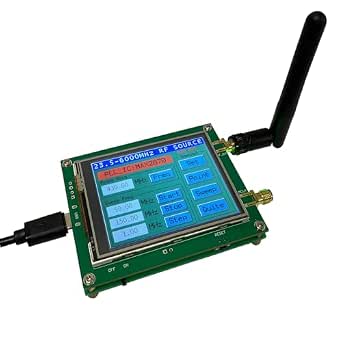 | Best High-Precision Wideband Generator | Main Chip: MAX2870 | Frequency Range: 23.5 MHz – 6000 MHz | Modes: Single frequency, Sweep | VIEW ON AMAZON | See Our Full Breakdown |
| 0.5MHz-470MHz Signal Generator with Audio Modulation for Radio Debugging |  | Best for Basic Radio Debugging and Audio Testing | Frequency Range: 5MHz to 470MHz | Audio Modulation: 800Hz | Sensitivity: 120DBM to 130DBM | VIEW ON AMAZON | See Our Full Breakdown |
| RF Explorer Signal Generator RFE6GEN 6GHz Portable Spectrum Analyzer Companion |  | Best for Field Spectrum Analysis and Versatile RF Testing | Frequency Range: 24 MHz – 6 GHz | Resolution: 1 kHz | Power Source: Portable, handheld | VIEW ON AMAZON | See Our Full Breakdown |
| Upgraded RF Signal Generator 35MHz-4400MHz Signal Source Frequency Screen Kit SG-A9 | 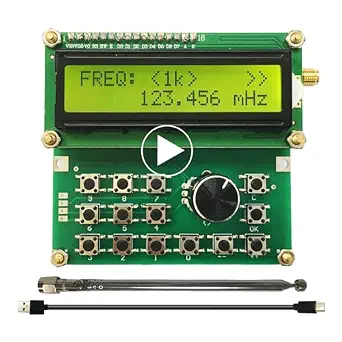 | Best for Versatile Laboratory and Testing Applications | Frequency Range: 35MHz-4400MHz | Modes: Single Frequency, Sweep | Waveform: Sine wave with noise | VIEW ON AMAZON | See Our Full Breakdown |
| TSG-17 Signal Generator, RF Frequency Generator with AM/FM Modulation, 100kHz to 150MHz |  | Best for Precise Laboratory Testing and Modulation Applications | Frequency Range: 100kHz to 150MHz | Modulation: AM, FM | Design: Durable metal with plastic finish | VIEW ON AMAZON | See Our Full Breakdown |
| Signal Generator TSG-17 High Frequency RF/AM Radio Frequency Signal Generator 100kHz-150MHz |  | Best for Detailed External Modulation and Harmonic Support | Frequency Range: 100kHz to 150MHz | Harmonics: up to 450MHz | Waveforms: Sine and amplitude modulation | VIEW ON AMAZON | See Our Full Breakdown |
| SeeSii TinySA Ultra+ ZS407 Spectrum Analyzer 7.3GHz with Signal Generator and Touchscreen |  | Best for Portable RF Testing with Integrated Signal Generation | Frequency Range: 100kHz–7.3GHz | Display: 4.0-inch HD touchscreen (480×320) | RBW: 200Hz–850kHz | VIEW ON AMAZON | See Our Full Breakdown |
| RF Signal Generator Handheld HF Frequency CW and Sweep Generator |  | Best for Precise Frequency Control and Software Integration | Frequency Range: 24MHz to 6GHz | Frequency Step/Resolution: 1KHz | Software: Firmware upgrades, Windows sweep and tracking software | VIEW ON AMAZON | See Our Full Breakdown |
| rf signal generator | Frequency Range |
|---|---|
| RIGOL DSG815 1.5 GHz RF Signal | up to 1.5 GHz |
| AURSINC Tinysa Ultra+ ZS407 7. | 100kHz–7.3GHz |
| Portable TinySA Spectrum Analy | 100kHz to 960MHz |
| Signal Generator Counter TSG-1 | 100 kHz to 150 MHz |
| Upgraded MAX2870 RF Signal Gen | 23.5 MHz – 6000 MHz |
| 0.5MHz-470MHz Signal Generator | 5MHz to 470MHz |
| RF Explorer Signal Generator R | 24 MHz – 6 GHz |
| Upgraded RF Signal Generator 3 | 35MHz-4400MHz |
| TSG-17 Signal Generator | 100kHz to 150MHz |
| Signal Generator TSG-17 High F | 100kHz to 150MHz |
| SeeSii TinySA Ultra+ ZS407 Spe | 100kHz–7.3GHz |
| RF Signal Generator Handheld H | 24MHz to 6GHz |
More Details on Our Top Picks
RIGOL DSG815 1.5 GHz RF Signal Generator
The RIGOL DSG815 stands out for offering a balanced mix of affordability and high performance, making it a strong choice for many testing environments. Its frequency range up to 1.5 GHz and phase noise of -112 dBc/Hz deliver reliable signal quality, comparable to more expensive models like the MAX2870 but at a fraction of the cost. While it excels in amplitude accuracy and modulation versatility, its primary focus on RF signal generation means it lacks advanced measurement features found in spectrum analyzers. The compact, lightweight design enhances portability, but operating it effectively requires some technical knowledge, especially for precise calibration. Compared to the TinySA or Spectrum Analyzer combos, it offers more dedicated RF output but less integrated analysis capability.
Pros:- Cost-effective with high performance
- Wide modulation capabilities
- Compact and durable design
Cons:- Limited to RF signal generation only
- Requires technical expertise to operate effectively
Best for: Engineers and technicians seeking a cost-effective, versatile RF source for bench testing and calibration.
Not ideal for: Novice hobbyists or those needing integrated spectrum analysis or advanced measurement tools, as it lacks these features.
- Frequency Range:up to 1.5 GHz
- Phase Noise:-112 dBc/Hz (typical)
- Maximum Output Power:+20 dBm (typical)
- Amplitude Accuracy:0.5 dB (typical)
Our verdict“This generator is ideal for professionals who need reliable RF output without extra measurement features.”
AURSINC Tinysa Ultra+ ZS407 7.3GHz Spectrum Analyzer with Signal Generator and 32GB Card
The AURSINC Tinysa Ultra+ ZS407 offers impressive versatility with a frequency range extending up to 7.3 GHz, making it suitable for diverse RF analysis needs. Its integrated signal generator complements the spectrum analyzer, enabling testing directly in the field or lab, surpassing basic standalone generators like the TSG-17 in range and functionality. The 4-inch color display provides clear visualization, while the long battery life supports extended outdoor use. However, its complexity may challenge beginners unfamiliar with RF testing procedures, and its portable design limits the depth of advanced features found in larger systems. Compared with dedicated lab spectrum analyzers, it sacrifices some precision for portability and convenience.
Pros:- Wide frequency coverage up to 7.3 GHz
- Built-in signal generator for testing and verification
- Long battery life for outdoor use
- Clear, detailed display
Cons:- Complex interface for RF beginners
- Limited advanced features compared to larger analyzers
- Portability may compromise some measurement precision
Best for: RF engineers and field technicians needing a portable, all-in-one RF analysis and signal generation tool.
Not ideal for: Users requiring high-precision laboratory analysis or extensive digital control, as it’s more suited to fieldwork and general testing.
- Frequency Range:100kHz–7.3GHz
- Display:4-inch IPS-TFT LCD
- Scan Points:up to 450 per sweep
- LNA Gain:up to 20dB
- Battery:3.7V 5000mAh
- Included Storage:32GB MicroSD
Our verdict“This device is perfect for RF professionals working in the field who need versatility and portability over ultimate measurement precision.”
Portable TinySA Spectrum Analyzer with Touch Screen and Signal Generator
The TinySA Spectrum Analyzer emphasizes portability and ease of use, covering 100 kHz to 960 MHz with a color touchscreen interface. Its built-in calibration signal generator allows for on-the-fly testing, which is convenient for antenna tuning or quick RF checks. Compared to larger, more feature-rich spectrum analyzers, the TinySA’s small size and PC control support make it ideal for fieldwork and rapid diagnostics. However, its UHF inputs are less robust than its lower-frequency channels, and the limited battery life can restrict extended outdoor use. While it excels for quick, portable RF assessments, it lacks the detailed measurement capabilities of high-end analyzers.
Pros:- Wide frequency range suitable for various RF tasks
- Built-in calibration signal generator
- Touchscreen interface for intuitive operation
- Portable with rechargeable battery
Cons:- Limited UHF input quality
- Battery life may restrict extended use
- Firmware updates are not straightforward
Best for: Field technicians and hobbyists needing a portable, easy-to-operate RF measurement device for quick tasks and antenna work.
Not ideal for: Advanced RF engineers or lab-based testing requiring detailed analysis, as it’s limited in measurement depth and battery life.
- Frequency Range:100kHz to 960MHz
- Display:2.8 inch color touchscreen
- Resolution Bandpass Filters:2.6kHz to 640kHz
- Battery Life:at least 2 hours
- Connectivity:USB for PC control
Our verdict“This compact analyzer makes sense for field operators needing quick, reliable RF measurements on the go.”
Signal Generator Counter TSG-17 RF/AM High Frequency Signal Generator 100kHz-150MHz
The TSG-17 RF/AM High Frequency Generator offers high stability and accuracy within its 100 kHz to 150 MHz range, making it suitable for precise low-frequency RF and AM testing. Its simple design with sine and amplitude modulation options makes it straightforward for users who only need basic RF signal output. Compared to the MAX2870, it’s limited in frequency range but excels in stability and durability, with external modulation capabilities adding flexibility. Its lack of digital interfaces or advanced features means it’s best suited for traditional RF setups rather than complex digital environments. It’s an excellent choice for dedicated low-frequency RF work, but not for broader spectrum needs.
Pros:- High stability and accuracy
- Durable construction
- Flexible external modulation
Cons:- Limited to RF/AM signals only
- No digital interface or advanced features
Best for: RF technicians focused on low-frequency signal generation and calibration in fixed or semi-permanent setups.
Not ideal for: Users needing wide frequency coverage or digital control, as its features are basic and limited to RF/AM signals.
- Frequency Range:100 kHz to 150 MHz
- Harmonics:up to 450 MHz
- Output Waveform:sine and amplitude modulation
- Max Output Voltage:≥10 Vp-P
- External Modulation:50 Hz to 20 kHz
Our verdict“This generator is suited for dedicated low-frequency RF applications requiring precision and durability over versatility.”
Upgraded MAX2870 RF Signal Generator Source 23-6000MHz with 2.8-inch Touch Screen
The MAX2870 RF Signal Generator covers a broad frequency span from 23.5 MHz to 6000 MHz, making it highly versatile for high-precision testing and calibration. Its 10 kHz resolution in sweep mode ensures detailed frequency coverage, and the full-touch 2.8-inch LCD simplifies operation. Compared with the more basic TSG-17, it provides digital control and data management features, ideal for detailed RF development work. The main tradeoff involves its focus on RF signal generation only, with no integrated measurement tools—making it less suitable for comprehensive analysis. Best suited for professionals needing detailed, high-frequency sweeps and easy control.
Pros:- Wide frequency coverage up to 6 GHz
- High-resolution sweep at 10 kHz
- Touchscreen interface simplifies operation
- Supports automatic data saving
Cons:- Limited to RF signal generation, no measurement features
- Requires technical knowledge for best use
Best for: RF engineers and calibration labs requiring high-precision, wideband signal sources with user-friendly control interfaces.
Not ideal for: Hobbyists or field operators looking for portable, all-in-one solutions, as it’s designed mainly for bench use and requires technical expertise.
- Main Chip:MAX2870
- Frequency Range:23.5 MHz – 6000 MHz
- Modes:Single frequency, Sweep
- Minimum Resolution:10 kHz
- Sweep Interval:1 ms
- Screen:2.8-inch Touch LCD
Our verdict“This generator is ideal for professionals who need a precise, broad-spectrum RF source with easy digital control for lab environments.”
0.5MHz-470MHz Signal Generator with Audio Modulation for Radio Debugging
This signal generator stands out for its extensive frequency range from 5MHz to 470MHz, making it ideal for walkie-talkie troubleshooting and radio repairs. Its built-in 800Hz audio modulation adds a layer of testing accuracy that many basic generators lack. Compared to the RF Explorer RFE6GEN, it offers a more straightforward interface with a clear 7-digit display, though it lacks detailed connectivity options and power info. The absence of a built-in display or advanced connectivity limits its appeal for more complex or field applications. This pick makes the most sense for hobbyists or technicians needing simple, reliable radio signal testing without the need for portable spectrum analysis features.Pros:- Wide frequency range suitable for various radio debugging tasks
- Built-in audio modulation enhances testing accuracy
- User-friendly 7-digit display simplifies operation
Cons:- No information on power source or battery life
- Limited connectivity options and potential complexity for novices
Best for: Amateur radio operators and technicians focused on walkie-talkie and radio debugging tasks.
Not ideal for: Field engineers or professionals needing portable spectrum analysis or broader frequency coverage.
- Frequency Range:5MHz to 470MHz
- Audio Modulation:800Hz
- Sensitivity:120DBM to 130DBM
- Display:7-digit frequency display
Our verdict“A practical choice for radio troubleshooting enthusiasts seeking simple, effective testing within a limited but relevant frequency span.”
RF Explorer Signal Generator RFE6GEN 6GHz Portable Spectrum Analyzer Companion
The RF Explorer RFE6GEN is designed for professionals needing portable, broad-spectrum testing from 24 MHz to 6 GHz. Its ability to serve as a Tracking Generator when paired with RF Explorer Spectrum Analyzers provides comprehensive S11 and filter analysis, surpassing simpler generators like the SG-A9, which lack spectrum analysis functions. Its compact, lightweight build makes it perfect for on-the-go testing, although it relies on a PC interface for full SNA capabilities. The absence of a built-in display and reliance on software can be a hurdle for quick field diagnostics. This device is ideal for RF engineers who need a versatile, portable tool for complex RF environments but are comfortable with a software-dependent workflow.Pros:- Wide frequency coverage up to 6 GHz for versatile testing
- Portable and lightweight design suitable for field use
- Supports scalar network analysis via PC software
Cons:- Requires PC connection for full spectrum analysis
- No built-in display, relies heavily on software interface
Best for: RF engineers and field technicians requiring portable, wide-range spectrum and network analysis.
Not ideal for: Users seeking standalone generators with integrated displays or those unfamiliar with PC-based analysis tools.
- Frequency Range:24 MHz – 6 GHz
- Resolution:1 kHz
- Power Source:Portable, handheld
- Included Accessories:EVA carrying case
Our verdict“An excellent choice for professionals who value portability and broad RF coverage for complex field testing, with the caveat of needing a PC.”
Upgraded RF Signal Generator 35MHz-4400MHz Signal Source Frequency Screen Kit SG-A9
Covering 35MHz to 4400MHz, the SG-A9 offers a wide frequency scope that suits many lab and field testing needs. Its dual modes—single frequency and sweep—provide flexible signal generation, unlike the more specialized TSG-17 which focuses on precision. While its sine wave output includes some noise, it remains suitable for many testing scenarios where absolute purity isn’t critical. The device’s ability to save settings when powered off and its USB power options add to its convenience. Yet, the non-pure waveforms and low power output of about 1mW make it less suitable for sensitive RF applications. This generator is a good fit for users needing broad coverage and flexible operation on a budget, but not for those requiring ultra-clean signals.Pros:- Wide frequency range for diverse applications
- Dual operation modes for flexibility
- Memory function retains settings after power off
Cons:- Waveform contains noise, not strictly pure sine wave
- Low power output limits certain applications
Best for: Laboratories and hobbyists needing flexible frequency generation over a wide range without strict purity requirements.
Not ideal for: High-precision RF measurement or testing where signal purity and higher power are essential.
- Frequency Range:35MHz-4400MHz
- Modes:Single Frequency, Sweep
- Waveform:Sine wave with noise
- Power:about 1mW
Our verdict“A flexible, budget-friendly generator suitable for general testing and experimentation but less ideal for precision RF tasks.”
TSG-17 Signal Generator, RF Frequency Generator with AM/FM Modulation, 100kHz to 150MHz
The TSG-17 covers 100kHz to 150MHz with impressive phase noise performance, making it well-suited for high-precision lab work. Its support for both AM and FM modulation provides versatility beyond basic signal generators like the 0.5MHz-470MHz model, which lacks modulation features. The durable metal construction ensures stability during extensive use, although its limited frequency range confines it to lower RF bands. Its intuitive controls and portability make it accessible for professionals needing reliable, stable signals. However, the absence of detailed power output info and potential complexity for beginners may deter some users. It makes the most sense for those needing precise, stable signals in a compact form, especially in controlled environments.Pros:- High precision with low phase noise
- Supports both AM and FM modulation
- Durable and stable construction
Cons:- Limited to RF testing applications
- No detailed power output specifications
Best for: Laboratory engineers and professionals requiring high stability and modulation capabilities in the 100kHz to 150MHz range.
Not ideal for: Hobbyists or field technicians working with higher frequencies or needing simple, plug-and-play units.
- Frequency Range:100kHz to 150MHz
- Modulation:AM, FM
- Design:Durable metal with plastic finish
- Portability:Compact with top handle
Our verdict“A fitting option for precision RF testing and modulation in a compact, durable package for professional environments.”
Signal Generator TSG-17 High Frequency RF/AM Radio Frequency Signal Generator 100kHz-150MHz
The TSG-17 offers a broad range from 100kHz to 150MHz with harmonic support up to 450MHz, making it suitable for detailed RF experiments and external modulation. Its ability to produce sine and amplitude modulation waveforms, with adjustable output levels, makes it more versatile than simpler units like the SG-A9. The complex interface, however, might challenge beginners or casual users. External modulation support up to 20kHz broadens its scope but may not cover all advanced needs. Its consistent 100mV RMS minimum output makes it reliable for standard RF tasks, but users should be aware of its potentially steep learning curve. This generator fits professionals who require detailed modulation features and harmonic support within a familiar RF range.Pros:- Wide frequency range with harmonic support
- Supports multiple waveforms and external modulation
- Adjustable output levels for precise control
Cons:- Complex interface may require technical expertise
- Limited external modulation frequency range
Best for: Advanced RF engineers and technicians needing external modulation and harmonic support for detailed testing.
Not ideal for: Beginners or users seeking straightforward, plug-and-play RF signal sources for quick tasks.
- Frequency Range:100kHz to 150MHz
- Harmonics:up to 450MHz
- Waveforms:Sine and amplitude modulation
- Output Control:1mV to 100mV
Our verdict“A capable, detailed RF generator suited for advanced applications where modulation flexibility and harmonic support are priorities, but not for novice users.”
SeeSii TinySA Ultra+ ZS407 Spectrum Analyzer 7.3GHz with Signal Generator and Touchscreen
The SeeSii TinySA Ultra+ stands out for combining a broad frequency range up to 7.3GHz with a built-in signal generator, making it ideal for field engineers and RF hobbyists who need a versatile, all-in-one device. Its 4-inch HD touchscreen simplifies navigation, and the 10-hour battery life supports extended testing sessions away from power sources. Compared to the RF Signal Generator Handheld, which offers a narrower frequency span but includes software control, the TinySA Ultra+ emphasizes user-friendly operation and portability. However, its complexity can be daunting for newcomers without RF background, and it may lack the advanced features of larger, more expensive analyzers. This pick makes sense for professionals needing a portable, comprehensive RF testing tool that can handle both spectrum analysis and signal generation on the go.
Pros:- Wide frequency range up to 7.3GHz for versatile testing
- Integrated signal generator supports multiple modes
- Long battery life ideal for fieldwork
- Touchscreen interface enhances usability
Cons:- Complex interface may challenge RF newcomers
- Limited advanced features compared to larger lab analyzers
- Portability might compromise some measurement precision
Best for: RF technicians and hobbyists seeking an all-in-one portable spectrum analyzer and signal generator
Not ideal for: Beginners without RF experience or users requiring ultra-precise calibration for critical measurements
- Frequency Range:100kHz–7.3GHz
- Display:4.0-inch HD touchscreen (480×320)
- RBW:200Hz–850kHz
- Battery:5000mAh, up to 10 hours
- Storage:32GB MicroSD card included
- Supported Modes:Standard 100kHz–800MHz, ULTRA 100kHz–6GHz
Our verdict“This device is best suited for mobile RF professionals who need a balance of spectrum analysis and signal generation in a single, portable package.”
RF Signal Generator Handheld HF Frequency CW and Sweep Generator
The RF Signal Generator Handheld offers a broad frequency span from 24MHz to 6GHz, making it a strong choice for RF engineers focusing on signal accuracy and sweep testing. Its firmware upgrades and Windows software compatibility provide advanced control over frequency steps and sweep parameters, which is less straightforward in the SeeSii TinySA Ultra+. While it lacks details on battery life, its durability, complemented by a custom EVA case, favors those who prioritize protection during frequent on-site use. The absence of explicit calibration data and power source info suggests it may need external power or calibration verification for precise measurements. This device is ideal for RF professionals who need a reliable, software-controlled signal source, especially in calibration or tracking scenarios.
Pros:- Wide frequency range from 24MHz to 6GHz
- Supports firmware upgrades and software control
- Includes a durable custom EVA carrying case
- Adjustable frequency step and sweep parameters
Cons:- Lack of specified battery or power details
- Requires Windows software for full functionality
- No explicit mention of calibration or measurement accuracy
Best for: RF engineers and technicians requiring high-precision frequency sweeps with software control
Not ideal for: Hobbyists or field operators needing a fully portable device with extended battery life or integrated spectrum analysis
- Frequency Range:24MHz to 6GHz
- Frequency Step/Resolution:1KHz
- Software:Firmware upgrades, Windows sweep and tracking software
- Included Accessories:Custom EVA case
Our verdict“This generator is best suited for RF professionals focused on precise, software-managed frequency sweeps in lab or field calibration tasks.”

How We Picked
Products were evaluated based on their frequency range, modulation options, build quality, ease of use, and value for money. Priority was given to models that balance performance with affordability and user experience, especially considering the needs of hobbyists versus professionals. We ranked items by how well they serve core testing tasks, reliability, and versatility, ensuring each top pick fills a distinct niche in the market. This approach helps buyers identify options that match their technical requirements and budget constraints, avoiding overpaying for features they won’t use.Factors to Consider When Choosing Rf Signal Generators
Choosing the right RF signal generator involves understanding key factors that impact performance and usability. Beyond specs, consider how the device fits your workspace, whether portability matters, and if advanced features are necessary for your projects. Making informed decisions helps you avoid common pitfalls like overspending on unnecessary features or selecting a model that can’t meet your frequency needs.Frequency Range and Signal Types
Determine your required frequency span; professional work may need generators covering up to several GHz, while hobbyist or educational uses might only require lower ranges. Ensure the device supports the modulation types you need, such as AM, FM, or pulse signals. Overlooking this can lead to purchasing a generator that can’t produce the signals your projects demand, limiting its usefulness.
Ease of Use and Interface
Intuitive controls, clear displays, and straightforward setup are vital, especially if you’re new to RF testing. Handheld or portable models often prioritize simplicity, while lab-grade instruments may offer more complex interfaces that require training. Balancing usability with features ensures you won’t be overwhelmed or underutilize the generator’s capabilities.
Build Quality and Reliability
Investing in a well-built device reduces maintenance costs and ensures consistent performance over time. Look for reputable brands with positive reviews regarding durability. Cheaper or lesser-known brands might save money upfront but can introduce issues like unstable output or calibration drift, which compromise testing accuracy.
Price and Value
High-end models deliver advanced features but come with a higher price tag. Consider your actual needs to avoid overpaying for capabilities you’ll never use. Conversely, extremely cheap options may lack necessary precision or stability, leading to frustrating results. Finding a balance between cost and performance is key to a satisfying purchase.
Portability and Power Options
If field testing or on-the-go use is your priority, portability becomes critical. Battery-powered, compact units like the RF Explorer are ideal in such scenarios. For fixed lab setups, larger models with dedicated power supplies may offer better stability and more features. Match portability needs with your work environment for optimal efficiency.
Frequently Asked Questions
Can a basic signal generator handle professional RF testing?
Basic signal generators are often designed for simple tasks and may lack the stability, frequency range, or modulation options required for professional testing. If your work involves precise measurements or complex signal analysis, investing in a higher-end model like the RIGOL DSG815 is advisable. However, for hobbyist projects or educational purposes, a simpler generator might suffice, provided it meets your frequency and modulation needs.
What is the most important feature for a beginner RF signal generator?
For beginners, ease of use and safety are paramount. Look for models with clear interfaces, straightforward controls, and good documentation. Features like automatic calibration or preset modes can help new users avoid common mistakes and get reliable results quickly. Budget-friendly, portable options like TinySA are excellent starting points, especially if you plan to learn and experiment without a steep learning curve.
How does portabilty influence choice for RF signal generators?
Portability is crucial if you need to perform tests outside the lab, such as on-site troubleshooting or field measurements. Small, battery-powered models like RF Explorer are designed for mobility but might sacrifice some advanced features or frequency ranges found in larger, benchtop units. Consider your typical work environment and whether portability outweighs the need for extensive capabilities.
Are higher frequency ranges always better?
Higher frequency ranges expand your testing capabilities, especially for modern RF applications like 5G or microwave systems. However, they often come with increased cost and complexity. If your projects only involve lower frequencies, selecting a generator with a narrower range can save money and simplify operation. Match the generator’s specs to your specific application to avoid unnecessary expense.
What maintenance does an RF signal generator typically require?
Most RF generators need periodic calibration to maintain accuracy, especially if used frequently or moved between environments. Regular inspections for physical damage and ensuring proper cooling are also advised. Choosing a model with good build quality and accessible calibration procedures can reduce long-term maintenance headaches, keeping your tests accurate and reliable over time.
Conclusion
For those seeking a reliable, all-around performer suitable for professional environments, the RIGOL DSG815 offers extensive features and stable output. Budget-conscious buyers or hobbyists will find the 0.5MHz-470MHz Signal Generator a practical choice, especially for basic tasks. Beginners should consider portable and user-friendly options like the TinySA Spectrum Analyzer, which simplifies RF testing without sacrificing essential features. For fieldwork, compact and rugged units like the RF Explorer RFE6GEN are ideal, while advanced users needing higher frequency coverage and modulation options should look toward premium models like the Upgraded MAX2870. Matching your specific use case to the right model ensures your RF testing is accurate, efficient, and future-proof.