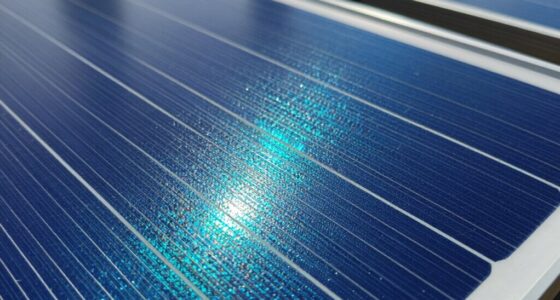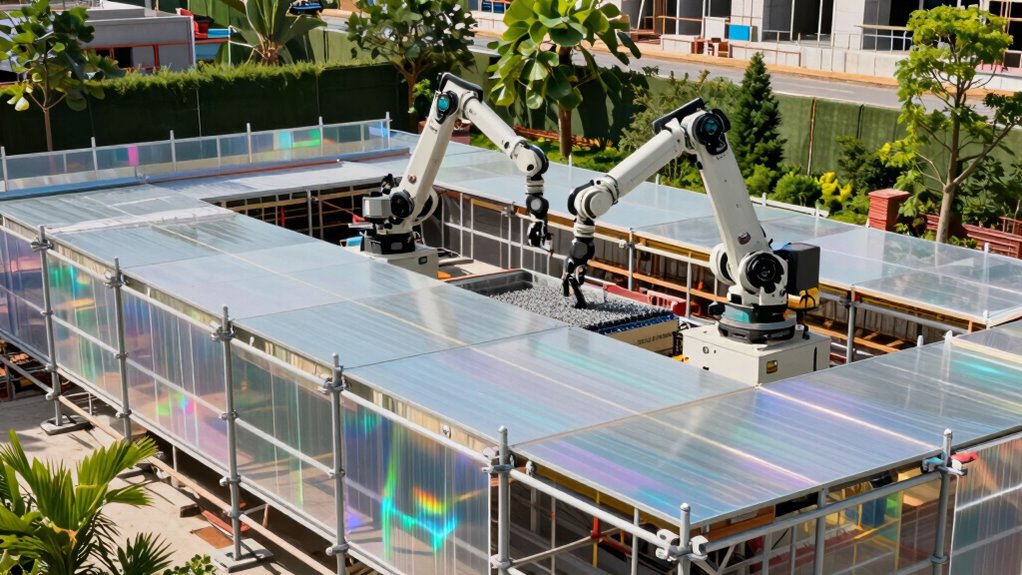

Nanotech is revolutionizing construction by creating stronger, more durable materials that last longer and reduce waste. It enables energy-efficient insulation and smart coatings that cut cooling and heating needs while protecting structures from corrosion and damage. Innovative nanomaterials also support sustainable choices, like cement reduction and air-purifying surfaces. If you’re curious how these advancements are shaping a greener future, there’s much more to explore about nanotech’s transformative role in building smarter, eco-friendly structures.
Key Takeaways
- Nanotech enhances material durability and strength, reducing the need for frequent replacements and waste in construction.
- Nano-enabled coatings and insulations extend building lifespan and improve energy efficiency, decreasing environmental impact.
- Incorporation of nanomaterials enables significant cement reduction, lowering embodied CO₂ and supporting sustainable practices.
- Smart nanomaterials and sensors facilitate early damage detection and adaptive responses, increasing resilience and reducing maintenance.
- Nanotechnology promotes circular construction through improved recycling, eco-friendly materials, and minimal material waste.

Akona Concrete Bonding Additive – Liquid Concrete Strengthener & Bonding Agent, Acrylic, Increase Strength in Cold Weather, Admixture (Quart, 1)
HIGH STRENGTH: Enhances strength and adhesion
As an affiliate, we earn on qualifying purchases.
As an affiliate, we earn on qualifying purchases.
Revolutionizing Concrete Strength and Durability
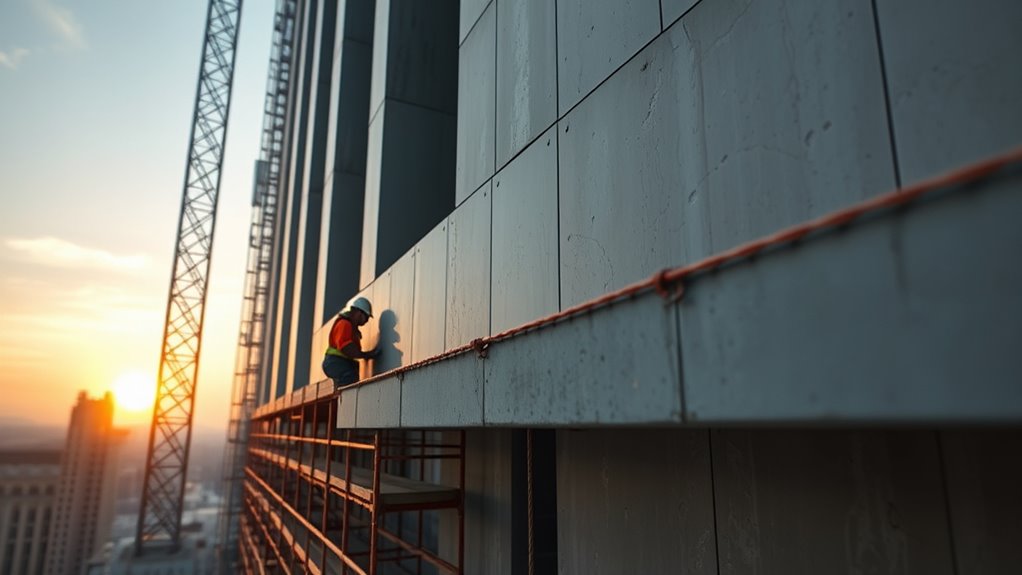
Nanotechnology is transforming concrete by remarkably enhancing its strength and durability. By adding nano-silica and nano-TiO2, you fill nanoscale voids in the cement matrix, reducing porosity and boosting compressive strength. This allows you to use less cement, lowering embodied CO2. Incorporating carbon nanotubes and nanofibers increases tensile and flexural strength, enabling thinner structural elements and saving material costs. Self-healing cement systems with encapsulated nanoparticles or nano-catalysts can automatically seal cracks, prolonging service life and reducing maintenance emissions. Photocatalytic nano-TiO2 surfaces degrade pollutants like NOx and organic compounds under sunlight, improving urban air quality with minimal added cost. Additionally, nano-modified admixtures improve workability at lower water-to-cement ratios, enhancing durability and decreasing permeability-related deterioration. Understanding nanomaterials further highlights their role in revolutionizing construction safety and efficiency through innovative applications.

Nanotechnology in Building Materials: Revolutionizing Construction with Nanoscale Innovations
As an affiliate, we earn on qualifying purchases.
As an affiliate, we earn on qualifying purchases.
Advanced Coatings for Longer-Lasting Structures

Advanced nanocoatings greatly enhance structural durability by preventing water ingress, corrosion, and thermal damage. They also offer self-healing functions that automatically repair cracks and minor defects, extending the lifespan of building components. By adopting these coatings, you’ll reduce maintenance costs and ensure longer-lasting, resilient structures. Moreover, integrating energy-efficient cloud solutions can further optimize construction management and monitoring processes. Implementing environmentally friendly coating materials can also minimize ecological impact and promote sustainable building practices. Additionally, ongoing research into nanotechnology-based materials continues to open new possibilities for smarter, more sustainable infrastructure. Incorporating innovative application techniques can further improve the effectiveness and longevity of these advanced coatings. Embracing the science behind nanotechnology can lead to breakthroughs in creating smarter, more sustainable infrastructure that benefits both the environment and future generations.
Durability Enhancement
Protecting structures from environmental damage is essential for extending their lifespan, and innovative coatings play a crucial role in achieving this goal. Nano-enhanced surface treatments create durable barriers that resist water, chemicals, and temperature extremes. Imagine:
- A hydrophobic nanocoating forming a protective shield, repelling rain and preventing water intrusion.
- Anti-corrosion nano-forms sealing steel rebar, halting rust and deterioration even in salty environments.
- Self-cleaning surfaces with photocatalytic nanoparticles breaking down pollutants, keeping façades pristine.
- The use of high contrast ratios in coatings can also enhance the visibility of surface details, aiding in maintenance and inspection.
Additionally, these coatings can be tailored to incorporate environmentally friendly materials, reducing ecological impact while maintaining performance. These environmentally conscious formulations help minimize ecological footprint, supporting sustainable building practices. Incorporating nanotechnology into coatings also enables customization for specific environmental challenges, further enhancing their effectiveness. Furthermore, advancements in coating durability allow structures to withstand freeze-thaw cycles and other physical stresses more effectively.
Self-Healing Capabilities
Surface treatments that can repair themselves after damage are transforming how you guarantee long-lasting structures. Self-healing coatings use nanocapsules or nano-catalysts embedded within materials to automatically seal cracks or damage as they occur. When a crack forms, these nanostructures activate, triggering calcite precipitation or polymerization reactions that fill and seal the fissures. This process slows deterioration, reduces maintenance needs, and extends the lifespan of buildings and infrastructure. For example, anti-corrosion nano-coatings on steel prevent rust, while hydrophobic nanocoatings on surfaces repel water, minimizing freeze-thaw damage. These advanced coatings not only enhance durability but also lower lifecycle costs and environmental impact by reducing repairs and replacements, making structures more resilient and sustainable over time. Nanoscience applications are continuously advancing to improve the effectiveness of these self-healing technologies. Additionally, ongoing research into nano-enabled materials promises even greater capabilities for durability and environmental protection in future construction projects, leveraging advanced nanotechnology to optimize performance. Furthermore, the development of smart nanomaterials that respond to environmental stimuli is expected to further revolutionize construction durability and sustainability. Incorporating innovative nanostructures into building materials can also help improve energy efficiency and reduce overall environmental footprints.
air-purifying nano surface coatings
As an affiliate, we earn on qualifying purchases.
As an affiliate, we earn on qualifying purchases.
Insulation and Glazing Innovations for Energy Efficiency
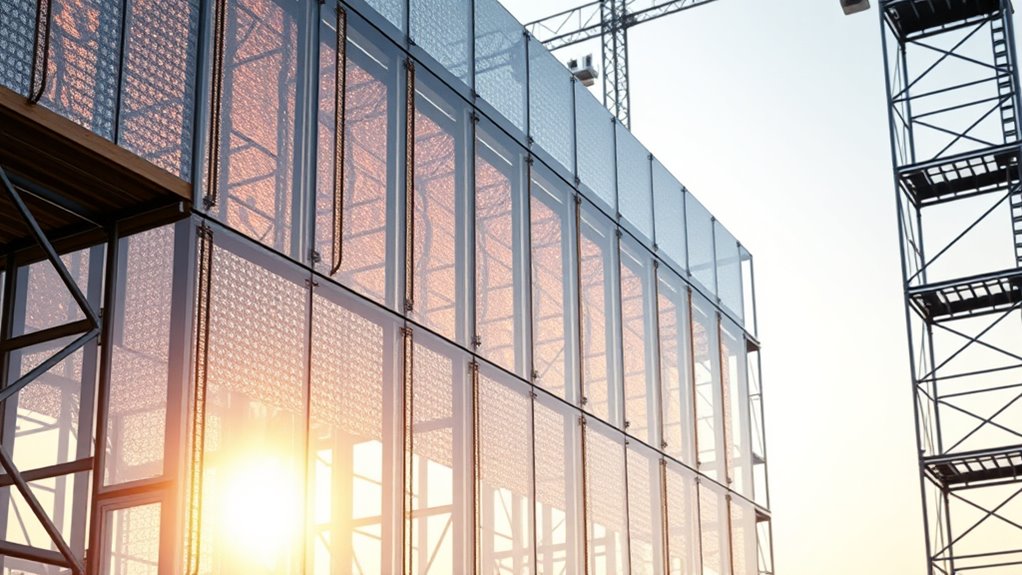
You can substantially improve your building’s energy efficiency by using nanoscale insulation materials that provide superior thermal resistance in thinner layers. Advanced nano-coatings on windows, like low-emissivity and self-cleaning films, reduce heat transfer and maintenance needs. These innovations make your structures more sustainable and cost-effective over their lifespan. Incorporating innovative insulation techniques can further optimize energy savings and comfort. Smart home technology can enhance the integration and monitoring of these energy-efficient features, ensuring optimal performance. Additionally, nanotechnology-enabled coatings are being developed to further improve durability and functionality of building surfaces. Durability enhancements through nanotech can extend the lifespan of these coatings, reducing the need for frequent replacements. Privacy policies ensure transparent handling of user data while supporting these advanced features.
Nanoscale Insulation Materials
Nanoscale insulation materials are revolutionizing building energy efficiency by enabling thinner, more effective barriers against heat transfer. Imagine:
- Ultra-light aerogel panels with nanosized pores that trap air, reducing thermal conductivity to as low as 0.01 W/m·K.
- Low-emissivity coatings on glass that reflect infrared radiation while letting visible light pass through, cutting cooling and heating needs.
- Nanoscale phase-change materials that absorb or release heat rapidly, smoothing out temperature fluctuations inside your space.
These innovations mean you can retrofit existing structures or design new buildings with slimmer walls, lowering energy bills and reducing environmental impact. Nanoscale insulation isn’t just thinner—it’s smarter, more efficient, and essential for a greener future.
Advanced Nano-Coatings for Windows
Advanced nano-coatings for windows are transforming building energy efficiency by considerably enhancing insulation and glazing properties. These coatings utilize nanostructured layers that reflect infrared radiation while transmitting visible light, reducing heat transfer. Aerogel-based panels with nanoscale porosity achieve extremely low thermal conductivity, enabling slimmer building envelopes. Phase-change materials at the nanoscale store and release heat, balancing indoor temperatures. Vacuum-insulated glazing with nanoporous spacers offers superior U-values over traditional double panes. Nano-enhanced low-E coatings and aerogel blankets cut cooling and heating loads profoundly.
| Coating Type | Benefits |
|---|---|
| Low-Emissivity (Low-E) Coatings | Reflect infrared, save energy |
| Nano-Aerogel Insulation | Ultra-thin, high R-value |
| Phase-Change Materials | Thermal buffering, passive load shifting |
| Vacuum-Insulated Glazing | Superior insulation, reduced energy costs |
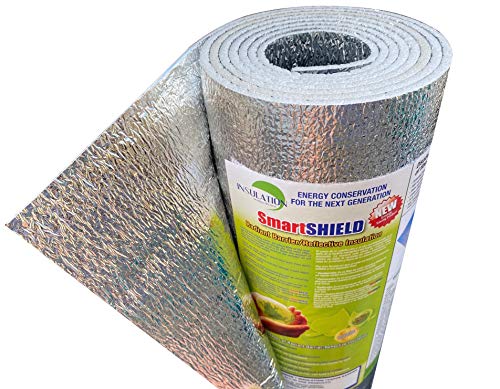
INSULATION MARKETPLACE SmartSHIELD -3mm 16inx10Ft ReflectiveINSULATION roll, Foam Core Radiant Barrier, ThermalINSULATION Shield – Engineered Foil
EXTREMELY EFFECTIVE – reflect 95% of radiant energy, perfect RADIANT BARRIER.
As an affiliate, we earn on qualifying purchases.
As an affiliate, we earn on qualifying purchases.
Smart Nanomaterials for Building Monitoring and Control

How can nanomaterials transform building monitoring and control? You’ll see real-time insights with smart nanomaterials embedded in structures. Imagine:
- Nanosensor networks woven into concrete that detect cracks, stress, or shifts, alerting you before failure occurs. These sensors can also monitor ear wax odor or other environmental factors to assess indoor air quality and detect potential issues early. Incorporating advanced materials enhances sensor durability and sensitivity, enabling long-term monitoring. The integration of sustainable innovations further supports eco-friendly building practices. Additionally, designing robust sensor systems ensures resilience against environmental challenges and prolongs their operational lifespan.
- Self-powered sensors harvesting ambient vibrations or temperature changes to continuously monitor structural health without external power.
- Adaptive surfaces that respond to environmental stimuli, adjusting properties like hydrophobicity or thermal emissivity to optimize comfort and energy use.
- These innovations are supported by navigation and mapping technologies that enable precise placement and monitoring of sensors within complex building structures.
These innovations enable proactive maintenance, reduce unexpected repairs, and extend building lifespan. You’ll gain precise, continuous data, allowing for smarter energy management and safer, more resilient structures. Nanotech makes building control more responsive, efficient, and sustainable—paving the way for the future of construction.
Sustainable Alternatives and Waste-Reducing Technologies

Innovative nanotechnologies are revolutionizing construction by offering sustainable alternatives and reducing waste. You can now use nanocellulose composites for lightweight, strong interior panels and formwork, lowering embodied carbon compared to petrochemical plastics. Reinforcing geopolymers with nanoclay reduces Portland cement content, decreasing CO2 emissions per cubic meter. Nano-enabled 3D printing minimizes material waste through precise layer deposition and creates functionally graded components that optimize material use. Nanoscale catalysts accelerate on-site recycling of concrete and asphalt, promoting circularity in construction streams. Additionally, durable nano-coatings extend the lifespan of facades and roofing, cutting down on replacements and lifecycle waste. These advances help you build greener, more sustainable structures while conserving resources and reducing environmental impact.
Ensuring Safety and Regulatory Compliance in Nanotech Construction
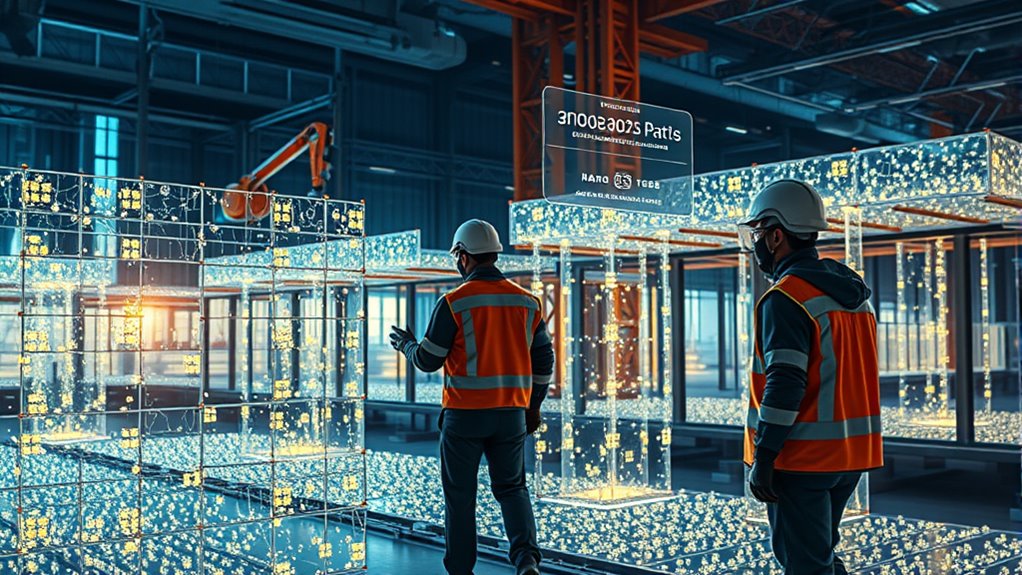
As nanotechnology becomes more integrated into construction practices, ensuring safety and regulatory compliance takes on increasing importance. You need to stay vigilant about potential health risks and adhere to evolving standards. Consider these key steps:
- Visualize workers wearing advanced PPE, like respirators and protective suits, to guard against inhaling or contacting engineered nanoparticles during handling.
- Picture laboratories testing nano-materials for toxicity and environmental impact, establishing safe exposure thresholds.
- Imagine regulatory bodies updating building codes, requiring extensive documentation and certification for nano-enhanced materials.
The Future Impact of Nanotechnology on Green Building Practices

Nanotechnology is poised to revolutionize green building practices by enabling more sustainable, energy-efficient, and durable structures. You’ll see lighter, stronger materials that cut down on resource use while extending lifespan. Nano-enhanced insulation and glazing improve thermal performance, reducing energy consumption for heating and cooling. Coatings with photocatalytic properties will clean urban air and lower maintenance needs. Smart nanomaterials embedded in façades and surfaces will adapt to environmental changes, optimizing comfort and efficiency. Additionally, nanotech-driven recycling and manufacturing methods will minimize waste and lower carbon footprints. As you adopt these innovations, you’ll build greener, more resilient buildings that meet future environmental standards and support healthier urban environments. Nanotech’s integration promises a sustainable, cost-effective, and high-performing construction landscape ahead.
Frequently Asked Questions
How Cost-Effective Are Nanotech-Enhanced Construction Materials Long-Term?
You’ll find nanotech-enhanced construction materials are cost-effective over the long term. Although upfront costs might be higher, they save you money through durability, reduced maintenance, and energy efficiency. For example, self-healing cement lasts longer, and nano-coatings lower repair needs. Additionally, energy-efficient glazing and insulation cut your heating and cooling bills. These benefits outweigh initial investments, making nanotech a smart choice for sustainable, cost-effective building solutions over time.
What Are the Main Environmental Risks of Nanoparticles in Construction?
You’re opening Pandora’s box when using nanoparticles in construction. The main risks are their tiny particles escaping into the environment, acting like invisible pollutants that can harm ecosystems and human health. They might accumulate in water, soil, or living organisms, causing unknown long-term effects. Plus, workplace exposure could lead to respiratory or skin issues. Treading carefully now helps prevent future environmental chaos from these microscopic yet mighty materials.
How Do Nanomaterials Impact Construction Worker Safety Protocols?
You need to update your safety protocols when working with nanomaterials because they pose inhalation and dermal exposure risks. Always wear appropriate PPE, such as respirators and gloves, and follow strict handling procedures. Regularly monitor exposure levels, ensure proper ventilation, and stay informed about new regulations. By taking these precautions, you can protect yourself from potential health hazards associated with nanomaterials during construction activities.
Are Nanotech Building Standards and Regulations Globally Standardized?
You should know that nanotech building standards and regulations aren’t yet globally standardized. Different countries and organizations are developing their own guidelines, but there’s no unified international framework. This disparity can make it challenging to guarantee consistent safety and performance standards. It’s essential for you to stay informed about local regulations and participate in industry collaborations to help promote harmonized standards that support safe, sustainable nanotechnology use in construction worldwide.
Can Nanotechnology Improve Building Deconstruction and Recycling Processes?
Nanotech can substantially improve deconstruction and recycling by enabling precise material separation and reducing waste. You can use nanoscale catalysts to accelerate concrete and asphalt depolymerization, making recycling more efficient. Nanosensors embedded in structures help identify material types and health, guiding responsible deconstruction. Additionally, nano-coatings extend material lifespan, decreasing replacement needs, while nanomaterials enable the creation of recyclable, high-performance composites, supporting a circular construction economy.
Conclusion
As you embrace nanotech’s potential, think of it as a seed that’s set to grow a greener, more resilient future. With innovations in stronger materials, smarter monitoring, and eco-friendly alternatives, you’re helping to build structures that stand the test of time while caring for the planet. Nanotechnology isn’t just a tool; it’s the compass guiding construction toward sustainability, turning dreams of a greener future into reality—one tiny innovation at a time.