
Augmented reality contact lenses with nanotech are evolving rapidly, integrating tiny displays, sensors, and power sources directly into your eye. These smart lenses can project images, monitor health, and gather environmental data seamlessly. While many prototypes focus on medical and professional uses, consumer options are still years away. If you’re curious about how these innovations might change your vision and daily life, discovering more will reveal the exciting future of ocular AR technology.

Get the latest gadgets delivered free with Prime
- Fast, free delivery on millions of items
- Prime Video, Amazon Music and more included
- Member-only deals all year
Key Takeaways
- Nanotech enables integration of microdisplays, sensors, and electronics into contact lenses for seamless AR experiences.
- Ultra-thin, transparent microLEDs powered by nanotech provide vivid images without impairing vision.
- Nanomaterials ensure biocompatibility, oxygen permeability, and safety for long-term contact lens wear.
- Nanotech-driven energy harvesting and microbatteries reduce the need for bulky power sources.
- Embedded nanosensors monitor health and environmental data, offering real-time insights directly in the eye.
augmented reality contact lenses
As an affiliate, we earn on qualifying purchases.
As an affiliate, we earn on qualifying purchases.
The Evolution of Smart Contact Lenses: From Concept to Prototype
How did smart contact lenses evolve from a futuristic idea to functional prototypes? It started in the early 2010s when researchers explored integrating tiny sensors and microdisplays into contact lenses. These experimental concepts aimed to project images, monitor health metrics, or enhance vision. By the 2020s, companies like Mojo Vision demonstrated high-profile prototypes, featuring microLED displays, eye-tracking, and wireless links in scleral lenses. Simultaneously, labs developed innovative power solutions such as saline-activated microbatteries and energy harvesting techniques, reducing reliance on bulky batteries. Startups accelerated progress with commercial pilots, claiming to develop full-feature AR lenses. Although full consumer products aren’t available yet, these milestones mark significant steps from theoretical ideas to working prototypes, paving the way for future integration of augmented reality directly into our eyes. The development of energy solutions has been crucial in making these advanced lenses more practical and wearable, especially with advancements in power management technologies. Moreover, ongoing research into miniaturization continues to push the boundaries of what these lenses can achieve, including integration with smart home systems for seamless user experiences. Additionally, breakthroughs in biocompatible materials have improved the safety and comfort of long-term wear.
As an affiliate, we earn on qualifying purchases.
Key Technologies Powering AR Contact Lenses
Advances in microfabrication and miniaturization have enabled the development of sophisticated technologies that power augmented reality contact lenses. You rely on these core components to deliver seamless AR experiences. Additionally, ongoing innovations aim to improve contingency plans to ensure reliable performance amidst potential technical disruptions. These technologies work together to create lightweight, functional AR lenses that can enhance your vision and provide real-time data, even in challenging environments, by integrating fail-safe mechanisms that detect and correct malfunctions. Moreover, implementing reliable backup systems is crucial to maintaining consistent operation during unexpected failures, which is essential for system resilience and user safety. Incorporating adaptive algorithms further enhances the lenses’ capability to adjust to varying conditions and user needs, ensuring optimal performance at all times.
smart contact lenses health monitoring
As an affiliate, we earn on qualifying purchases.
As an affiliate, we earn on qualifying purchases.
How Microdisplays Bring Visuals Directly Into Your Eye
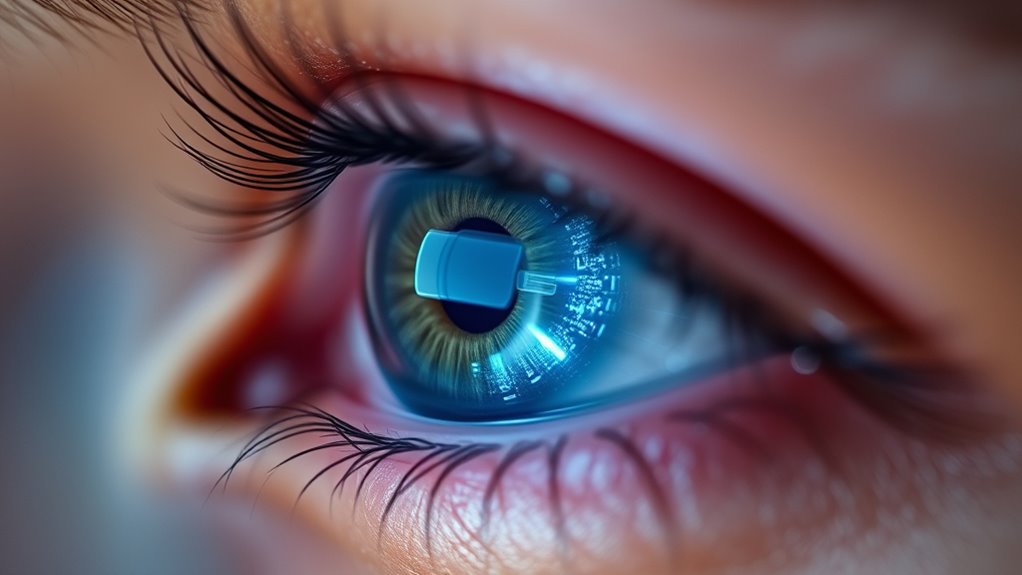
Microdisplays in AR contact lenses project images directly into your eye’s field of view, creating the illusion of floating visuals while preserving your peripheral vision. These tiny screens use microLED or similar technology to generate bright, sharp images at a sub-millimeter scale. Because they’re integrated into the lens periphery, they don’t block or distort your natural sight. Instead, they overlay digital content seamlessly onto your real-world view, enabling real-time information like navigation cues, notifications, or data displays. The microdisplays work in tandem with sensors and electronics around the lens, ensuring precise image placement and stability. This integration allows you to experience augmented visuals without bulky hardware or obstructed vision, making the technology discreet, efficient, and comfortable for extended wear. Additionally, the use of high-quality display technology ensures vivid visuals that enhance user experience. Incorporating Free Floating concepts helps to minimize visual clutter, providing a more natural augmented reality experience. The careful integration of microLED technology also contributes to improved energy efficiency and longer wearability.
As an affiliate, we earn on qualifying purchases.
Powering the Tiny Lenses: Energy Solutions and Challenges
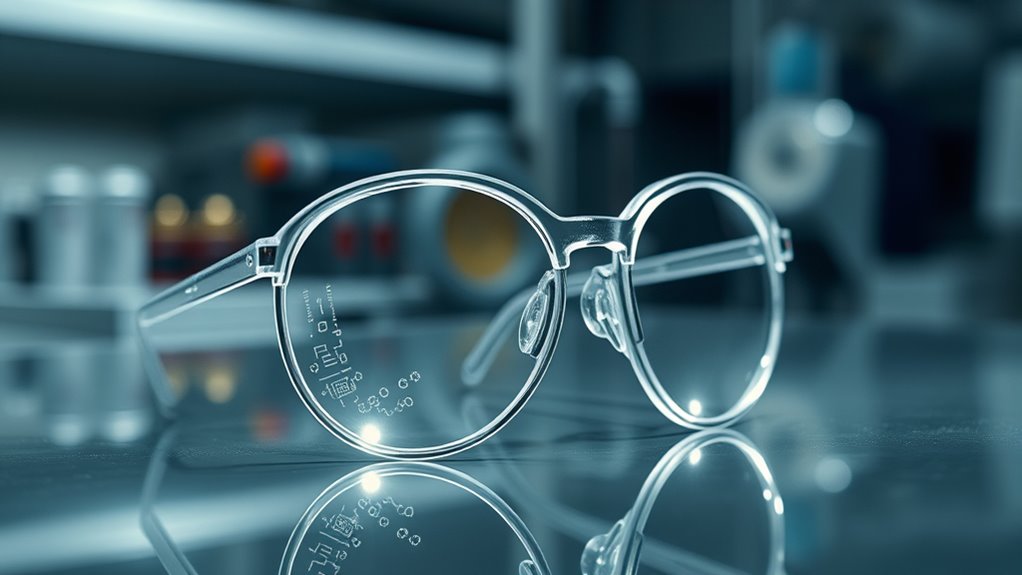
Powering augmented reality contact lenses presents one of the most significant hurdles to making this technology practical. You need a reliable energy source that’s tiny enough to fit inside the lens without causing discomfort or damage. Achieving this involves several innovative solutions:
- Microbatteries and Energy Harvesting: Researchers develop microbatteries powered by tears or saline, plus harvest energy from eye movements or blinking. Energy harvesting methods can capture small amounts of power from natural eye activity, reducing the need for onboard batteries. Additionally, advances in miniaturized energy storage are crucial to improve the capacity and safety of onboard power systems, ensuring longer wear and reliable operation. The development of biocompatible materials is also essential to prevent adverse reactions and maintain lens integrity over time. Moreover, integrating wireless charging techniques can further enhance energy management by recharging lenses during periods of rest.
- Wireless Power Transfer: RF or near-field communication systems can transmit power wirelessly, eliminating bulky batteries.
- Ultra-low-power Electronics: Designing sensors and displays that consume minimal energy reduces the power demand, making it easier to keep lenses lightweight and safe.
- Advancements in energy storage are crucial to improve the capacity and safety of onboard power systems, ensuring longer wear and reliable operation.
Integrating Sensors for Health and Environmental Monitoring
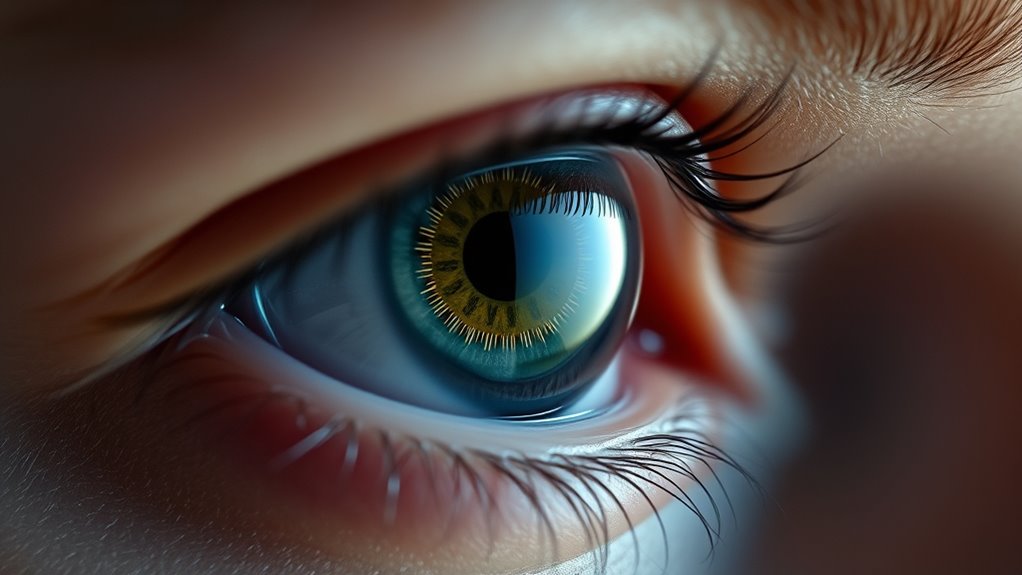
How can contact lenses become essential tools for health and environmental monitoring? By integrating tiny sensors directly onto the lens, you can track vital signs like intraocular pressure or tear glucose levels in real time. These sensors can detect early signs of conditions such as glaucoma or diabetes, providing continuous, non-invasive diagnostics. Incorporating biocompatible materials ensures that the sensors do not cause irritation or adverse reactions during extended wear. Additionally, sensor durability is crucial to maintain long-term functionality and reliability in various environments. Advances in materials science support the development of ultra-miniaturized electronics that can withstand daily use without compromising comfort. Environmental sensors embedded in the lens could monitor pollution levels or UV exposure, alerting you to potential hazards. Wireless communication links enable seamless data transfer to your smartphone or cloud platform, allowing for immediate analysis and alerts. Advanced materials and ultra-miniaturized electronics ensure comfort and biocompatibility during extended wear. This integration transforms your contact lens into a smart health and environment monitor, offering proactive insights without disrupting daily activities. Incorporating vintage-inspired design elements can enhance user comfort and aesthetic appeal, seamlessly blending advanced technology with retro style. Additionally, cybersecurity measures are essential to protect sensitive health data transmitted by these devices, ensuring user privacy and data integrity.
Applications Transforming Healthcare and Accessibility
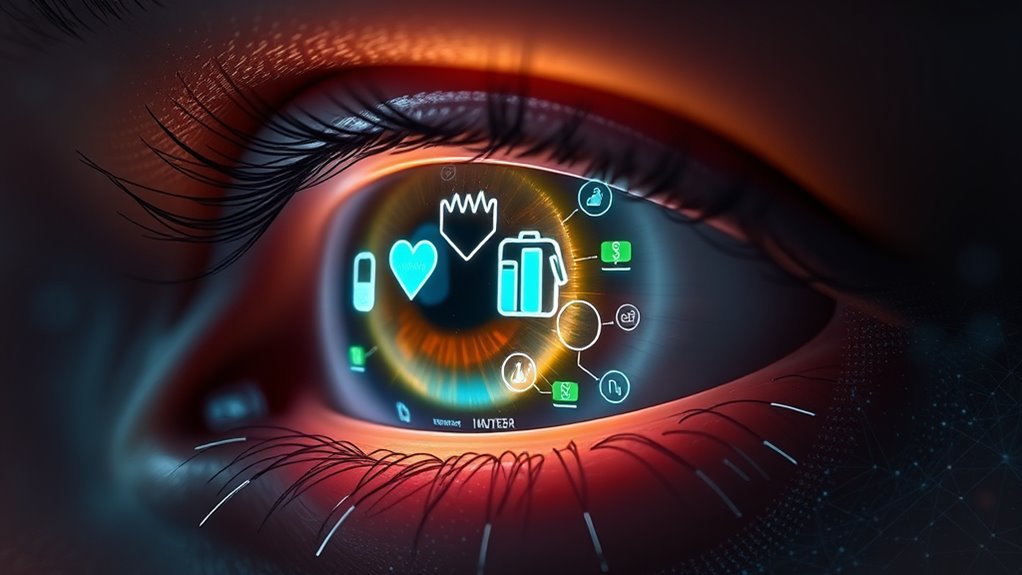
Could augmented reality contact lenses revolutionize healthcare and accessibility by providing real-time, hands-free support? Absolutely. These lenses can enhance daily life and medical management in several ways:
- Visual aids: They offer contrast enhancement, magnification, and overlays of text or symbols, helping those with low vision navigate their environment more easily. Prairie scenery and visual enhancement features can assist users in outdoor environments, improving safety and independence.
- Health monitoring: Continuous sensing of intraocular pressure, tear glucose, or early disease biomarkers enables real-time diagnostics and alerts, improving patient outcomes. Incorporating biometric sensing into these lenses allows for more comprehensive health data collection.
- Accessibility features: They deliver contextual information, navigation cues, and notifications directly into your field of view, making communication and orientation simpler for individuals with disabilities or chronic conditions. These applications promise to make healthcare more personalized, proactive, and inclusive, transforming how you manage health and accessibility daily. Additionally, integrating home energy concepts could support energy-efficient and sustainable health technology solutions.
Overcoming Technical Barriers: Safety, Comfort, and Biocompatibility
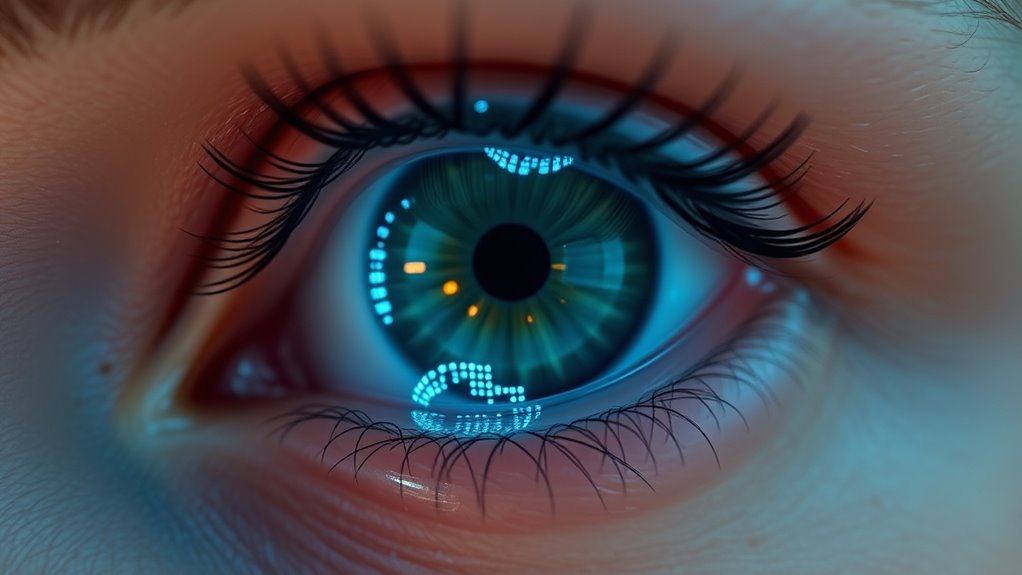
You need to guarantee that AR contact lenses remain safe and comfortable over long periods, which means addressing biocompatibility and oxygen flow. Maintaining optical clarity is also critical, as electronics must not impair vision or cause glare. Balancing these factors while managing safety risks is essential to developing reliable, user-friendly lenses.
Ensuring Long-Term Biocompatibility
Ensuring long-term biocompatibility for augmented reality contact lenses is essential to prevent adverse health effects and maintain user comfort over extended periods of wear. Your goal is to prevent tissue irritation, hypoxia, and infection. To achieve this, focus on these key aspects:
- Use biocompatible materials that are oxygen-permeable, soft, and inert, reducing the risk of inflammation or allergic reactions.
- Incorporate advanced encapsulants that protect electronics from moisture while allowing oxygen flow to the cornea.
- Design lenses with smooth surfaces and proper fit to minimize mechanical irritation and prevent bacterial buildup.
Prioritizing these strategies helps guarantee your lenses stay safe, comfortable, and compatible with your eye’s natural functions over long-term use.
Maintaining Optical Clarity
Maintaining optical clarity in augmented reality contact lenses involves overcoming significant technical hurdles related to integrating electronic components without impairing vision. You need ultra-thin, transparent displays like microLEDs that project images without blocking your natural sight. Embedding sensors and electronics must not cause glare, distortions, or aberrations that hinder visual comfort. You also have to guarantee materials are highly transparent and compatible with your eye’s optics, avoiding clouding or scattering of light. Precise placement of components around the lens periphery helps preserve peripheral vision while supporting AR functions. Additionally, flexible, biocompatible materials are essential to prevent discomfort and maintain clarity during extended wear. Achieving this balance requires innovative miniaturization, advanced fabrication techniques, and rigorous testing to keep your vision sharp, clear, and natural.
Managing Safety and Risks
Addressing safety and risks in augmented reality contact lenses requires overcoming complex technical hurdles related to biocompatibility, comfort, and long-term stability. You must guarantee materials don’t cause irritation or adverse reactions. Managing power delivery is critical to prevent tissue heating or toxicity. Additionally, maintaining optical clarity and preventing visual distortions is essential for safe wear. To achieve this, focus on:
- Developing biocompatible, oxygen-permeable materials that support extended use without harming your eye health.
- Engineering ultra-low-power electronics and wireless power solutions to avoid bulky batteries and minimize heat.
- Designing electronics and sensors that integrate seamlessly without degrading vision or causing glare.
Navigating Regulatory and Privacy Hurdles
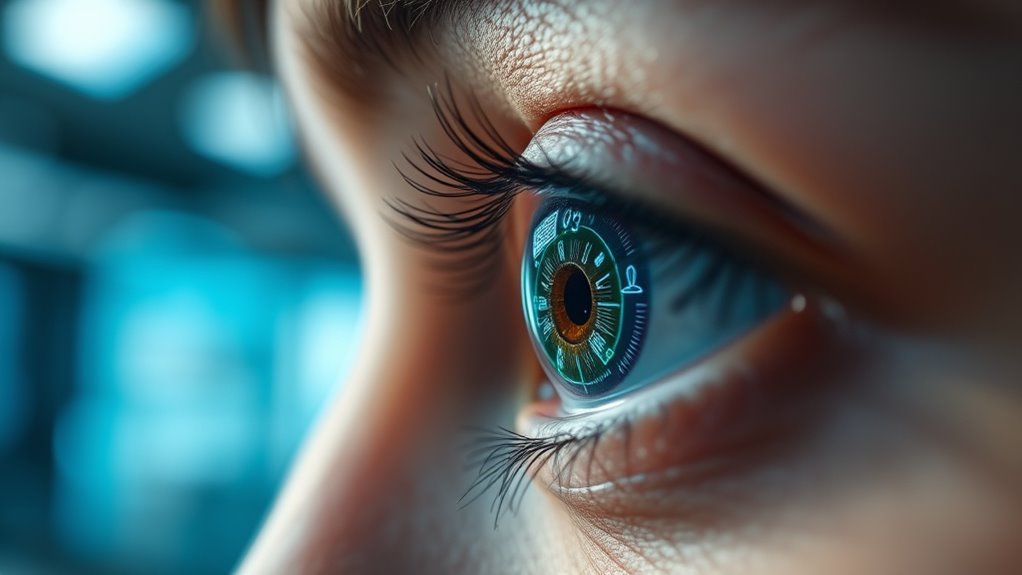
As you develop augmented reality contact lenses, you’ll need to navigate complex regulatory approval processes that combine medical and consumer device standards. Data security challenges also arise, since continuous scene capture and telemetry can expose users to privacy risks. Addressing these hurdles requires clear policies, robust safeguards, and compliance with evolving regulations to guarantee user safety and trust.
Data Security Challenges
Data security challenges for augmented reality contact lenses stem from their ability to continuously collect, transmit, and store sensitive biometric and environmental data. You need to contemplate risks like unauthorized access, data breaches, and misuse of personal information. To protect yourself, be aware of:
- Data interception: Wireless links can be vulnerable to hacking, risking exposure of your biometric and location data.
- Unauthorized sharing: Without strict controls, your health and environment data might be shared or sold without consent.
- Long-term storage risks: Persistent storage of sensitive data increases the chance of breaches, especially if encryption or privacy safeguards are weak.
These challenges demand robust security measures, transparent policies, and user control to ensure your privacy and data integrity are maintained.
Regulatory Approval Complexities
Managing regulatory approval for augmented reality contact lenses presents a complex challenge because these devices blur the lines between medical instruments and consumer electronics. You must navigate multiple approval pathways, as lenses may serve diagnostic, therapeutic, or recreational purposes. Regulatory agencies like the FDA or EMA require rigorous clinical trials to demonstrate safety, efficacy, and biocompatibility, especially since long-term wear introduces risks like hypoxia or infection. Combining medical claims with consumer features adds layers of complexity, often leading to prolonged approval timelines. You also need to address privacy concerns, ensuring data security and user consent are built into the device’s design. Balancing innovation with strict safety standards requires careful planning, extensive testing, and often, collaboration across regulatory bodies to bring these advanced lenses to market safely and legally.
Market Trends and Future Outlook for AR Contact Lenses
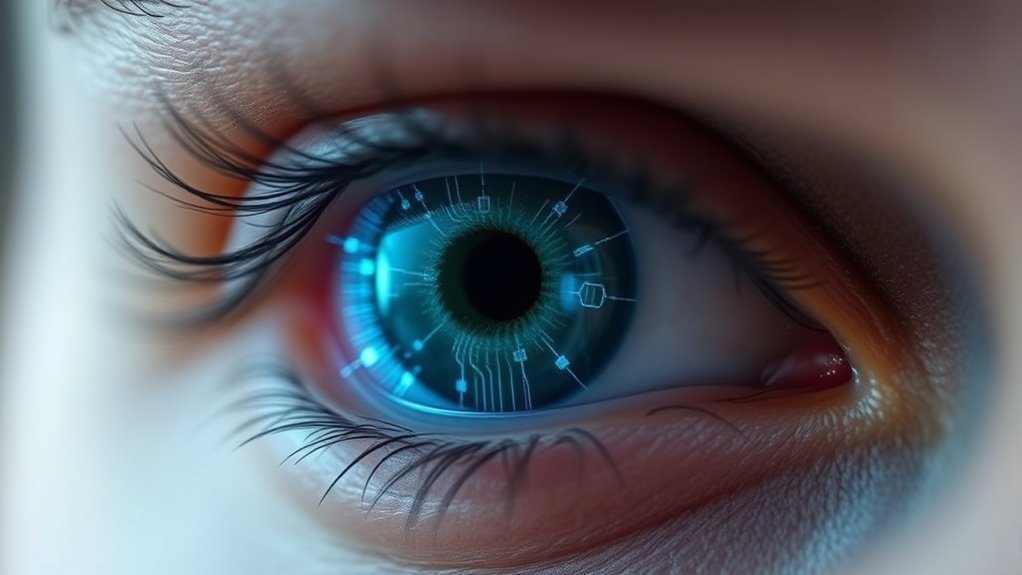
Will augmented reality contact lenses reshape the future of wearable tech and healthcare? The market is shifting toward specialized applications first, with consumer devices still on the horizon. You can expect rapid growth in medical diagnostics, vision aids, and therapeutic uses by 2025–2027. Startup prototypes and pilot programs are pushing the boundaries, but regulatory hurdles and safety concerns slow mass adoption.
Here are three key trends to watch:
- Increased focus on health monitoring, like intraocular pressure and glucose sensing.
- Growing partnerships between tech firms and healthcare providers for clinical validation.
- Advancements in miniaturization and power solutions, making lenses more practical and comfortable.
While full consumer AR lenses remain years away, the industry’s trajectory points toward transformative healthcare and professional applications first.
Ethical Considerations and Society’s Response to Ocular AR Tech
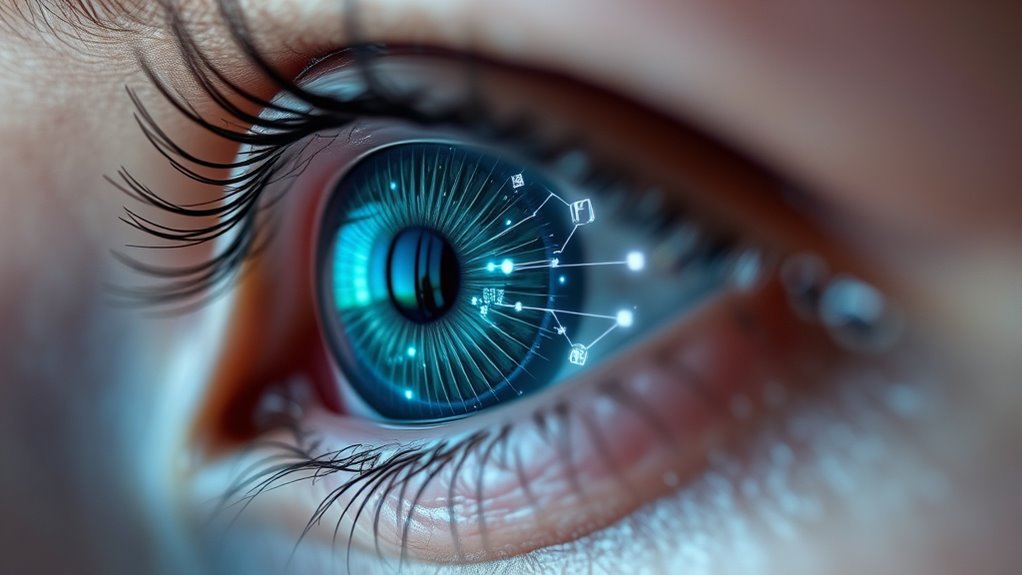
As ocular AR lenses become more common, you need to contemplate how privacy and surveillance could be misused, like covertly recording your surroundings or others without consent. These devices also raise questions about who owns and controls the data they collect, especially when it involves sensitive health information. Society’s response will likely focus on ensuring equitable access and establishing clear ethical guidelines to prevent misuse and protect individual rights.
Privacy and Surveillance Risks
The advent of augmented reality contact lenses introduces significant privacy and surveillance concerns, as their continuous scene capture and biometric data collection could be exploited without your knowledge or consent. You might not realize how often your environment is being recorded or how your biometric data is being shared.
Consider these risks:
- Unauthorized data collection, leading to covert monitoring of your surroundings or conversations.
- Data misuse or breaches, risking exposure of sensitive health or location information.
- Dual-use scenarios, where high-fidelity recordings could be exploited for surveillance or deception.
Society must develop policies and technological safeguards to protect your privacy, ensuring transparency and giving you control over your data. Without proper oversight, ocular AR tech could become a tool for pervasive surveillance.
Equity and Access Gaps
Although augmented reality contact lenses promise revolutionary applications, they also risk deepening existing societal inequalities if access remains limited to wealthier populations. Advanced technology often comes with high costs, making it difficult for underserved communities to benefit from these innovations. This digital divide could widen disparities in healthcare, education, and employment, where only privileged groups access enhanced vision or health monitoring. Furthermore, limited availability may hinder widespread adoption, leaving vulnerable populations behind. Society’s response involves policymakers and industry leaders working to develop affordable solutions and equitable distribution models. Ensuring that the benefits of ocular AR tech reach diverse socioeconomic groups is essential to prevent further marginalization and promote inclusive technological progress. Bridging this gap requires deliberate efforts to democratize access and avoid exacerbating existing inequalities.
Data Ownership Ethics
Advancements in ocular AR technology bring not only innovative capabilities but also complex ethical questions about data ownership. You need to consider who controls the vast amount of biometric and scene data these lenses collect. Society’s response centers on protecting individual rights and privacy.
- Ownership Rights: Clarify whether users, manufacturers, or third parties own the data, and how it’s stored, shared, or sold.
- Consent and Transparency: Ensure users are fully informed about what data is collected and how it’s used, requiring clear consent protocols.
- Security Risks: Address potential breaches, unauthorized access, or misuse of sensitive ocular data, emphasizing robust data protection measures.
Balancing innovation with ethical safeguards is vital to prevent misuse and maintain public trust as this technology evolves.
Frequently Asked Questions
How Long Can AR Contact Lenses Be Worn Safely Without Causing Eye Damage?
You can typically wear AR contact lenses safely for a few hours at a time, but long-term use remains uncertain. Manufacturers are still working to guarantee oxygen permeability, biocompatibility, and proper power management to prevent eye damage like hypoxia or irritation. It’s best to follow your eye care provider’s guidance and manufacturer recommendations, as prolonged wear without proper safety measures could risk infection, dryness, or other ocular issues.
What Measures Are in Place to Ensure User Data Privacy and Security?
You’re protected through strict data security protocols, including encryption and secure storage, ensuring your biometric and health information remains private. Manufacturers implement user consent processes, clear data ownership policies, and anonymization techniques to prevent misuse. Regular security updates and compliance with privacy regulations safeguard your data from breaches. Additionally, transparent practices and user controls let you manage what data is shared, giving you peace of mind with your AR contact lenses.
Will These Lenses Be Accessible and Affordable for All Populations?
Around 1 in 8 people worldwide lack access to essential healthcare, highlighting disparities. These lenses won’t be accessible or affordable for all populations anytime soon due to high development costs, complex manufacturing, and regulatory hurdles. You might see them initially in medical or professional settings, but widespread affordability will take years. To bridge the gap, innovations in production and policy changes are essential, ensuring benefits reach underserved communities eventually.
How Do AR Lenses Prevent Eye Infections During Prolonged Use?
You can prevent eye infections during prolonged use by ensuring the lenses are made from biocompatible, oxygen-permeable materials that allow proper airflow and reduce hypoxia risks. Always follow proper cleaning and disinfection protocols, avoid sharing lenses, and replace them as recommended. Regularly consult your eye care professional for check-ups, and choose lenses with advanced antimicrobial coatings that inhibit bacterial growth, keeping your eyes safe and healthy during extended wear.
What Are the Potential Legal Implications of Covert Eye Recordings?
Like Pandora’s box, covert eye recordings open complex legal issues. You could face privacy violations if you record others without consent, risking lawsuits or criminal charges. Data ownership also comes into question—who controls the footage? Legislators might impose strict regulations to prevent misuse, and your actions could lead to ethical dilemmas or surveillance concerns. Staying informed and respecting others’ privacy is vital to avoid unintended legal consequences.
Conclusion
As AR contact lenses become reality, think about how they’ll change daily life—imagine a runner getting real-time health stats without stopping or a student accessing instant info during class. While exciting, you’ll need to contemplate privacy and safety. Just like a pilot relying on heads-up displays, society must balance innovation with responsibility, ensuring these tiny tech marvels enhance your world without compromising your well-being or autonomy.
Fall Picks
fall essentials
As an affiliate, we earn on qualifying purchases.