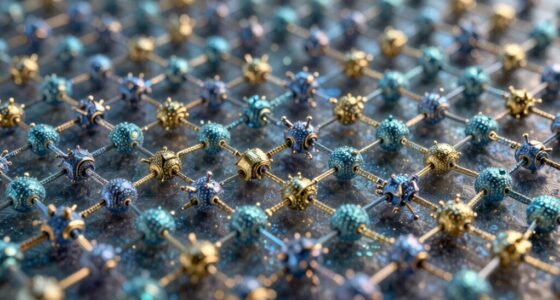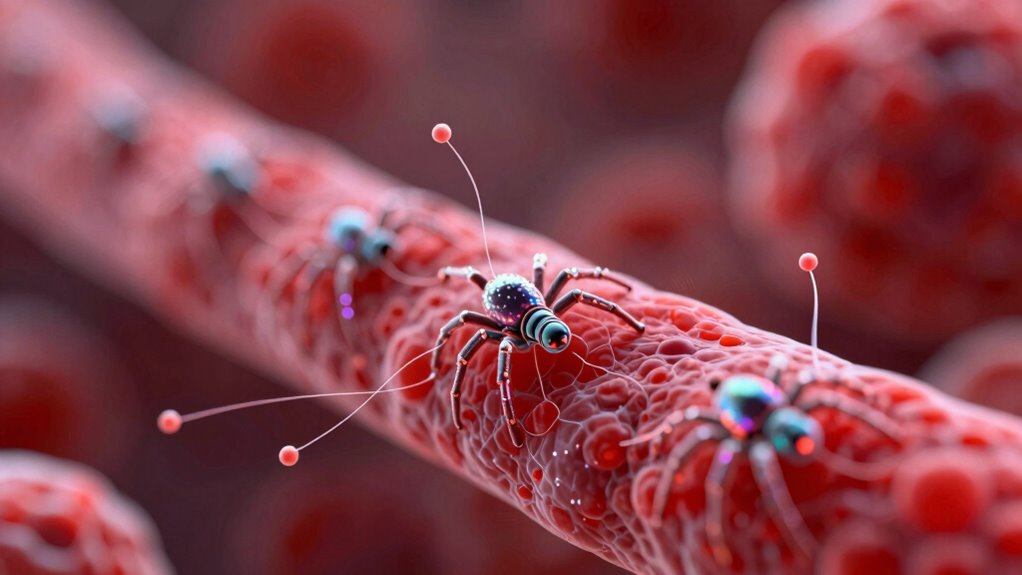

The idea of shrinking humans like in Ant-Man ignores real science, as atomic and molecular sizes are fixed by quantum physics, making miniaturization impossible without destabilizing matter. Biological systems depend on specific sizes for proper function, and reducing size causes metabolic, neural, and heat regulation problems. While sci-fi suggests we can compress humans, the physical and chemical laws block this—if you’re curious about the genuine limits and alternatives, here’s what science really says.
Key Takeaways
- Atomic and quantum physics set fundamental size limits, making human miniaturization physically impossible.
- Shrinking biological structures disrupt vital functions like diffusion, enzyme activity, and neural conduction.
- Increased surface area at smaller scales causes heat dissipation and metabolic challenges that cannot be overcome naturally.
- Scaling down beyond cellular and molecular levels would destabilize matter and impair physiological processes.
- Nanotechnology offers realistic medical applications without physically shrinking humans, unlike fictional miniaturization.

Extracellular Vesicles for Therapeutic and Diagnostic Applications (Nanotechnology in Biomedicine)
As an affiliate, we earn on qualifying purchases.
As an affiliate, we earn on qualifying purchases.
The Atomic and Molecular Barriers to Miniaturization

The atomic and molecular structures of matter set fundamental limits on how small objects can become, making true miniaturization physically impossible beyond a certain point. Atomic radii, determined by quantum mechanics, prevent atoms from being scaled down indefinitely, as electron orbitals define their size. Chemical bonds depend on electrostatic forces, so shrinking atoms would disrupt their chemistry and biochemical functions. Cellular components like proteins and lipids have fixed sizes; shrinking cells without redesigning these molecules would impair diffusion, enzyme activity, and structural integrity. Additionally, as objects get smaller, their surface-to-volume ratio increases, leading to excessive heat loss and metabolic challenges. Atomic radii are governed by quantum principles that restrict how condensed matter can become. These atomic and molecular constraints fundamentally bar the possibility of reducing humans to microscopic sizes while maintaining functional biological systems. Moreover, the molecular stability of complex biological structures relies on precise atomic arrangements that cannot be arbitrarily compressed without losing their essential functions. The quantum mechanical principles governing atomic behavior establish the physical boundaries that prevent such extreme miniaturization. Understanding these atomic and molecular limits is crucial for appreciating why physical laws impose unavoidable constraints on the extent of miniaturization possible in biological and material systems.

Atomic Adventures Lab Educational Molecule Model Kit for Kids – Organic Chemistry Molecular Model Kit with Guide & STEM Learning Activity Cards for Teens & Adults to Build 3D Molecules, Atoms, Bonds
- 3D Molecule Construction: Build real molecular structures in 3D
- Interactive Learning Cards: Explore chemistry concepts with easy-to-follow cards
- Complete STEM Kit: Includes color-coded atoms and flexible bonds for accurate models
As an affiliate, we earn on qualifying purchases.
As an affiliate, we earn on qualifying purchases.
Biological Constraints and Size-Dependent Functionality

You can’t simply shrink a human without disrupting fundamental biological functions. Atomic size limits prevent atoms from packing further, and cellular structures rely on fixed molecular dimensions that don’t scale down easily. Neural conduction and processing speed also depend on sizes that, if reduced, would impair cognition and coordination dramatically. Moreover, the material properties of tissues would change unpredictably at smaller scales, compromising structural integrity and function. Additionally, the scaling laws of biology impose natural constraints that make size reduction beyond certain limits biologically unfeasible.
Atomic Size Limits
Atomic size limits fundamentally constrain how small matter can be packed, as electron orbitals are dictated by quantum mechanics and fundamental constants. You can’t simply scale down atoms arbitrarily because their size is set by the balance of electrostatic forces and quantum principles. Shrinking atoms would disrupt chemical bonds essential for life, altering molecular interactions and biochemical reactions. You also face the problem that biomolecules like proteins and nucleic acids have fixed sizes necessary for function; shrinking them would impair enzyme activity, DNA stability, and structural integrity. Furthermore, as you reduce size, surface-to-volume ratios skyrocket, causing heat loss and metabolic challenges that small organisms like shrews can handle but humans cannot. These atomic and quantum constraints impose fundamental limits on how small humans—or any matter—can be compressed. Additionally, quantum mechanics sets the boundaries for how matter can be manipulated at the atomic level, preventing arbitrary reduction in size.
Cellular Structural Constraints
Shrinking cells disrupts their internal architecture, making it nearly impossible to maintain essential biological functions at smaller sizes. Cellular components like membranes, organelles, and the cytoskeleton rely on fixed-size biomolecules such as proteins, lipids, and nucleic acids. When you decrease cell size, diffusion rates and enzyme kinetics slow dramatically, impairing metabolic processes. Surface-to-volume ratios increase, causing heat loss and making nutrient and gas exchange inefficient. Ion channels, receptors, and protein folding impose minimal functional sizes; below these, neural signaling and muscle contraction degrade sharply. Structural integrity becomes compromised, risking cell stability and function. Overall, biological constraints rooted in atomic and molecular physics prevent cells from shrinking without fundamental redesigns, making the concept of miniaturized humans biologically unfeasible.
Neural Function Threshold
As body size decreases, neural function becomes increasingly constrained by the physical properties of neurons and their connections. Neurons rely on axon diameters, synapse sizes, and ion channel densities, all bound by quantum and molecular limits. Shrinking neurons risks degrading conduction velocity and signal strength, impairing cognition and motor control. Smaller neurons have fewer ion channels and reduced membrane surface area, slowing nerve impulses and weakening muscle responses. Additionally, the increased surface-to-volume ratio causes heat dissipation issues and alters ion exchange, making efficient neural signaling difficult. Neural size limitations below a certain size, neural networks can’t sustain the rapid, complex processing humans require. This biological threshold prevents the preservation of high-level cognition and coordination in miniaturized forms, rendering true neural functionality impossible at extremely reduced sizes.

YCHOULEK Molecular Model Kit, 444 Pcs Organic Chemistry Structure Set
- Visualize Molecular Structures: Simplifies complex chemistry concepts in 3D
- Complete 444-Piece Set: Includes atoms, bonds, and fullerene parts
- Easy to Assemble: Embedded design for quick construction
As an affiliate, we earn on qualifying purchases.
As an affiliate, we earn on qualifying purchases.
The Physics of Scaling Down: Why Matter Can’t Just Shrink

Understanding why matter can’t simply be scaled down involves recognizing the fundamental principles of physics that set strict limits on how atoms and molecules behave at smaller sizes. Atomic radii are fixed by quantum mechanics, preventing atoms from shrinking arbitrarily. Chemical bonds depend on electrostatic forces that change with size, disrupting molecular interactions essential for life. Cellular structures rely on specific biomolecule sizes; shrinking without redesigning these components breaks diffusion and structural integrity. As size decreases, the surface-to-volume ratio spikes, causing heat loss and metabolic stress humans can’t adapt to. Additionally, quantum constraints ensure atoms maintain a fixed size, making uniform shrinkage impossible.

Portable Slim Phone Cooling Pad, USB Low Noise Phone Cooler Mat for iPhone Android Samsung, Non-Slip Heat Dissipation Pad for Gaming Travel Car Desk Video Calls
- Ultra Slim & Portable: Fits in pockets, bags, or car cup holders
- Quiet & Efficient Cooling: Low-noise operation (≤25dB) for effective heat dissipation
- Universal Compatibility: Compatible with iPhone, Android, Samsung devices
As an affiliate, we earn on qualifying purchases.
As an affiliate, we earn on qualifying purchases.
Metabolic and Physiological Challenges of a Smaller Body

As your body gets smaller, it would lose heat faster due to a higher surface-to-volume ratio, forcing you to burn more energy just to stay warm. This increased energy demand means you’d need to eat markedly more calories per pound than you’re used to. Without major physiological changes, maintaining normal body functions at a tiny size would be practically impossible. Additionally, fine rug preservation principles highlight how delicate and sensitive small-scale biological processes would be at such a miniature size. Moreover, metabolic scaling laws suggest that biological functions would not simply shrink proportionally, complicating the body’s ability to adapt to such drastic size reduction. The challenges of thermal regulation would become more pronounced at a smaller scale due to these heightened surface area effects. Furthermore, the surface-to-volume ratio plays a critical role in how heat exchange occurs, making thermal management even more difficult at reduced sizes. Small bodies would also face increased difficulty in waste elimination, impacting overall health and functionality.
Increased Heat Loss
When a body shrinks, its surface area-to-volume ratio increases markedly, making heat loss much more rapid. You’d lose body heat faster than your larger counterpart, forcing your metabolism to work overtime just to stay warm. Unlike small mammals adapted to this challenge with thick fur or fat layers, humans lack such insulation, so maintaining core temperature becomes a severe problem. To compensate, you’d need constant caloric intake or insulating gear, which isn’t feasible at tiny sizes. Your body’s thermoregulatory systems, like blood flow adjustments and sweating, would struggle to keep pace. Without major physiological redesigns, your small body would be prone to hypothermia, making survival difficult. This increased heat loss highlights a fundamental obstacle to miniaturization, rooted in physics and biology. Additionally, the surface area-to-volume ratio plays a critical role in heat exchange, emphasizing why small size poses such challenges for thermal regulation. A metabolic rate increase would be necessary to generate enough heat, but this would demand an impractically high energy intake for a tiny organism. Moreover, enhanced metabolic efficiency would be essential to sustain such elevated energy demands without exhausting available resources. The challenge of maintaining adequate thermal insulation further complicates the feasibility of size reduction in humans. In fact, biological constraints make such adaptations extremely unlikely without revolutionary physiological redesigns.
Elevated Energy Demands
Reducing body size dramatically increases metabolic demands because a higher surface-to-volume ratio causes heat loss, requiring your body to burn more energy just to stay warm. As you shrink, your body faces several challenges:
- Your basal metabolic rate per unit mass skyrockets, making small animals like mice burn energy at extremely high rates to maintain temperature.
- Circulatory and respiratory systems become less efficient; smaller stroke volumes and shorter diffusion distances demand faster heart rates and increased oxygen consumption.
- Thermoregulation becomes a major hurdle—your tiny body loses heat rapidly, forcing you to eat more calories, stay active constantly, or develop insulation to avoid hypothermia.
- To combat these challenges, some small creatures have evolved adaptive insulation or behavioral strategies that help them conserve heat more effectively.
- The importance of metabolic scaling laws helps explain how energy requirements change with size, guiding efforts to develop materials or strategies for heat conservation.
Understanding yarn weight and stitch type is crucial in crafting clothing or insulation materials that could help small beings retain heat more effectively.
The Illusion of Uniform Shrinking: Quantum and Chemical Limits
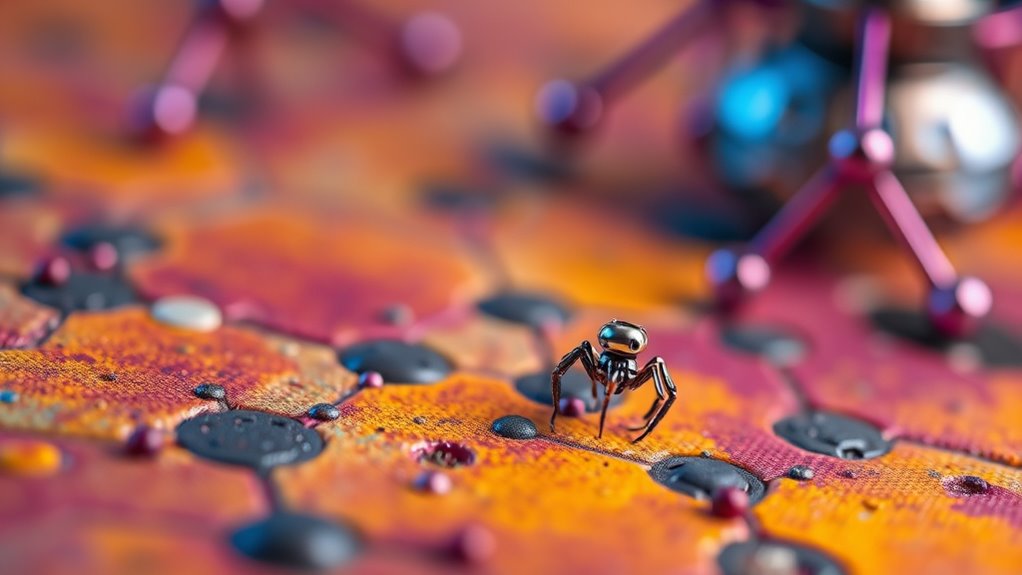
The idea of uniformly shrinking an object or a human body ignores fundamental principles of quantum mechanics and chemistry that set strict limits on how small matter can become. Atomic radii and electron orbitals prevent atoms from compressing further, as their sizes are fixed by quantum constants. Shrinking atoms would disrupt chemical bonds and biochemical processes, rendering cells nonfunctional. Cellular structures rely on fixed-sized molecules; reducing their size would interfere with diffusion, enzyme activity, and structural integrity. Additionally, surface-to-volume ratios increase as size decreases, causing heat loss and metabolic challenges humans can’t naturally compensate for. Quantum constraints and atomic properties fundamentally prohibit uniform miniaturization, making the fantasy of shrinking humans to microscopic sizes physically impossible without rewriting the laws of chemistry and quantum physics.
Realistic Alternatives: Nanotechnology and Medical Micro-robots

You can explore how nanotechnology enables the creation of micro-robots that perform in-body diagnostics, targeted drug delivery, and minimally invasive procedures. These tiny devices are already advancing in medical research and could revolutionize healthcare without shrinking the human body. While they won’t turn you into an ant, they offer practical, scientifically grounded alternatives for medical innovation. Creative Studio Spotlight Additionally, ongoing advancements in connected devices are enhancing the capabilities of these micro-robots, making them more effective and adaptable for various medical applications. This progress is supported by detailed nanotech research, which continues to unlock new possibilities for medical micro-robots and their integration into healthcare systems.
Medical Nanorobots Development
Advances in nanotechnology have made the development of medical micro-robots a promising approach for targeted diagnosis and treatment. These tiny devices can navigate your bloodstream, identify specific cells, and deliver drugs precisely where needed. Here are three key developments:
- Targeted Drug Delivery: Micro-robots can carry medication directly to diseased tissues, reducing side effects and increasing effectiveness.
- Minimally Invasive Surgery: They can perform microsurgeries, removing or repairing tissues without large incisions or anesthesia.
- Real-Time Diagnostics: These robots can monitor physiological conditions at the cellular level, providing immediate data for early intervention.
While still in experimental stages, these innovations could revolutionize medicine, offering highly precise and less invasive treatments, all without shrinking your entire body.
In-Body Diagnostic Tools
In-body diagnostic tools are increasingly relying on nanotechnology and micro-robots to provide real-time, minimally invasive health monitoring. These tiny devices can traverse the bloodstream, detect biomarkers, and assess tissue health with high precision. Unlike fictional shrinking, which assumes uniform size reduction, nanotech-based diagnostics work at the molecular level, avoiding atomic and cellular scaling issues. Researchers develop nanosensors that can identify early signs of disease, track metabolic changes, and monitor organ functions continuously. Micro-robots can be programmed to target specific tissues, reducing the need for invasive procedures. While these tools won’t miniaturize humans, they offer a practical, scalable alternative for improving diagnostics, enabling faster responses and personalized treatment without violating physical constraints or disrupting biological systems.
Targeted Drug Delivery
Targeted drug delivery has become increasingly feasible through nanotechnology and medical micro-robots, which can navigate the bloodstream to deliver therapies directly to specific tissues. Instead of shrinking humans, these innovations allow precise treatment with minimal side effects. Here’s how they work:
- Nanoparticles are engineered to recognize and bind to specific cell types, releasing drugs exactly where needed.
- Micro-robots can be guided through blood vessels using magnetic fields or sensors to target tumors or infected tissues.
- Organ-on-chip systems simulate human tissue responses at tiny scales, improving drug testing without involving whole organisms.
These approaches improve safety, reduce drug dosages, and enhance treatment efficacy. They demonstrate that advanced nanotech can revolutionize medicine without the need for impossible human miniaturization.
Ethical and Social Implications of Human Size Modification
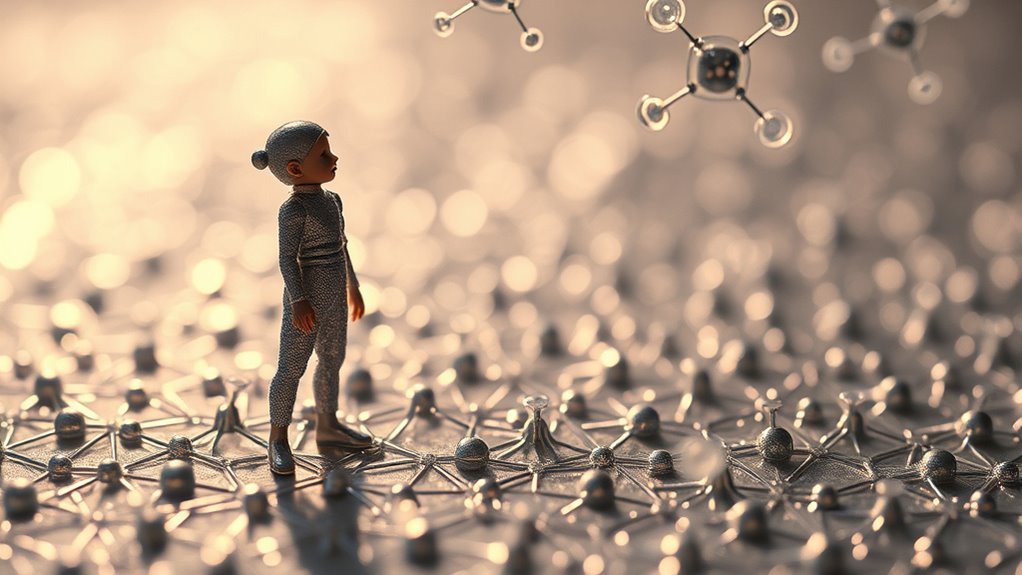
Human size modification raises profound ethical and social questions because it challenges fundamental ideas about identity, autonomy, and equality. If you could alter your size, questions about consent, especially for children or marginalized groups, become urgent. Selecting for reduced height via genetic or hormonal means risks eugenics, loss of genetic diversity, and societal pressure to conform. Socioeconomic disparities could widen if smaller bodies offer environmental or economic advantages, creating new inequalities. Regulatory frameworks are unprepared for non-therapeutic modifications, raising concerns over misuse and long-term population impacts. You must consider whether altering size respects individual choice or enforces social norms. The potential for coercion, discrimination, and unforeseen health consequences underscores the need for careful ethical oversight and inclusive policy development before pursuing any form of human size modification.
The Fiction vs. Reality: Separating Science From Sci-Fi

Fictional portrayals of shrinking, like those seen in Ant-Man or other sci-fi stories, often depict characters reducing in size while maintaining their strength, intelligence, and overall functionality. However, in reality, physics and biology impose strict limits on miniaturization. For example:
Fictional shrinking maintains strength and intelligence, but real science limits miniaturization due to atomic, cellular, and biological constraints.
- Atomic and molecular constraints prevent atoms from shrinking further, making uniform size reduction impossible without altering matter’s fundamental properties.
- Cellular structures depend on fixed-sized biomolecules; downsizing disrupts diffusion, enzyme activity, and structural integrity.
- Scaling down humans would drastically increase surface-to-volume ratios, causing heat loss, metabolic challenges, and compromised organ function.
These scientific barriers show that true human miniaturization remains beyond our reach, unlike the seamless shrinking seen in sci-fi.
Current Technologies That Reduce Resource Use Without Shrinking

Advances in technology now enable us to considerably cut resource consumption and environmental impact without altering human body size. You can achieve this through innovations like wearable devices and microfabricated habitats that improve efficiency in daily life, reducing energy and material use. Lab-on-a-chip and organ-on-a-chip systems replicate human tissues at tiny scales, decreasing reliance on large-scale experiments and resource-heavy processes. Medical nanobots provide targeted diagnostics and treatment, lessening the need for invasive procedures and large equipment. Additionally, resource-saving engineering—such as modular, energy-efficient packaging and transportation—optimizes resource use without changing human dimensions. These technologies focus on smarter design, miniaturization, and automation, offering practical ways to lessen environmental footprints while maintaining current human sizes and lifestyles.
What Science Really Says About Making Humans Tiny

Making humans tiny isn’t as simple as shrinking their size; the science of physics and biology imposes fundamental limits that make such transformations impossible in practice. First, atomic and molecular structures set size boundaries because quantum mechanics fixes atomic radii and bond lengths, preventing uniform miniaturization. Second, cellular architecture depends on fixed biomolecules like proteins and lipids; scaling down disrupts diffusion, enzyme activity, and structural integrity. Third, physiological challenges arise: a higher surface-to-volume ratio causes excessive heat loss and metabolic stress, while neural and muscular functions degrade at smaller scales. Overall, these constraints mean that shrinking humans would require radical redesigns of biology and physics—something current science cannot achieve, making the Ant-Man fantasy a far-fetched fiction.
Frequently Asked Questions
Can Genetic Engineering Create Smaller Humans Without Violating Physics?
You can’t create smaller humans through genetic engineering without violating physics. Atomic and molecular limits set a hard lower bound on size, and altering these fundamental structures isn’t feasible. While genetics can influence height modestly, drastic miniaturization would require rewriting the laws of chemistry and physics. Instead, focus on nanotech and bioengineering to develop miniature devices or systems that mimic human functions, avoiding fundamental size constraints altogether.
Are There Any Existing Technologies Capable of Truly Miniaturizing Humans?
No, there are no existing technologies capable of truly miniaturizing humans. While nanotech and micro-engineering can create tiny robots or tissue models, shrinking a whole human body to microscopic size remains impossible. You’d face fundamental physical and biological limits—atoms won’t just pack tighter, and cells wouldn’t function. So, if you’re dreaming of size reduction, you’ll need to settle for science fiction, not today’s science.
How Would Shrinking Affect Human Cognition and Sensory Perception?
If you shrank, your cognition and senses would be severely impacted. Neural conduction would slow down due to smaller axons and fewer neurons, reducing processing speed. Sensory perception would change because your receptors and nerve pathways are fixed in size; they’d struggle to detect signals accurately. Heat loss and metabolic demands would increase, making it difficult to sustain normal brain function. Overall, your mental and sensory abilities would degrade, not improve.
Is It Possible to Develop Nanobots to Replace Human Organs Entirely?
Yes, you can develop nanobots to replace human organs, but it’s still a long-term goal. Currently, nanotechnology can create tiny devices for targeted drug delivery and diagnostics, but building fully functional, durable organ replacements at the nanoscale remains a challenge. You’d need breakthroughs in biocompatible materials, control systems, and tissue integration. While promising, replacing entire organs with nanobots isn’t feasible today, but ongoing research moves closer to that future.
What Are the Ethical Risks of Designing Humans With Smaller Body Sizes?
You face significant ethical risks when designing humans with smaller body sizes. You risk exacerbating social inequalities, as smaller stature could be linked to economic or health advantages, leading to discrimination. You also confront autonomy concerns if size alteration is imposed without consent, especially on children. Additionally, you may trigger eugenics debates, threaten genetic diversity, and create unpredictable psychosocial impacts, all demanding careful regulation and ethical oversight before pursuing such modifications.
Conclusion
Imagine trying to squeeze a giant oak into a tiny seed—no matter how much you wish, nature’s barriers won’t budge. The science shows that shrinking humans isn’t just a matter of wishful thinking; atomic, biological, and physical laws stand in your way. Instead of dreaming of miniatures, focus on innovative tech that conserves resources and improves lives. Remember, understanding limits helps us appreciate the incredible complexity of life at every size.