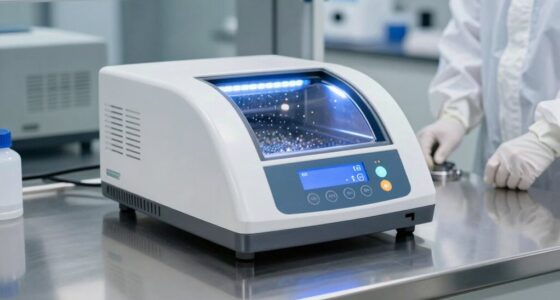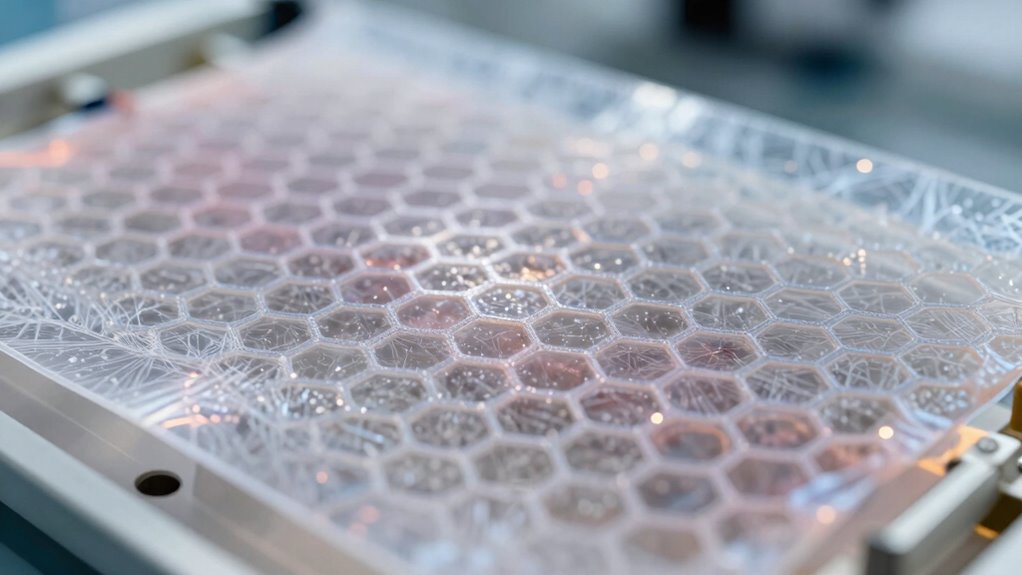

Nano-enhanced membranes matter in filtration science because they boost performance by making membranes stronger, more durable, and resistant to chemicals, UV light, and fouling. They provide better filtration efficiency and longer lifespan, reducing maintenance costs and environmental impact. These membranes can be tailored for specific needs, leading to more sustainable and cost-effective systems. Staying informed about these advances helps you understand how nanotechnology is shaping the future of clean, reliable filtration solutions.
Open a free Amazon Business account
Business pricing, bulk buying and tax-exempt orders.
As an affiliate, we earn on qualifying purchases.
Key Takeaways
- Nano-enhanced membranes offer superior filtration performance by increasing surface area and preventing blockages.
- They improve membrane durability, extending lifespan and reducing replacement frequency.
- Nanoparticles provide anti-fouling and chemical stability, maintaining efficiency under harsh conditions.
- These membranes lower operational costs and environmental impact through reduced maintenance and chemical use.
- Advances in nanotechnology enable customized solutions, enhancing the resilience and effectiveness of filtration systems.
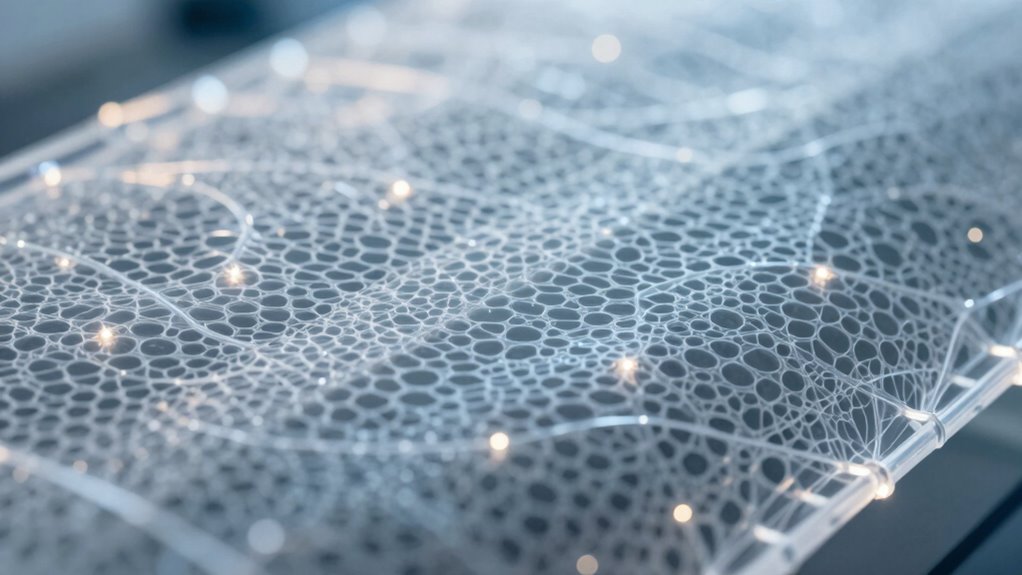
Nanotechnology has revolutionized filtration science by enabling the development of nano-enhanced membranes that substantially improve performance. These membranes incorporate nanoparticles, which are tiny particles engineered at the nanometer scale, to enhance filtration capabilities beyond traditional materials. When you integrate nanoparticles into membrane structures, you don’t just improve filtration efficiency—you also considerably boost membrane durability. This combination is vital because it guarantees these membranes can withstand harsh operating conditions, resist fouling, and maintain their performance over time.
Nanoparticles enhance membrane durability, withstand harsh conditions, and resist fouling for long-lasting, high-performance filtration systems.
By adding nanoparticles, you create membranes with unique properties that weren’t possible before. These particles can provide increased surface area, improved mechanical strength, and enhanced chemical stability. For example, incorporating metal oxide nanoparticles like titanium dioxide or zinc oxide can make membranes more resistant to degradation caused by chemicals or UV exposure. This means your membranes last longer, saving you money on replacements and reducing downtime in your filtration systems. The integration process involves dispersing nanoparticles uniformly within the membrane matrix, which is essential for guaranteeing consistent performance and avoiding blockages or uneven filtration. Nanoparticle dispersion plays a critical role in ensuring the effectiveness of these advanced membranes.
Membrane durability benefits directly from nanoparticle integration because it addresses one of the main challenges in filtration technology: fouling and wear. Fouling occurs when unwanted particles, microbes, or organic matter accumulate on the membrane surface, diminishing flow rates and filtration efficiency. Nanoparticles can impart anti-fouling properties by creating smoother, more hydrophilic surfaces that repel contaminants. Additionally, the enhanced mechanical strength from nanoparticle reinforcement makes the membrane more resistant to physical stress, tearing, or deformation. As a result, you get a membrane that not only filters more effectively but also maintains its integrity under demanding conditions. Furthermore, advances in nanoparticle engineering have made it possible to tailor these particles for specific filtration needs, boosting their effectiveness.
The improved durability also means your filtration system remains operational longer without frequent maintenance or replacement, which is a noteworthy advantage in industrial, municipal, or even household applications. You’ll notice fewer interruptions, lower operational costs, and more consistent quality of filtered water or air. Furthermore, nanoparticle-enhanced membranes often require less chemical cleaning, reducing environmental impact and chemical consumption. Nanoparticle integration is a key factor in advancing the longevity and resilience of these membranes.
In essence, nanoparticle integration directly influences the longevity and resilience of nano-enhanced membranes. You benefit from a more robust filtration solution that performs reliably over time, even in challenging environments. This advancement in filtration science isn’t just about better performance; it’s about creating sustainable, long-lasting membranes that meet the increasing demands for efficient and cost-effective filtration systems. By focusing on these nanotechnology-driven improvements, you’re helping to push filtration technology forward — making it more effective, durable, and adaptable to future needs.
nano-enhanced filtration membranes
As an affiliate, we earn on qualifying purchases.
As an affiliate, we earn on qualifying purchases.
Frequently Asked Questions
How Do Nano-Enhanced Membranes Compare Cost-Wise to Traditional Membranes?
Nano-enhanced membranes tend to be more expensive initially due to higher manufacturing challenges and material costs, leading to increased cost implications. However, their improved efficiency and durability can reduce long-term operational expenses. You might find that, despite the higher upfront investment, these membranes save money over time by offering better filtration performance, longer lifespan, and lower maintenance needs, making them a worthwhile choice despite the initial costs.
Are Nano-Enhanced Membranes Environmentally Sustainable?
Like a guardian shield, nano-enhanced membranes stand strong against environmental impact, offering sustainable solutions. Their design minimizes material degradation, reducing waste and energy use. By leveraging advanced nanomaterials, you can lower pollution and extend membrane lifespan, making them more eco-friendly. Although manufacturing still poses challenges, these membranes symbolize progress toward cleaner, greener filtration systems, helping you create a more sustainable future while protecting our planet’s delicate balance.
What Are the Potential Health Risks of Nano-Materials in Membranes?
You should be aware that nanoparticle leaching from membranes can pose health risks, as these tiny particles might enter your water or environment. Additionally, biological toxicity is a concern because some nanomaterials can harm aquatic life and humans if ingested or exposed. It is crucial to carefully evaluate and control nanoparticle stability to minimize leaching and toxicity, ensuring safer, more sustainable filtration solutions.
How Long Do Nano-Enhanced Membranes Typically Last?
Nano-enhanced membranes typically last 3 to 5 years, depending on durability factors like operational conditions and material degradation. Imagine a superhero’s shield that wears down over time—constant exposure to harsh chemicals or pressure accelerates aging. To maximize lifespan, you need to understand these factors. Proper maintenance and selecting high-quality materials can extend their durability, ensuring your filtration system remains effective, saving you costs and downtime.
Can Nano-Enhanced Membranes Be Recycled or Reused?
Yes, you can recycle or reuse nano-enhanced membranes, but it depends on the extent of membrane degradation. Nano repair techniques help restore functionality after damage, extending their lifespan. Proper cleaning and maintenance are essential to prevent membrane degradation, which can hinder reuse. While some membranes are designed for multiple cycles, others may require replacement sooner. Always assess the membrane’s condition to determine if reuse or recycling is feasible.
industrial nanotechnology water filters
As an affiliate, we earn on qualifying purchases.
As an affiliate, we earn on qualifying purchases.
Conclusion
You now understand that nano-enhanced membranes are the secret weapon in filtration science, like a finely tuned filter catching the tiniest impurities. They’re the lighthouse guiding clean water through a storm of contaminants, ensuring safety and efficiency. As these membranes continue to evolve, they’ll shape a future where our water is clearer, purer, and more reliable. Embrace this innovation—it’s the beacon illuminating the path to a healthier, more sustainable world.
UV resistant filtration membranes
As an affiliate, we earn on qualifying purchases.
As an affiliate, we earn on qualifying purchases.
anti-fouling nanotechnology filters
As an affiliate, we earn on qualifying purchases.
As an affiliate, we earn on qualifying purchases.
NFL season / tailgating Picks
team gear
As an affiliate, we earn on qualifying purchases.