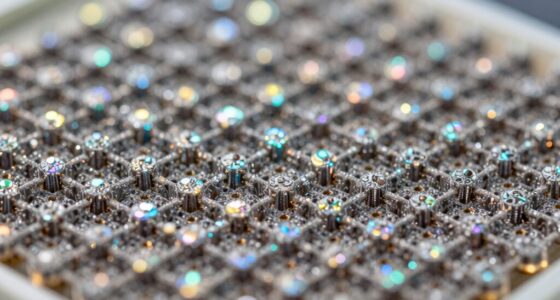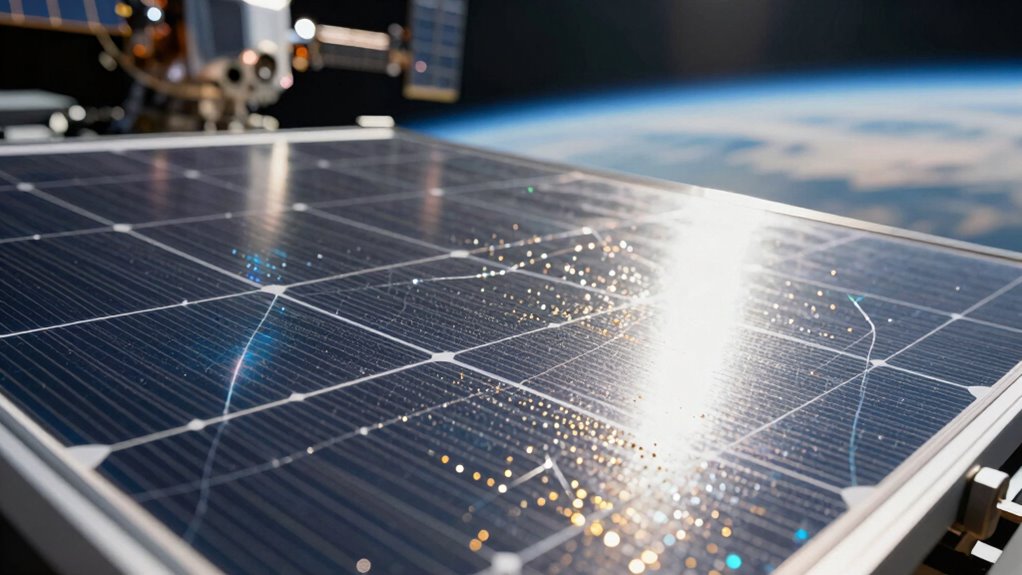

Nanotechnology will matter more in future solar systems because it can profoundly boost efficiency by capturing a broader sunlight spectrum and improving charge transfer. It also enhances durability, making panels resistant to harsh environments and extending their lifespan. Lighter, flexible, and adaptable nanomaterials will allow for innovative applications like building-integrated or portable solar solutions. If you’re curious about how these advancements could impact your energy options, there’s more to uncover ahead.

Get the latest gadgets delivered free — and shop member deals
- Fast, free delivery on millions of items
- Access to Prime Big Deal Days deals on October 6–7
- Prime Video, Amazon Music and more included
Key Takeaways
- Nanotechnology enhances solar cell efficiency by enabling broader spectrum absorption with quantum dots.
- It improves durability and environmental resistance, extending solar panel lifespan in harsh conditions.
- Advances in nanomaterials facilitate lightweight, flexible, and adaptable solar system designs.
- Nanotech reduces energy losses, ensuring long-term performance and economic viability of solar panels.
- Future innovations will enable more powerful, versatile, and cost-effective solar energy solutions.

Nanotechnology is transforming the way we harness solar energy, paving the way for more efficient and scalable future solar systems. At the forefront of this revolution are quantum dots—tiny semiconductor particles that can notably boost how much sunlight your solar panels can absorb and convert into electricity. Unlike traditional solar cells, which often struggle with limited spectral absorption, quantum dots can be tuned to capture a broader range of the solar spectrum. This means your solar panels could become more efficient, generating more power from the same amount of sunlight. The integration of quantum dots into solar technology not only enhances performance but also opens doors to flexible, lightweight, and even transparent solar panels, making solar energy more adaptable to various surfaces and environments.
Nanotechnology, especially quantum dots, enhances solar panel efficiency, flexibility, and durability for a more sustainable energy future.
As you consider the potential of nanotechnology, solar panel durability becomes a key factor. Nanomaterials can make solar panels more resistant to environmental stressors like UV radiation, temperature fluctuations, and moisture. This increased durability means your solar system can maintain peak performance over longer periods, reducing maintenance costs and replacement frequency. By incorporating nanostructures, manufacturers can develop coatings that protect panels from scratching, dirt, and corrosion, ensuring they stay cleaner and more efficient in real-world conditions. With improved durability, your solar system can operate reliably in harsh climates, whether on rooftops, in deserts, or offshore installations. Additionally, advancements in nanomaterial stability are crucial for extending the lifespan of solar panels, making solar energy a more economically viable choice. Incorporating nanotechnology innovations further enhances the potential for creating adaptable and resilient solar solutions. Moreover, ongoing research into nanostructure fabrication aims to improve the scalability and cost-effectiveness of these advanced materials, bringing their benefits closer to widespread commercial adoption. Understanding the material properties of nanomaterials helps optimize their performance in solar applications.
Furthermore, nanotechnology enables the manufacturing of solar panels with enhanced stability and lifespan. Quantum dots, for example, can be embedded into the solar cell structure to improve charge transfer efficiency, reducing energy losses over time. This technological advancement ensures your solar system remains effective for decades, making solar energy a more economically viable choice. Because nanomaterials are often lighter and more flexible than traditional materials, future solar panels could be integrated into building materials, vehicles, or portable devices without adding considerable weight or bulk.
In essence, nanotechnology holds the promise of transforming solar power into a more practical, durable, and efficient energy source. Quantum dots can revolutionize how much sunlight your panels absorb, while nanomaterials improve their resilience against environmental wear and tear. As these innovations continue to develop, you’ll find solar systems that are not only more powerful but also longer-lasting and adaptable to a wider range of applications. The future of solar energy, driven by nanotechnology, promises a cleaner, more sustainable world—one where harnessing the sun becomes easier, cheaper, and more reliable than ever before.
As an affiliate, we earn on qualifying purchases.
Frequently Asked Questions
How Affordable Will Nanotechnology-Based Solar Systems Become for Consumers?
Nanotechnology-based solar systems will likely become more affordable as cost reduction efforts accelerate and innovation potential is fully realized. You can expect prices to drop over time due to improved manufacturing techniques and increased competition. As researchers discover new applications and materials, these advanced solar systems will become accessible for more consumers. In the near future, nanotech solar solutions could offer a cost-effective, highly efficient alternative to traditional solar panels, making renewable energy more attainable for everyone.
What Are Potential Environmental Risks of Nanotechnology in Solar Energy?
You should be aware that nanotechnology in solar energy could pose environmental risks, like environmental contamination from toxic nanoparticles. Studies show that over 80% of nanomaterials may accumulate in ecosystems if not properly managed. This could harm wildlife and water quality, and pose health threats to humans. Ensuring safe disposal and regulation is vital to prevent potential damage from these tiny yet impactful particles.
How Soon Can Nanotech-Enhanced Solar Systems Be Commercially Available?
You could see nanotech-enhanced solar systems within the next 5 to 10 years. Advances in quantum dots and nanomaterial coatings are accelerating commercialization. These materials boost efficiency, durability, and flexibility, making solar panels more practical for various settings. As research progresses and manufacturing costs decrease, expect these innovative systems to become widely available, transforming the renewable energy landscape faster than traditional technologies.
Will Nanotechnology Improve Solar Panel Efficiency in Low-Light Conditions?
Imagine a cloudy sky where sunlight barely filters through—nanotechnology can help you harness more of that faint light. Quantum dots and nanoparticle coatings enhance solar panels’ ability to absorb low-light conditions, turning dim rays into usable energy. These tiny innovations improve efficiency by capturing a broader spectrum of light, making your solar system more effective even on overcast days. With these advancements, you’ll get reliable power no matter the weather.
How Does Nanotechnology Impact the Longevity of Solar Systems?
Nanotechnology greatly extends the longevity of solar systems by enhancing material durability. Quantum dots, a nanotech innovation, improve resistance to environmental wear and tear, reducing degradation over time. You’ll find that these advanced materials better withstand temperature fluctuations, moisture, and UV exposure. As a result, your solar panels last longer, maintain efficiency, and require less maintenance, making nanotechnology a crucial factor in future solar system durability.
flexible lightweight solar cells
As an affiliate, we earn on qualifying purchases.
As an affiliate, we earn on qualifying purchases.
Conclusion
As you consider the potential of nanotechnology in future solar systems, remember that it could boost solar panel efficiency by up to 30%. This means more energy with less material, making solar power more affordable and accessible worldwide. By harnessing tiny innovations, you could help shape a cleaner, sustainable future. The impact is profound—embracing nanotech now might just revolutionize how you power your life and protect the planet for generations to come.
As an affiliate, we earn on qualifying purchases.
transparent nanomaterial solar panels
As an affiliate, we earn on qualifying purchases.
As an affiliate, we earn on qualifying purchases.
Fall Picks
fall essentials
As an affiliate, we earn on qualifying purchases.