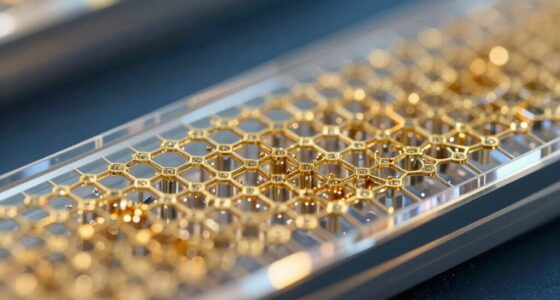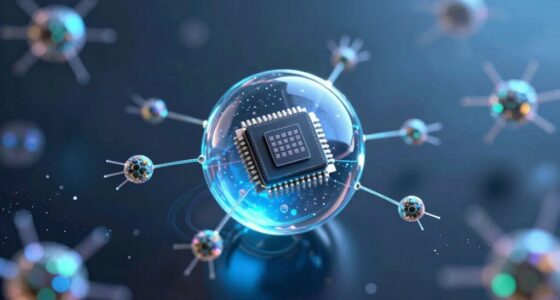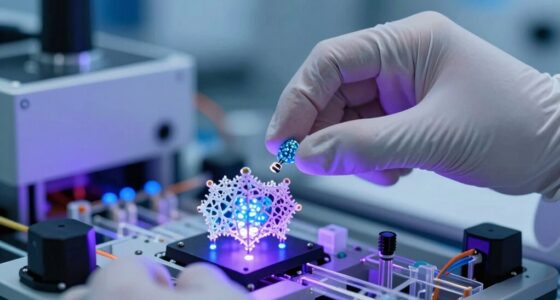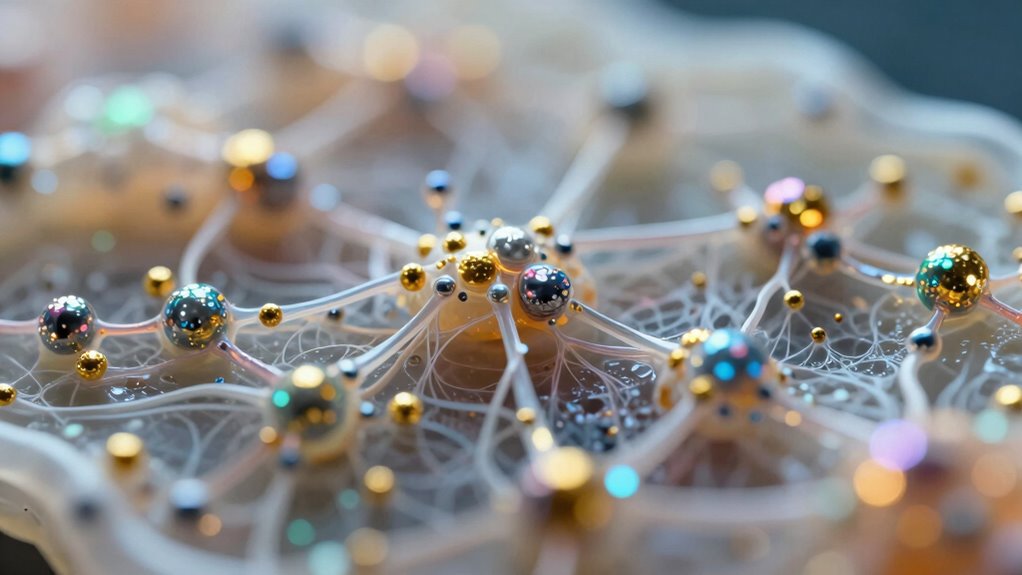

Nanomaterials play a essential yet often hidden role in tissue engineering by mimicking your body’s natural cellular environment, promoting tissue growth and healing. Their high surface area interacts directly with cells, guiding regeneration effectively. Surface modifications improve safety and help target therapies precisely. Understanding nanoparticle behavior and ensuring they’re biocompatible are critical for safe applications. Want to uncover the full picture and see how these tiny materials are transforming regenerative medicine? Keep exploring to discover more.

Get the latest gadgets delivered free with Prime
- Fast, free delivery on millions of items
- Prime Video, Amazon Music and more included
- Member-only deals all year
Key Takeaways
- Nanomaterials mimic the natural cellular environment, promoting tissue regeneration and healing.
- Surface modification of nanomaterials reduces toxicity and enhances biocompatibility for safe tissue engineering applications.
- Their high surface area facilitates cellular interactions, supporting seamless tissue integration.
- Functionalization allows targeted delivery of drugs and growth factors to specific tissue sites.
- Proper safety assessments ensure nanomaterials are effective and free from adverse biological effects.
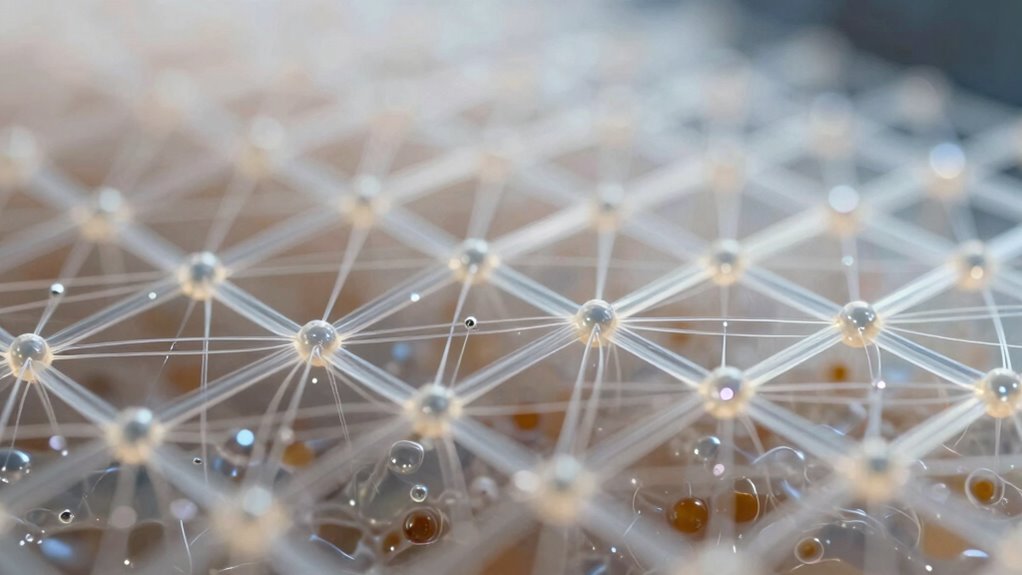
Have you ever wondered how tiny materials can revolutionize tissue engineering? The answer lies in the incredible potential of nanomaterials, which are incredibly small but highly powerful. These materials can mimic the natural environment of cells, promote healing, and even guide tissue regeneration. However, working with nanomaterials isn’t without its challenges, especially when it comes to nanoparticle toxicity. When nanoparticles interact with biological systems, they can sometimes elicit adverse effects, such as inflammation or cellular damage. That’s why researchers pay close attention to how these particles behave in the body. Surface modification plays an essential role here; by altering the surface of nanoparticles, scientists can reduce toxicity and improve compatibility. For example, coating nanoparticles with biocompatible materials like polyethylene glycol can help prevent unwanted immune responses and reduce toxicity risks. This process, known as surface modification, allows you to fine-tune how nanoparticles interact with cells and tissues, making them safer and more effective for medical applications. It’s a delicate balance—enhancing beneficial properties while minimizing harm. Surface modification doesn’t just improve safety; it also enhances functionality. You can attach specific molecules to the nanoparticle surface, directing them to target particular cell types or tissues. This targeted approach increases the efficiency of tissue engineering therapies, making treatments more precise and less invasive. As you explore the field, you’ll realize that understanding nanoparticle toxicity and mastering surface modification techniques are key to accessing the full potential of nanomaterials in tissue engineering. These strategies allow you to harness the unique properties of nanomaterials—such as their high surface area and ability to interact at the cellular level—while maintaining safety standards. Advances in surface modification have led to the development of nanomaterials that not only promote tissue regeneration but also integrate seamlessly into biological systems. The challenge is to design nanoparticles that are both effective and biocompatible, ensuring they support healing without causing harm. By controlling surface properties, you can make nanoparticles more hydrophilic or hydrophobic, influence their stability, and improve their ability to deliver drugs or growth factors directly to the target site. Additionally, understanding nanoparticle toxicity is crucial for developing safe and reliable tissue engineering solutions. Incorporating biocompatibility assessments into the development process ensures that nanomaterials function effectively within the body without adverse effects. Ultimately, understanding and managing nanoparticle toxicity through surface modification empowers you to develop smarter, safer, and more efficient tissue engineering solutions. These tiny materials hold vast promise, but only through careful engineering and thorough safety assessments can you truly realize their potential to transform regenerative medicine and improve patient outcomes.
biocompatible nanomaterials for tissue engineering
As an affiliate, we earn on qualifying purchases.
As an affiliate, we earn on qualifying purchases.
Frequently Asked Questions
How Do Nano Materials Improve Cell Growth in Tissue Engineering?
Nano materials improve cell growth in tissue engineering by leveraging their unique properties, such as high surface area and tunable surface chemistry, which enhance cellular interactions. These properties allow nanomaterials to mimic natural extracellular matrices more effectively, encouraging cell adhesion, proliferation, and differentiation. By fostering better cellular interactions, nanomaterials create a conducive environment for tissue regeneration, ultimately leading to improved tissue development and functionality in engineered tissues.
Are Nano Materials Safe for Long-Term Medical Applications?
Nano materials can be safe for long-term medical applications if regulatory challenges are addressed and environmental impacts are minimized. You should consider rigorous testing, proper regulation, and sustainable practices to guarantee safety. While nano materials offer promising benefits, ongoing research is essential to understand potential risks, like toxicity or environmental harm, and to develop standards that protect patients and the environment over time.
What Are the Cost Implications of Using Nano Materials?
Using nano materials can be costly due to manufacturing challenges and the need for specialized equipment. However, a thorough cost benefit analysis often shows long-term savings through improved tissue regeneration and patient outcomes. While initial expenses are higher, the enhanced effectiveness and reduced need for additional treatments can make nano materials a financially viable choice in tissue engineering. Balancing upfront costs with long-term benefits is key.
How Do Nano Materials Interact With Biological Tissues at the Molecular Level?
Think of nano materials as tiny explorers at a molecular level, forging bonds with biological tissues through molecular interactions. They form nano biointerfaces, acting like bridges that facilitate communication and integration between synthetic and natural components. These interactions are driven by electrostatic forces, hydrogen bonding, and van der Waals forces, allowing nano materials to seamlessly integrate, influence cell behavior, and promote tissue regeneration, making them essential in advanced tissue engineering applications.
Can Nano Materials Be Customized for Specific Tissue Engineering Needs?
Yes, you can customize nano materials for specific tissue engineering needs. By applying surface modifications, you can enhance cell adhesion, biocompatibility, or targeted interactions. Mechanical tuning allows you to adjust stiffness and elasticity to match the tissue’s native properties. Together, these techniques enable you to design nano materials that precisely meet the functional requirements of different tissues, improving regeneration success and integration.
nanoparticle surface modification kits
As an affiliate, we earn on qualifying purchases.
As an affiliate, we earn on qualifying purchases.
Conclusion
Imagine designing a synthetic cartilage with nano-enhanced scaffolds that promote faster healing and better integration. By harnessing nanomaterials, you can create tissue engineering solutions that mimic natural tissues more closely. For instance, a recent case study showed how nano-coated scaffolds improved nerve regeneration in spinal injuries. As you explore these advancements, you’ll discover how nano materials are transforming regenerative medicine—bringing hope and innovative treatments closer to reality for countless patients.
targeted drug delivery nanoparticles
As an affiliate, we earn on qualifying purchases.
As an affiliate, we earn on qualifying purchases.
nanomaterials for regenerative medicine
As an affiliate, we earn on qualifying purchases.
As an affiliate, we earn on qualifying purchases.
Halloween Picks
halloween
As an affiliate, we earn on qualifying purchases.