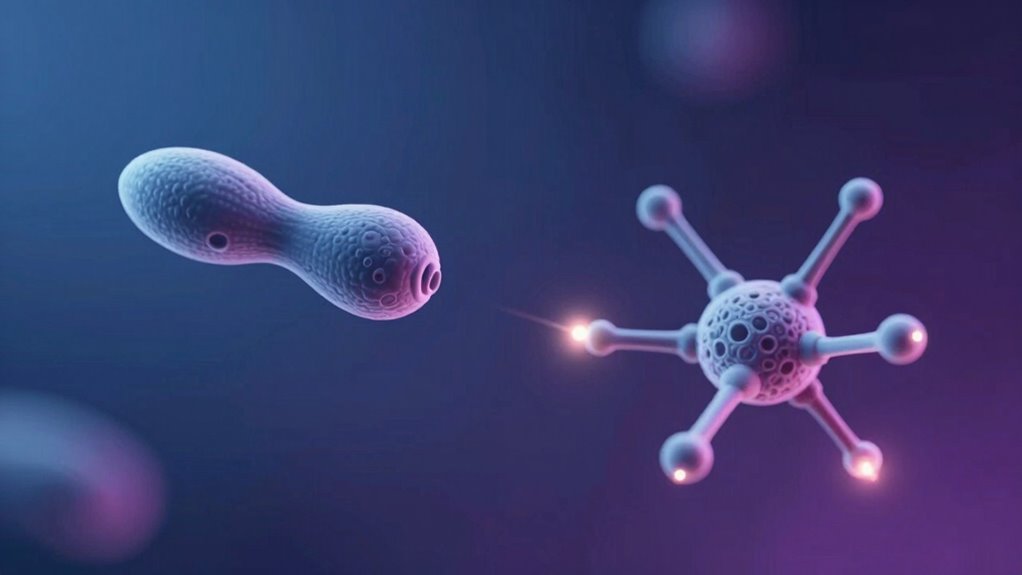

The key difference is that passive nanomachines rely on external forces or stimuli to work, meaning they don’t power themselves. In contrast, active nanomachines have their own internal energy sources, allowing them to perform tasks independently, like moving or switching states. Active types also have more sophisticated control mechanisms for precise actions. If you want to understand how this energy autonomy impacts their capabilities, there’s more to explore below.

Get the latest gadgets delivered free with Prime
- Fast, free delivery on millions of items
- Prime Video, Amazon Music and more included
- Member-only deals all year
Key Takeaways
- Passive nanomachines do not perform work autonomously; active nanomachines operate independently using internal energy.
- Active nanomachines have sophisticated mechanisms for precise control, while passive ones rely on external stimuli.
- Active nanomachines convert internal energy sources into motion, unlike passive nanomachines which lack internal energy.
- Active nanomachines can perform complex, targeted tasks like switching states or propulsion; passive ones mainly exhibit passive interactions.
- The primary difference is that active nanomachines have internal energy sources enabling sustained, autonomous activity.
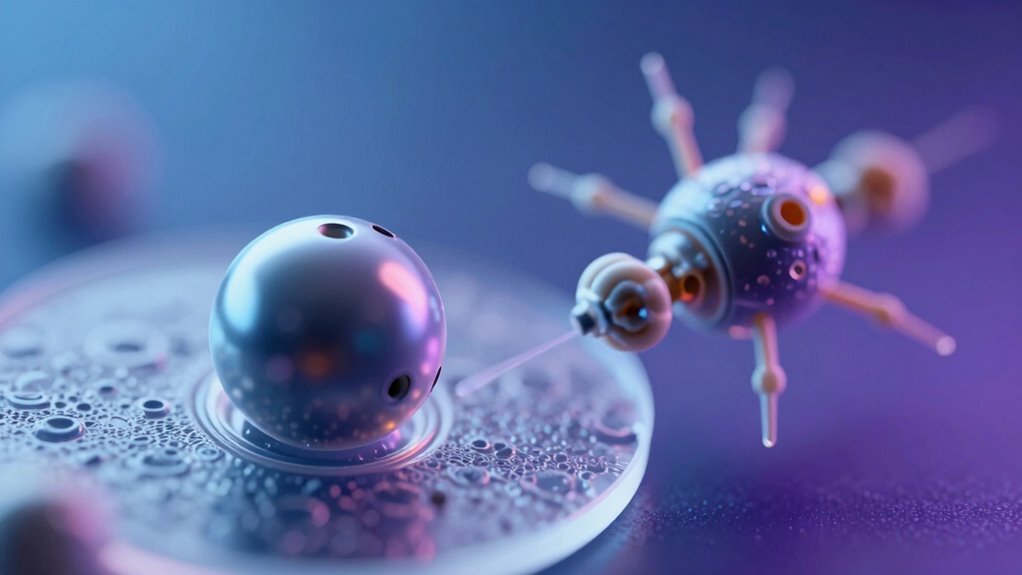
Active nanomachines, on the other hand, are designed to perform work autonomously by actively converting energy into motion or action. They have more sophisticated nanomachine mechanisms that enable them to manipulate molecular interactions intentionally. These interactions often involve chemical reactions, electron transfers, or mechanical movements driven by internal energy sources like chemical fuels or electrical signals. Active nanomachines can change configuration, propel themselves, or carry out tasks with high precision and control. For example, they might rotate, walk, or switch states based on internal programming or external commands. Because they generate their own energy, they can perform complex sequences of actions, making them suitable for targeted drug delivery, nanoscale assembly, or environmental sensing that requires dynamic responsiveness. Their ability to perform complex tasks** is a direct result of their internal energy management and control mechanisms. Additionally, their capacity for energy conversion** allows them to operate efficiently in various environments, further expanding their potential applications. The internal energy sources they utilize enable sustained activity over extended periods, which is crucial for many practical implementations.
Popular right now

TCL 85 Designer Series QD-Mini LED TV (Model 85A400U) with Google Smart TV

Dyson Cyclone V10 Origin Cordless Vacuum

Philips 4400 Series Fully Automatic Espresso Machine with LatteGo Milk System
As an affiliate, we earn on qualifying purchases.
Frequently Asked Questions
How Long Do Nanomachines Typically Operate Before Failure?
Nanomachine lifespan varies, but many are designed for hours to days of operational durability. Factors like the materials used, environmental conditions, and workload influence how long they function before failure. You should expect active nanomachines to have a shorter lifespan if they operate continuously or in harsh environments. Regular maintenance or advancements in nanotech can extend their operational durability, but ultimately, their lifespan depends on their specific design and usage.
What Are the Main Materials Used in Constructing Nanomachines?
You’ll find that the main materials used in nanomachines include carbon-based materials like graphene and carbon nanotubes, which offer excellent material durability. Metals like gold and platinum are also common because they’re conductive and biocompatible. Advanced fabrication techniques like chemical vapor deposition and atomic layer deposition help you build precise structures at the nanoscale, ensuring the nanomachines are both durable and functional for their intended applications.
Can Passive and Active Nanomachines Work Together in Applications?
Passive and active nanomachines can team up in incredible ways, revealing a synergy potential that’s almost like magic. They work together seamlessly in collaborative applications, with passive nanomachines providing support and structural stability, while active ones drive motion or perform tasks. This combined power enhances efficiency, enabling groundbreaking advancements in medicine, manufacturing, and environmental cleanup. Their collaboration could revolutionize industries, transforming the impossible into everyday reality.
Are There Safety Concerns Related to Nanomachine Deployment?
You should be aware that deploying nanomachines raises safety concerns, especially regarding nanomachine toxicity and ethical considerations. These tiny devices could potentially cause harm if they malfunction or if their materials are toxic. Ethical issues involve privacy, consent, and environmental impact. It’s vital to thoroughly evaluate these risks, regulate their use, and develop safety protocols to prevent unintended consequences and guarantee responsible deployment of nanomachines.
How Do Environmental Factors Affect Nanomachine Performance?
Environmental factors impact nanomachine performance like wind affects a kite’s flight. You’ll find that environmental resilience is essential for maintaining ideal function amid temperature fluctuations, pH changes, or chemical exposure. These conditions can hinder or enhance nanomachines’ adaptive functionality, which allows them to modify their behavior in real-time. To guarantee efficiency, designers must consider these variables, enabling nanomachines to operate reliably in diverse and challenging environments.
Conclusion
In the dance of nanotechnology, passive nanomachines drift like silent shadows, waiting for commands to act, while active nanomachines pulse with purpose, driven by energy and design. Think of passive as the calm before the storm and active as the storm itself—each essential in their own right. Ultimately, understanding their difference is like holding the keys to a universe of possibilities, revealing innovations that can change the world, one tiny revolution at a time.