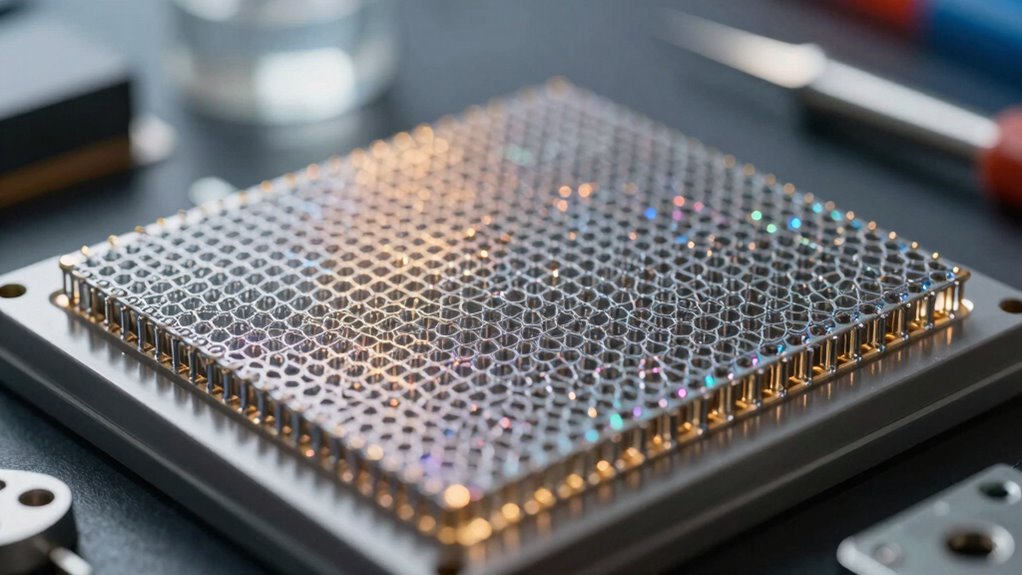

Nanoengineering helps you fine-tune material behavior by allowing precise control of atomic and molecular structures at the nanoscale. You can manipulate surface properties, enhance electrical, optical, and magnetic functions, and utilize quantum effects to improve performance. Adjusting surface chemistry and increasing surface-to-volume ratios enable you to optimize reactivity, stability, and functionality. Exploring how these techniques work together opens up exciting possibilities for smarter, customized materials that suit your specific needs.
Listen free for 30 days with Audible
Thousands of audiobooks and originals — cancel anytime.
As an affiliate, we earn on qualifying purchases.
Key Takeaways
- Nanoengineering allows precise manipulation of material properties at atomic and molecular levels for customized functionalities.
- Quantum effects at nanoscale enhance electrical, optical, and magnetic behaviors for advanced device performance.
- Surface modifications optimize interactions, improve biocompatibility, and increase resistance to corrosion or wear.
- Increased surface-to-volume ratios enable surface chemistry tailoring to improve stability and functionality.
- Combining quantum effects with surface engineering creates smarter, highly specialized nanomaterials for diverse applications.
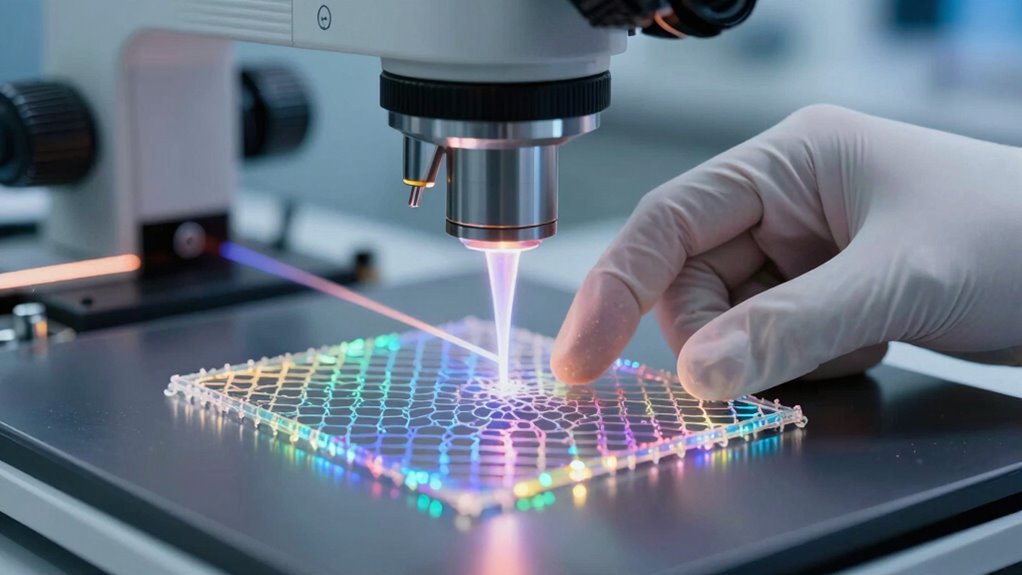
Nanoengineering has revolutionized the way we manipulate materials at the atomic and molecular levels, allowing scientists to precisely control their properties. This control opens up new possibilities for customizing materials to meet specific needs. One of the key ways nanoengineering achieves this is through understanding and harnessing quantum effects. When materials are reduced to nanoscale dimensions, quantum effects become prominent, significantly influencing their electrical, optical, and magnetic behaviors. By leveraging these effects, you can enhance material performance, such as increasing conductivity or tuning optical properties, which wouldn’t be possible at larger scales. These quantum phenomena enable you to design materials with highly specific functions, like quantum dots for targeted drug delivery or nanoscale transistors for faster electronics. Additionally, mastering quantum effects allows researchers to develop novel devices that operate at unprecedented speeds and efficiencies. Surface modifications are another critical aspect of nanoengineering that help fine-tune material behavior. When you modify the surface of a nanomaterial, you alter how it interacts with its environment, affecting properties like chemical reactivity, adhesion, and biocompatibility. For instance, adding functional groups or coatings can make materials more resistant to corrosion or enable specific biological interactions. Surface modifications also help in controlling catalytic activity, which is crucial for energy conversion and chemical synthesis. By precisely engineering the surface, you can optimize a material’s performance for applications like sensors, drug delivery systems, or environmentally friendly catalysts.
Nanoengineering leverages quantum effects to enhance material properties and enable innovative, highly specific functions at the nanoscale.
At the nanoscale, the increased surface-to-volume ratio means surface effects dominate the material’s overall behavior. This makes surface modifications especially impactful. You can tailor the surface chemistry to improve stability or introduce new functionalities. For example, in medical applications, coating nanoparticles with biocompatible materials prevents immune rejection and improves targeting accuracy. In electronics, surface treatments can enhance charge transport or reduce energy loss, making devices more efficient. The ability to modify surfaces at the atomic level means you can address specific challenges, such as improving wear resistance or creating self-cleaning surfaces.
Combining an understanding of quantum effects with precise surface modifications allows you to push the boundaries of material capabilities. This synergy leads to innovations in energy storage, nanomedicine, and environmental remediation. Nanoengineering empowers you to design materials that aren’t just smaller but smarter—offering tailored properties that meet the demands of advanced technologies. Ultimately, by controlling quantum phenomena and surface chemistry at the nanoscale, you access a new realm of possibilities for fine-tuning material behavior with unprecedented precision.
nanotechnology surface modification kit
As an affiliate, we earn on qualifying purchases.
As an affiliate, we earn on qualifying purchases.
Frequently Asked Questions
How Does Nanoengineering Differ From Traditional Materials Engineering?
Nanoengineering differs from traditional materials engineering by allowing you to manipulate materials at the molecular level, giving you precise control over their properties. You can perform surface modification to enhance specific functions like strength, conductivity, or biocompatibility. Unlike traditional methods, nanoengineering enables you to design materials with tailored behaviors, leading to innovations in electronics, medicine, and energy storage through detailed control at the nanoscale.
What Are the Primary Tools Used in Nanoengineering Research?
Imagine wielding tiny brushes and molecular scissors—you’re using nanoengineering’s primary tools. You engage in molecular manipulation, precisely controlling atoms and molecules to craft desired properties. Surface modification allows you to alter material surfaces at the nanoscale, enhancing functionality or durability. These tools empower you to design materials with unparalleled precision, unleashing innovations across medicine, electronics, and energy. Nanoengineering’s toolkit turns microscopic control into monumental breakthroughs.
Can Nanoengineering Improve Material Sustainability?
Yes, nanoengineering can improve material sustainability by developing eco-friendly nanomaterials and utilizing renewable nano fabrication methods. You can create materials that are biodegradable, less toxic, and more energy-efficient, reducing environmental impact. By harnessing these advanced techniques, you contribute to sustainable innovation, making products that are both functional and environmentally responsible. This approach helps address global sustainability challenges while advancing technological progress.
What Are Potential Health Risks Associated With Nanoengineered Materials?
You should be aware that nanoengineered materials pose potential health risks due to nanoparticle toxicity, which can lead to respiratory issues or cellular damage if inhaled or ingested. Additionally, their environmental impact raises concerns about pollution and ecological disruption when these materials are released. Proper safety measures and thorough testing are essential to minimize risks, ensuring safe handling and responsible disposal to protect human health and the environment.
How Scalable Are Nanoengineering Techniques for Industrial Applications?
Nanoengineering techniques are increasingly scalable for industrial applications, but you’ll face scalability challenges. Manufacturing processes need to adapt from lab-scale to mass production, requiring significant investment and innovation. You must guarantee quality control and uniformity across large batches. Successful industrial integration depends on developing cost-effective, reliable methods that can handle high volumes while maintaining the precision nanoengineering offers. Overcoming these hurdles will enable broad commercial use of nanoengineered materials.
quantum dot nanoparticles for research
As an affiliate, we earn on qualifying purchases.
As an affiliate, we earn on qualifying purchases.
Conclusion
Imagine you’re adjusting the strings of a guitar to get the perfect sound—you’re fine-tuning each note for harmony. Nanoengineering works the same way, tweaking materials at an atomic level to optimize their behavior. Just like that precise tuning transforms music, tiny changes in nanomaterials can revolutionize industries—from stronger batteries to lighter aircraft. With each nano-adjustment, you’re composing a future where materials perform exactly as you need, harmonizing science and innovation seamlessly.
nanoscale surface coating materials
As an affiliate, we earn on qualifying purchases.
As an affiliate, we earn on qualifying purchases.
nanomaterials for energy storage
As an affiliate, we earn on qualifying purchases.
As an affiliate, we earn on qualifying purchases.
Flea & tick season Picks
flea and tick prevention
As an affiliate, we earn on qualifying purchases.