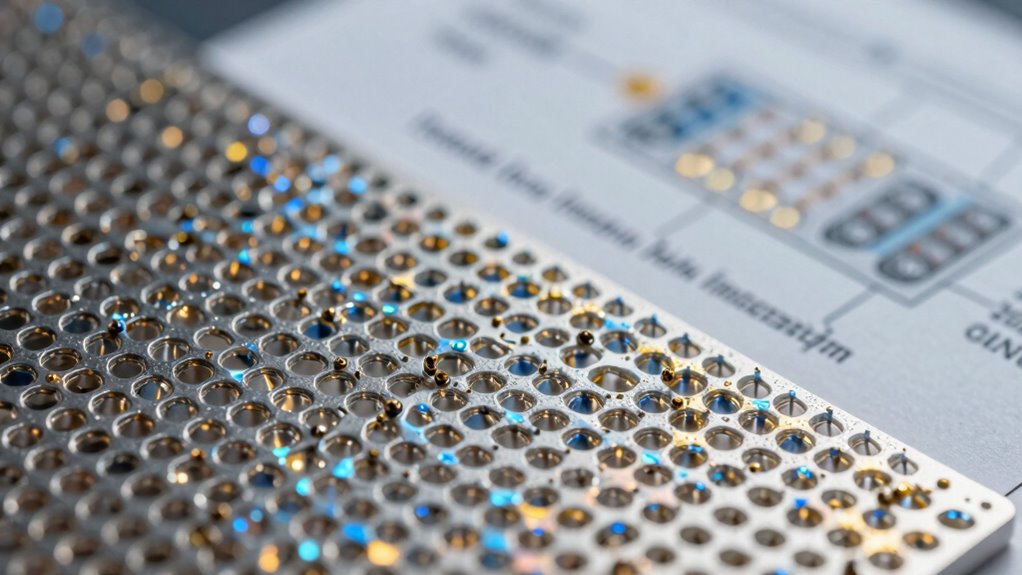

Nanomaterials influence the balance between mechanical strength and electrical performance through their unique quantum effects and surface modifications. Their small size enhances properties like flexibility and conductivity but can also introduce stability issues. Improving surface stability often involves modifications that boost mechanical durability, though too much can lower electrical conductivity. Adjusting these factors allows you to optimize performance for specific applications. Stay with us to uncover how precise control over these tradeoffs reveals nanomaterials’ full potential.

Get the latest gadgets delivered free with Prime
- Fast, free delivery on millions of items
- Prime Video, Amazon Music and more included
- Member-only deals all year
Key Takeaways
- Quantum confinement allows tuning electrical properties but can compromise stability and mechanical strength.
- Surface modifications enhance mechanical durability while maintaining or improving electrical conductivity.
- High surface-to-volume ratios amplify surface effects, influencing the balance between electrical performance and mechanical stability.
- Managing quantum effects is crucial to optimize both electrical conductivity and mechanical resilience.
- Application-specific design involves controlling surface chemistry and quantum properties to balance tradeoffs effectively.
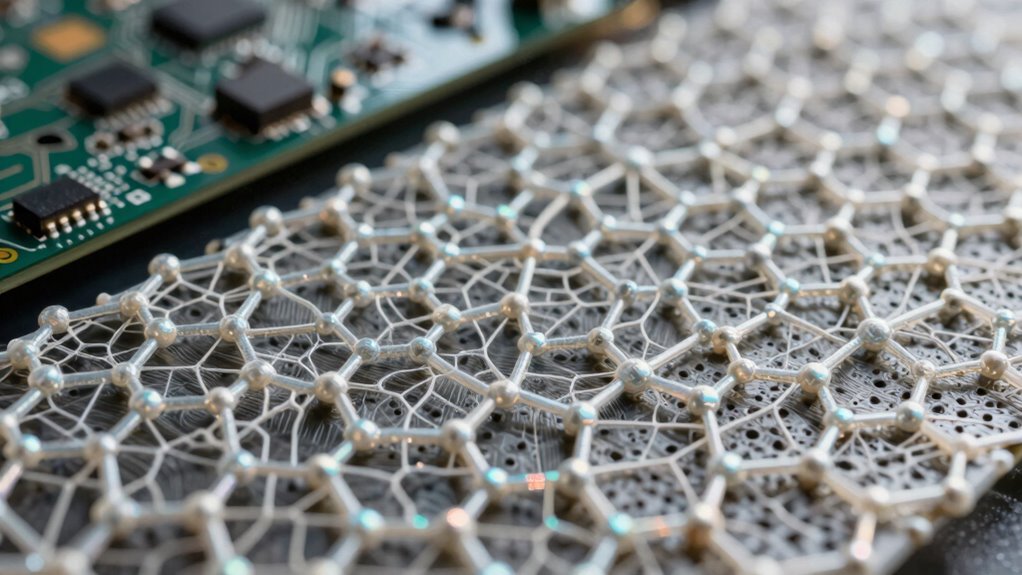
Nano materials have revolutionized the fields of electronics and mechanics by offering exceptional strength, flexibility, and conductivity at an atomic scale. These tiny materials exhibit unique properties that deviate from their bulk counterparts, largely due to quantum effects. When dimensions shrink to the nanoscale, the behavior of electrons changes considerably, influencing electrical conductivity, optical responses, and even chemical reactivity. This quantum confinement means you can tune the electrical properties of nanomaterials by controlling their size and shape, making them ideal for applications where precise electrical performance is essential. However, these same quantum effects also introduce tradeoffs; for instance, while nanomaterials can be highly conductive, their stability and integration into larger systems can become challenging, especially when quantum effects induce variability or instability.
Nanomaterials’ quantum effects enable precise tuning but pose stability and integration challenges.
Surface modifications play an essential role in balancing these tradeoffs. At the nanoscale, surface atoms make up a substantial proportion of the material, so altering the surface can dramatically change properties like electrical conductivity, mechanical strength, or chemical reactivity. You can intentionally modify surfaces to enhance specific traits—such as coating nanomaterials with insulating layers to prevent unwanted quantum effects or functionalizing surfaces with chemical groups to improve compatibility with other materials. These modifications help mitigate some of the inherent tradeoffs in nano materials, like fragility or susceptibility to environmental degradation. For example, surface passivation can protect nanostructures from oxidation without compromising their electrical conductivity or mechanical integrity. Additionally, understanding how quantum effects influence material behavior is crucial for tailoring nanomaterials to specific needs.
The interplay between quantum effects and surface modifications becomes especially important when considering mechanical versus electrical tradeoffs. At the nanoscale, increasing surface modifications can improve mechanical durability but may also reduce electrical conductivity if not carefully engineered. Conversely, optimizing quantum effects for electrical performance might weaken the material mechanically if the structure isn’t properly stabilized. You need to find a delicate balance—using surface modifications to reinforce mechanical stability without sacrificing the electrical benefits brought about by quantum effects. Recognizing how surface-to-volume ratio impacts these tradeoffs is vital for designing resilient nanomaterials.
Ultimately, understanding and manipulating these factors allow you to tailor nanomaterials to meet specific application needs. Whether it’s maximizing electrical performance in nanoelectronics or enhancing mechanical resilience in nanomechanical devices, the key lies in controlling quantum effects and surface modifications. By doing so, you can navigate the inherent tradeoffs, harnessing the extraordinary potential of nanomaterials while minimizing their limitations. This nuanced control is what pushes the boundaries of what’s possible in both electronics and mechanics at an atomic level.
nanomaterials for electrical conductivity
As an affiliate, we earn on qualifying purchases.
As an affiliate, we earn on qualifying purchases.
Frequently Asked Questions
How Do Nano Materials Affect Long-Term Durability?
Nano materials boost your product’s long-term durability through nano-enhanced durability, making surfaces more resistant to wear, corrosion, and environmental damage. By incorporating nanostructures, you extend material longevity, ensuring your items last longer and perform better over time. This advanced technology strengthens the material at a microscopic level, reducing degradation and maintaining structural integrity. As a result, you benefit from increased reliability, lower maintenance costs, and enhanced overall performance.
What Environmental Impacts Are Associated With Nano Material Production?
You might not realize it, but nano material production can release environmental toxicity on a massive scale and drain resources faster than you can blink. The process often involves hazardous chemicals and energy-intensive methods, risking contamination of ecosystems. Resource depletion becomes a serious concern as rare elements are mined relentlessly. These environmental impacts threaten both natural habitats and human health, making it vital to develop sustainable nanotechnology practices now.
Can Nano Materials Be Recycled Efficiently?
Recycling nano materials is challenging due to their tiny size and complex structures, making separation and recovery difficult. You’ll find that recycling challenges hinder their efficient reuse, often raising questions about economic viability. Currently, the high costs and technical hurdles limit large-scale recycling efforts. However, ongoing research aims to develop better methods, promising a future where nano materials can be recycled more effectively, reducing waste and environmental impact.
How Do Nano Materials Influence Cost Compared to Traditional Materials?
Nano materials often increase initial costs due to complex production processes, but they can lead to significant cost reductions over time through material innovation. Their unique properties enable lighter, stronger, and more efficient products, reducing material waste and energy consumption. As you adopt nano materials, you’ll find that their long-term benefits, like durability and performance, outweigh the higher upfront expenses, ultimately making your projects more cost-effective.
Are There Health Risks for Workers Handling Nano Materials?
You should be aware that worker exposure to nano materials can pose health risks, especially if proper health safety measures aren’t in place. Nano particles can penetrate deep into the lungs or skin, potentially causing respiratory or other health issues. To protect yourself, guarantee you’re using appropriate protective gear, working in well-ventilated areas, and following safety protocols to minimize health risks associated with handling nano materials.
nanomaterial surface modification coatings
As an affiliate, we earn on qualifying purchases.
As an affiliate, we earn on qualifying purchases.
Conclusion
You now see how nano materials shape the delicate dance between mechanical strength and electrical performance. Like a tightrope walker balancing above a chasm, you must navigate these tradeoffs with precision. As nanotechnology advances, you’ll discover that pushing one limit often pulls another—reminding you that progress is a careful act of balance. Embrace this challenge, for in mastering these tradeoffs, you reveal the true potential of nano materials—the tiny giants transforming our world.
nanomaterials for mechanical strength
As an affiliate, we earn on qualifying purchases.
As an affiliate, we earn on qualifying purchases.
As an affiliate, we earn on qualifying purchases.
Halloween Picks
halloween
As an affiliate, we earn on qualifying purchases.