
Nanotech is valuable for high-precision diagnostics because it uses tiny particles like quantum dots that can emit bright, tunable signals to target specific biomarkers. You can attach recognition molecules to these particles, reducing false positives and ensuring they light up only when certain molecules are present. This makes detection faster, more reliable, and capable of identifying multiple targets simultaneously. If you want to explore how nanotech is revolutionizing disease detection, there’s more to discover below.
Listen free for 30 days with Audible
Thousands of audiobooks and originals — cancel anytime.
As an affiliate, we earn on qualifying purchases.
Key Takeaways
- Quantum dots provide highly sensitive and specific detection of disease biomarkers through bright, tunable fluorescence.
- Surface functionalization allows precise targeting of molecules, reducing false positives in diagnostics.
- Multiplexing capabilities enable simultaneous detection of multiple targets, increasing diagnostic efficiency.
- Nanomaterials enhance signal stability and enable real-time, high-precision imaging.
- Ongoing safety and environmental controls improve reliability and clinical applicability of nanotech-based diagnostics.
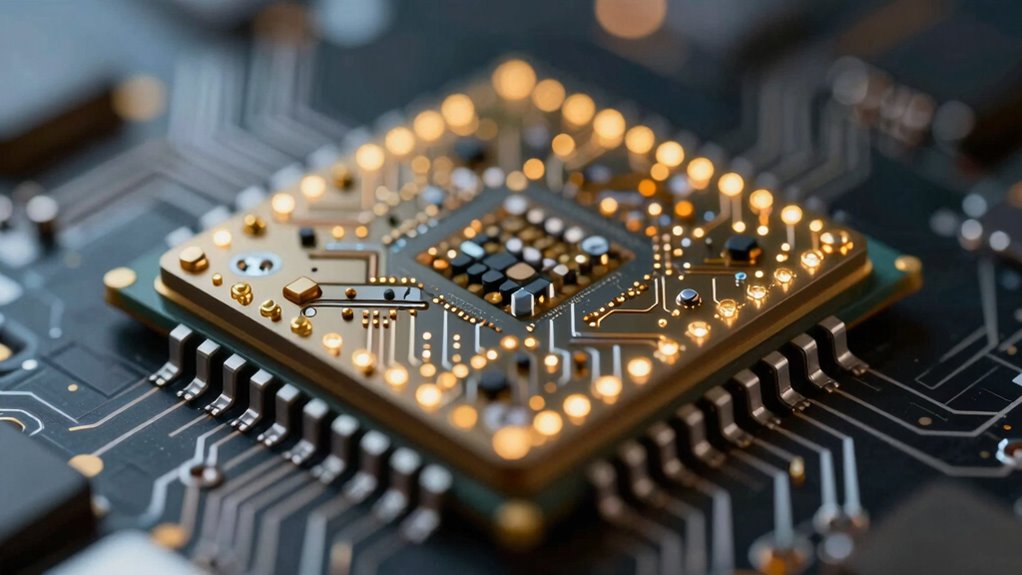
Have you ever wondered how tiny technology can revolutionize medical diagnostics? It’s a fascinating world where nanotechnology plays a vital role, especially through the use of quantum dots and surface functionalization. These innovations enable you to detect diseases with remarkable accuracy, often before symptoms even appear. Quantum dots are minuscule semiconductor particles that emit bright, tunable fluorescence when exposed to specific wavelengths of light. Their small size and unique optical properties make them ideal for tagging and tracking biological molecules. When you incorporate quantum dots into diagnostic tests, you can achieve highly sensitive detection of biomarkers, allowing for early diagnosis of conditions like cancer or infectious diseases.
Tiny quantum dots enable highly sensitive, early disease detection through customizable, fluorescent tagging of biological molecules.
Surface functionalization amplifies the capabilities of quantum dots by attaching specific molecules to their surfaces. Think of it as customizing each quantum dot to recognize and bind to particular targets within your body. By adding antibodies, peptides, or other recognition elements, surface functionalization guarantees that quantum dots only light up in the presence of the molecules you’re interested in. This specificity dramatically reduces false positives and increases confidence in your diagnostic results. The process is precise; it allows you to tailor each nanoparticle for different applications, whether you’re testing blood, saliva, or tissue samples.
This combination of quantum dots and surface functionalization makes nanotech invaluable for high-precision diagnostics. You’re able to visualize and quantify minute levels of disease markers with unprecedented clarity. The bright fluorescence of quantum dots enables real-time imaging, giving you immediate feedback during tests. Plus, their stability and resistance to photobleaching mean you can analyze samples over extended periods without losing signal quality. As a result, your diagnostics become faster, more reliable, and capable of identifying diseases at stages that traditional methods might miss. Additionally, the integration of nanomaterials in diagnostic platforms continuously advances the sensitivity and specificity of detection techniques. Understanding how nanoparticles interact with biological systems is crucial for ensuring both effectiveness and safety in clinical applications.
Moreover, nanotech’s versatility means you can develop multiplexed tests. You can attach different surface functionalizations to various quantum dots, each emitting distinct colors. This setup allows you to detect multiple targets simultaneously in a single sample, saving time and resources. The precision and customization provided by surface functionalization and quantum dots open new avenues for personalized medicine, where treatments are tailored based on highly specific diagnostic information. Additionally, understanding and controlling microplastics in dust and other environmental factors can further improve the accuracy and reliability of nanotech-based diagnostics. Recent studies also highlight how nanoparticle safety is a crucial aspect that continues to be refined for widespread clinical use. In essence, this tiny technology offers a giant leap forward in your ability to diagnose, monitor, and treat diseases more effectively than ever before.
As an affiliate, we earn on qualifying purchases.
Frequently Asked Questions
How Does Nanotech Improve Diagnostic Accuracy?
Nanotech improves diagnostic accuracy by enhancing molecular detection and signal amplification. You benefit from highly sensitive tools that identify even tiny amounts of biomarkers, reducing false negatives. Its precision allows you to detect diseases early, with clearer results. By using nanomaterials, you get faster, more reliable data, making it easier to diagnose accurately and promptly. This technology ultimately helps you make more informed decisions about patient care.
Are Nanotech-Based Diagnostics Cost-Effective?
Nanotech-based diagnostics are like a sharp scalpel, offering precision at a lower cost. They considerably reduce testing expenses through streamlined processes and minimal reagent use, making them more accessible. As more healthcare providers recognize their benefits, market adoption grows, driving costs down further. This combination of cost reduction and increased acceptance makes nanotech diagnostics not just innovative but also financially sustainable, paving the way for widespread use.
What Are Potential Safety Concerns With Nanotech Diagnostics?
You should be aware that potential safety concerns with nanotech diagnostics include nanoparticle toxicity, which can harm cells or tissues if not properly controlled. Additionally, there’s environmental impact to take into account, as nanoparticles may persist and accumulate in ecosystems, causing unforeseen harm. To address these risks, researchers work on developing safer nanomaterials, but ongoing monitoring and regulation are essential to prevent adverse health and environmental effects.
How Scalable Are Nanotech Diagnostic Tools?
Scaling nanotech diagnostic tools presents significant scalability challenges and manufacturing hurdles. You’ll find that translating lab prototypes into large-scale production demands delicate precision and demanding diligence. While the technology holds immense promise, ensuring consistent quality, cost-effectiveness, and mass manufacturability remains a complex challenge. Overcoming these obstacles requires innovative integration, increased investment, and international cooperation to make nanotech diagnostics widely accessible and reliably scalable for global healthcare needs.
What Is the Future Outlook for Nanotech in Medicine?
The future of nanotech in medicine looks promising, especially in molecular manipulation and targeted therapies. You’ll see more precise drug delivery systems that minimize side effects and improve effectiveness. Researchers are developing smarter nanodevices that can detect diseases early and even repair damaged tissues. As technology advances, nanotech will become an essential part of personalized medicine, offering tailored treatments that enhance patient outcomes and revolutionize healthcare.
multiplex biomarker detection kit
As an affiliate, we earn on qualifying purchases.
As an affiliate, we earn on qualifying purchases.
Conclusion
Nanotech is like a finely tuned compass, guiding you through the complex landscape of diagnostics with pinpoint accuracy. Its tiny tools can detect diseases at their earliest stages, turning the tide in healthcare. As you embrace this technology, you’re opening a future where precision and speed are your best allies. With nanotech’s power, the path to better health becomes clearer, brighter, and more promising—illuminating the way to a healthier tomorrow.
high sensitivity disease detection tools
As an affiliate, we earn on qualifying purchases.
As an affiliate, we earn on qualifying purchases.
As an affiliate, we earn on qualifying purchases.
NFL season / tailgating Picks
team gear
As an affiliate, we earn on qualifying purchases.