

Nano materials support cleaner industrial chemistry by acting as highly efficient catalysts that speed up reactions and operate under milder conditions. They have a large surface area and can be customized to improve stability and selectivity, which reduces waste and harmful byproducts. Additionally, nano catalysts often lower energy use and emissions. As a result, industries can become more sustainable. Keep exploring to discover how these innovations are transforming industrial processes toward eco-friendliness.
Key Takeaways
- Nanoparticle catalysts increase reaction efficiency, reducing waste and harmful byproducts in industrial processes.
- Surface modification enhances catalyst stability, extending lifespan and decreasing the need for frequent replacement.
- Nano materials enable reactions under milder conditions, lowering energy consumption and emissions.
- Scalable synthesis methods ensure consistent quality and safety of nanocatalysts for industrial use.
- Eco-friendly production techniques minimize environmental impact, supporting sustainable manufacturing practices.
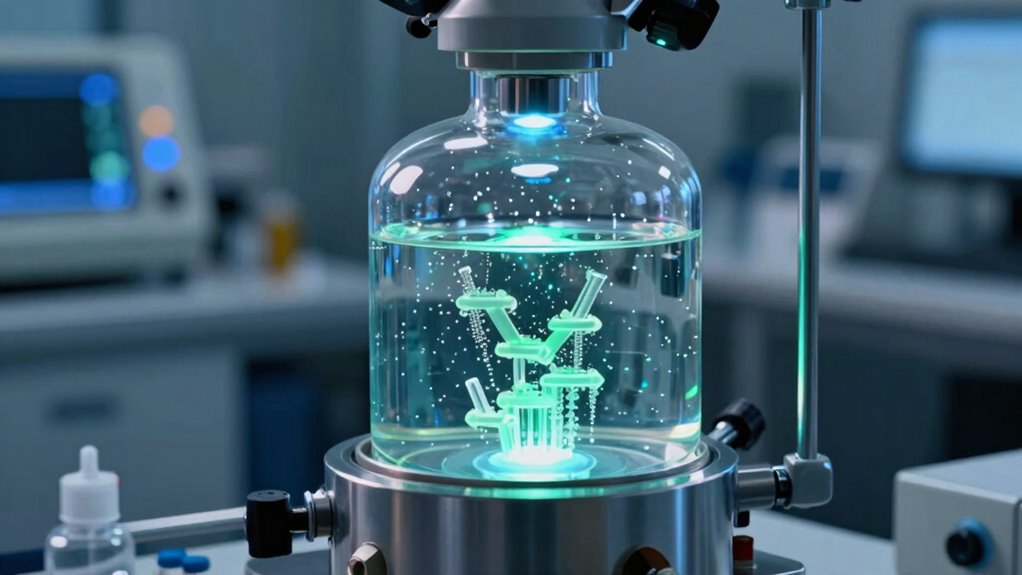
Nanomaterials are revolutionizing industrial chemistry by enabling cleaner, more efficient processes. One of the most promising developments in this field is the use of nanoparticle catalysts, which markedly enhance reaction rates while reducing the need for harsh chemicals or high energy inputs. These tiny particles, often just a few nanometers in size, provide a high surface area-to-volume ratio, making them ideal for catalytic reactions. When you utilize nanoparticle catalysts, you can achieve greater selectivity and efficiency, meaning fewer byproducts and less waste. This not only cuts costs but also minimizes environmental impact, aligning with the goals of sustainable chemistry. Additionally, advancements in multi-unit setups allow for more scalable and integrated applications of nanomaterials in industrial processes. The integration of standardized testing protocols ensures consistent quality and performance of nanocatalysts across different applications. Incorporating quality control measures further guarantees the reliability and safety of nanomaterials used in various industries. Recent innovations in nanomaterial synthesis contribute to more environmentally friendly production methods, reducing the overall ecological footprint.
Surface modification techniques further amplify the benefits of nanomaterials. By tailoring the surface properties of nanoparticles, you can improve their stability, dispersibility, and interaction with specific reactants. For instance, you might add functional groups or coatings that facilitate better catalyst-substrate interactions, leading to faster and cleaner reactions. Surface modifications also help prevent aggregation of nanoparticles, ensuring they stay active over longer periods. This durability reduces the need for frequent catalyst replacements, decreasing waste and resource consumption. Moreover, recent research highlights the importance of nanostructure design in enhancing catalyst performance, allowing for even more precise control over reactions. Furthermore, with precise surface engineering, you can design catalysts that operate effectively under milder conditions, such as lower temperatures and pressures, which reduces energy consumption and emissions.

Research Grade KH570 Processing 20nm Nano Silicon Dioxide Powder Silica Nanoparticles SiO2 Nanopowder with 99% Purity
- Product Name: KH570 Processing Nano Silicon Dioxide Powder
- Appearance: White powder
- Particle Size: 20nm
As an affiliate, we earn on qualifying purchases.
As an affiliate, we earn on qualifying purchases.
Frequently Asked Questions
How Cost-Effective Are Nano Materials for Large-Scale Industrial Applications?
Nano materials can be cost-effective for large-scale applications but depend on the specific use and production methods. You’ll face cost implications related to their synthesis and potential scalability challenges. While initial expenses might be high, advancements in manufacturing could lower costs over time. To maximize benefits, you need to carefully evaluate the balance between performance improvements and the investment needed for large-scale deployment, ensuring the technology remains economically viable.
What Are the Potential Environmental Risks of Using Nano Materials?
Think of nano materials as tiny, powerful explorers—yet, their environmental toxicity can be a double-edged sword. You risk unintended ecological impacts if these particles escape into nature, disrupting ecosystems and harming wildlife. Their small size allows them to penetrate cells and water sources, potentially causing long-term environmental toxicity. So, careful management and thorough risk assessments are essential to prevent these promising materials from becoming environmental villains.
How Do Nano Materials Compare to Traditional Catalysts in Efficiency?
Nano materials often outperform traditional catalysts in efficiency because their nano stability allows for greater surface area, which enhances catalytic activity. You can improve their performance further through surface modifications that optimize active sites. Unlike bulk catalysts, nano materials can be tailored at the molecular level, providing faster reactions, lower energy consumption, and increased selectivity. This makes them ideal for cleaner industrial processes, reducing waste and emissions.
Are Nano Materials Safe for Workers Handling Industrial Chemicals?
Nano materials aren’t inherently unsafe for workers if proper handling protocols are followed, but they can pose health risks if mishandled. You need to prioritize worker safety by wearing protective gear and following strict handling procedures. While nano particles are tiny enough to penetrate tissues, responsible practices reduce exposure. With diligent safety measures, you can confidently manage nano materials, transforming industrial chemistry into a safer, cleaner industry without risking worker health.
What Regulations Govern the Use of Nano Materials in Industry?
You need to follow regulations that govern nano materials in industry, such as guaranteeing regulatory compliance and adhering to safety standards. Agencies like OSHA, EPA, and the FDA set guidelines to manage risks associated with nanomaterials. You should stay updated on evolving legislation, implement proper safety measures, and document compliance efforts. This way, you protect workers, the environment, and ensure your operations meet all legal requirements for nanomaterials.

Nanomaterials for Sustainable Tribology
As an affiliate, we earn on qualifying purchases.
As an affiliate, we earn on qualifying purchases.
Conclusion
As you explore nano materials, you’ll find they unexpectedly support cleaner industrial chemistry, revealing a coincidence that innovation often emerges from the smallest sources. By harnessing these tiny materials, you can reduce waste and energy consumption, making industries more sustainable. It’s fascinating how such minute particles can have a massive impact, proving that sometimes, the smallest elements lead to the biggest breakthroughs in creating a cleaner, greener future.

Research Grade Ultrafine 20nm Nano Magnesium Oxide Powder MgO Nanoparticles Nanopowder with 98% Purity
- Product Name: Nano Magnesium Oxide Powder
- Appearance: White powder
- Particle Size: 20nm
As an affiliate, we earn on qualifying purchases.
As an affiliate, we earn on qualifying purchases.

Surface Modified Nanomaterials for Applications in Catalysis: Fundamentals, Methods and Applications (Micro and Nano Technologies)
As an affiliate, we earn on qualifying purchases.
As an affiliate, we earn on qualifying purchases.