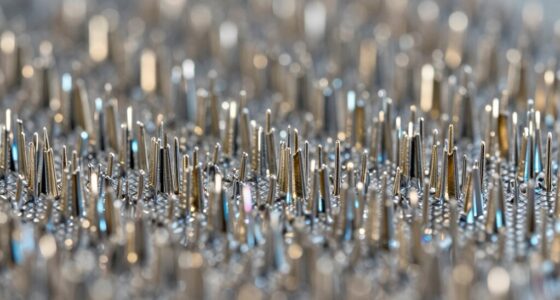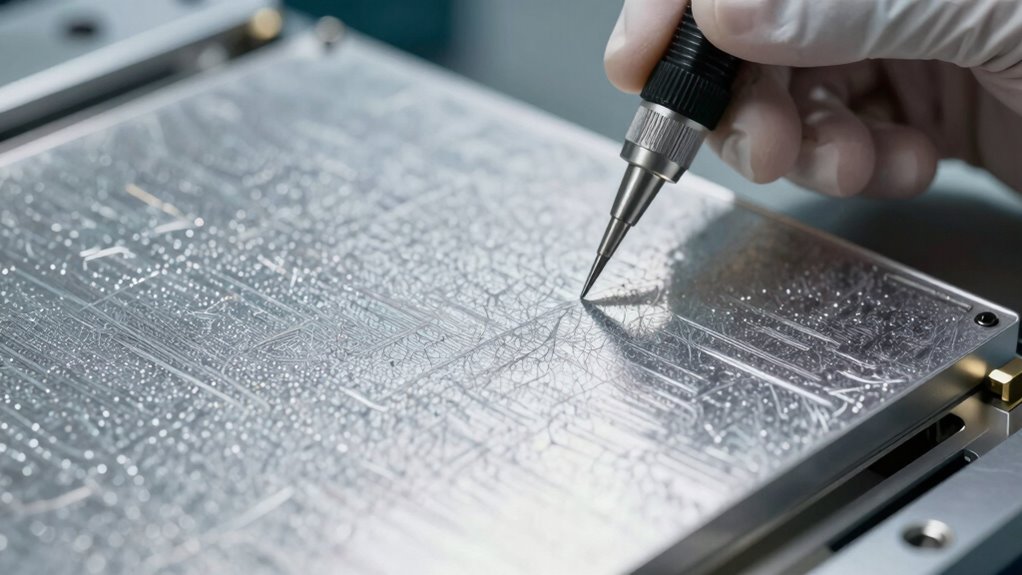
Nanotechnology can improve material efficiency in manufacturing by enabling smarter, more durable coatings and materials that resist wear, corrosion, and environmental damage. It helps you produce smaller, precise components, reducing waste and energy use. Nano-enabled surfaces and adaptive materials also extend equipment life and cut replacement costs. By adopting these innovations, you can lower your environmental footprint and boost product sustainability. Keep exploring to see how these advancements could transform your manufacturing processes.
Key Takeaways
- Nano-enabled coatings enhance surface durability, reducing material loss and extending equipment lifespan.
- Quantum dots optimize material properties, increasing efficiency while lowering raw material consumption.
- Adaptive materials respond to environmental stresses, decreasing replacement needs and waste.
- Nano-driven manufacturing processes produce smaller components with minimal defects, reducing waste and energy use.
- Overall nanotech innovations promote sustainable, high-performance products by minimizing resource and energy consumption.
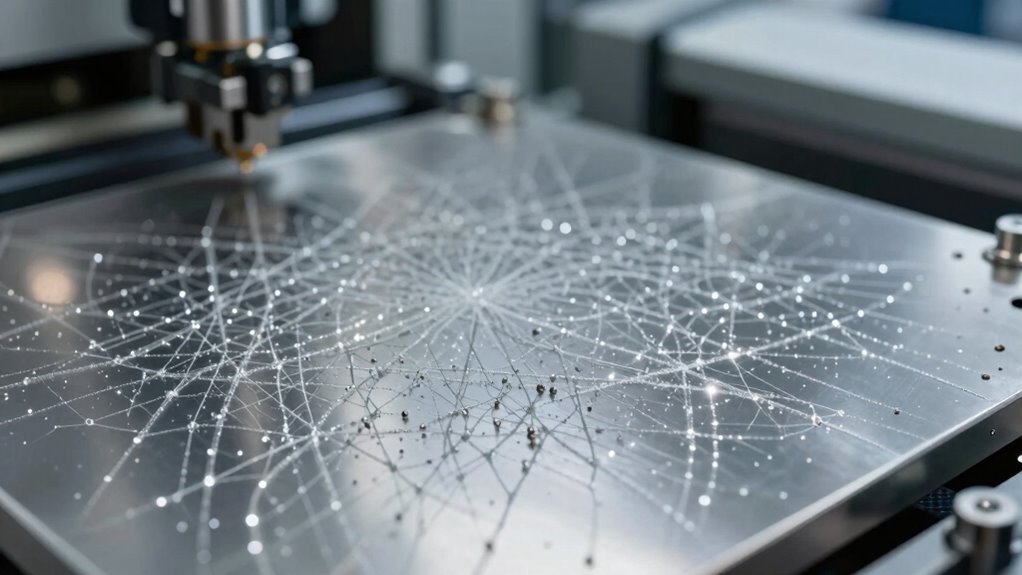
Nanotechnology is transforming manufacturing by enabling the creation of materials and devices at an incredibly small scale. This breakthrough allows you to develop products with enhanced properties, leading to greater material efficiency and lower waste. For example, nano enabled coatings are revolutionizing surface protection, making surfaces more resistant to scratches, corrosion, and environmental damage. When applied to manufacturing tools and machinery, these coatings reduce maintenance costs and extend equipment lifespan, ultimately saving resources and energy. By using such advanced coatings, you can minimize material loss and improve the durability of your products, making the entire process more sustainable.
Beyond coatings, quantum dot applications are opening new doors for material innovation. These tiny semiconductor particles can be embedded into various materials, enabling precise control over their optical and electronic properties. In manufacturing, quantum dots can be used to improve the efficiency of displays, lighting, and even solar cells, which means you get more output with less input. This not only boosts performance but also reduces the amount of raw materials needed for production. As a result, quantum dots help you create high-quality, energy-efficient products that are more eco-friendly and cost-effective.
The integration of nanotechnology into manufacturing also means you can design smarter materials that adapt to their environment. For instance, by incorporating nano enabled coatings, you can develop surfaces that respond to temperature changes or mechanical stress, reducing wear and tear. This adaptability leads to materials that last longer, requiring fewer replacements and less material consumption over time. Furthermore, the precision of nanotechnology enables you to produce components with minimal defects, decreasing waste and increasing overall yield. Material properties can be precisely engineered to meet specific performance criteria, further enhancing manufacturing efficiency. Additionally, understanding nanomaterials’ unique behaviors allows engineers to tailor materials for specialized applications, increasing the scope of innovation. Incorporating nano scale manufacturing techniques can also streamline production workflows and reduce process complexity.
You’ll also find that nanotechnology facilitates more efficient manufacturing processes. Smaller, more precise components mean less material is wasted during production. Additionally, nanomaterials often require less energy to produce and process, cutting down on your energy consumption and environmental footprint. As you adopt these innovations, you’ll likely see faster production times, higher-quality products, and a significant reduction in resource use.
In short, nanotechnology’s ability to enhance material properties through nano enabled coatings, quantum dot applications, and other innovations directly translates to improved material efficiency in manufacturing. You can produce more durable, sustainable, and high-performing products while reducing waste and energy consumption. Nanotechnology’s small-scale innovations enable manufacturers to optimize resource use and minimize environmental impact, positioning you at the forefront of manufacturing innovation, helping you meet the growing demand for eco-friendly and cost-effective solutions in today’s competitive market.
nano coating for industrial machinery
As an affiliate, we earn on qualifying purchases.
As an affiliate, we earn on qualifying purchases.
Frequently Asked Questions
How Cost-Effective Is Nanotechnology for Small-Scale Manufacturers?
Nanotechnology can be cost-effective for small-scale manufacturers, but you need to take into account a detailed cost analysis first. While initial investments might be high, the long-term savings through improved material efficiency can offset these costs. However, scalability challenges may limit quick adoption, so you should evaluate production volume and technological maturity. With careful planning, nanotech’s benefits can outweigh the costs, especially in specialized or niche markets.
What Are the Potential Environmental Impacts of Nanomaterials?
You should know that nanomaterials can pose significant environmental hazards, with some studies showing potential toxicity to aquatic life. Their tiny size makes waste management challenging, as nanomaterials may escape into ecosystems unnoticed. These risks highlight the need for careful regulation and advanced waste management strategies to prevent environmental contamination. While nanotechnology offers benefits, you must consider these environmental impacts to guarantee sustainable development.
How Does Nanotechnology Influence Product Lifespan and Durability?
Nanotechnology considerably influences product lifespan and durability through durability enhancement, making materials more resistant to wear and tear. By incorporating nanomaterial degradation prevention techniques, you can extend the functional life of products. Nanomaterials strengthen surfaces, improve corrosion resistance, and reduce damage from environmental factors. As a result, your products last longer, perform better over time, and require fewer replacements, leading to cost savings and increased overall efficiency.
Are There Safety Protocols for Handling Nanomaterials in Factories?
You should follow strict safety protocols when handling nanomaterials in factories to guarantee worker safety. This includes using protective gear like gloves and masks, maintaining proper ventilation, and regularly training staff on safe handling procedures. Disposal procedures are equally vital; nanomaterials must be disposed of in designated containers, following environmental regulations to prevent contamination. These steps help minimize health risks and environmental impact.
What Are the Regulatory Challenges for Nanotechnology in Manufacturing?
Regulatory challenges pose significant struggles for nanotechnology in manufacturing. You’ll find frameworks and compliance standards evolving, often lagging behind rapid technological advances. Managing these nuances demands diligent dedication to safety, standards, and scientific scrutiny. Ensuring ethical, environmentally sound practices becomes a formidable but necessary duty. Staying proactive and informed about policies helps you meet regulations, mitigate risks, and maximize the marvelous potential of nanotech innovations in manufacturing.
As an affiliate, we earn on qualifying purchases.
Conclusion
So, don’t worry about nanotechnology making your manufacturing process too complex or expensive. It actually boosts efficiency by making materials stronger, lighter, and more durable—saving you money in the long run. While it might seem futuristic, many advancements are already here and ready to improve your operations. Embracing nanotech now means staying competitive and innovative, so you can confidently navigate the future of manufacturing with smarter, more efficient materials.
adaptive nanomaterials for manufacturing
As an affiliate, we earn on qualifying purchases.
As an affiliate, we earn on qualifying purchases.
nano-enabled protective coatings
As an affiliate, we earn on qualifying purchases.
As an affiliate, we earn on qualifying purchases.