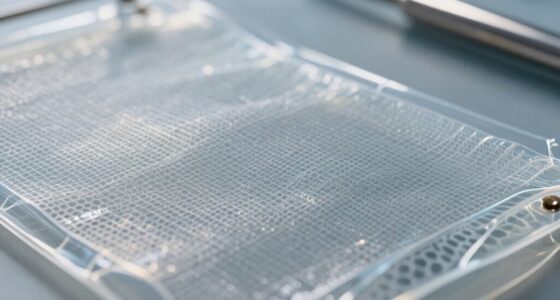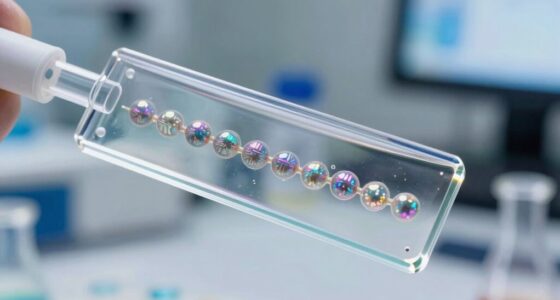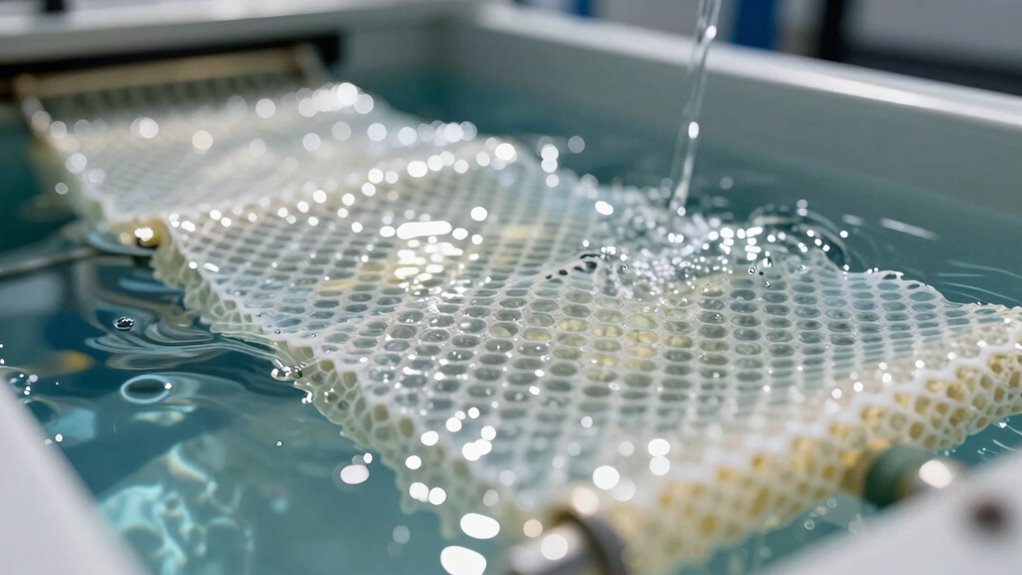

Nano surface engineering helps you achieve cleaner water by creating advanced materials that efficiently remove bacteria, viruses, and pollutants. Coated with nanoparticles like silver or titanium dioxide, filters become more reactive and resistant to fouling, reducing maintenance needs. Hydrophobic surfaces repel oils and organic matter, extending filter life. These innovations lead to safer, more sustainable water systems. If you keep exploring, you’ll discover even more ways this technology is shaping the future of water treatment.
Key Takeaways
- Nano surface engineering enables the development of advanced filtration materials that efficiently remove bacteria, viruses, and chemical pollutants.
- Incorporating hydrophobic nanomaterials prevents biofouling and extends filter lifespan, ensuring sustained water quality.
- Precision nano fabrication allows for targeted removal of specific contaminants, improving filtration effectiveness.
- Surface modifications at the nanoscale enhance flow rates and reduce clogging in water treatment systems.
- Innovations in nano surface engineering support durable, adaptable, and sustainable solutions for global clean water access.
Clean water is essential for health and sustainability, yet pollution continues to threaten its safety. As contaminants become more complex and harder to remove, traditional filtration methods often fall short. That’s where nano surface engineering comes into play, offering innovative solutions to improve water purification systems. By manipulating surfaces at the nanoscale, engineers can develop advanced materials that tackle pollutants more effectively. One key approach involves nanoparticle filtration, where tiny particles are integrated into filters to capture even the smallest contaminants. These nanoparticles, often made of materials like silver, titanium dioxide, or carbon-based compounds, provide highly reactive surfaces that can target bacteria, viruses, and chemical pollutants with unmatched efficiency. When incorporated into filtration media, nanoparticle filtration enhances the ability of water systems to remove a broad spectrum of impurities, guaranteeing cleaner, safer water for communities.
Nano surface engineering enhances water filtration by using reactive nanoparticles to efficiently remove bacteria, viruses, and chemical pollutants.
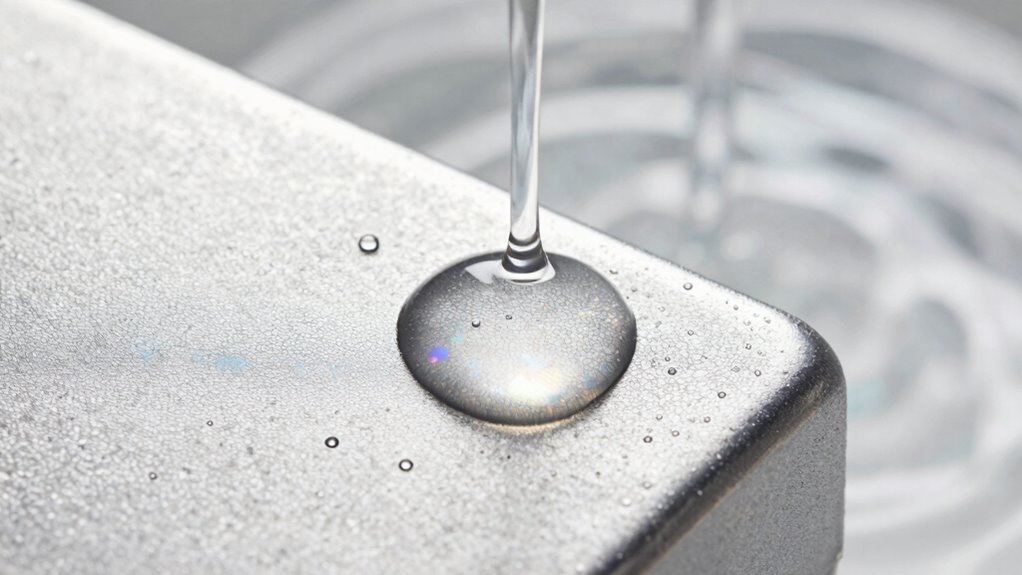
Another essential aspect of nano surface engineering is surface hydrophobicity. You might not realize it, but the water-repelling properties of a surface can dramatically influence filtration performance. Surfaces engineered to be hydrophobic prevent water from sticking or spreading across them, which reduces the buildup of biofilms and other fouling agents. This means your water filtration system can operate longer without frequent cleaning or replacement, saving you time and resources. Additionally, hydrophobic surfaces can repel oil-based pollutants and organic matter, making them particularly useful in treating industrial or polluted water sources. By designing filtration membranes with tailored surface hydrophobicity, engineers ensure water flows smoothly through the system while contaminants are effectively repelled or trapped. Furthermore, research into sound healing science highlights how specific interactions at the nanoscale can influence biological processes, hinting at future possibilities for bio-inspired water treatment technologies. Understanding these surface interactions at the nano level can lead to even more innovative solutions for water purification. Recognizing how surface properties can be optimized at the nanoscale opens new avenues for enhancing filtration capabilities. Advances in nano fabrication techniques are also expanding the potential to create more precise and effective filtration materials tailored to diverse environmental challenges. Moreover, recent progress in nano material development demonstrates how custom-engineered surfaces can be designed to target specific pollutants more efficiently, further advancing water treatment technologies.
Combining nanoparticle filtration with surface hydrophobicity creates a powerful synergy. For example, filters coated with hydrophobic nanomaterials not only block impurities but also resist fouling, maintaining high flow rates and filtration efficiency over time. This integration helps address common issues like clogging and microbial growth, which can compromise water quality. Additionally, nano surface engineering allows for customization, enabling you to select specific surface properties suited for different types of water sources and contaminants. The precision of these nano-engineered surfaces means you can develop targeted solutions that are both efficient and sustainable.
In essence, nano surface engineering equips you with tools to revolutionize water treatment. By fine-tuning surface properties at the nanoscale, you can create filtration systems that are more effective, durable, and adaptable. As pollution levels rise and water demands increase, these advanced materials could be critical in ensuring access to clean water around the world. With continued innovation, nano surface engineering might just hold the key to safer, more sustainable water systems for generations to come.
nano water filter with silver nanoparticles
As an affiliate, we earn on qualifying purchases.
As an affiliate, we earn on qualifying purchases.
Frequently Asked Questions
How Durable Are Nano Surface Coatings in Water Treatment Applications?
Nano surface coatings in water treatment are quite durable, thanks to strong surface adhesion and excellent coating stability. You’ll find that these coatings resist corrosion, fouling, and chemical degradation over time. Their robust surface adhesion ensures they remain attached even in harsh conditions, while coating stability maintains their effectiveness. This durability implies you won’t need frequent replacements, allowing for long-term, efficient water treatment with minimal maintenance.
Are Nano-Engineered Surfaces Safe for Environmental Release?
You might be surprised to learn that nano-engineered surfaces are generally considered safe for environmental release, but concerns about their environmental impact persist. Regulatory challenges exist because these materials can behave unpredictably in ecosystems, potentially affecting wildlife or water quality. Careful assessment and strict regulations are essential to guarantee their safe use. As research advances, you’ll see more thorough guidelines to balance innovation with environmental protection.
What Are the Cost Implications of Implementing Nano Surface Engineering?
Implementing nano surface engineering involves significant upfront costs, but a thorough cost analysis shows potential long-term savings through improved efficiency and durability. You’ll need to take into account material expenses, manufacturing processes, and maintenance. While the economic feasibility varies depending on scale and application, investing in nano-engineered solutions can reduce operational costs over time, making it a worthwhile consideration for sustainable water systems. Careful planning ensures you balance costs with environmental benefits.
Can Nano Surfaces Remove All Types of Water Contaminants?
You can’t catch all fish with one net, and similarly, nano surfaces can’t remove every water contaminant. Nano filtration and surface modification excel at targeting specific pollutants, like heavy metals or bacteria, but may struggle with complex or organic contaminants. For thorough water purification, combining nano surface engineering with other treatment methods provides a more effective solution, ensuring cleaner water for various needs.
How Scalable Are Nano Surface Engineering Techniques for Large Water Systems?
You can scale nano surface engineering techniques for large water systems by focusing on nanoparticle stability and surface modification. These factors guarantee durability and effectiveness over time, making it feasible to implement on a broader scale. Advances in manufacturing and cost reduction also support scalability, allowing you to treat larger volumes efficiently. By optimizing these aspects, you can enhance water purification processes, guaranteeing cleaner water across extensive systems.
hydrophobic water filtration membrane
As an affiliate, we earn on qualifying purchases.
As an affiliate, we earn on qualifying purchases.
Conclusion
By harnessing nano surface engineering, you can considerably improve water purification systems. For example, nano-engineered filters can remove up to 99.9% of contaminants, making water safer and cleaner. This technology not only enhances efficiency but also reduces the need for chemical treatments. As water scarcity grows, adopting nano solutions could be a game-changer, ensuring safe water access for millions worldwide—highlighting how tiny innovations can have a huge impact on global health.
advanced nanoparticle water purifier
As an affiliate, we earn on qualifying purchases.
As an affiliate, we earn on qualifying purchases.
industrial nano water treatment system
As an affiliate, we earn on qualifying purchases.
As an affiliate, we earn on qualifying purchases.