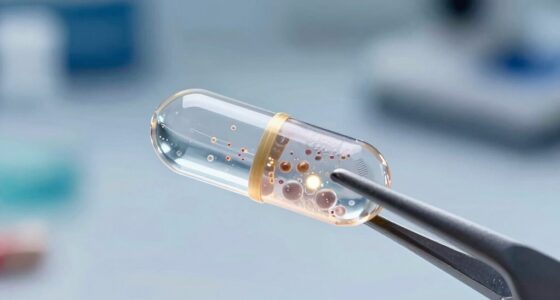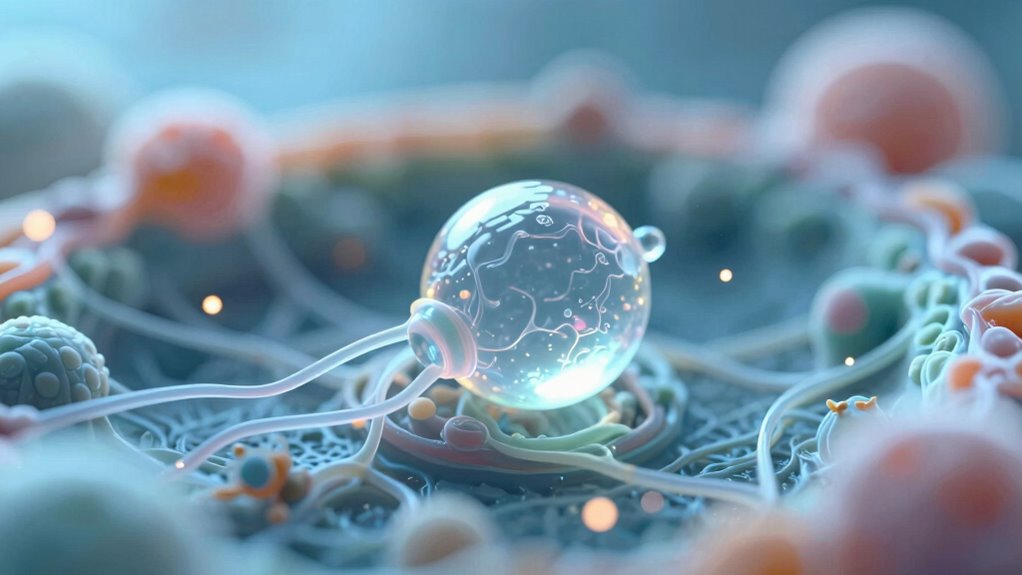

Nano carriers are promising for fragile biologics because they protect delicate molecules from degradation and harsh environments, like stomach acidity and enzymes. They can be engineered to release drugs precisely when needed, guided by triggers such as pH or enzymes, and can target specific tissues or cells with ligands or antibodies. Plus, their biocompatible materials minimize side effects and immune reactions. If you want to discover how these designs can boost treatment safety and effectiveness, keep exploring further.

Get the latest gadgets delivered free with Prime
- Fast, free delivery on millions of items
- Prime Video, Amazon Music and more included
- Member-only deals all year
Key Takeaways
- Nanocarriers protect fragile biologics from degradation by environmental factors like acidity and enzymes.
- Their small size enhances cellular uptake, improving delivery efficiency and therapeutic effectiveness.
- Engineered for targeted and controlled release, they minimize off-target effects and maximize site-specific activity.
- Use of biocompatible materials ensures safety, reduces immune reactions, and facilitates safe metabolism or elimination.
- Precise design optimization and thorough characterization improve stability, targeting, and overall therapeutic performance.

Fragile biologics, such as delicate proteins and antibodies, require specialized delivery systems to maintain their stability and efficacy. Nanocarriers emerge as a promising solution because their design can be tailored to protect these sensitive molecules from degradation, guaranteeing they reach their target intact. When considering nanocarrier design, you focus on creating structures that shield biologics from harsh environments like the stomach’s acidity or enzymatic activity. Their small size allows for enhanced cellular uptake, which improves therapeutic effectiveness. Additionally, nanocarriers can be engineered to release their payloads in response to specific stimuli, such as pH changes or enzymes, providing controlled and targeted delivery. This precision minimizes side effects and maximizes the biologic’s activity at the intended site. Incorporating biocompatibility assessment into the development process is essential to ensure these nanocarriers are safe and well-tolerated in human applications. You also need to pay close attention to biocompatibility assessment, which is vital for guaranteeing these nanocarriers are safe for human use. This involves evaluating how the body’s immune system interacts with the carrier and whether it causes any adverse reactions. A well-designed nanocarrier should be biocompatible, meaning it can circulate without provoking significant immune responses or toxicity. This assessment guides you in selecting materials that are non-toxic, non-immunogenic, and capable of being metabolized or eliminated without harm. The use of biocompatible materials like certain lipids, polymers, or naturally derived substances can markedly reduce complications and improve patient safety. Furthermore, the versatility of nanocarrier design allows you to optimize properties such as size, surface charge, and functionalization to enhance biocompatibility and targeting capabilities. For fragile biologics, this means you can incorporate specific ligands or antibodies onto the surface to direct the nanocarrier to particular cell types or tissues, increasing therapeutic precision. The integration of biocompatibility assessment into the development process ensures that these modifications don’t compromise safety or induce unintended immune responses. Moreover, understanding the properties of nanocarriers can help in designing more effective delivery systems that meet the unique needs of fragile biologics. As research progresses, the importance of well-characterized nanocarriers becomes increasingly clear in achieving safe and efficient delivery. Overall, the combination of smart nanocarrier design and thorough biocompatibility evaluation makes these delivery systems especially promising for fragile biologics, providing a means to improve their stability, safety, and therapeutic outcomes.
nanocarriers for biologic drug delivery
As an affiliate, we earn on qualifying purchases.
As an affiliate, we earn on qualifying purchases.
Frequently Asked Questions
How Do Nano Carriers Improve Biologic Stability During Storage?
Nano carriers improve biologic stability during storage by offering enhanced protection against environmental factors like temperature and pH fluctuations. They shield fragile biologics from degradation, preventing loss of activity. Additionally, nano carriers enable controlled release, maintaining the biologics’ efficacy over time. This combination guarantees your biologics stay stable longer, reducing the need for frequent dosing and increasing overall effectiveness during storage and handling.
Are Nano Carriers Cost-Effective for Large-Scale Biologic Production?
Nano carriers can be cost-effective for large-scale biologic production, especially when you consider that their use can reduce drug wastage by up to 30%. While initial cost analysis and manufacturing challenges exist, advances in scalable synthesis and process optimization are making them more feasible. As production scales up, the efficiency gains and improved biologic stability often outweigh the upfront expenses, promising a more sustainable and economical approach.
What Are the Potential Immune Responses to Nano Carrier Systems?
You should be aware that nano carrier systems can trigger immune responses like immune modulation, which may enhance or suppress the immune system unpredictably. Adverse reactions, such as inflammation or allergic responses, are also possible due to their small size and surface properties. These reactions vary depending on the carrier’s composition and surface modifications. Monitoring immune responses closely helps manage potential adverse reactions and guarantees safe, effective delivery of biologics.
How Do Nano Carriers Influence Biologic Pharmacokinetics?
You see, nano carriers profoundly shape biologic pharmacokinetics through surface modification, which enhances stability and targeting, and influences biodistribution patterns, ensuring the biologic reaches its intended site. By tweaking surface properties, you can prolong circulation time, reduce clearance, and improve therapeutic efficiency. This strategic manipulation allows nano carriers to optimize drug delivery, making treatments more effective while minimizing side effects, transforming biologic therapy into a precise, powerful process.
Can Nano Carriers Target Specific Cell Types More Effectively?
Yes, nano carriers can target specific cell types more effectively through cell-specific targeting. They use surface modifications, like ligands or antibodies, to recognize and bind to particular cell receptors, enhancing delivery precision. This targeted approach reduces off-target effects and improves therapeutic outcomes, especially for fragile biologics. By customizing nano carriers, you can achieve higher accuracy in delivering drugs to the intended cells, making treatments safer and more effective.
biocompatible nanocarriers for proteins
As an affiliate, we earn on qualifying purchases.
As an affiliate, we earn on qualifying purchases.
Conclusion
Think of nano carriers as delicate treasure chests, carefully designed to protect fragile biologics on their journey through the body. They shield, deliver, and release these precious molecules exactly where needed, turning a risky voyage into a smooth sail. With their precision and gentleness, nano carriers hold the promise of transforming biologic therapies, making them safer and more effective. Embrace this tiny marvel, and watch how it opens a new era of medicine—delivering hope one nano at a time.
targeted drug delivery nanocarriers
As an affiliate, we earn on qualifying purchases.
As an affiliate, we earn on qualifying purchases.
pH responsive nanocarrier systems
As an affiliate, we earn on qualifying purchases.
As an affiliate, we earn on qualifying purchases.
Fall Picks
fall essentials
As an affiliate, we earn on qualifying purchases.