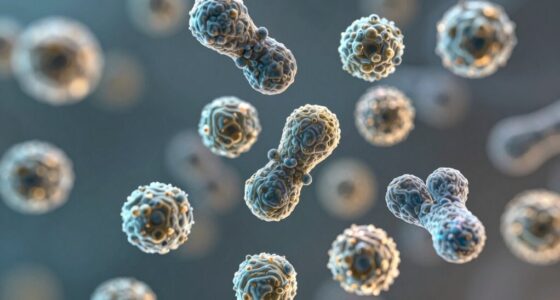

Nano-engineered hydrogels keep gaining attention because they offer exceptional precision in drug delivery and tissue regeneration. You can benefit from their ability to target specific cells, penetrate biological barriers, and respond to environmental cues like pH or temperature. Their customizable properties make them safer and more effective for healing and regenerative techniques. Continued exploration reveals how these innovative materials are transforming medicine and offering new hope for complex treatments.

Get the latest gadgets delivered free — and shop member deals
- Fast, free delivery on millions of items
- Access to Prime Big Deal Days deals on October 6–7
- Prime Video, Amazon Music and more included
Key Takeaways
- Their nanoscale design enhances versatility and mimics natural extracellular matrices for improved tissue compatibility.
- They enable targeted, controlled drug delivery, reducing side effects and increasing treatment efficacy.
- Their customizable properties support tissue regeneration and promote cell growth in various medical applications.
- Advanced safety features and biocompatibility make them suitable for in vivo use with minimal immune response.
- Ongoing innovations, including integration with emerging technologies, expand their potential across regenerative medicine and drug delivery.
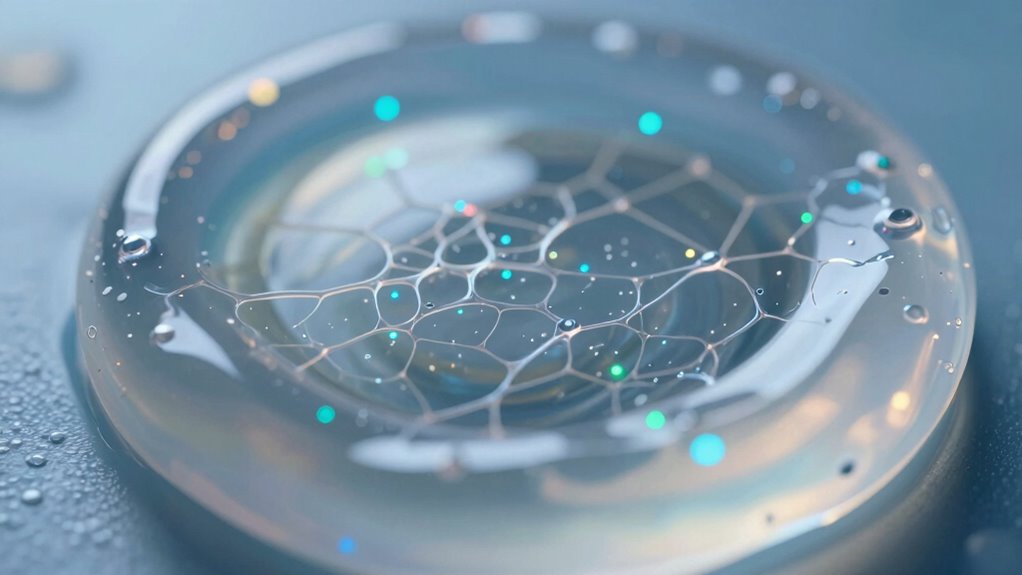
Have you ever wondered how scientists are revolutionizing medical treatments and tissue engineering? Nano-engineered hydrogels are at the forefront of this transformation. These tiny, highly versatile materials are designed at the nanoscale, giving them unique properties that traditional hydrogels can’t match. Their ability to mimic the body’s natural extracellular matrix makes them ideal for applications like drug delivery and tissue regeneration. As a result, they’re gaining attention for their potential to improve healing and reduce recovery times.
Nano-engineered hydrogels mimic natural tissue, advancing drug delivery and tissue repair with unmatched precision and versatility.
One of the main reasons nano-engineered hydrogels keep capturing interest is their exceptional capacity for targeted drug delivery. When you’re dealing with complex diseases or injuries, precision becomes essential. These hydrogels can be engineered to carry therapeutic agents directly to specific cells or tissues. Because of their nanoscale features, they can penetrate biological barriers more easily and release drugs in a controlled manner. This minimizes side effects and maximizes treatment efficiency. Their responsiveness to environmental triggers—such as pH, temperature, or enzymes—means that drugs are released exactly when needed, making treatments more effective and less invasive.
Beyond drug delivery, their role in tissue regeneration is equally impressive. Nano-engineered hydrogels act as scaffolds that support cell growth and tissue formation. You can think of them as providing a supportive template that closely resembles the body’s natural tissue structure. This promotes better cell adhesion, proliferation, and differentiation. Whether it’s repairing skin, cartilage, or even complex organs, these hydrogels facilitate the regeneration process by creating a conducive environment for new tissue to develop. Their ability to incorporate growth factors, stem cells, or other bioactive molecules further enhances their regenerative potential. Additionally, advancements in nano-engineering enable precise control over their properties, expanding their potential uses in medicine. Furthermore, understanding the biophysical interactions at the nanoscale helps researchers optimize these materials for specific therapeutic goals.
Another reason they’re gaining attention is their customizable nature. Researchers can tweak their composition, mechanical strength, and degradation rates to suit specific medical needs. They can also be designed to respond to the body’s signals, ensuring that they perform *best* within the biological environment. Plus, their biocompatibility reduces the risk of immune rejection, making them safer for in vivo applications. Furthermore, the integration of blockchain gaming concepts into biomedical research is opening new avenues for tracking and ensuring the safety and efficacy of these advanced materials, highlighting the innovative cross-disciplinary approaches shaping the future of medicine.
nano-engineered hydrogel for drug delivery
As an affiliate, we earn on qualifying purchases.
As an affiliate, we earn on qualifying purchases.
Frequently Asked Questions
How Cost-Effective Are Nano-Engineered Hydrogels for Large-Scale Applications?
Nano-engineered hydrogels can be cost-effective for large-scale applications, especially when considering their impressive market potential. You’ll find that a detailed cost analysis reveals decreasing production costs over time, thanks to advances in manufacturing. While initial investments might be higher, their multifunctionality and improved performance can reduce long-term expenses. As demand grows, economies of scale will further enhance their affordability, making them a promising option for widespread use.
What Are the Environmental Impacts of Producing Nano-Engineered Hydrogels?
You might picture factories humming as nano-engineered hydrogels are made, but their environmental impacts are mixed. Production can involve energy-intensive processes and potentially harmful chemicals, challenging environmental sustainability. However, researchers are exploring eco-friendly alternatives to reduce this footprint, aiming for greener methods. As you consider their benefits, remember that balancing innovation with environmental care is key to making these advanced materials truly sustainable for the future.
How Do Nano-Engineered Hydrogels Compare to Traditional Hydrogels in Durability?
You’ll find that nano-engineered hydrogels are more durable than traditional ones due to their enhanced mechanical strength. The nanostructures enable better mechanical enhancement, making them resistant to wear and tear. While biocompatibility concerns exist, ongoing research aims to address these issues. Overall, nano-engineered hydrogels offer superior durability, making them suitable for advanced biomedical applications where long-lasting performance is essential.
Are There Any Known Health Risks Associated With Nano-Engineered Hydrogels?
Like a double-edged sword, nano-engineered hydrogels can pose potential toxicity risks. While research is ongoing, you should be aware that long-term safety data remains limited. Some studies suggest possible adverse effects if nanoparticles leach out or accumulate in the body. It’s essential to monitor developments closely, especially as these materials become more widespread, to verify they’re safe and don’t pose health risks over time.
What Are the Regulatory Challenges for Commercializing Nano-Engineered Hydrogels?
You face regulatory challenges with nano-engineered hydrogels because existing frameworks often lack specific guidelines for nanomaterials. You need to conduct thorough safety assessments to demonstrate their safety and efficacy. Managing approvals requires clarity on regulations, which are still evolving, and addressing potential environmental and health risks. Staying informed about regulatory updates and collaborating with authorities can help you streamline the commercialization process and guarantee compliance.
biocompatible tissue engineering hydrogels
As an affiliate, we earn on qualifying purchases.
As an affiliate, we earn on qualifying purchases.
Conclusion
As you explore the rapidly evolving world of nano-engineered hydrogels, you’ll realize they’re just the beginning of a technological revolution. Their potential to transform medicine, environmental science, and beyond is vast, yet many questions remain unanswered. What breakthroughs lie ahead as researchers push boundaries? You’re on the cusp of discoveries that could redefine what’s possible. The future of these tiny innovations is as exciting as it is uncertain—prepare to watch this space closely.
responsive hydrogels for regenerative medicine
As an affiliate, we earn on qualifying purchases.
As an affiliate, we earn on qualifying purchases.
targeted drug delivery hydrogels
As an affiliate, we earn on qualifying purchases.
As an affiliate, we earn on qualifying purchases.
Fall Picks
fall essentials
As an affiliate, we earn on qualifying purchases.