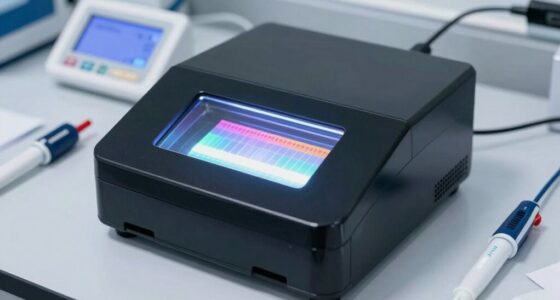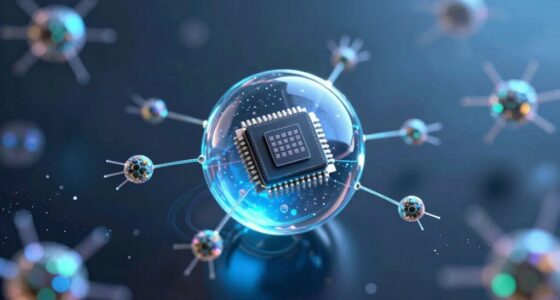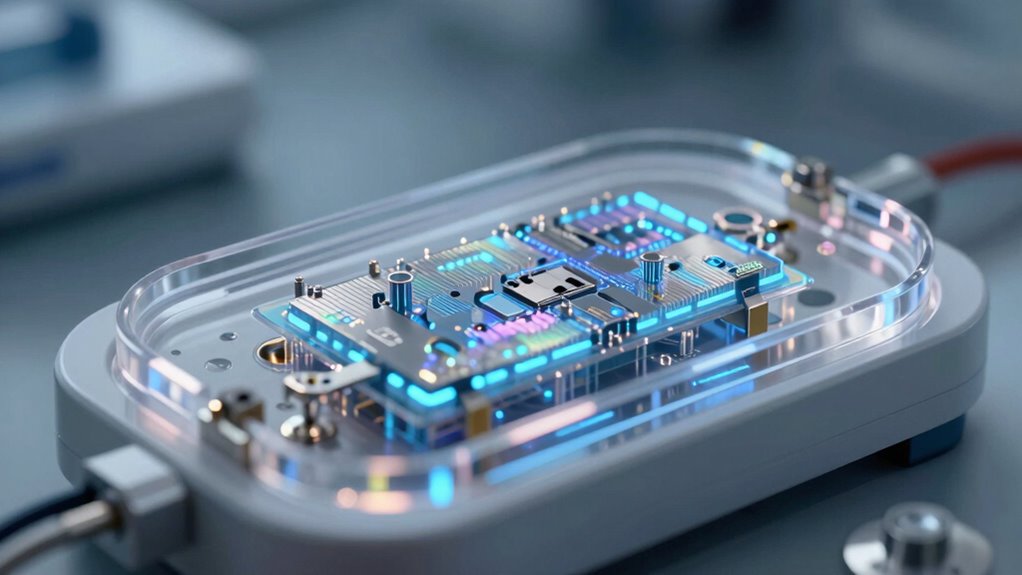

Nano-driven detection can transform preventive medicine by enabling you to spot diseases early, even before symptoms show. Engineered nanoparticles target specific biomarkers, improving diagnostic accuracy and reducing false positives. Quantum dot imaging offers bright, stable signals for detailed views of abnormalities, making early detection faster and more reliable. With ongoing advances, these nanotech tools could make routine screenings more accessible, personalized, and less invasive. Stay with us to discover how this cutting-edge technology shapes the future of healthcare.

Get the latest gadgets delivered free with Prime
- Fast, free delivery on millions of items
- Prime Video, Amazon Music and more included
- Member-only deals all year
Key Takeaways
- Nanoparticles enable early, highly specific detection of disease biomarkers, improving preventive diagnosis accuracy.
- Quantum dot imaging provides detailed, long-lasting visualization of abnormalities, facilitating early intervention.
- Combining nanotechnology with advanced imaging allows for minimally invasive, routine screening methods.
- Personalized nanoparticle-based diagnostics can tailor preventive care to individual biological profiles.
- Ongoing nanomaterial innovations promise faster, more sensitive, and less burdensome early disease detection.
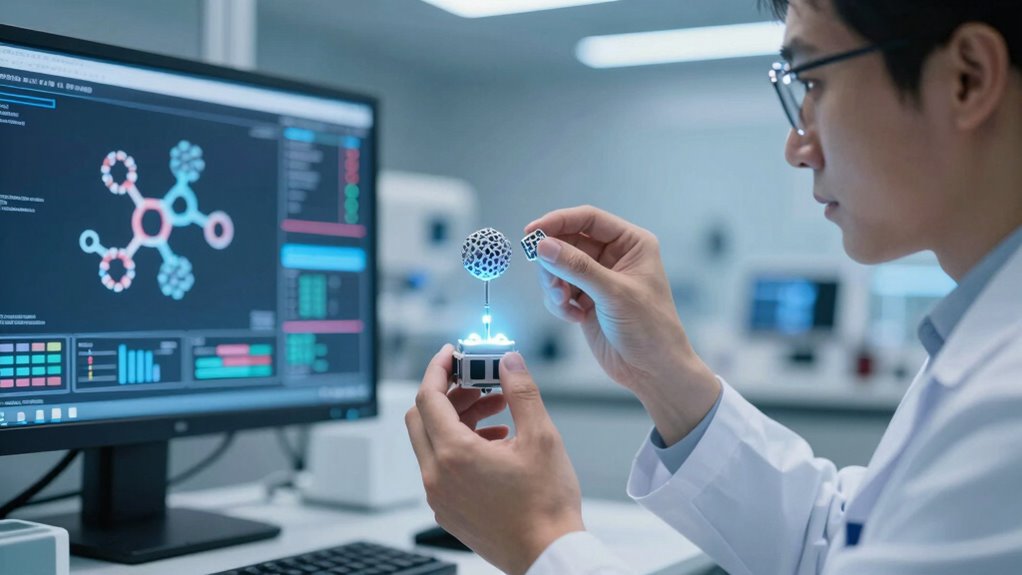
Advancements in nanotechnology are revolutionizing preventive medicine by enabling highly sensitive and early detection of diseases. As you explore these innovations, you’ll find that techniques like nanoparticle targeting are transforming how we identify health issues before symptoms even appear. Nanoparticles are engineered to seek out specific biomarkers associated with various diseases, such as cancer or neurodegenerative conditions. When designed correctly, these tiny particles can attach to abnormal cells or proteins, making them easier to detect with advanced imaging methods. This targeted approach reduces false positives and improves diagnostic accuracy, giving you a clearer picture of your health status at an earlier stage.
Quantum dot imaging is another breakthrough that complements nanoparticle targeting. These semiconductor nanocrystals emit bright, stable fluorescent signals when excited by light, allowing you to visualize disease markers with remarkable precision. Unlike traditional dyes, quantum dots don’t fade over time, so your doctors can get detailed images that reveal even the tiniest abnormalities. This high level of sensitivity means that potential health issues can be identified long before they develop into serious problems, opening the door to more effective interventions and personalized treatment plans.
By combining nanoparticle targeting with quantum dot imaging, the potential for early detection increases exponentially. Imagine a scenario where your healthcare provider uses these cutting-edge tools to scan your body, quickly pinpointing the earliest signs of disease. Because these methods are minimally invasive and highly specific, they can be integrated into routine screenings, making preventive care more accessible and reliable. This approach not only catches diseases early but also reduces the need for more invasive, costly procedures later on. Additionally, the integration of advanced imaging techniques enhances the overall diagnostic accuracy, providing more detailed insights into the disease process.
Furthermore, the customization available with nanotechnology means you benefit from tailored diagnostics that consider your unique biological makeup. You can think of it as a highly personalized health check-up, where the tiny particles and imaging techniques work together to provide detailed insights into your health risks. As these technologies continue to advance, they promise to make preventive medicine faster, more accurate, and less burdensome, ultimately helping you stay healthier for longer. Additionally, understanding the contrast ratio and its impact on image clarity helps optimize these detection methods for even better diagnostic outcomes. Incorporating nanoparticle targeting into routine screenings can significantly improve early disease detection, reducing both the emotional and financial burdens of late-stage diagnoses.
A deeper understanding of the biomarker detection process is essential for appreciating how these innovations can be applied effectively in clinical practice. As research progresses, the development of new nanomaterials with improved properties will further enhance the sensitivity of detection techniques, making early diagnosis even more reliable.
quantum dot imaging for medical diagnostics
As an affiliate, we earn on qualifying purchases.
As an affiliate, we earn on qualifying purchases.
Frequently Asked Questions
How Affordable Will Nano-Driven Detection Technologies Become for General Healthcare?
Nano-driven detection technologies will become more affordable as research advances and production scales up, leading to significant cost reduction. This will improve accessibility for you and others, making preventive healthcare more widespread and proactive. As these technologies become less expensive, you’ll likely see them integrated into regular health checkups, enabling early detection of diseases. Overall, cost reduction will make nano-driven detection a practical tool for broad-based, accessible healthcare.
What Are Potential Privacy Concerns With Nano-Based Health Monitoring?
Privacy problems proliferate with nano-based health monitoring. You might worry about data security—personal health data becomes vulnerable to breaches or misuse. Ethical considerations also come into play, such as consent and surveillance concerns. As nanoscale devices collect sensitive information silently, you need safeguards to shield your privacy. Addressing these issues is essential to guarantee that innovative nano technologies serve you safely, securely, and ethically in future healthcare.
How Long Does It Take to Develop and Approve Nano-Diagnostic Tools?
Developing and approving nano-diagnostic tools typically takes several years, often around 5 to 10, due to complex nano manufacturing processes and extensive testing. You’ll face regulatory hurdles, as agencies like the FDA require thorough safety and efficacy evaluations. The fast-paced innovation in nano technology means timelines can vary, but overcoming these hurdles is essential before these tools can reach widespread clinical use, ensuring they’re safe and effective for patients.
Can Nano-Driven Detection Replace Traditional Diagnostic Methods Entirely?
Nano-driven detection isn’t likely to replace traditional methods entirely; instead, it acts as a precision scalpel, sharpening diagnostic accuracy. With molecular accuracy and miniaturized sensors, it can detect diseases earlier and more accurately. While it enhances existing tools, traditional diagnostics still play a crucial role, especially in broad screenings. Together, they form a powerful, complementary approach, transforming preventive medicine into a more proactive and personalized science.
What Are the Risks of Toxicity or Environmental Impact From Nano-Materials?
You should be aware that nano-materials can pose risks of nano toxicity, which might affect human health if inhaled or absorbed. Additionally, their environmental impact raises concerns, as nanoparticles can accumulate in ecosystems, potentially harming wildlife and contaminating water sources. It’s essential to develop safe disposal methods and regulate nano-material use to minimize toxicity risks and reduce adverse environmental effects associated with nano-driven detection technologies.
nanoparticle biomarker detection kit
As an affiliate, we earn on qualifying purchases.
As an affiliate, we earn on qualifying purchases.
Conclusion
Imagine catching diseases early with nano-driven detection, transforming preventive medicine. You could identify health risks before symptoms appear, drastically reducing treatment costs and improving outcomes. Did you know that early detection can increase survival rates by up to 80%? With nanotechnology, you’re not just improving healthcare—you’re revolutionizing it. Soon, this tiny technology could be your biggest ally in maintaining health, making prevention smarter, faster, and more effective than ever before.
early disease detection nanotech tools
As an affiliate, we earn on qualifying purchases.
As an affiliate, we earn on qualifying purchases.
personalized nanoparticle diagnostic tests
As an affiliate, we earn on qualifying purchases.
As an affiliate, we earn on qualifying purchases.
Halloween Picks
halloween
As an affiliate, we earn on qualifying purchases.