
When choosing a particle size analyzer, look for features that guarantee precise measurements, such as advanced dispersion techniques, effective filtration, and consistent sample preparation options. Reliable software with automated data analysis and visualization helps you make informed decisions quickly. These features minimize errors, improve data accuracy, and support better process control. Understanding these key traits can markedly impact your quality assessments and formulation optimizations—keep exploring to discover how these features drive smarter choices.
Key Takeaways
- Accurate sample preparation ensures reliable measurements, directly influencing decision quality.
- Advanced data analysis algorithms improve detection of outliers and key metrics, guiding informed choices.
- Measurement range and resolution determine the ability to detect critical particle size variations.
- Consistent sample handling and standardized procedures enhance data reproducibility for decision-making.
- Visualization and reporting features facilitate quick interpretation and support strategic process adjustments.
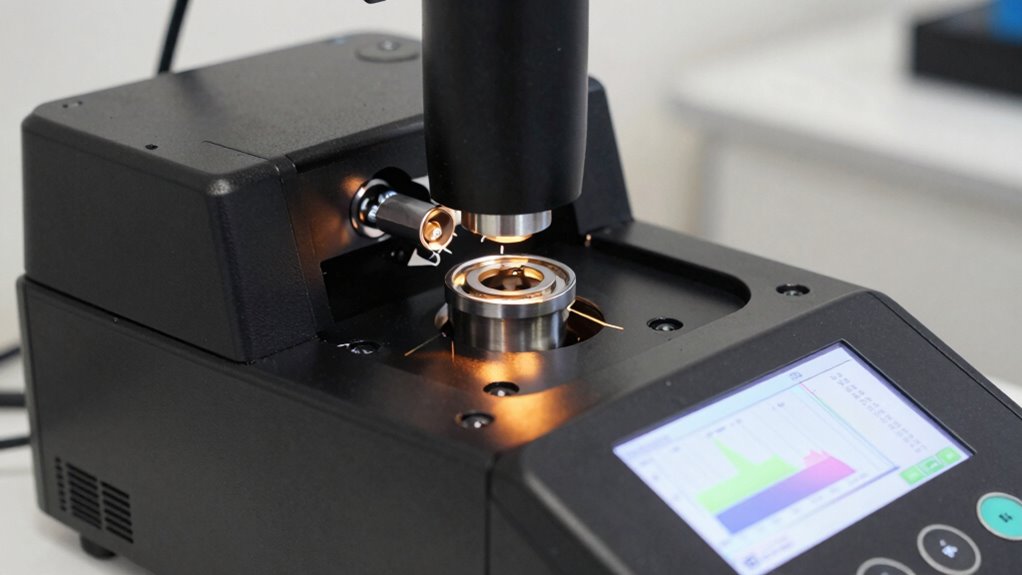
A particle size analyzer offers precise and efficient measurement of particle dimensions, which is essential across industries like pharmaceuticals, food processing, and materials science. When using these devices, your approach to sample preparation can substantially influence the accuracy of your results. Proper sample preparation involves ensuring particles are well-dispersed, free from agglomerates, and representative of the entire batch. If your sample isn’t adequately prepared, you risk skewed data, which can lead to incorrect decisions—such as adjusting manufacturing processes unnecessarily or overlooking quality issues. Techniques like ultrasonic dispersion, filtration, and proper dilution help you achieve consistent, reliable samples. Paying attention to sample preparation is vital because it directly impacts the measurement’s precision and reproducibility, making your data more trustworthy.
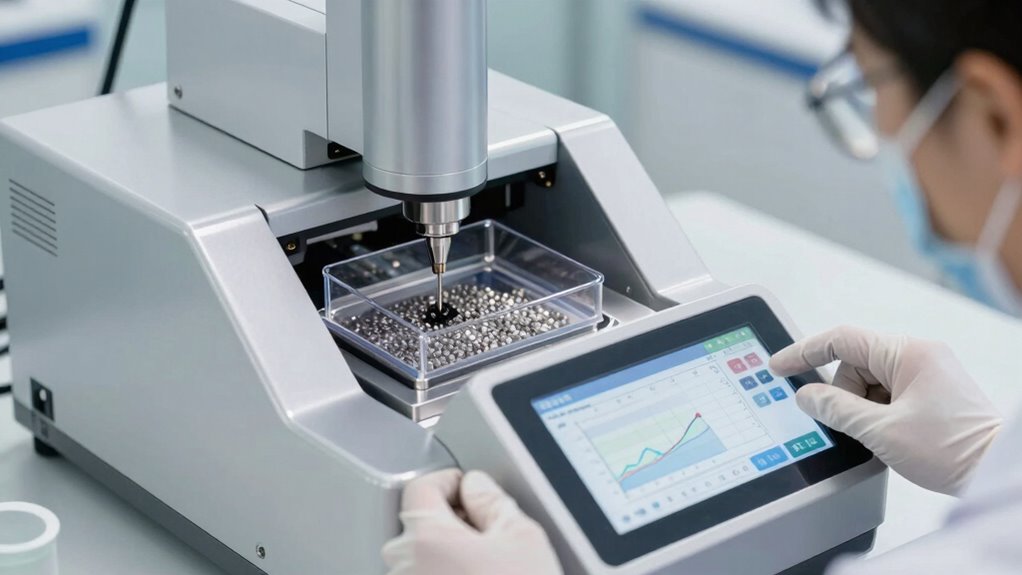
Another key feature that influences real-world decisions is the data analysis techniques employed by the analyzer. Modern particle size analyzers come with advanced algorithms and software that interpret raw measurement data quickly and accurately. These data analysis techniques help you extract meaningful insights, such as particle size distribution, mean diameter, and polydispersity index. Choosing an analyzer with robust, user-friendly software allows you to visualize data clearly, identify outliers, and understand the implications of the particle size profile for your specific application. The ability to generate detailed reports and perform statistical analysis on your data enables you to make informed decisions, whether it’s optimizing formulation, ensuring quality control, or adjusting processing parameters. Additionally, incorporating advanced data analysis techniques can further enhance your confidence in the measurement results and decision-making process.
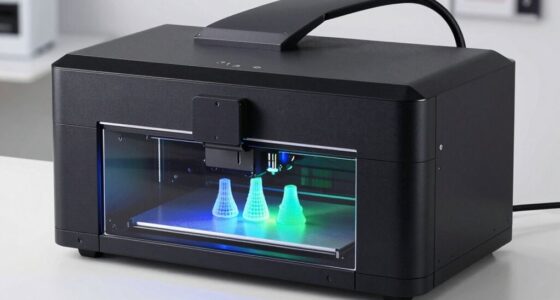
particle size analyzer with advanced dispersion
As an affiliate, we earn on qualifying purchases.
As an affiliate, we earn on qualifying purchases.
Frequently Asked Questions
How Does Particle Shape Influence Analyzer Readings?
Particle shape markedly influences analyzer readings because non-spherical particles cause shape-induced scattering, which can distort size measurements. Irregular or elongated shapes may lead to over- or underestimation of particle size. Surface texture analysis helps identify these shape effects, allowing you to adjust your readings accordingly. By understanding how shape impacts scattering and surface features, you can improve measurement accuracy and make better-informed decisions based on the particle size data.
Can Analyzers Differentiate Between Particle Types?
Imagine a master chef sorting ingredients on a busy countertop—your analyzer can distinguish between particle types if you provide proper sample preparation and clear particle classification. It uses advanced detection methods to identify differences in size, shape, and composition. While it can’t label particles as specific substances, it effectively separates and characterizes them, helping you make informed decisions based on their unique features. Proper sample prep is your secret ingredient.
What Maintenance Is Required for Long-Term Accuracy?
To keep your particle size analyzer accurate over time, you need to follow proper maintenance. Regularly perform calibration protocols to guarantee measurements stay precise. Also, adhere to cleaning procedures to prevent contamination that could skew results. Check and replace parts as recommended by the manufacturer, and keep detailed maintenance records. Consistent upkeep helps you maintain reliable data, reduces downtime, and extends the lifespan of your analyzer.
How Do Environmental Factors Affect Measurements?
Environmental factors like humidity interference and temperature instability can substantially skew your measurements, much like how a foggy window distorts your view. Fluctuating humidity levels can cause particles to clump or disperse, affecting accuracy. Temperature instability can alter instrument calibration, leading to inconsistent results. To guarantee precise data, keep the analyzer in a controlled environment with stable temperature and low humidity, minimizing these external influences on your measurements.
Are Portable Analyzers as Reliable as Laboratory Models?
Portable analyzers can be quite reliable, but their accuracy often varies compared to laboratory models. You might find that portable devices offer good reliability for on-site decisions, though they may not match the precision of lab instruments. When considering portable accuracy, weigh the convenience against potential slight differences in measurement consistency. Overall, for many field applications, portable analyzers provide a dependable, practical solution, especially when immediate results are essential.
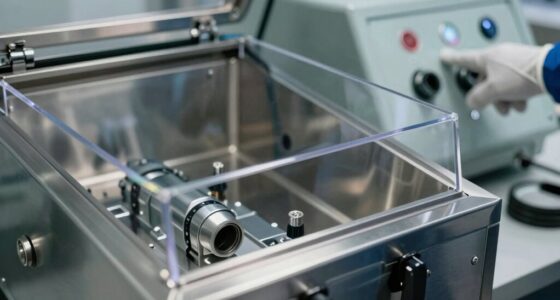
sample preparation tools for particle measurement
As an affiliate, we earn on qualifying purchases.
As an affiliate, we earn on qualifying purchases.
Conclusion
In the end, choosing the right particle size analyzer isn’t just about features—it’s about how those features align with your real-world needs. You might find yourself surprised by how a subtle detail, like ease of use or data accuracy, can influence your decision profoundly. Sometimes, the most overlooked feature can become the game-changer you never expected, proving that the smallest details often make the biggest difference in achieving your goals.
particle size distribution software
As an affiliate, we earn on qualifying purchases.
As an affiliate, we earn on qualifying purchases.
As an affiliate, we earn on qualifying purchases.