
Before buying a PCR machine, consider its contamination prevention features, like heated lids and easy-to-clean blocks, to maintain sample integrity. Evaluate workflow efficiency with multiple wells, fast cycling, and user-friendly interfaces to save time and reduce errors. Security options like access controls and data encryption protect sensitive results. Also, weigh the long-term costs, energy efficiency, and durability to guarantee a good investment. Keep exploring to discover more details that can help you choose the perfect model.
Key Takeaways
- Ensure the PCR machine supports contamination prevention features like heated lids and easy-to-clean blocks.
- Prioritize models with high throughput, fast cycling, and user-friendly interfaces to enhance workflow efficiency.
- Confirm security options such as access controls, data encryption, and compatibility with existing data management systems.
- Consider initial costs alongside ongoing expenses for consumables, maintenance, and potential upgrades for long-term value.
- Evaluate energy efficiency, durability, and environmental impact to ensure reliable, cost-effective operation over time.
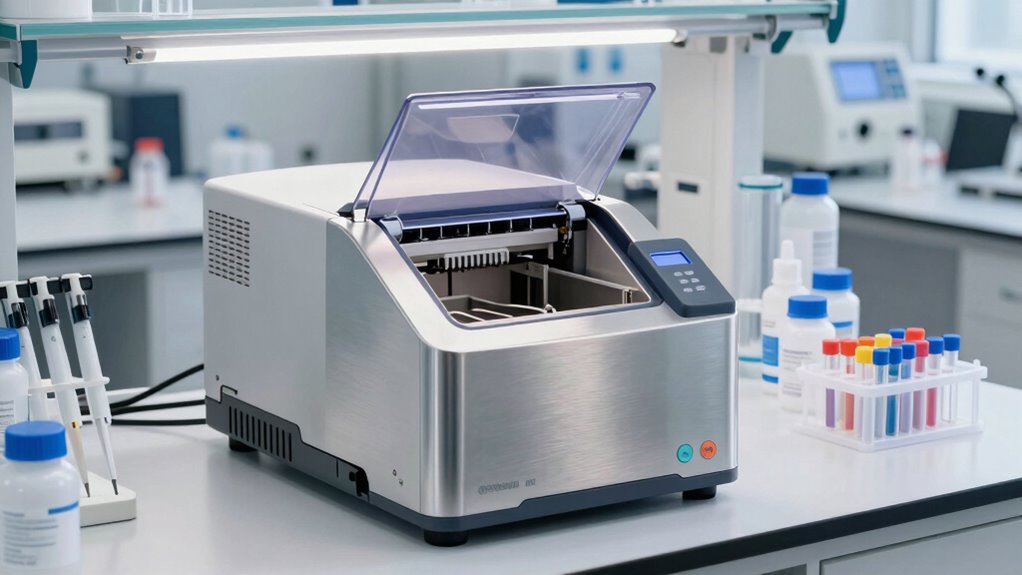
Purchasing a PCR machine can be a crucial decision for laboratories and research facilities aiming for accurate and reliable genetic analysis. Before making a purchase, you need to evaluate how the machine will fit into your workflow and meet your specific needs. One of the first things to assess is sample maintenance. PCR machines require careful handling of samples, which includes proper loading, sealing, and storage. You want a model that minimizes contamination risks and offers features like heated lids or easy-to-clean blocks, ensuring your samples stay stable and uncontaminated throughout the process. Think about the volume of samples you’ll process regularly—if you’re running high-throughput experiments, look for machines with multiple wells and fast cycling capabilities to save time. Additionally, consider how user-friendly the machine is; intuitive interfaces and clear display screens can reduce errors and training time, making your workflow more efficient. Incorporating security strategies such as access controls and data encryption can also protect sensitive research data stored or transmitted through the device. Furthermore, choosing a machine with advanced control features can help optimize experimental conditions and improve overall results. It’s also important to consider the potential for future upgrades or compatibility with new technologies that can extend the lifespan of your investment. A reliable machine should also incorporate robust construction to withstand daily laboratory use and maintain consistent performance over time. Moreover, assessing the software compatibility with your existing systems can help streamline data management and analysis processes, reducing manual errors and saving time.
Cost considerations are equally important. Beyond the initial purchase price, you should account for ongoing expenses such as consumables, maintenance, and potential repairs. Some PCR machines come with lower upfront costs but might have higher running costs due to expensive reagents or limited durability. Conversely, investing in a more robust, reliable model could cut down on frequent repairs and replacements, saving you money in the long run. It’s wise to compare the cost of compatible consumables, like PCR plates and reagents, since these can greatly add up over time. Also, check if the manufacturer offers maintenance packages or extended warranties, which can help manage unexpected expenses and keep your machine running smoothly. Remember that a higher-quality PCR machine with advanced features often results in better data accuracy and reproducibility, which might justify a higher initial investment. Considering the environmental impact of consumables and energy usage can also be a responsible approach to sustainable laboratory practices. Additionally, assessing the energy efficiency of the device can contribute to reducing operational costs and environmental footprint over its lifespan.

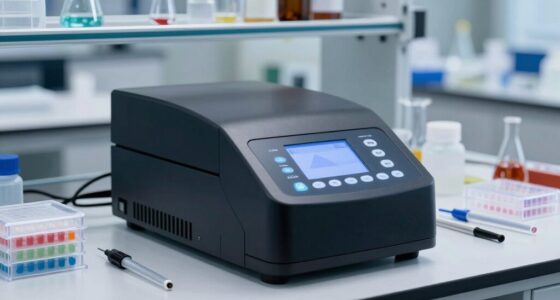
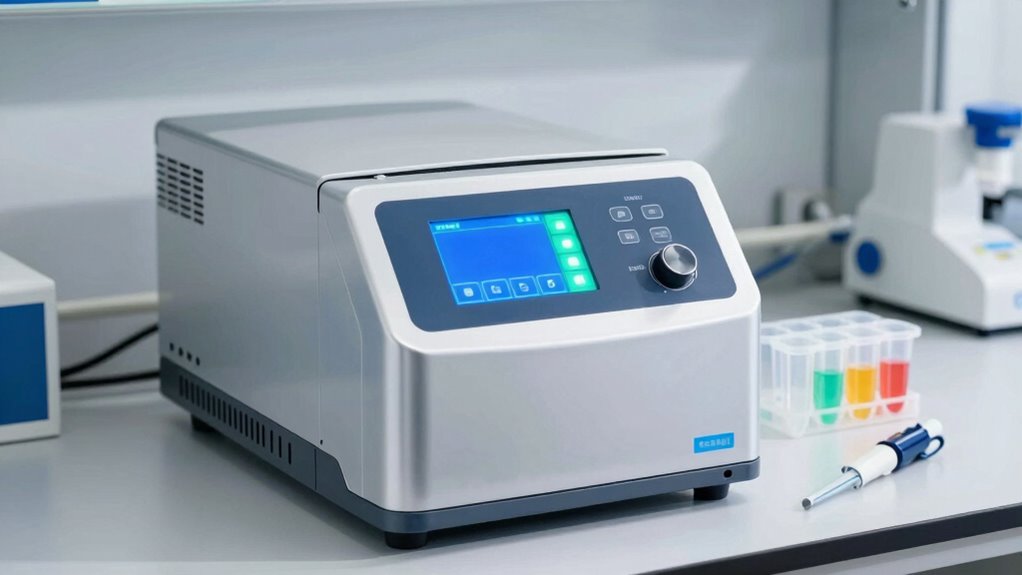
Newest Generation Gene Amplification Machine DNA RNA Nucleic Acid PCR Thermal Cycler
Tube Type: 96×0.2ml PCR plate, 8×0.2ml PCR tube.
As an affiliate, we earn on qualifying purchases.
As an affiliate, we earn on qualifying purchases.
Frequently Asked Questions
What Is the Typical Lifespan of a PCR Machine?
A PCR machine typically lasts around 8 to 10 years with proper maintenance. You should follow regular calibration schedules to guarantee accuracy and reliability. Additionally, check reagent compatibility to prevent damage and extend its lifespan. Proper handling and timely updates can help you maximize its performance. If you maintain it well, your PCR machine can serve you effectively for many years, making it a valuable investment.
How Much Does Maintenance Usually Cost Annually?
Maintenance costs for a PCR machine typically range from $1,000 to $3,000 annually, depending on usage and model. When planning, consider pricing considerations like routine service, parts, and potential repairs. Check warranty coverage because it can substantially reduce your expenses during the machine’s lifespan. Regular maintenance ensures accuracy and longevity, so investing in an extensive warranty can save you money and prevent unexpected costs.
Are There Portable PCR Machines Available?
Did you know the global portable PCR market is expected to grow at a CAGR of 8.2% through 2028? Yes, portable PCR machines are available, offering convenient testing on the go. These devices feature a compact design, making them ideal for fieldwork, clinics, or emergency situations. They maintain high accuracy and speed, ensuring you get reliable results without needing a bulky lab setup, perfect for flexible and quick diagnostics.
What Are the Common Troubleshooting Issues?
You might encounter troubleshooting issues like inconsistent results or failed runs, often due to sample calibration errors or reagent stability problems. Always check that your samples are properly calibrated and that reagents are fresh and stored correctly. If problems persist, verify the machine’s thermal cycling accuracy and make sure the reagents haven’t degraded. Regular maintenance and calibration help prevent these issues and keep your PCR machine running smoothly.
How Does Software Compatibility Impact Operation?
Software compatibility greatly impacts your PCR machine’s operation by ensuring smooth software integration with your existing systems. A user-friendly interface simplifies running tests, reducing errors and saving time. If the software isn’t compatible, you may face operational delays or need costly updates. Make sure the PCR machine’s software supports your computer’s operating system and integrates well with your lab’s workflow, so you can efficiently manage and analyze your results.

PCR Gradient Thermal Cycler, Real-Time PCR System,GTC‑96E
Advanced Semiconductor Heating Module Utilizes next‑gen semiconductor technology for uniform temperature distribution and minimal edge effects, supported by…
As an affiliate, we earn on qualifying purchases.
As an affiliate, we earn on qualifying purchases.
Conclusion
Before you rush to buy a PCR machine, remember that choosing the right one depends on your specific needs, budget, and lab setup. Do your research, compare features, and consider future scalability. Think of it as picking a trusty steed for your scientific adventures—don’t settle for a horse that can’t keep pace. With the right guidance, you’ll be well on your way to making an informed decision that guarantees your lab’s success for years to come.
PCR machine with data encryption
As an affiliate, we earn on qualifying purchases.
As an affiliate, we earn on qualifying purchases.

VISOSCI Aluminum Cooling Block – PCR Plate Cooler ,96-Well for 0.2 mL Tubes, Strips or 96-Well Plates (96-Well)
Independent packaging, strong adaptability, long-lasting low temperature. Aluminum alloy material, efficient heat conduction. The surface is processed by…
As an affiliate, we earn on qualifying purchases.
As an affiliate, we earn on qualifying purchases.