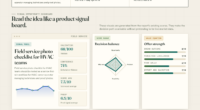
📊 Full opportunity report: The Ghost Story Became a Forecast. on ThorstenMeyerAI.com — validation score, market gap, and execution plan.

Get the latest gadgets delivered free — and shop member deals
- Fast, free delivery on millions of items
- Access to Prime Big Deal Days deals on October 6–7
- Prime Video, Amazon Music and more included
TL;DR
Clark’s latest essay presents a bivalent forecast: a 60% probability of automated AI research by 2028 and a 40% chance of discovering fundamental limitations in current AI paradigms. This shift has significant implications for AI research and policy.
Jack Clark’s latest essay assigns a 60% probability that automated AI research will be achieved by the end of 2028, marking a significant update in AI forecasting. This development is noteworthy because Clark’s forecast influences how researchers, policymakers, and industry leaders plan for future AI capabilities.
In his essay, Clark presents a bivalent forecast: a 60% chance of reaching automated AI R&D by 2028, and a 40% chance that such progress will not occur within that timeframe. The 40% is interpreted by Clark as an indication of a fundamental limitation in current AI paradigms, suggesting that the prevailing methods—more compute, data, and algorithms—may hit an intrinsic ceiling, requiring new approaches or paradigms to advance further.
This 40% probability is not a benign delay; Clark emphasizes it signals a structural shift, meaning the current technological paradigm might be incomplete or fundamentally flawed. If this occurs, the field could face years of stagnation until new breakthroughs emerge, fundamentally altering research timelines and policy considerations.
Clark’s forecast also includes a 30% probability of achieving automated AI R&D by the end of 2027, contingent on current corporate commitments and technological progress. This shorter-term estimate reflects a high degree of uncertainty but underscores the importance of near-term milestones, such as OpenAI’s targeted deployment of automated AI research tools and corporate strategic moves.
The ghost story
became a forecast.
Reading Clark’s closing — the bivalent 60%/40% credence. The 30% by 2027 alternative. What it means when a frontier-lab co-founder publicly says “I’m persuaded.”
Jack Clark’s closing section — “Staring into the black hole” — contains the most important sentence in the essay for the public discourse. Not the 60%/2028 number — though that’s the technical claim that gets quoted. The discourse-crossing sentence is the personal credence statement: “I have written this essay in an attempt to coldly and analytically wrestle with something that for decades has seemed like a science fiction ghost story. Upon looking at the publicly available data, I’ve found myself persuaded that what can seem to many like a fanciful story may instead be a real trend.”
The standard discourse reads 40% as benign — “slower AI.” Clark’s actual claim is stronger. The 40% reveals a fundamental deficiency within the current technological paradigm. Both outcomes are major findings. The franchise has read the 60% side. The coda reads the 40% side and the bivalence itself.
“For decades, it has seemed like a science fiction ghost story.“
The most important sentence in the essay is not the 60% number. The discourse-crossing sentence is the personal credence statement. When a frontier-lab co-founder publicly says “I am persuaded by the data that this is no longer science fiction,” the discourse changes.
“I have written this essay in an attempt to coldly and analytically wrestle with something that for decades has seemed like a science fiction ghost story. Upon looking at the publicly available data, I’ve found myself persuaded that what can seem to many like a fanciful story may instead be a real trend.”
Nine pieces. One structural finding.
Six different forms of evidence aggregating to one structural finding: the labs are building what they say they’re building; the forecast is the plan; the institutional response window is the only variable that remains unfixed.
Six different forms of evidence. One structural finding. The labs are building what they say they’re building. The institutional response window is the only variable that remains unfixed.
Three paths. All major. All need capacity.
Three structural possibilities for what the next 32 months produce. Asymmetric cost-of-being-wrong points toward building response capacity now. There is no scenario where the capacity goes unused.
~20 months
~32 months
field correction
Capacity built for 30%/60% paths is useful. Capacity built for 40% path is also useful (for field correction). There is no scenario where building response capacity now is wasted.
Clark stares into the black hole and says he’s persuaded. The franchise has been about reading that statement seriously. The reading: he should be. The implication: so should we.
Implications of Clark’s Bivalent AI Forecast
This forecast significantly impacts how the AI community and policymakers view the timeline and risks of AI development. The 60% likelihood of reaching automated AI by 2028 suggests a near-term technological breakthrough, potentially accelerating economic and societal changes. Conversely, the 40% probability indicates a possible paradigm ceiling, implying that current methods may be insufficient and that fundamental research breakthroughs are needed.
Understanding this bifurcation helps in planning for both rapid deployment scenarios and longer-term research challenges. It highlights the importance of preparing for a potential shift in AI paradigms, which could delay progress or require reevaluating current assumptions about AI capabilities and risks.
As an affiliate, we earn on qualifying purchases.
Clark’s Forecast within AI Development Discourse
Clark’s forecast builds on ongoing debates about AI trajectory, especially regarding the pace of progress and the limits of current paradigms. Historically, AI development has been characterized by exponential improvements driven by increased compute and data. Clark’s recent essay revises this view by suggesting that these trends may encounter an intrinsic ceiling, leading to a potential paradigm shift.
The 60%/40% bivalent forecast is rooted in Clark’s analysis of recent corporate commitments, technological milestones, and theoretical considerations about AI capabilities. It also reflects a broader uncertainty in the field about whether current approaches can sustain exponential growth or whether fundamental limitations will emerge, requiring new foundational breakthroughs.
“Clark’s forecast suggests a 60% probability of achieving automated AI R&D by 2028, but also warns of a 40% chance that fundamental paradigm limitations will slow progress significantly.”
— Thorsten Meyer
As an affiliate, we earn on qualifying purchases.
Uncertainties Surrounding the Forecast’s Implications
It remains unclear how precisely the 40% scenario will unfold and what specific technological or theoretical breakthroughs might be required to overcome current limitations. The exact nature of the potential paradigm shift is still speculative, and the timeline for such a breakthrough, if it occurs, is uncertain.
Additionally, the impact of external factors such as geopolitical developments, funding shifts, or regulatory changes on these probabilities is not yet understood. Clark’s analysis emphasizes probabilities rather than certainties, indicating inherent uncertainties in forecasting AI progress.
As an affiliate, we earn on qualifying purchases.
Next Steps in Monitoring AI Development Trajectory
Researchers and policymakers should prepare for both scenarios outlined by Clark: rapid progress toward automated AI by 2028 and potential paradigm limitations that could delay or reshape development. Key indicators to watch include corporate milestones, breakthroughs in AI theory, and shifts in research funding.
Further analysis and empirical data in the coming months will clarify whether the 40% scenario materializes or if progress continues along the current trajectory. Clark’s forecast encourages ongoing vigilance and adaptive planning within the AI community.
As an affiliate, we earn on qualifying purchases.
Key Questions
What does Clark’s 60% probability mean for AI development timelines?
It indicates a high likelihood that automated AI research will be achieved by 2028, influencing industry planning and policy decisions.
Why is the 40% probability significant?
It suggests there may be fundamental limitations in current AI paradigms, potentially leading to delays or paradigm shifts that could slow or alter progress.
How does Clark’s forecast compare to previous predictions?
Clark’s forecast incorporates a more nuanced view, emphasizing the structural risks and uncertainties rather than a simple exponential growth assumption.
What are the implications if the 40% scenario occurs?
It could mean a significant slowdown in AI progress, requiring new theoretical breakthroughs and possibly extending timelines beyond 2028.
What should policymakers do in response to this forecast?
Policymakers should prepare for both rapid development and potential paradigm shifts, ensuring regulatory and research frameworks are adaptable.
Source: ThorstenMeyerAI.com
Fall Picks
fall essentials
As an affiliate, we earn on qualifying purchases.