
📊 Full opportunity report: Stenvrik: News as Geography on ThorstenMeyerAI.com — validation score, market gap, and execution plan.

Get the latest gadgets delivered free — and shop member deals
- Fast, free delivery on millions of items
- Access to Prime Big Deal Days deals on October 6–7
- Prime Video, Amazon Music and more included
TL;DR
Stenvrik has launched a news platform that visualizes live stories pinned to 49 city hubs on a rotating 3D globe. It combines a low-cost infrastructure with autonomous trend detection, offering a new way to understand global news dynamics.
Stenvrik has launched a new news platform that visualizes live stories pinned to 49 city hubs on a rotating 3D globe, offering a geographically organized view of global news. This approach emphasizes ‘where’ news is happening, providing users with spatial context that traditional feeds lack. The platform is in closed beta and aims to change how news is consumed by focusing on location-based clustering and trend detection.
The platform displays approximately 1,700 live stories, each pinned to a specific city hub, which rotates on a 3D globe interface. The system’s core is an autonomous trend engine that continuously surfacing, clustering, and pinning stories without human intervention. Unlike conventional news feeds that prioritize recency, this system emphasizes the geographic distribution and emerging clusters of news, allowing users to see hotspots and regional trends at a glance.
Designed with cost-efficiency in mind, the globe rendering occurs client-side, and the trend engine runs on owned infrastructure, resulting in near-zero monthly operational costs. This low-cost setup enables the platform to operate without immediate monetization, focusing instead on providing a strategic signal for broader news and market analysis. The trend detection component offers real-time indicators of regional interest and emerging topics, which can inform editorial decisions and market insights across the publisher’s network.
Stenvrik — news as geography
Not what is the news — where is it happening. ~1,700 live stories pinned to 49 city hubs on a rotating globe, with an autonomous trend engine that also feeds the network.
Spin the world; the news sorts itself.
A 60fps 3D globe where every story is pinned to the city it belongs to. Clusters, gaps, regions heating up — context a vertical feed throws away.
Independent commentary, produced with AI assistance under human editorial oversight. The views are the author’s own and may change. Stenvrik is in closed beta; features, availability, and behavior may change and it is provided without guarantee of uptime or fitness for a particular purpose. The autonomous trend engine clusters and places stories programmatically and may contain errors, mis-placements, or omissions — verify independently before relying on any of it. Product and company names are trademarks of their respective owners; mention does not imply endorsement.
Potential Impact on News Consumption and Trend Detection
Stenvrik’s geographic visualization offers a fundamentally different way to engage with news, shifting focus from chronological feeds to spatial awareness. This can enhance understanding of regional developments and global interconnectedness, making news more actionable for both consumers and publishers. Its low-cost, autonomous architecture demonstrates a sustainable model for innovative news products, especially in an environment where traditional aggregation is commoditized. Moreover, the embedded trend engine provides a strategic advantage by offering early signals of regional and global shifts, influencing coverage priorities and market responses.
3D globe news visualization device
As an affiliate, we earn on qualifying purchases.
As an affiliate, we earn on qualifying purchases.
Origins as a Prototype and Its Evolution into Production
Stenvrik originated as a Claude Design ‘News Globe Demo’—a prototype designed to visualize news geographically. Its initial simplicity and low-cost development made it feasible to evolve into a full product without significant infrastructure investment. The platform’s transition from demo to production was driven by the realization that organizing news by geography addresses a core challenge in news consumption: providing meaningful context beyond lists of headlines.
By leveraging autonomous trend detection, the platform not only offers a novel interface but also supplies valuable signals for broader content and market strategies. Its development reflects a broader trend toward leveraging AI-driven automation to create scalable, cost-effective news tools that serve both consumers and industry needs.
“The real innovation is in organizing news by geography, which transforms how people understand and interact with information.”
— Thorsten Meyer, source developer
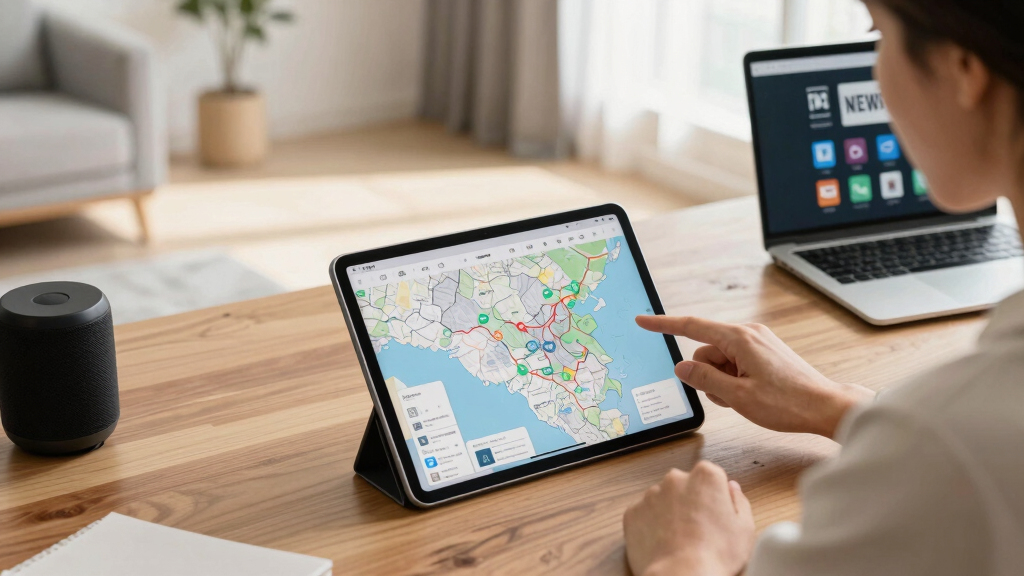
interactive globe with news stories
As an affiliate, we earn on qualifying purchases.
As an affiliate, we earn on qualifying purchases.
Unclear Aspects of User Adoption and Long-term Viability
It remains uncertain how widely the platform will be adopted once in broader release, given its current limited beta status. The impact on user habits—whether geographic visualization will replace or supplement traditional feeds—is still unproven. Additionally, the long-term sustainability of the trend engine as a strategic tool depends on further validation and integration with existing news ecosystems, which are still evolving.
As an affiliate, we earn on qualifying purchases.
Next Steps for Public Access and Platform Development
The platform is currently in closed beta, with limited access. The next phase involves expanding testing, collecting user feedback, and refining the interface and trend detection algorithms. If successful, the developers plan to open the platform more broadly and explore monetization options aligned with its strategic insights capabilities. Further integration with existing news services and potential partnerships are also anticipated to enhance its reach and impact.
trend detection hardware for news analysis
As an affiliate, we earn on qualifying purchases.
As an affiliate, we earn on qualifying purchases.
Key Questions
How does the geographic news visualization differ from traditional feeds?
Instead of listing stories in chronological order, it pins live stories to specific city hubs on a rotating globe, providing spatial context and highlighting regional clusters and emerging trends.
What is the main advantage of the trend detection engine behind Stenvrik?
It continuously identifies and clusters trending stories by region, offering early signals of regional interest and potential market or political shifts, which can inform editorial and strategic decisions.
Is Stenvrik a commercial product now?
Not yet. It is currently in closed beta with no announced commercial deployment. Its low operational cost model aims to enable future scalability without immediate monetization.
What are the limitations of this platform at present?
Its adoption is limited to beta testers, and it remains uncertain how well users will embrace a geographic-based interface compared to traditional feeds. Long-term viability and integration with broader news ecosystems are still under evaluation.
Could this approach reshape the future of news consumption?
Potentially. By emphasizing location and real-time trend detection, it offers a different perspective that could influence how news organizations and consumers prioritize and interpret information.
Source: ThorstenMeyerAI.com
Fall Picks
fall essentials
As an affiliate, we earn on qualifying purchases.