
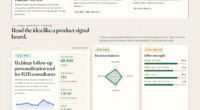
📊 Full opportunity report: The Nordics: Protect the Worker, Not the Job on ThorstenMeyerAI.com — validation score, market gap, and execution plan.

Get the latest gadgets delivered free — and shop member deals
- Fast, free delivery on millions of items
- Access to Prime Big Deal Days deals on October 6–7
- Prime Video, Amazon Music and more included
TL;DR
Nordic countries adopt a model that emphasizes protecting workers rather than jobs, enabling smoother transitions amid automation. This approach challenges traditional employment protections and offers a blueprint for managing technological change.
Nordic countries are implementing policies that prioritize protecting workers over preserving specific jobs, a shift that could reshape how societies manage automation and economic change. This approach, rooted in the ‘flexicurity’ model, aims to make technological transitions less disruptive for individuals and more adaptable for economies.
The Nordic model, particularly Denmark’s ‘flexicurity,’ combines flexible labor markets with robust social safety nets and active labor policies. This system makes it easier for employers to reconfigure their workforce while ensuring workers receive generous unemployment benefits and retraining support. Unlike many European countries that focus on job preservation, the Nordics treat jobs as temporary and people as permanent, fostering a societal attitude that embraces technological change rather than resists it.
According to sources from Thorsten MeyerAI, this model’s core advantage lies in dissolving the fear of unemployment, which often hampers innovation and automation adoption. Nordic unions are among the most pro-technology globally, welcoming automation because they see it as part of a broader social contract that ensures individual security regardless of employment status.
Protect the Worker, Not the Job
Where Germany saves the job, the Nordics let the job go and catch the worker. The counterintuitive result: unions that welcome automation — because the person is protected even when the role isn’t.
Independent commentary, produced with AI assistance under human editorial oversight. The views are the author’s own and may change. This is analysis, not policy, economic, investment, or legal advice. Descriptions of flexicurity, Nordic active-labor spending, Finland’s basic-income experiment, and Norway’s sovereign wealth fund reflect publicly reported information as of mid-2026 and may change. This phase maps differing approaches and endorses none; contested questions are presented with competing views, not a verdict. Country and program names are referenced for analysis and imply no affiliation.
Implications for Society and Policy
This approach reduces resistance to automation and technological change, enabling societies to adapt more swiftly to economic shifts. It demonstrates that prioritizing worker security can create a resilient, innovative economy that minimizes social disruption. For policymakers worldwide, the Nordic model offers a blueprint for managing the social impacts of automation while maintaining social cohesion and economic flexibility.
As an affiliate, we earn on qualifying purchases.
Nordic Labor Policies and Post-Labor Strategies
The ‘flexicurity’ concept originated in Denmark in the 1990s, emphasizing easy hiring and firing combined with strong social protections. The model contrasts with Germany’s Kurzarbeit, which aims to preserve jobs during downturns but can entrench workers in unproductive roles. Nordic countries spend significantly more on active labor market policies—training, job search support, and activation programs—than other high-income nations, supporting the transition to new employment opportunities.
This framework aligns with a broader societal view: jobs are transient, but individuals are permanent. It reflects a deliberate policy choice to prioritize human capital and adaptability over rigid job protections. Norway’s sovereign wealth fund exemplifies the region’s approach to capital ownership, providing a collective stake in global assets that benefits future generations.
“The Nordic model treats jobs as temporary arrangements; people are treated as permanent. This fosters societal resilience and acceptance of automation.”
— Thorsten Meyer
social safety net programs for workers
As an affiliate, we earn on qualifying purchases.
As an affiliate, we earn on qualifying purchases.
Uncertainties Surrounding Implementation and Outcomes
It remains unclear how universally applicable the Nordic model is outside the region’s specific social and political context. Questions persist about whether other countries can replicate the level of investment in active labor policies and whether this approach can fully address the challenges posed by rapid automation and AI-driven change. Additionally, the long-term fiscal sustainability of generous unemployment benefits and active policies warrants further examination.
flexicurity employment policy books
As an affiliate, we earn on qualifying purchases.
As an affiliate, we earn on qualifying purchases.
Future Policy Developments and Global Adoption
Policymakers in Europe and beyond are increasingly studying the Nordic model as a potential framework for managing automation. Future developments may include expanding active labor market programs, refining income support systems, and exploring new ownership models like sovereign wealth funds. Monitoring how these policies evolve and their impact on social resilience and economic growth will be essential.
automation transition support tools
As an affiliate, we earn on qualifying purchases.
As an affiliate, we earn on qualifying purchases.
Key Questions
How does the Nordic ‘flexicurity’ model differ from traditional employment protections?
It emphasizes flexible hiring and firing combined with strong unemployment benefits and active labor policies, rather than rigid job protections that make layoffs difficult.
Why is prioritizing workers over jobs considered innovative?
This approach reduces resistance to automation, enabling societies to adapt more quickly and smoothly to technological changes, ultimately fostering economic resilience.
Can other countries adopt the Nordic model successfully?
While some elements are transferable, success depends on political will, social infrastructure, and fiscal capacity. The model’s effectiveness is also tied to cultural attitudes towards social safety nets and labor flexibility.
What challenges does the Nordic approach face?
Potential challenges include maintaining fiscal sustainability, ensuring inclusive participation in active labor programs, and adapting the model to different economic and political contexts.
Source: ThorstenMeyerAI.com
Fall Picks
fall essentials
As an affiliate, we earn on qualifying purchases.