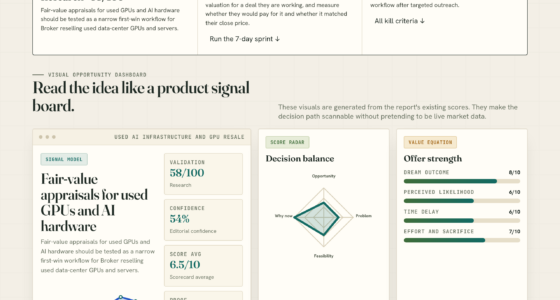

📊 Full opportunity report: When Does Cheap Memory Come Back? The 2027–2029 Question on ThorstenMeyerAI.com — validation score, market gap, and execution plan.

Get the latest gadgets delivered free with Prime
- Fast, free delivery on millions of items
- Prime Video, Amazon Music and more included
- Member-only deals all year
TL;DR
Memory prices are expected to remain elevated until at least 2028–2029 due to ongoing capacity constraints and industry discipline. Relief from the current shortage is unlikely before then, with some scenarios suggesting prices will stay permanently higher.
Memory prices are unlikely to drop back to pre-crisis levels before 2028–2029, according to industry forecasts and manufacturer warnings. The ongoing shortage, driven by physical capacity limits and industry discipline, means relief will be delayed, impacting markets and technology sectors relying on memory chips.
Multiple industry sources, including IDC and major memory producers like Samsung, SK Hynix, and Micron, agree that a significant easing in memory shortages is not expected before late 2028. The primary reason is the long lead time for new fabs—taking years to build and ramp—such as Micron’s Idaho plant and SK Hynix’s Indiana facility, which are only beginning to add capacity in 2027 and beyond. The largest planned capacity increase, Micron’s New York megafab, is pushed to 2030.
Despite new capacity coming online, industry insiders warn that prices will stay elevated, with a new normal of 30–50% above pre-crisis levels. This is reinforced by the physical limits of the supply chain, especially the bottleneck in advanced packaging, which constrains the final assembly of high-bandwidth memory (HBM) modules. Additionally, manufacturers are maintaining tight control over supply to maximize profits, and demand from AI applications remains robust, further extending shortages.
When does cheap memory come back?
The question everyone’s really asking: do I just wait this out? The honest answer is a timeline, three scenarios, and news you may not want — the cheap memory you remember isn’t coming back. A less-expensive market probably is — later, and at a higher floor.
Capacity ramps ’27–’28; price climbs stop, then ease. Settles ~30–50% above pre-crisis — the new baseline, not a return to 2024.
AI keeps accelerating; OpenAI locked ~40% of DRAM through 2029; makers pause expansion to protect record margins; each HBM gen worsens the math.
AI demand moderates just as delayed ’27–’28 fabs all arrive → classic overshoot → prices crash. Not the bet — but never impossible in this industry.
The one relief valve that needs no fab is efficiency: if compression (Part 9) cuts how much memory each model needs, demand softens on the timescale of a software update, not a construction project. So the posture isn’t waiting — it’s the discipline this series has been about. Memory is now a scarce, valuable resource; treat it that way. Buy what you need, right-size, own what’s steady, rent what’s spiky, quantize either way. The people who do best won’t be the ones who guessed the bottom — they’ll be the ones who stopped needing so much. That’s the squeeze, end to end.
Impacts of Persistent Memory Shortages on Markets
The expectation that memory prices will stay high until at least 2028–2029 means that consumers, data centers, and AI developers should prepare for sustained higher costs. This affects pricing strategies, hardware investments, and the pace of AI infrastructure deployment. The industry’s discipline and physical constraints suggest a permanently elevated baseline, limiting the possibility of a quick price correction and shaping long-term planning for technology companies.
Popular right now

Dyson Cyclone V10 Origin Cordless Vacuum

Ninja Prestige Smart XL 10-in-1 Air Fryer and Countertop Oven with Pro Cook System, DT551

Breville Barista Pro Espresso Machine with Built-In Grinder, Brushed Stainless Steel
As an affiliate, we earn on qualifying purchases.
Physical and Industry Factors Behind the Delay
The delay in relief is rooted in the physical realities of semiconductor manufacturing. Building new fabs takes years, with current projects like Micron’s Idaho plant and SK Hynix’s Indiana facility only just beginning to produce in 2027. The largest capacity addition, Micron’s Clay megafab, is not expected until 2030. Meanwhile, the industry’s focus on high-margin products like HBM and the discipline to avoid overbuilding mean supply growth will be slow and deliberate. The ongoing demand from AI applications, with companies like OpenAI locking in long-term supply agreements, further tightens the market.
Additionally, constraints in advanced packaging—necessary for final memory assembly—limit how quickly new capacity can translate into available products, reinforcing the long timeline for relief.
“The shortage could extend beyond 2027, with a genuine easing only expected in late 2028.”
— Samsung spokesperson
Uncertainties in Market Recovery Timeline
While projections point toward a late 2028–2029 easing, several factors remain uncertain. Sudden shifts in AI demand, potential breakthroughs in manufacturing efficiency, or unforeseen supply chain disruptions could accelerate or delay relief. Additionally, the possibility of a market overshoot—where supply exceeds demand—remains a risk, potentially causing prices to crash unexpectedly.
Upcoming Capacity Additions and Market Indicators
Monitoring the progress of new fabs like Micron’s Clay plant and SK Hynix’s Indiana facility will be key in assessing when supply begins to meet demand more effectively. Industry reports and company announcements over the next 12–24 months will clarify whether capacity growth aligns with projections. Meanwhile, demand-side innovations, such as improved memory efficiency through compression and better integration, may influence future price trends.
Key Questions
Will memory prices ever return to pre-crisis levels?
Most industry experts agree that prices are unlikely to return to pre-crisis levels before 2028–2029, and a permanently higher baseline may persist due to physical and strategic factors.
What factors are delaying the relief in memory shortages?
The primary factors include the long lead time for building and ramping new fabs, physical constraints in advanced packaging, and industry discipline to limit overproduction amid high profits and sustained demand, especially from AI applications.
Could a market crash happen if supply overshoots demand?
Yes, historically, the memory industry has experienced boom-and-bust cycles. If demand moderates suddenly or capacity exceeds needs, prices could crash, though current projections suggest this is less likely in the near term.
How might demand-side improvements affect prices?
Technological advancements that reduce memory requirements—such as data compression and more efficient architectures—could soften demand and help mitigate price increases without new capacity additions.
Source: ThorstenMeyerAI.com