
TL;DR
OpenAI has introduced ChatGPT Health, a new feature allowing users to connect medical records and wellness apps for tailored health responses. Currently limited to early users, its broader impact on medicine and privacy remains uncertain.
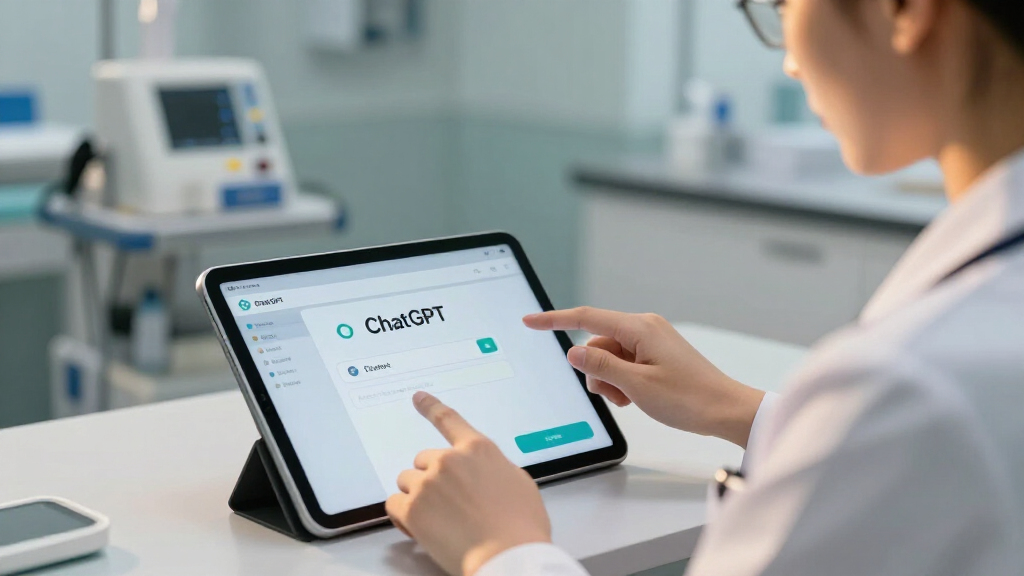
OpenAI has launched ChatGPT Health, a dedicated feature within its chatbot platform that allows users to connect medical records and wellness apps for more personalized health answers. The feature is currently available to a limited group of early users on web and iOS, with plans for broader access. This development marks a significant move into consumer health, integrating AI with personal health data for the first time at this scale.
ChatGPT Health enables users to link data from services including Apple Health, MyFitnessPal, Peloton, and others, with in the United States, access to medical records facilitated through a partnership with b.well. OpenAI states that health conversations are stored separately, encrypted, and are not used to train its AI models, addressing privacy concerns. The product was developed over two years with input from more than 260 physicians across 60 countries, and evaluated using the HealthBench framework introduced in 2025.
While the feature aims to provide answers based on lab results, visit history, and activity data, OpenAI emphasizes it is not intended for diagnosis or treatment. The rollout is limited initially, excluding regions such as the European Economic Area, Switzerland, and the UK, due to stricter data protection laws. The company plans to expand access gradually, with future integrations and regional availability to be announced.
Potential Impact on Personalized Healthcare Delivery
This development signals a shift toward AI-driven personalized medicine, where health data integration could enhance patient engagement and clinical decision-making. However, it also raises questions about data privacy, security, and regulatory oversight, especially as the technology moves closer to diagnostic and treatment domains. The move could influence how healthcare providers and regulators approach AI tools in medicine, balancing innovation with patient safety and privacy.
Apple Health compatible fitness tracker
As an affiliate, we earn on qualifying purchases.
As an affiliate, we earn on qualifying purchases.
Background of AI in Consumer Health Applications
AI-based health tools have been evolving over the past few years, with companies like Anthropic expanding their models’ capabilities in health and life sciences. Prior to this launch, ChatGPT was already popular for health-related queries, with hundreds of millions of weekly interactions. OpenAI’s move to integrate personal health data directly into ChatGPT represents a significant step, leveraging its existing user base and pushing into a space traditionally dominated by medical professionals and regulatory bodies.
OpenAI’s development of HealthBench in 2025 provided a framework for evaluating the quality of health responses, and the company claims extensive physician input shaped ChatGPT Health. Despite this, the reliability of AI-generated health advice outside controlled evaluations remains unproven, and external regulatory scrutiny is expected to increase as the product expands.
“While integrating medical records into AI chatbots is promising, we need rigorous validation and clear regulatory standards before widespread adoption.”
— Dr. Lisa Chen, healthcare AI researcher
As an affiliate, we earn on qualifying purchases.
Unanswered Questions About Safety and Regulation
It remains unclear how reliably ChatGPT Health will perform in real-world, unsupervised settings beyond initial evaluations. The timeline for broader rollout, especially outside the US, is uncertain, as is the regulatory response, particularly in regions with strict data privacy laws like Europe. Additionally, how third-party apps handle and govern data once transferred remains to be clarified.
personal medical records app for iOS
As an affiliate, we earn on qualifying purchases.
As an affiliate, we earn on qualifying purchases.
Future Steps for Broader Adoption and Evaluation
OpenAI plans to expand access gradually, with announcements on additional integrations, regional availability, and independent assessments of answer quality. Monitoring regulatory responses and privacy safeguards will be critical as the product approaches wider markets. The next milestones include increased platform integrations, regional launches, and independent validation of health-related accuracy and safety.
encrypted health data storage device
As an affiliate, we earn on qualifying purchases.
As an affiliate, we earn on qualifying purchases.
Key Questions
What is ChatGPT Health?
It is a new feature inside ChatGPT that allows users to connect medical records and wellness apps for personalized health responses, announced by OpenAI in January 2026.
Can I use ChatGPT Health now?
Currently, access is limited to a small group of early users on web and iOS, with a waitlist for broader access. It is not available in Europe, the UK, or Switzerland at this time.
Will my health data be used to train AI models?
OpenAI states that health conversations are stored separately, encrypted, and are not used to train its AI models.
Is ChatGPT Health meant for diagnosing medical conditions?
No, OpenAI emphasizes that the tool is designed for wellness support and should not be used for diagnosis or treatment.
What are the privacy concerns with this technology?
While OpenAI claims data is encrypted and stored separately, questions remain about data governance once information leaves connected third-party apps and how regulators will oversee this new use of health data.
Source: ThorstenMeyerAI.com