🔍 Read the full analysis: Harnessing AI With Google To Redefine The Future Of Fashion on ThorstenMeyerAI.com

Get the latest gadgets delivered free — and shop member deals
- Fast, free delivery on millions of items
- Access to Prime Big Deal Days deals on October 6–7
- Prime Video, Amazon Music and more included
TL;DR
Google partnered with designers Jane Wade and Sergio Hudson to develop AI tools for fashion planning, showcased at New York Fashion Week. These tools aim to streamline styling and staging, emphasizing operational efficiency. Their broader adoption remains unverified.
Google announced on September 18, 2026, that its Envisioning Studio, in collaboration with Google Labs, co-developed two custom AI tools with fashion designers Jane Wade and Sergio Hudson for use in New York Fashion Week. These tools aim to support styling and runway staging, with Google claiming their results appeared on the runway, though independent verification is unavailable.
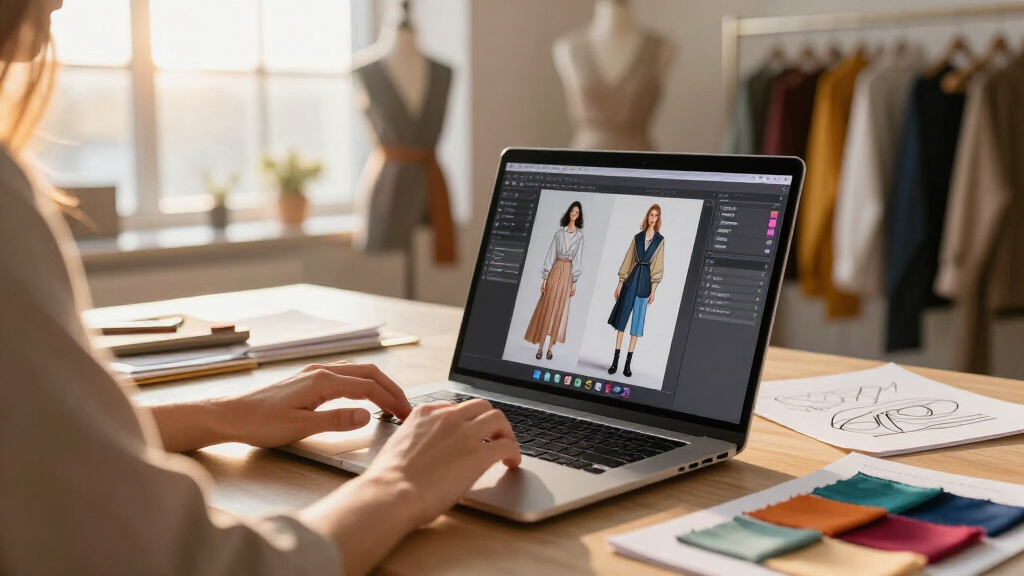
The first tool, Styling Suite, allows Wade to digitally assemble and refine head-to-toe looks, including hair, makeup, accessories, and garments, reducing the typical three-day in-person fitting process. The second, Runway Visualization, enables Hudson to simulate and adjust his runway setup within budget constraints, testing lighting, props, and set configurations virtually. Both tools were built within Google Flow, Google’s AI creative studio, with direct input from the designers to address workflow inefficiencies.
Google states that these tools were designed to target operational costs and time, not creative decision-making, and that they are tailored to small and mid-sized studios. The company highlights that the tools support simulation and planning tasks—such as styling combinations and staging adjustments—before physical production, aiming to reduce expenses and streamline workflows. The results of these collaborations reportedly appeared on the NY Fashion Week runway, though specific metrics or independent assessments have not been provided.
Potential Impact of Co-Developed AI Tools in Fashion
This development underscores a shift toward operational AI applications in fashion, emphasizing collaboration between tech companies and designers to improve efficiency rather than replace creative roles. The focus on workflow automation and cost reduction could help small and mid-sized fashion houses compete more effectively under tight budgets and schedules. If these tools prove effective and scalable, they could redefine pre-production processes across the industry, enabling faster turnaround and resource optimization.
As an affiliate, we earn on qualifying purchases.
Background on AI in Fashion and Google’s Initiatives
While AI has been explored in fashion primarily for generative design and trend prediction, practical applications for operational tasks remain limited. Google’s Envisioning Studio and Google Flow aim to bridge this gap by creating tools that integrate into existing workflows. The recent collaboration with Wade and Hudson represents a move toward co-developing bespoke AI solutions, contrasting with earlier pilot projects that often remained theoretical or limited in scope. Fashion Week, a key industry event, serves as a testing ground for these innovations, with the potential for wider adoption if successful.
“Using the Styling Suite, I can see how virtual fittings help me refine looks faster and identify missing elements before physical production.”
— Jane Wade
As an affiliate, we earn on qualifying purchases.
Unverified Claims and Broader Adoption Potential
There is no independent verification of the tools’ effectiveness, cost savings, or whether results truly appeared on the NY Fashion Week runway. Details on measurable outcomes, the extent of reuse by other designers, or plans for wider rollout remain undisclosed. It is unclear how much time or money was saved and whether these tools will become standard features within Google Flow or industry-wide.
As an affiliate, we earn on qualifying purchases.
Next Steps for AI-Driven Fashion Workflow Tools
Google is expected to monitor the performance and reception of these tools during upcoming fashion cycles, potentially expanding access or developing templates based on this pilot. Industry observers will watch for independent assessments of cost and time savings, as well as whether other designers adopt similar workflows. Google may also release more detailed case studies or metrics to validate the broader impact of these AI applications in fashion production.
As an affiliate, we earn on qualifying purchases.
Key Questions
Are these AI tools available for all designers now?
Google has not announced general availability; the tools were developed specifically for Wade and Hudson as part of a pilot project. Broader access depends on future evaluations and industry adoption.
Can these tools replace traditional styling and staging processes?
Google states that the tools are meant to support operational tasks like styling and staging, not replace creative decision-making. They aim to reduce time and costs associated with these steps.
Will other designers be able to customize these tools?
Google Flow allows users to build bespoke tools using natural language descriptions, suggesting that similar applications could be created or adapted by other designers in the future.
Has there been any independent review of the tools’ effectiveness?
No, all claims are based on Google’s own announcement. Independent verification or peer-reviewed assessments are not yet available.
What are the main benefits claimed for these AI tools?
According to Google, the main benefits include reducing production time (such as fittings and set staging) and lowering costs, especially for small and mid-sized studios with limited budgets.
Primary source: Google AI · via ThorstenMeyerAI.com
Fall Picks
fall essentials
As an affiliate, we earn on qualifying purchases.