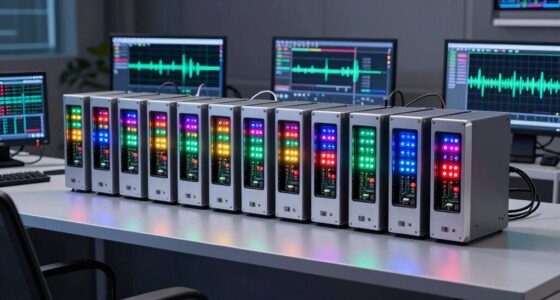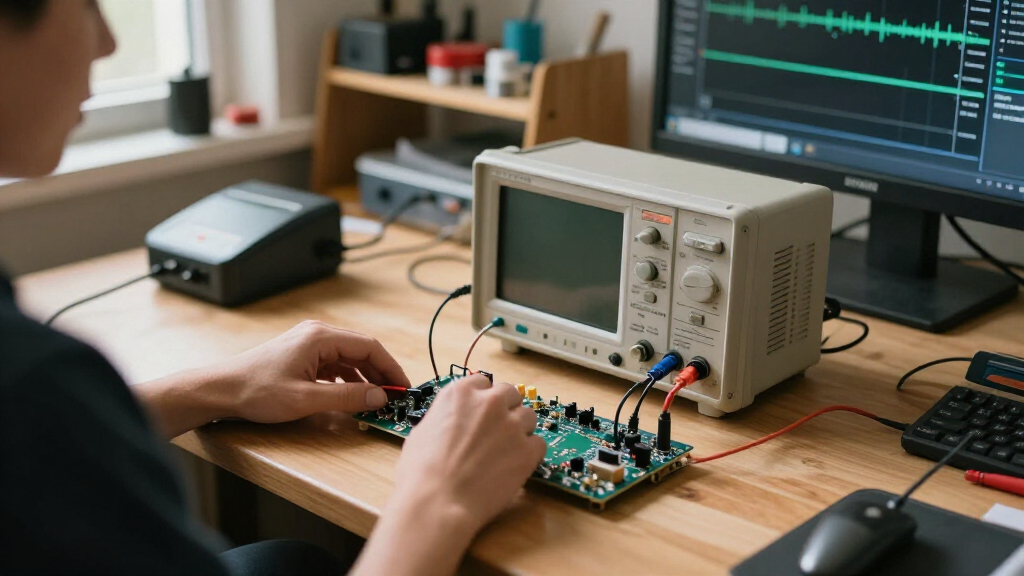

The best electronics instrumentation equipment depends on whether you need detailed waveform analysis, portable troubleshooting, or a tool for a specialized task. I put the Digilent Analog Discovery 3 first for its broad PC-based test capabilities, while the Rigol DS1054Z stands out for bench work that benefits from four channels, and the FNIRSI 2C53T combines several functions in a handheld format. The main tradeoffs are capability versus portability, dedicated instruments versus all-in-one convenience, and general-purpose tools versus task-specific devices. This lineup also includes an audio multimeter, a synth-oriented kit, and a digital caliper, so not every pick serves the same kind of electronics work. Read on for the full breakdown and guidance on choosing by job, workspace, and experience level.

Get the latest gadgets delivered free with Prime
- Fast, free delivery on millions of items
- Prime Video, Amazon Music and more included
- Member-only deals all year
Complete the kit



Key Takeaways
- Analog Discovery 3 is the broadest general-purpose pick in this lineup, while the Rigol DS1054Z is the clearer choice when a bench setup needs four oscilloscope channels.
- The Digilent Analog Discovery 3 Pro Bundle adds a bundle-oriented route to the Analog Discovery platform; compare what is included with the standalone model before choosing between them.
- Handheld all-in-one models such as the FNIRSI 2C53T, 2C23T, and DST-210 trade the workflow of separate bench instruments for portability and combined functions.
- The SMD AMM-1, Korg NTS-2, and NEIKO digital caliper serve narrower tasks, so their value depends on whether audio, synthesis, or physical measurement is part of your work.
- The FNIRSI DSO152 and DSO-510 are portable oscilloscope options, but buyers should match bandwidth and sampling specifications to their signals rather than treating handheld size as a substitute for capability.
| Analog Discovery 3 USB Oscilloscope and Test Instrument |  | Best Overall for Mixed-Signal Bench Work | Oscilloscope channels: 2 differential | Oscilloscope resolution: 14-bit | Oscilloscope sample rate: Up to 125 MS/s per channel | VIEW LATEST PRICE | See Our Full Breakdown |
| SMD AMM-1 Audio Multimeter |  | Best for Audio-System Measurements | Brand: SMD (Steve Meade Designs) | Model: SMD AMM-1 | Measurement types: Ammeter, multimeter, and voltmeter | VIEW LATEST PRICE | See Our Full Breakdown |
| Digilent Analog Discovery 3 Pro Bundle |  | Best Ready-to-Connect Lab Bundle | Oscilloscope and generator channels: 2 | Oscilloscope and generator resolution: 14-bit | Sample rate: 125 MS/s per channel | VIEW LATEST PRICE | See Our Full Breakdown |
| FNIRSI DSO-510 Portable Oscilloscope and DDS Signal Generator |  | Best Portable Scope with Built-In Signal Generation | Oscilloscope bandwidth: 10 MHz | Sampling rate: 48 MS/s | Signal generator: DDS, up to 50 kHz; 13 waveform types | VIEW LATEST PRICE | See Our Full Breakdown |
| FNIRSI DSO152 Handheld Oscilloscope, 200 kHz Bandwidth, 2.5 MS/s Sampling Rate |  | Best Compact Scope for Basic Signal Checks | Bandwidth: 200 kHz | Sampling rate: 2.5 MS/s | Display: 2.8-inch LCD, 320 × 240 resolution | VIEW LATEST PRICE | See Our Full Breakdown |
| Digilent Analog Discovery 3 Pro Bundle |  | Best All-in-One Bench Toolkit | Model: 471-060 | Oscilloscope: Dual-channel, 14-bit, 125 MS/s per channel, 30 MHz+ bandwidth with BNC adapter | Waveform generator: Dual-channel, 14-bit, 125 MS/s per channel, 12 MHz bandwidth with BNC adapter | VIEW LATEST PRICE | See Our Full Breakdown |
| FNIRSI 2C53T 3-in-1 50 MHz Oscilloscope, Multimeter, and DDS Signal Generator |  | Best Portable Scope-and-Meter Combination | Oscilloscope: Two channels, 50 MHz bandwidth, 250 MSa/s | Record depth: 1 Kpts | Multimeter: 4.5-digit, 19,999 counts | VIEW LATEST PRICE | See Our Full Breakdown |
| Korg Nu:Tekt NTS-2 Oscilloscope Kit |  | Best for Audio and Control-Voltage Work | Type: No-solder oscilloscope kit | Channels: 4 | Functions: Oscilloscope, waveform generator, spectrum analyzer, and tuner | VIEW LATEST PRICE | See Our Full Breakdown |
| FNIRSI DST-210 3-in-1 10MHz Handheld Oscilloscope Multimeter DDS Generator |  | Best Compact Field Diagnostic | Oscilloscope bandwidth: 10 MHz | Sampling rate: 48 MSa/s | Maximum input voltage: 400 V | VIEW LATEST PRICE | See Our Full Breakdown |
| NEIKO 01409A 12-Inch Electronic Digital Caliper |  | Best for Physical Measurements | Measurement range: 0–12 in / 0–300 mm | Resolution: 0.0005 in / 1/128 in / 0.01 mm | Accuracy: 0.001 in / 0.02 mm | VIEW LATEST PRICE | See Our Full Breakdown |
| FNIRSI 2C23T 3-in-1 Handheld Oscilloscope, Multimeter, and Signal Generator |  | Best Portable All-in-One | Oscilloscope bandwidth: 10 MHz | Oscilloscope channels: 2 | Real-time sampling rate: 50 MSa/s | VIEW LATEST PRICE | See Our Full Breakdown |
| Rigol DS1054Z Digital Oscilloscope, 50 MHz, 4-Channel, 1 GSa/s |  | Best for Multi-Signal Bench Debugging | Bandwidth: 50 MHz | Analog channels: 4 | Maximum sample rate: 1 GSa/s (single-channel) | VIEW LATEST PRICE | See Our Full Breakdown |
| electronics instrumentation equipment | Display |
|---|---|
| Analog Discovery 3 USB Oscillo | — |
| SMD AMM-1 Audio Multimeter | — |
| Digilent Analog Discovery 3 Pr | — |
| FNIRSI DSO-510 Portable Oscill | 2.8-inch TFT |
| FNIRSI DSO152 Handheld Oscillo | 2.8-inch LCD, 320 × 240 resolution |
| Digilent Analog Discovery 3 Pr | — |
| FNIRSI 2C53T 3-in-1 50 MHz Osc | 2.8-inch LCD |
| Korg Nu:Tekt NTS-2 Oscilloscop | — |
| FNIRSI DST-210 3-in-1 10MHz Ha | 2.8-inch color TFT |
| NEIKO 01409A 12-Inch Electroni | Extra-large LCD |
| FNIRSI 2C23T 3-in-1 Handheld O | 2.8-inch HD LCD |
| Rigol DS1054Z Digital Oscillos | — |
More Details on Our Top Picks
Analog Discovery 3 USB Oscilloscope and Test Instrument
The Analog Discovery 3 earns my top spot for buyers who need several kinds of electronic instrumentation in one computer-connected unit. Its two-channel, 14-bit oscilloscope, dual waveform generator, 16-channel logic analyzer, and variable supplies cover analog and digital development without requiring separate bench tools. Compared with the portable FNIRSI DSO-510, it offers a much broader analysis environment and far faster signal generation, but it depends on a computer rather than providing its own screen and battery. WaveForms adds spectrum, network, and impedance analysis, plus scripting and support for LabVIEW and MATLAB. The tradeoff is setup flexibility: the stated bandwidth figures require a BNC adapter, and reaching 800 mA per supply channel calls for auxiliary power. I’d choose it for a versatile lab workstation, not quick standalone field checks.
Pros:- Combines oscilloscope, waveform generator, logic analyzer, and variable power supplies
- 14-bit resolution and sample rates up to 125 MS/s per channel
- WaveForms supports spectrum, network, and impedance analysis, scripting, LabVIEW, and MATLAB
- Includes a project box, USB-C cable, flywire assembly, headers, and labels
Cons:- Requires a connected computer for its software-based instrument interface
- BNC adapter is needed for the listed oscilloscope and generator bandwidths
- Maximum 800 mA supply current per channel requires an auxiliary power source
Best for: Students, engineers, and electronics developers who want analog, digital, and power testing tools in a computer-based lab setup.
Not ideal for: Technicians who need a standalone, battery-powered instrument, or users who need the listed bandwidth without buying or supplying a BNC adapter.
- Oscilloscope channels:2 differential
- Oscilloscope resolution:14-bit
- Oscilloscope sample rate:Up to 125 MS/s per channel
- Oscilloscope bandwidth:30+ MHz with BNC adapter
- Waveform generator:2 channels, 14-bit, up to 125 MS/s per channel
- Digital I/O:16 channels; up to 125 MS/s per channel
- Variable power supplies:0.5 V to 5 V and -0.5 V to -5 V
- Dimensions and weight:7 x 2 x 9 inches; 8.5 ounces
Our verdict“Choose the Analog Discovery 3 if you want a flexible computer-based mixed-signal lab instrument and can accept its adapter and auxiliary-power requirements.”
SMD AMM-1 Audio Multimeter
The SMD AMM-1 has the clearest specialist role here: audio-focused readings of current, voltage, power, and impedance. That makes it more relevant to checking audio systems than general oscilloscopes such as the FNIRSI DSO-510, which can display waveforms and generate test signals but is not described as measuring audio power and impedance. Its battery operation also suits checks away from a powered bench. The limitation is breadth of documented capability. The supplied information does not specify ranges, accuracy, display details, or included leads, so I would not choose it as a replacement for a general-purpose multimeter or oscilloscope. Compared with the Analog Discovery 3, it is a narrower, audio-oriented instrument rather than a software-driven mixed-signal platform. Its value is in that focused measurement set, provided those are the readings you need.
Pros:- Measures current and voltage for audio-system checks
- Includes audio power and impedance measurement functions
- Battery-powered design supports use away from a bench outlet
- Listed as meeting CE and FCC specifications
Cons:- Product data does not specify measurement ranges or accuracy
- Does not provide the oscilloscope and signal-generation functions found in the Analog Discovery 3
- Included accessories and display details are not specified
Best for: Car-audio installers and audio-system hobbyists who need battery-powered measurements of current, voltage, power, and impedance.
Not ideal for: Electronics students or bench technicians who need waveform viewing, signal generation, logic analysis, or documented measurement ranges and accuracy.
- Brand:SMD (Steve Meade Designs)
- Model:SMD AMM-1
- Measurement types:Ammeter, multimeter, and voltmeter
- Audio measurements:Power and impedance
- Power source:Battery powered
- Compliance:CE and FCC
Our verdict“Pick the AMM-1 for focused audio power and impedance checks, but choose a broader instrument if you also need waveform analysis or general electronics testing.”
Digilent Analog Discovery 3 Pro Bundle
The Analog Discovery 3 Pro Bundle suits buyers who want the Analog Discovery platform with key signal connections included. Like the standard Analog Discovery 3, it combines a two-channel oscilloscope, waveform generator, 16-channel digital interface, and variable supplies, with 14-bit resolution and rates up to 125 MS/s per channel. The practical distinction is the bundle: its BNC adapter, probes, and test clips reduce the need to source those connections separately and make it easier to move from setup to measurement. WaveForms supports capture, analysis, and waveform generation. Compared with the standalone FNIRSI DSO-510, this is better suited to computer-based mixed-signal work, but less convenient when you need a self-contained handheld screen. The provided data does not list the supply current or the same detailed analysis and programming integrations as the standard model, so buyers should check those requirements before choosing between the two.
Pros:- Combines oscilloscope, waveform generator, logic analyzer, pattern generator, and variable supplies
- Includes BNC adapter, probes, and test clips
- Provides 14-bit resolution and up to 125 MS/s per channel
- WaveForms supports waveform capture, analysis, and generation
Cons:- Computer-based operation is less convenient for standalone field measurements than the FNIRSI DSO-510
- Product data does not specify variable-supply current capacity
- The listed bundle information does not detail the broader analysis and programming integrations described for the standard Analog Discovery 3
Best for: Lab users and electronics learners who want a computer-based mixed-signal instrument with probes, BNC connection, and test clips in the bundle.
Not ideal for: Field technicians who need standalone operation, or buyers who require clearly specified power-supply current and detailed software integrations before purchase.
- Oscilloscope and generator channels:2
- Oscilloscope and generator resolution:14-bit
- Sample rate:125 MS/s per channel
- Digital I/O:16 channels
- Logic analyzer and pattern generator rate:Up to 125 MS/s per channel
- Variable power supplies:0.5 V to 5 V and -0.5 V to -5 V
- Software:WaveForms
- Included bundle accessories:BNC adapter, probes, and test clips
- Dimensions and weight:9.5 x 3 x 6.5 inches; 13.3 ounces
Our verdict“Choose this bundle over the standard Analog Discovery 3 when included probes, test clips, and BNC connection matter more than the missing published detail on supply capacity.”
FNIRSI DSO-510 Portable Oscilloscope and DDS Signal Generator
The FNIRSI DSO-510 is the better fit when portability and quick checks matter more than broad lab analysis. It pairs a 10 MHz oscilloscope with a DDS generator that produces 13 waveform types up to 50 kHz, and its one-button auto setup can help get a basic capture underway without a computer. That makes it more self-contained than either Analog Discovery 3 model, which relies on a software-based setup but offers substantially higher sample rates and mixed-signal tools. The DSO-510’s 48 MS/s sampling, 2.8-inch display, included 10X probe, and built-in battery suit portable troubleshooting; its stated runtime is up to four hours. The tradeoff is limited bandwidth and generator frequency, which narrow its usefulness for faster circuits or more demanding signal work. I’d treat it as a compact field instrument, not a substitute for a full lab platform.
Pros:- Combines an oscilloscope and DDS signal generator in one portable instrument
- Includes a 10X probe
- One-button auto setup can simplify basic waveform capture
- Built-in battery is rated for up to four hours of operation
Cons:- 10 MHz bandwidth limits use on faster signals
- Signal generator frequency tops out at 50 kHz
- 2.8-inch display provides less viewing space than a computer-based instrument
Best for: Repair technicians and hobbyists who need a battery-powered scope and basic signal generator for low-frequency portable troubleshooting.
Not ideal for: Engineers working on faster digital or analog circuits, or users who need the analysis range and high sample rates of an Analog Discovery 3.
- Oscilloscope bandwidth:10 MHz
- Sampling rate:48 MS/s
- Signal generator:DDS, up to 50 kHz; 13 waveform types
- Time base:50 ns–20 s
- Maximum measurable voltage:Up to 400 V
- Display:2.8-inch TFT
- Battery:1000 mAh lithium-ion; up to 4 hours
- Probe:10X probe included
Our verdict“Choose the DSO-510 for portable, low-frequency troubleshooting with basic signal generation, but use an Analog Discovery 3 for broader bench analysis.”
FNIRSI DSO152 Handheld Oscilloscope, 200 kHz Bandwidth, 2.5 MS/s Sampling Rate
The FNIRSI DSO152 is the simplest choice here for basic waveform checks in a small handheld format. Its 200 kHz bandwidth and 2.5 MS/s sampling rate place it well below the FNIRSI DSO-510, which reaches 10 MHz bandwidth and adds a DDS generator; the DSO152 is better viewed as a focused, entry-level scope than a combined test station. Auto waveform setup and Auto, Normal, and Single trigger modes offer practical control for occasional troubleshooting, while USB-C handles charging, data transfer, and firmware updates. The 2.8-inch, 320 × 240 display keeps the unit compact, but gives less room for detailed traces than a computer-based Analog Discovery 3. Its roughly four-hour battery life supports short checks away from an outlet, not extended sessions. I’d choose it for simple, low-frequency work where portability matters more than bandwidth.
Pros:- Compact handheld design with a built-in 1000 mAh battery
- One-button automatic waveform setup
- Auto, Normal, and Single trigger modes support different capture situations
- USB-C supports charging, data transfer, and firmware updates
Cons:- 200 kHz bandwidth is far below the FNIRSI DSO-510’s 10 MHz
- 2.5 MS/s sampling rate restricts its usefulness for faster signals
- Small 2.8-inch display offers limited space for waveform inspection
Best for: Beginners and repair hobbyists who need a compact handheld scope for basic, low-frequency signal checks.
Not ideal for: Users measuring higher-frequency circuits, needing signal generation, or wanting a larger display and broader analysis tools.
- Bandwidth:200 kHz
- Sampling rate:2.5 MS/s
- Display:2.8-inch LCD, 320 × 240 resolution
- Trigger modes:Auto, Normal, Single
- Probe attenuation:10×
- Maximum probe measurement:800 Vpp (280 V AC equivalent)
- Battery and runtime:1000 mAh; about 4 hours
- Charging and data port:USB-C
- Dimensions and weight:3.78 × 2.64 × 0.79 inches; 10.2 ounces
Our verdict“Pick the DSO152 for occasional, low-frequency checks in a pocketable format, but step up to the DSO-510 for more bandwidth and built-in signal generation.”
Digilent Analog Discovery 3 Pro Bundle
I rank the Analog Discovery 3 Pro Bundle first for buyers who need a broad set of electronics instruments in a compact, computer-connected setup. Its oscilloscope and waveform generator each support 125 MS/s per channel, while a 16-channel logic analyzer, pattern generator, and programmable supplies cover digital and low-voltage circuit work. The included BNC adapter board and test leads make it more ready for bench use than a bare instrument. Compared with the FNIRSI 2C53T, this bundle offers more digital I/O and faster sampling, but it does not combine a handheld multimeter in the same way. The main tradeoff is that the supplies reach 800 mA per channel only with auxiliary power, and serious use depends on a connected computer.
Pros:- Combines oscilloscope, waveform generator, logic analyzer, pattern generator, and programmable supplies
- 125 MS/s per channel supports faster signal capture than the FNIRSI 2C53T
- Includes a BNC adapter board, test clips, and flywire connections
- 16-channel logic and pattern functions suit mixed digital and analog projects
Cons:- Programmable supplies provide up to 800 mA per channel only with auxiliary power
- Computer-connected workflow is less convenient for untethered field measurements
- The many functions may be unnecessary for buyers who only need a handheld meter or basic scope
Best for: Electronics students, educators, and hardware developers who want oscilloscope, signal-generation, logic-analysis, and low-voltage supply functions in one computer-connected toolkit.
Not ideal for: Field technicians who need a self-contained handheld multimeter, or users needing higher-current programmable supplies without auxiliary power.
- Model:471-060
- Oscilloscope:Dual-channel, 14-bit, 125 MS/s per channel, 30 MHz+ bandwidth with BNC adapter
- Waveform generator:Dual-channel, 14-bit, 125 MS/s per channel, 12 MHz bandwidth with BNC adapter
- Logic analyzer:16 channels, 125 MS/s per channel
- Pattern generator:16 channels, 125 MS/s per channel
- Programmable supplies:0.5 V to 5 V and -0.5 V to -5 V; up to 800 mA per channel with auxiliary power
- Weight:1.28 lb
- Included accessories:USB-C cable, BNC adapter board, six mini-grabber clips, flywire assembly, headers, and labels
Our verdict“Choose this bundle if you want a versatile computer-based electronics lab in one device and can work within its auxiliary-power and tethering requirements.”
FNIRSI 2C53T 3-in-1 50 MHz Oscilloscope, Multimeter, and DDS Signal Generator
The FNIRSI 2C53T is a practical pick for technicians who want an oscilloscope, multimeter, and signal generator in one rechargeable handheld unit. Its 50 MHz bandwidth and 250 MSa/s sampling rate give it more scope headroom than the 10 MHz FNIRSI DST-210, while the 4.5-digit meter covers voltage, current, resistance, and capacitance measurements. That combination can reduce the instruments and leads a field worker carries. Its limits show up in waveform capture: the 1 Kpts record depth is modest, and the generator tops out at 50 kHz. Compared with the Digilent Analog Discovery 3 Pro Bundle, it is easier to carry and does not need a computer for basic use, but lacks the Digilent’s 16-channel digital tools and broader bench functions.
Pros:- Combines a two-channel oscilloscope, 4.5-digit multimeter, and DDS signal generator
- 50 MHz bandwidth and 250 MSa/s sampling exceed the FNIRSI DST-210’s scope figures
- Rechargeable 3000 mAh battery supports portable work
- Waveform storage and computer export help preserve measurements
Cons:- 1 Kpts record depth limits how much waveform detail can be captured at once
- Signal generator frequency is limited to 50 kHz
- Small 2.8-inch display is less suited to detailed waveform inspection than a bench instrument
Best for: Field service technicians and electronics hobbyists who need a portable scope and general-purpose meter for low- to mid-frequency diagnostics.
Not ideal for: Engineers analyzing long or complex captures, or users who need high-frequency signal generation and extensive logic-analysis channels.
- Oscilloscope:Two channels, 50 MHz bandwidth, 250 MSa/s
- Record depth:1 Kpts
- Multimeter:4.5-digit, 19,999 counts
- Signal generator:Up to 50 kHz, 13 waveforms
- Maximum voltage:400 V
- Battery:3000 mAh; up to 6 hours standby
- Display:2.8-inch LCD
- Dimensions and weight:6.57 × 3.5 × 1.38 in; 400 g
Our verdict“Pick the 2C53T for portable diagnostics that need a capable meter alongside a mid-bandwidth scope, but skip it for deep waveform analysis.”
Korg Nu:Tekt NTS-2 Oscilloscope Kit
The Korg Nu:Tekt NTS-2 earns a distinct place here as a compact instrument for synthesizer, studio, and live-sound workflows rather than general electronics bench work. It combines a four-channel oscilloscope with a waveform generator, spectrum analyzer, and tuner, making it useful for checking audio signals and control voltages without carrying several separate tools. The no-solder assembly is approachable for people comfortable putting together a small kit, though it still takes setup before use. Compared with the Digilent Analog Discovery 3 Pro Bundle, the NTS-2 is much smaller and focused on audio, but it lacks the Digilent’s stated high-speed sampling, logic analyzer, and programmable supplies. Its role is specialized: buyers seeking multimeter functions or broad circuit testing should choose a different instrument.
Pros:- Combines a four-channel oscilloscope, waveform generator, spectrum analyzer, and tuner
- No-solder assembly makes the kit accessible without soldering equipment
- Compact 130 g design suits studio desks and portable rigs
- Audio-oriented functions offer a different toolset from the Digilent Analog Discovery 3 Pro Bundle
Cons:- Requires assembly before use
- Its audio and control-voltage focus leaves out general multimeter and programmable power-supply functions
- The supplied specifications do not state bandwidth or sampling rate, limiting direct performance comparison
Best for: Synthesizer players, audio technicians, and electronic-music makers who need compact signal monitoring and analysis for audio or control-voltage setups.
Not ideal for: General electronics repairers who need a multimeter, high-speed digital logic analysis, or a full bench-testing instrument.
- Type:No-solder oscilloscope kit
- Channels:4
- Functions:Oscilloscope, waveform generator, spectrum analyzer, and tuner
- Assembly:No soldering required
- Connectors:Auxiliary and MIDI USB
- Dimensions:3.07 × 5.08 × 1.54 in
- Weight:130 g
- Material:Aluminum and alloy steel
Our verdict“Choose the NTS-2 if your instrumentation needs center on audio and synthesizer signals, not broad electrical troubleshooting.”
FNIRSI DST-210 3-in-1 10MHz Handheld Oscilloscope Multimeter DDS Generator
For quick checks away from a bench, the FNIRSI DST-210 combines a handheld oscilloscope, TRMS multimeter, and DDS generator with a 3000 mAh rechargeable battery. Its 48 MSa/s sampling rate and color display give field users a practical way to inspect basic waveforms, while the meter adds functions such as continuity, capacitance, frequency, and temperature. Compared with the FNIRSI 2C53T, the DST-210 is the more limited scope: its bandwidth is 10 MHz rather than 50 MHz, so it is better suited to slower signals and routine diagnostics than faster circuit work. The generator also stops at 50 kHz. I would favor this model when portability and a combined toolset matter more than bandwidth or detailed waveform capture.
Pros:- Combines oscilloscope, TRMS multimeter, and signal generator in a handheld unit
- 3000 mAh battery and USB-C charging support work away from an outlet
- 48 MSa/s sampling is specified for waveform capture
- Meter includes useful field functions such as continuity, diode, temperature, and live/neutral detection
Cons:- 10 MHz bandwidth is substantially narrower than the FNIRSI 2C53T’s 50 MHz
- Signal generator is limited to 50 kHz
- Small 2.8-inch screen is less comfortable for detailed analysis than a larger bench display
Best for: Field technicians and repair hobbyists who need a rechargeable, space-saving instrument for routine low-frequency checks and common multimeter tasks.
Not ideal for: Circuit designers working with fast digital edges or higher-frequency signals, or anyone needing a signal generator above 50 kHz.
- Oscilloscope bandwidth:10 MHz
- Sampling rate:48 MSa/s
- Maximum input voltage:400 V
- Multimeter:19,999-count TRMS
- Signal generator:13 waveforms; up to 50 kHz; 0.1 V–3.0 V amplitude
- Display:2.8-inch color TFT
- Battery and charging:3000 mAh; USB-C
- Dimensions:6.69 × 3.43 × 1.36 in
Our verdict“Choose the DST-210 for compact, battery-powered basic diagnostics, but pick the 2C53T if your work needs more oscilloscope bandwidth.”
NEIKO 01409A 12-Inch Electronic Digital Caliper
The NEIKO 01409A is the outlier in this roundup: it does not analyze electrical signals, but it fills a useful instrumentation role when electronics work also involves measuring components, enclosures, or mechanical clearances. Its 0–12 inch / 0–300 mm range and inside, outside, depth, and step measurements cover more than simple part diameter checks. The selectable inch, fractional, and metric readouts make it easier to work across different plans and components. Compared with the oscilloscope-focused Korg NTS-2 or the FNIRSI handheld units, this caliper cannot diagnose circuits; it answers a different question—whether a part physically fits. Its 12-inch reach is useful for larger work, though it is bulkier than a small caliper and depends on LR44 batteries.
Pros:- Measures inside, outside, depth, and step dimensions
- Switches among inches, fractions, and millimeters
- 12-inch range accommodates larger enclosures and parts than compact calipers
- Includes a storage case and spare LR44 battery
Cons:- Does not measure electrical signals or replace any scope or multimeter in this roundup
- Requires LR44 batteries
- Its 12-inch size may be less convenient for users measuring only small components
Best for: Electronics builders, repair technicians, and makers who regularly measure component dimensions, chassis openings, connector spacing, or enclosure depth.
Not ideal for: Buyers seeking electrical test equipment such as an oscilloscope, multimeter, or signal generator; this caliper measures physical dimensions only.
- Measurement range:0–12 in / 0–300 mm
- Resolution:0.0005 in / 1/128 in / 0.01 mm
- Accuracy:0.001 in / 0.02 mm
- Measurement modes:Inches, fractions, and millimeters
- Measurement types:Inside, outside, depth, and step
- Material:Polished stainless steel
- Display:Extra-large LCD
- Included accessories:Storage case and spare LR44 battery
Our verdict“Buy this caliper as a companion measurement tool for physical electronics work, not as a substitute for electrical instrumentation.”
FNIRSI 2C23T 3-in-1 Handheld Oscilloscope, Multimeter, and Signal Generator
The FNIRSI 2C23T is the strongest fit here for buyers who need several basic bench functions in one portable instrument. Its two-channel, 10 MHz oscilloscope, 10,000-count multimeter, and signal generator cover common circuit checks without requiring separate devices. Compared with the bench-style Rigol DS1054Z, it is far lighter and adds voltage, current, resistance, and capacitance measurements, but its 50 MSa/s sampling and smaller display make detailed or fast-changing waveform analysis less capable. The generator reaches 2 MHz and offers several waveform types for simple signal injection, not high-frequency work. A rechargeable battery, waveform saving, and PC export suit field troubleshooting or a compact hobby setup. The tradeoff is clear: portability and tool consolidation come before bandwidth, screen size, and advanced bench analysis.
Pros:- Combines oscilloscope, multimeter, and DDS signal generator in one handheld instrument
- Two oscilloscope channels support comparison of related signals
- Waveform saving and PC export help preserve measurements for later analysis
- Rechargeable 3000 mAh battery supports portable troubleshooting
Cons:- 10 MHz bandwidth and 50 MSa/s sampling limit work on faster signals
- The 2 MHz generator ceiling is unsuitable for higher-frequency signal injection
- The 2.8-inch display is less suited to detailed waveform inspection than a bench oscilloscope
Best for: Field technicians and electronics hobbyists who want oscilloscope, multimeter, and basic signal-generator functions in one battery-powered handheld unit.
Not ideal for: Lab users debugging fast digital signals or needing multiple simultaneous measurements, since its bandwidth, sampling rate, and two-channel layout are modest beside the Rigol DS1054Z.
- Oscilloscope bandwidth:10 MHz
- Oscilloscope channels:2
- Real-time sampling rate:50 MSa/s
- Record depth:32 kb
- Multimeter count:10,000 counts
- Signal generator maximum frequency:2 MHz
- Display:2.8-inch HD LCD
- Battery and standby:3000 mAh rechargeable; up to 6 hours standby
- Weight:10.4 ounces
Our verdict“Choose the 2C23T when portability and three integrated test functions matter more than the Rigol DS1054Z’s greater bandwidth, channel count, and bench-oriented analysis.”
Rigol DS1054Z Digital Oscilloscope, 50 MHz, 4-Channel, 1 GSa/s
For bench work that depends on seeing several signals at once, I rank the Rigol DS1054Z above the portable all-in-one options. Its four analog channels let a learner or engineer compare more points in a circuit simultaneously, while up to 24 Mpts of memory and a 30,000 wfms/s capture rate help retain detail and catch intermittent behavior. Serial triggering and decoding for UART, I2C, and SPI also make it more useful for embedded-system debugging than the FNIRSI 2C23T, which combines a multimeter and generator but offers only two channels and 10 MHz bandwidth. The Rigol is a dedicated bench oscilloscope, not a portable replacement for those extra measurement tools. Its 50 MHz bandwidth can still constrain faster designs, and the 1 GSa/s maximum applies to single-channel operation.
Pros:- Four analog channels allow simultaneous comparison of multiple circuit signals
- Up to 24 Mpts memory supports longer or more detailed waveform captures
- Serial trigger and decoding features support UART, I2C, and SPI debugging
- USB, LAN, and AUX connections suit bench and teaching setups
Cons:- 50 MHz bandwidth may not cover higher-frequency design work
- The 1 GSa/s maximum sample rate is available on a single channel, with lower memory depth for multichannel use
- Bench-oriented 6.6-pound form factor is less convenient for field troubleshooting than the handheld FNIRSI 2C23T
Best for: Electronics students, lab teams, and hobbyists debugging multi-point circuits or embedded boards who need four channels, deep memory, and serial-bus tools.
Not ideal for: Technicians who need a battery-powered instrument with integrated multimeter and signal generator, or engineers analyzing signals beyond its 50 MHz bandwidth.
- Bandwidth:50 MHz
- Analog channels:4
- Maximum sample rate:1 GSa/s (single-channel)
- Memory depth:24 Mpts (12 Mpts dual-channel; 6 Mpts with 3 or 4 channels)
- Capture rate:30,000 wfms/s
- Waveform recording:Up to 60,000 frames
- Serial bus support:Triggering and decoding for RS232/UART, I2C, and SPI
- Interfaces:USB Host, USB Device, LAN (LXI), AUX output
- Weight:6.6 pounds
Our verdict“Pick the DS1054Z for multi-signal bench debugging and embedded-bus analysis, but choose a handheld all-in-one if portability and multimeter functions take priority.”

How We Picked
I ranked these products by how directly they support common electronics measurement and troubleshooting tasks, then by usability, flexibility, portability, and the fit between stated capability and likely workload. Instruments that combine several useful functions or support a broad range of bench tasks ranked ahead of tools designed for a narrow specialty. I also weighed whether a buyer is likely to need a PC-connected workflow, a standalone bench setup, or a handheld tool.
The lineup includes distinct instrument types, so this is not a claim that every product is interchangeable. The Analog Discovery 3 leads as a versatile general-purpose choice; the Rigol DS1054Z earns a separate role for four-channel bench work; and portable FNIRSI models are ranked for mobility and combined functions, with their more limited specifications taken into account. Specialty tools rank for the buyers who need them, not as substitutes for an oscilloscope or multimeter. The Digilent Pro Bundle appears twice in the supplied list, so the two entries represent the same named product rather than separate models.
Factors to Consider When Choosing Best Electronics Instrumentation Equipment
Before choosing, I would start with the measurements your work actually requires, then decide where and how you will take them. A longer specification sheet does not automatically make an instrument a better fit: measurement range, connections, workflow, and the limits of each tool matter as much as headline numbers.
Match Bandwidth and Sampling to the Signals You Measure
For an oscilloscope, bandwidth and sampling rate describe different limits, and neither should be judged alone. Bandwidth relates to how much signal frequency the scope can represent, while sampling rate affects how it captures changes over time. Start with the fastest signals and edges you expect to inspect, then leave room for useful detail rather than selecting a scope that only just covers the nominal frequency. A common mistake is assuming that a larger bandwidth number guarantees clean measurements across every probe, setting, and signal condition. If your work is mostly slow control or audio signals, a modest handheld model may fit; faster digital circuits and multi-signal debugging call for a more capable instrument. For questions where the waveform itself matters, prioritize the scope over a tool that bundles many functions but offers less measurement headroom.
Choose Between a PC-Based Instrument and a Standalone Bench Scope
A PC-based instrument can keep acquisition, analysis, and documentation together on a computer, which suits lab work that already relies on software. A standalone bench scope offers a dedicated screen and controls, so it can be easier to use for quick checks or when a computer is not part of the workspace. Consider where the instrument will sit, whether you need to save or share measurements, and how much you value physical controls. Buyers sometimes choose a PC-connected model for its range of functions without checking computer compatibility or how they prefer to work at the bench. Conversely, a standalone scope may be less convenient if your process depends on a software-centered workflow. Decide on the interaction style before comparing feature lists.
Treat Portability and All-in-One Convenience as Tradeoffs
A handheld instrument can reduce setup time for field checks, repairs, and workspaces with limited bench room. Combining an oscilloscope, multimeter, or signal generator can also mean fewer separate tools to store and carry. That convenience does not make every bundled function equivalent to a dedicated instrument, so check which function you will rely on most and whether its stated limits suit that task. A frequent buying mistake is counting functions rather than asking how well the primary measurement is supported. If you mostly need waveform analysis, a dedicated scope may be the better investment; if you move between basic checks, a combined handheld can be more practical. Consider battery or charging arrangements, display size, and probe connections as part of portability, not just the instrument’s dimensions.
Check Channel Count, Inputs, and Connection Needs
Channel count matters when you need to compare multiple signals at the same time, such as an input and output or related digital lines. A two-channel device may be sufficient for basic troubleshooting, while a four-channel scope like the Rigol DS1054Z supports more simultaneous comparisons. More channels only help if you can connect them safely and have enough probes and workspace for the setup. Before buying, check the input limits, probe compatibility, grounding approach, and any connections needed to use the instrument with your equipment. A mismatch between the instrument input and the circuit can make readings unreliable or create a safety risk. If you rarely need simultaneous measurements, paying for extra channels may be less useful than choosing a more suitable workflow or measurement range.
Buy Specialty Tools Only When the Task Calls for Them
Not every electronics task is best served by an oscilloscope. An audio multimeter, a synth-focused oscilloscope kit, and a digital caliper address distinct needs that general-purpose test instruments do not replace. Think about whether you regularly measure audio behavior, interact with electronic instruments, or need to check component and enclosure dimensions. A common mistake is treating a specialized tool as a general lab upgrade simply because it appears alongside core test equipment. If the task is occasional, another tool you already own may be adequate; if it is routine, a focused instrument can make that work more direct. Keep specialty purchases tied to a clear workflow, and prioritize a capable core oscilloscope or multimeter if you still lack basic diagnostic coverage.
Plan for Probes, Software, and the Rest of the Measurement Setup
The instrument is only one part of a measurement system. Probes, leads, software, adapters, and calibration needs can affect how easily you get a useful reading, and included accessories vary between standalone instruments and bundles. Check exactly what comes with the version you plan to buy rather than assuming that a bundle name or product family guarantees particular accessories. Also confirm operating-system support and connection requirements for PC-based equipment, especially if the instrument will be shared across several computers. Buyers can overlook these details and discover that the main unit works but the intended setup needs extra parts. Compare the complete workflow you need, including storage and maintenance, before deciding that a feature count alone makes one option the better value.
Frequently Asked Questions
Should I choose the Analog Discovery 3 or the Rigol DS1054Z?
I would choose based on workflow rather than treating them as direct substitutes. The Analog Discovery 3 is the broader PC-based option for buyers who want multiple test functions within a computer-centered setup. The Rigol DS1054Z makes more sense when a dedicated bench oscilloscope and four-channel waveform viewing are the main priorities. Before deciding, check which controls, software, probes, and connections your work requires. If you often compare several live signals, favor the four-channel bench format; if you value integrated PC analysis, the Analog Discovery approach may fit better.
Can a handheld oscilloscope replace a bench oscilloscope?
It can replace one for some basic troubleshooting, but not for every measurement job. A handheld model is useful when mobility, limited bench space, or combined functions matter more than a full bench workflow. Compare its bandwidth, sampling rate, channel count, input limits, and display against the signals you need to inspect. A compact instrument may not offer the same headroom or convenience for detailed, simultaneous waveform analysis. If your work depends on capturing faster signals or comparing multiple channels, a bench scope is usually the safer fit.
Is a 3-in-1 instrument a good first purchase for electronics work?
It can be a practical start if you want one device for basic scope, multimeter, and signal-generator tasks. The main question is whether the limits of each function fit the circuits you plan to work on, rather than how many functions appear in the product name. Check input ratings, measurement ranges, and the included leads before using it on unfamiliar equipment. A combined tool may be easier to carry, while separate instruments can offer a more focused setup for demanding work. If you already know that waveform analysis is your main need, choose around the scope specifications first.
Do I need the Digilent Pro Bundle if I am considering the Analog Discovery 3?
Not automatically. The two listings name the same Analog Discovery 3 Pro Bundle, so the supplied roundup does not establish two distinct bundle versions or a separate upgrade in capability. Compare the bundle’s stated contents with the standalone Analog Discovery 3 listing and identify any accessories you would otherwise need to buy. A bundle is useful when its included items match your intended measurements and workflow. If the extras will go unused, the standalone device may be the simpler fit; verify the exact package contents before ordering.
When should I buy a specialty tool instead of another general-purpose instrument?
A specialty instrument makes sense when its task comes up often enough that a dedicated workflow saves effort or provides the measurement you need. The SMD AMM-1, Korg NTS-2, and NEIKO caliper target audio, synth-related, and physical-dimension tasks rather than replacing a general oscilloscope. If those jobs are occasional, first check whether your existing equipment can handle them adequately. If they are central to your projects, a dedicated tool can be a more suitable purchase than adding another general-purpose handheld. Keep a core scope and meter in the plan if you still need basic circuit diagnostics.
Conclusion
For a single broad recommendation, I would start with the Digilent Analog Discovery 3; it offers the strongest general-purpose fit for buyers who want a PC-based test setup. My pick for best premium bench use is the Rigol DS1054Z when four-channel oscilloscope work matters most, while the FNIRSI 2C53T is a strong portable all-in-one choice for buyers willing to trade some dedicated-instrument headroom for convenience. For beginners, I would choose between the Analog Discovery 3 for a software-centered learning setup and a handheld FNIRSI model for portable, combined basics, checking the specifications against the projects first. The DSO152 or DSO-510 suits buyers whose priority is a compact oscilloscope, while the SMD AMM-1, Korg NTS-2, and NEIKO caliper are best for their respective specialty tasks. The Analog Discovery 3 Pro Bundle is the bundle-oriented alternative, but compare its exact contents with the standalone listing; the duplicated entry in this lineup is not a separate model.
Evergreen bestsellers Picks
bestsellers
As an affiliate, we earn on qualifying purchases.