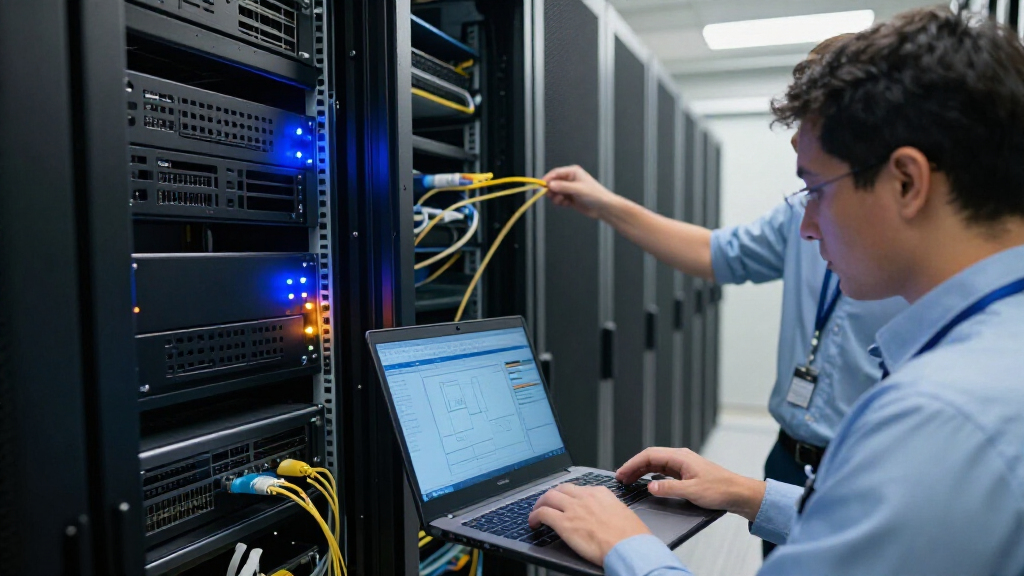
🔍 Read the full analysis: Is Your Model Ready To Run On AWS Trainium? on ThorstenMeyerAI.com

Get the latest gadgets delivered free with Prime
- Fast, free delivery on millions of items
- Prime Video, Amazon Music and more included
- Member-only deals all year
TL;DR
Hugging Face has launched a public Space showing whether selected Transformers models completed basic tests on AWS Trainium2, with scripts and software versions to help reproduce results. A PASS confirms a short run and a limited output check; it does not establish speed, cost or production readiness.
Hugging Face has introduced a public Space that reports whether selected Transformers models run on AWS Trainium2, Amazon’s AI accelerator, and provides scripts and software-version details for reproducing the tests, as described in the original analysis. The results offer developers a model-specific compatibility check, but a PASS reflects a short test rather than evidence of production performance.
The Space features a curated selection of popular Hugging Face Hub models, chosen using download and trending scores. Users can search rankings by task and model name, but those rankings also include models that have not been tested. The interface separates models omitted from testing, often because they were not prioritized, from those that received an incompatible result. For broader context on AI systems that act, see world model readiness.
For tested models, the page lists the result, number of Trainium cores, elapsed time including compilation, and peak device memory. It also identifies the versions of the Neuron compiler, neuronx-cc, and Transformers associated with a result. Each model page includes the software stack, additional packages and a run.py script intended to reproduce the test.
Hugging Face says the script loads the checkpoint with Transformers’ from_pretrained, shards it when needed, and generates with a static cache and torch.compile using the Neuron backend. On a Trainium2 instance, users install the listed packages and run the script with Python. For sharded models, the script launches its own distributed ranks; a separate torchrun command is not required. The Space also offers a command to retrieve compiled graphs from a public cache, avoiding compilation on a first run.
A Compatibility Check, Not a Benchmark
The Space addresses a practical question for teams weighing whether to test Amazon’s accelerator: will this particular model run with this software setup? General framework support does not by itself establish that an individual checkpoint works. A recorded result and reproducible script give developers a more concrete starting point, and the version details can help them identify whether a failure is tied to a model or a particular software stack.
That information can inform early screening, but it does not answer the larger infrastructure questions. The checks do not report serving throughput, operating cost, long-generation behavior or performance under production workloads. Teams comparing hardware or planning deployment still need to evaluate the model on workloads that reflect their own requirements.
The test also has a defined size limit: each model is assigned the smallest number of Trainium cores that can hold its weights, up to four Trainium2 devices, or 16 cores. The results therefore do not establish support for models that exceed that tested capacity or for every possible configuration.
AWS Trainium2 EC2 instance cloud computing
As an affiliate, we earn on qualifying purchases.
As an affiliate, we earn on qualifying purchases.
How the Trainium Tests Work
The Space builds on Hugging Face’s earlier introduction of TorchNeuron, its name for using the native PyTorch backend for AWS Trainium through the torch-neuronx package. In that setup, Transformers uses its modeling code on Trainium. The new Space adds a public record of selected models that Hugging Face has tried, alongside instructions for repeating the runs.
Tests run on a Trainium2, or trn2, instance, and generate 32 tokens. Most models use tensor parallelism. For mixture-of-experts models without a tensor-parallel plan, the tests use expert parallelism alone. For single-core runs, generated tokens are compared with output from a CPU run of the same checkpoint. For sharded models, a small judge model checks whether the generated text is fluent English.
At launch, the stated test coverage includes Transformers models for text generation and image-text-to-text tasks. Hugging Face also publishes the results as the aws-neuron/torch-neuronx-model-support dataset, with Parquet files organized by compiler and library versions. The rows include results, applicable failure errors, software versions and the script, allowing developers to query records outside the interface.
““Which ones actually do?””
— Hugging Face
AWS Neuron SDK developer tools Trainium
As an affiliate, we earn on qualifying purchases.
As an affiliate, we earn on qualifying purchases.
Limits of the Published Results
The announcement does not provide a total count of models tested or a summary of how many passed, failed or were excluded. It also gives no throughput measurements, long-generation results, cost comparisons or production workload data. A PASS means the test completed a short run and passed the stated output check; it does not establish that a model is fast, economical or ready to serve users at scale.
The validation method varies by configuration: single-core outputs are compared with CPU output, while sharded runs receive a fluency check from a small judge model. The announcement does not say that every run uses an identical validation method. Developers should inspect the dataset card and the record for the specific model and version pair before interpreting a result.
Results are tied to the listed Transformers and neuronx-cc versions. It is not yet clear whether a model will continue to run after those versions change. Nor does a missing result mean a model is incompatible: Hugging Face says some models may simply not have been prioritized. Coverage is also limited to models that fit within the stated maximum of 16 Trainium2 cores.
AWS Trainium machine learning model deployment guide
As an affiliate, we earn on qualifying purchases.
As an affiliate, we earn on qualifying purchases.
Planned Expansion of Model Coverage
Hugging Face says it plans to add tests for Diffusers, sentence-transformer models and additional Transformers tasks. The announcement gives no timetable or target number of models for those additions. Until coverage expands, users can search the Space or query the public dataset for the available model and version combinations.
To reproduce a listed result, developers will need access to a compatible Trainium2 instance and the software stack specified for that test. The next useful developments for users will be broader test coverage and additional published results; performance, cost and production suitability will still require separate workload-specific evaluation.
Hugging Face Transformers machine learning development books
As an affiliate, we earn on qualifying purchases.
As an affiliate, we earn on qualifying purchases.
Key Questions
What does a PASS mean in the Hugging Face Space?
A PASS indicates that the tested model completed a short run and passed the output check used for that configuration. The test generates 32 tokens; a PASS does not establish production performance.
Does a PASS show that the model is fast or inexpensive on Trainium2?
No. The published checks do not provide throughput measurements or cost comparisons, and they do not establish performance under production workloads.
Does a missing model listing mean it is incompatible?
No. The Space distinguishes models that were left out, often because testing was not prioritized, from models marked incompatible. Untested does not mean incompatible.
How can developers reproduce a result?
Use the model page’s run.py script and listed software versions on a compatible Trainium2 instance. The page also lists packages and provides a command for copying compiled graphs from a public cache.
What model coverage is planned?
Hugging Face says it plans to add Diffusers, sentence-transformer models and more Transformers tasks. It has not announced a release schedule.
Primary source: Hugging Face · via ThorstenMeyerAI.com
Fall Picks
fall essentials
As an affiliate, we earn on qualifying purchases.