
TL;DR

Get the latest gadgets delivered free with Prime
- Fast, free delivery on millions of items
- Prime Video, Amazon Music and more included
- Member-only deals all year
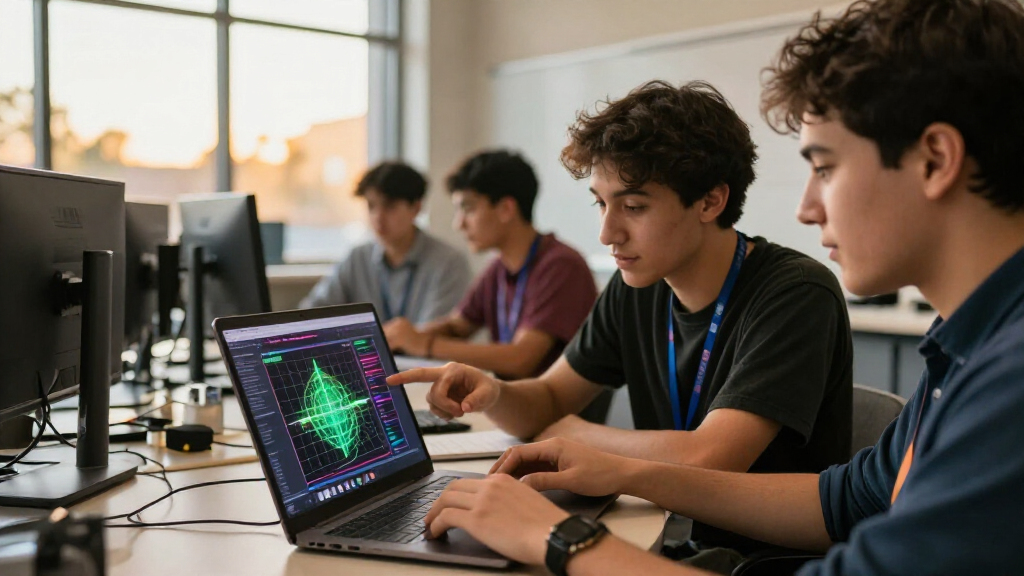
Google held its second annual Colorado Impact Hackathon at its Boulder offices with CU Boulder and the Colorado Energy Office. Student teams presented projects aimed at solar planning, battery use during wildfire-related power shutoffs and predictive grid hardening; Google’s report names SolarSnap as the winner.
Students presented tools for solar planning, battery backup and grid hardening at Google’s second annual Colorado Impact Hackathon, held at the company’s Boulder offices in partnership with CU Boulder and the Colorado Energy Office. Google said the first-place project, SolarSnap, uses AI to help homeowners assess possible solar-panel setups with a phone camera, placing student-developed ideas for a more resilient electric grid in the spotlight.
Google’s report, published October 29, 2026, said the event asked participants how to help create a clean, secure and resilient electric grid in Colorado. It did not give the hackathon’s specific event date, the number of participants or the length of the competition. The three ranked projects focused on different parts of the challenge.
SolarSnap took first place. Google described it as an AI app that helps homeowners find an ideal solar-panel setup using a phone camera. Grid Watch placed second; Google said it is an AI-managed battery network designed to maintain power during wildfire-related shutoffs while reducing electricity costs. Third-place project Grid Guard offers predictive capabilities for targeted grid hardening, according to the company.
Google said Colorado Attorney General Phil Weiser and CU Boulder Vice Chancellor for Sustainability Andrew Mayock spoke at the event about innovation and the state’s clean-energy future. The report does not describe their remarks in detail, nor does it say whether any of the student projects will be developed or deployed beyond the hackathon.
Student Ideas Target Grid Pressures
The projects address several practical concerns for Colorado’s electricity system: how households might evaluate solar, how batteries could support customers during wildfire-related power shutoffs, and where utilities might prioritize physical grid upgrades. These are distinct problems, but each is tied to the broader aim identified by the hackathon: a grid that can support clean energy while withstanding disruptions.
The event also brought students together with a technology company, a university and a state energy agency. That collaboration can give participants a forum to frame and prototype responses to public infrastructure problems. However, a hackathon result is not evidence that a tool is ready for consumers or utilities. The projects’ real-world value would depend on further development, testing, data access, cost and coordination with relevant energy providers and regulators.
For residents, the ideas point to issues with direct consequences: household energy choices, continuity of electricity during shutoffs and the reliability of local infrastructure. Google’s report describes concepts and rankings, not measured savings, improved reliability or reductions in wildfire risk. Those outcomes remain unestablished by the material available.
Popular right now

Vitamix Propel Series 750 Professional-Grade Blender, 4 Programs, Black

KitchenAid Artisan Series 5-Quart Tilt-Head Stand Mixer, Dried Rose (KSM150PS)

Dyson V8 Cyclone Cordless Vacuum
As an affiliate, we earn on qualifying purchases.
A Second Colorado Impact Hackathon
Google described the Boulder gathering as the second annual Colorado Impact Hackathon. It was organized in partnership with CU Boulder and the Colorado Energy Office, pairing student participation with institutions involved in technology, higher education and state energy policy. Google’s account presents the event as a competition centered on a specific state-level challenge rather than a report on a completed grid project.
The company linked the ideas to concerns including wildfire risks and energy backlogs. Its report did not define those backlogs or provide data on their scale, and it offered no technical documentation for the teams’ proposals. The available account therefore supports a summary of the projects and event, but not a comparison of their expected performance or readiness.
“How can we create a clean, secure, and resilient electric grid in Colorado?”
— Google, in its October 29, 2026 report
Project Readiness Is Not Reported
Google’s report does not say whether the teams built working prototypes, what data or methods they used, or whether independent judges assessed the projects against technical criteria. It also gives no information about funding, follow-up support, utility partners or plans for deployment. The event date, participant count and competition format are not specified in the report.
Claims about keeping power on during shutoffs or lowering electricity costs describe Grid Watch’s intended design, not confirmed results. Likewise, Google provides no evidence that SolarSnap’s recommendations have been validated for different homes or that Grid Guard’s predictions could guide actual infrastructure investments. Further details would be needed to assess the projects’ feasibility and likely impact.
Development Plans Remain Unannounced
Google’s account does not announce a next stage for any of the three projects. It remains unclear whether the student teams will continue building their ideas, test them with energy providers or seek support from the event partners. The next concrete update would be information from Google, CU Boulder, the Colorado Energy Office or the project teams about prototypes, evaluation or deployment plans.
Until then, the confirmed outcome is the ranking of three student concepts at the Boulder hackathon. Any claims about improved grid reliability, lower bills or reduced wildfire-related disruption would require evidence from testing or implementation.
Key Questions
What was the Colorado Impact Hackathon?
Google described it as its second annual event in Boulder, organized with CU Boulder and the Colorado Energy Office. Students worked on ideas for a clean, secure and resilient Colorado electric grid.
Which project won first place?
SolarSnap placed first. Google said the AI app uses a phone camera to help homeowners find an appropriate solar-panel setup.
What were the other student projects?
Grid Watch placed second with a proposed AI-managed battery network for wildfire-related shutoffs and electricity costs. Grid Guard, which offers predictive capabilities for targeted grid hardening, placed third.
Will the projects be used by Colorado utilities or homeowners?
Google’s report does not say. It provides no confirmed deployment plans, utility agreements, testing results or consumer release details.
When did the hackathon take place?
Google published its report on October 29, 2026, but did not specify the event’s date.
Source: blog.google