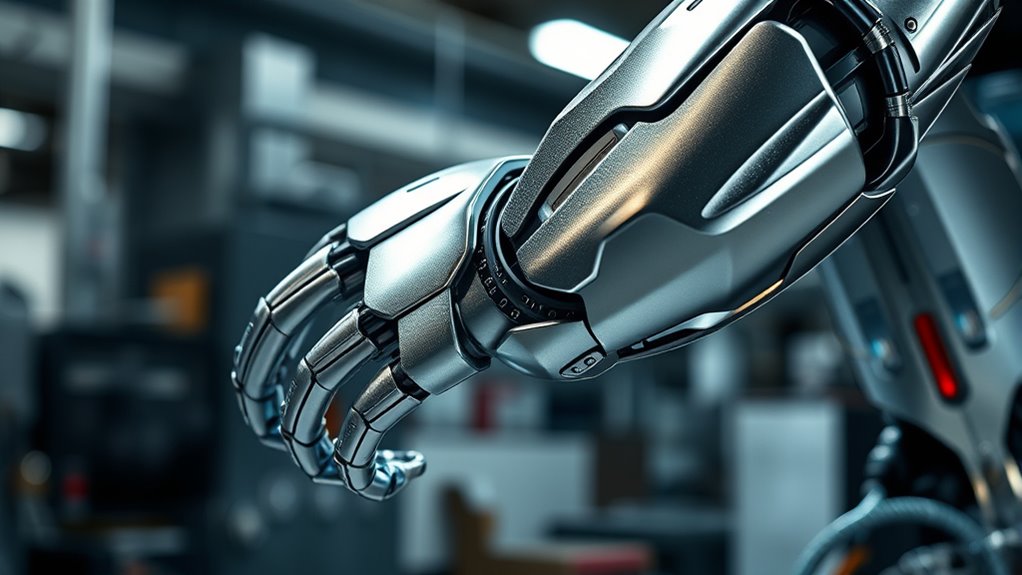

Industrial robots enhanced with nanotech offer incredible improvements in precision, durability, and efficiency. By integrating nanomaterials like graphene and carbon nanotubes, these robots become stronger, lighter, and more energy-efficient. Nanoscale sensors and actuators enable finer environmental detection and intricate handling, while nanocoatings extend their lifespan and resistance to harsh conditions. As a result, manufacturing processes become more accurate and cost-effective. If you keep exploring, you’ll discover how nanotech is revolutionizing industrial automation even further.
Key Takeaways
- Nanotechnology enables smarter, faster, and more precise industrial robots through nanoscale components and materials.
- Incorporation of nanomaterials like graphene enhances robotic parts for increased strength and reduced weight.
- Nanosensors and actuators allow robots to detect environmental changes and manipulate objects at the nanometer scale.
- Nanocoatings improve robots’ resistance to corrosion, wear, and extreme temperatures, extending lifespan.
- Advances in nanotech lead to higher quality, cost-effective manufacturing with enhanced automation capabilities.

Advancements in nanotechnology are revolutionizing industrial robots, making them smarter, faster, and more precise. This leap forward is largely driven by nano enhanced manufacturing, which incorporates nanomaterials and nanoscale components into robotic systems. These tiny enhancements allow robots to perform tasks with a level of accuracy previously impossible, reducing errors and increasing efficiency across various industries. As a result, manufacturers can produce higher quality products at lower costs, accelerating the shift toward more intelligent automation.
Nanotechnology drives smarter, faster, and more precise industrial robots, boosting efficiency and product quality through nano enhanced manufacturing.
Nano enhanced manufacturing enables the integration of nanomaterials such as graphene, carbon nanotubes, and quantum dots into robot components. These materials bring remarkable properties—strength, flexibility, conductivity—that improve the overall performance of robotic parts. For instance, lighter yet stronger robotic arms become feasible, reducing energy consumption and boosting speed without sacrificing durability. This integration also enhances sensors and actuators at a microscopic level, allowing robots to detect minute changes in their environment with exceptional sensitivity. Such advancements are transforming industrial applications, where precision is paramount.
In the domain of precision robotics integration, nanotechnology plays a pivotal role in achieving unprecedented levels of control. Tiny nanoscale actuators and sensors are embedded into robots, enabling finer movements and better feedback mechanisms. This allows robots to handle delicate materials or perform intricate assembly tasks with remarkable accuracy. For example, in electronics manufacturing, nanotech-enabled robots can manipulate components down to the nanometer scale, ensuring perfect alignment and bonding that was once impossible. The result is a significant increase in product quality and a reduction in waste, which benefits both manufacturers and consumers. Additionally, nanocoatings can enhance the durability and lifespan of robotic systems, making them more resistant to corrosion, wear, and extreme temperatures.
As an affiliate, we earn on qualifying purchases.
Frequently Asked Questions
How Do Nanotech Enhancements Improve Robot Energy Efficiency?
Nanotech enhancements boost your robot’s energy efficiency by optimizing nanotech power usage, reducing waste, and improving overall performance. These tiny materials enable more precise control of energy flow, leading to significant energy savings. As a result, your robot consumes less power during operation, which lowers operational costs and extends its lifespan. With nanotech, you get smarter, more efficient robots that maximize energy use and minimize environmental impact.
What Are the Safety Concerns With Nanotech-Integrated Robots?
Think of nanotech misuse as Pandora’s box—once opened, it’s hard to control. You should be concerned about worker safety because integrating nanotech can create unpredictable hazards, like tiny particles escaping or malfunctioning components. These risks demand strict safeguards, as even small errors could lead to serious accidents or health issues. You must prioritize safety protocols to prevent potential disasters, ensuring nanotech-enhanced robots serve you without unintended consequences.
Can Nanotech Make Robots More Adaptable to Different Tasks?
Yes, nanotech can boost robot versatility by enabling adaptive functionalities. You’ll find that nanomaterials allow robots to modify their properties in real-time, making them highly adaptable to various tasks. This technology enhances their ability to handle different environments, switch tools quickly, and perform complex operations. As a result, nanotech empowers robots with greater flexibility, allowing you to use them across a wider range of industries and applications with increased efficiency.
How Durable Are Nanotech-Enhanced Components in Industrial Settings?
Nanotech-enhanced components boast impressive nanotech durability, making them highly resistant to wear and tear in industrial settings. You’ll find that their material resilience allows them to withstand harsh conditions, such as extreme temperatures and corrosive environments. This robustness ensures longer-lasting performance and reduces maintenance needs. As a result, your robots stay operational longer, boosting productivity and lowering overall costs, thanks to the superior durability provided by advanced nanotech materials.
What Are the Environmental Impacts of Using Nanotech in Robotics?
Think of nanotech as a double-edged sword. While it boosts robot efficiency, it also risks nano pollution if not managed properly. You might find that resource consumption increases with the production of nanomaterials, impacting ecosystems. Responsible use is key; by minimizing waste and controlling nano pollution, you can harness nanotech’s benefits without harming the environment. Your choices shape a sustainable future for robotics and the planet.

6DOF Robot Mechanical Arm Kit, Programming Robotic Clamp Hand Claw with 6 Servo Motors, 180 Degree Angle Manipulator Industrial Robot Parts for College Teaching
- Wide Application Areas: Used in education and manufacturing
- Flexible Movement: Smooth, multi-directional operation
- Robust Construction: Made with durable aluminum parts
As an affiliate, we earn on qualifying purchases.
As an affiliate, we earn on qualifying purchases.
Conclusion
As you explore the future of manufacturing, you’ll see how nanotech-enhanced robots revolutionize efficiency and precision. With a projected 25% boost in productivity by 2030, these advancements open new doors for innovation. You’ll notice that integrating nanotechnology not only makes robots smarter and more adaptable but also reduces maintenance costs markedly. Embrace this transformative wave, because, soon, industrial robots with nanotech will be essential for staying ahead in the competitive landscape.
nanosensor for industrial robots
As an affiliate, we earn on qualifying purchases.
As an affiliate, we earn on qualifying purchases.
As an affiliate, we earn on qualifying purchases.