

To go green at the nanoscale, focus on eco-friendly methods like using plant extracts and microbes for nanoparticle synthesis, which bypass harmful chemicals and reduce energy use. Develop biodegradable nanomaterials and incorporate recycling and recycling protocols to minimize environmental impact. Implement advanced sensors and regulation frameworks to guarantee safety and monitoring. Embracing these strategies leads to responsible nanotech, and exploring further reveals how innovations are shaping a sustainable future at the nanoscale.
Listen free for 30 days with Audible
Thousands of audiobooks and originals — cancel anytime.
As an affiliate, we earn on qualifying purchases.
Key Takeaways
- Eco-friendly synthesis of nanomaterials using plant extracts and microbes reduces hazardous chemicals and energy consumption.
- Incorporating biodegradable biopolymers and enzymatically cleavable linkages promotes environmental degradation of nanomaterials.
- Developing recyclable nanoplastics and advanced detection methods minimizes pollution and supports circular economy goals.
- Enhancing energy storage and water treatment with nanostructured materials improves sustainability and reduces environmental impact.
- Implementing harmonized safety regulations and transparent labeling fosters responsible development of green nanotechnologies.
eco-friendly nanoparticle synthesis kit
As an affiliate, we earn on qualifying purchases.
As an affiliate, we earn on qualifying purchases.
Embracing Plant and Microbial Methods for Eco-Friendly Nanoparticle Synthesis

Plant and microbial methods are transforming nanoparticle synthesis by offering environmentally friendly alternatives to traditional chemical processes. You can harness plant extracts to reduce metal ions, producing nanoparticles like silver, gold, and zinc oxide with antimicrobial and catalytic properties. These methods eliminate hazardous reducing agents and solvents, making scale-up more sustainable. Microbial and algal biosynthesis operate at ambient conditions, lowering energy consumption compared to physical or chemical techniques. Hybrid approaches that combine enzymes, phytochemicals, and mild chemicals enhance yield and monodispersity while addressing batch variability. Additionally, computational modeling and AI-driven optimization streamline process parameters such as pH and temperature, improving reproducibility and reducing waste. Embracing these green methods helps you develop safer, scalable nanomaterials that align with sustainability goals and reduce environmental impact.
As an affiliate, we earn on qualifying purchases.
Advancing Sustainable Packaging With Biopolymer-Nanofiller Composites

Advancing sustainable packaging hinges on developing biopolymer-nanofiller composites that combine environmental benefits with enhanced functionality. You can improve mechanical strength, water and oxygen barriers, and biodegradability by integrating nanofillers like cellulose nanocrystals or nanofibrillated chitosan into biopolymers such as agarose. These composites replace traditional plastics, reducing waste accumulation and microplastic pollution. You should consider lifecycle factors, ensuring the materials are biodegradable at end-of-life and capable of recycling to maximize sustainability. Market growth in packaged foods drives demand, making nano-enabled biopolymers a promising alternative. By focusing on scalable green synthesis methods and standardizing characterization, you can help overcome barriers to commercialization. Ultimately, these innovations enable eco-friendly packaging solutions that meet industry needs while protecting the environment. Additionally, European cloud servers are increasingly supporting the development of sustainable nanotechnologies through secure and energy-efficient digital infrastructure, fostering innovation in this field.
nanofiller biopolymer composites
As an affiliate, we earn on qualifying purchases.
As an affiliate, we earn on qualifying purchases.
Enhancing Energy Storage With Nano-Engineered Electrodes and Catalysts

Nano-engineered electrodes and catalysts are transforming energy storage technologies by markedly boosting their performance and efficiency. They enable higher energy and power densities, making batteries and supercapacitors lighter and more powerful. You can expect:
- Enhanced electrode materials—such as graphene composites and nanostructured metal oxides—delivering faster charge/discharge rates.
- Catalysts with reduced noble metal content—like nanostructured platinum or cobalt oxides—lowering costs while maintaining activity.
- Nanostructured carbon materials—including carbon nanotubes and nanolattices—that improve conductivity and structural stability.
These innovations reduce material usage, increase lifespan, and support sustainable energy solutions. By integrating nano-engineering, you’re helping create cleaner transport, grid storage, and decarbonized energy systems, all while minimizing environmental impact.
energy storage nanotech electrodes
As an affiliate, we earn on qualifying purchases.
As an affiliate, we earn on qualifying purchases.
Revolutionizing Water Treatment Through Nano-Enabled Filtration and Photocatalysis

Nano-enabled filtration systems and photocatalytic materials are transforming water treatment by offering highly efficient and compact solutions for removing contaminants. Nano-fiber membranes and functionalized aerogels capture organic pollutants, heavy metals, and pathogens more effectively per unit area than traditional media, enabling smaller, portable treatment units. Photocatalytic nanomaterials like TiO2 degrade persistent plastics and pharmaceuticals under sunlight or visible light, reducing chemical use and energy consumption. Nano-adsorbents with high surface areas target trace pollutants, but you must carefully manage secondary nanoparticle release to prevent environmental harm. Understanding the importance of safe disposal is crucial to prevent secondary contamination from nanomaterials after water treatment processes. Advances in nanomaterial stability and surface modification are also essential to improve their durability and performance in real-world applications. Developing standardized testing protocols for nanotoxicity assessment remains a key challenge in ensuring environmental safety. Scaling these technologies from lab to field remains challenging, as does establishing clear ecotoxicity profiles. Nonetheless, advances in nano-biosensors and monitoring tools help optimize remediation efforts, paving the way for cleaner, safer water worldwide.
Prioritizing Safety and Regulation in Green Nanotechnology Development
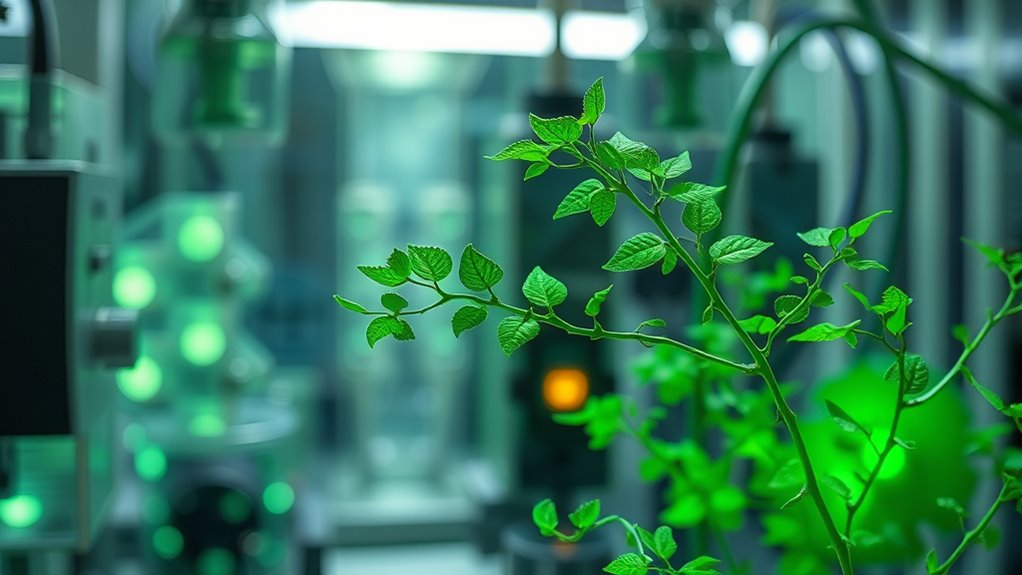
As green nanotechnology moves toward widespread adoption, addressing safety and regulatory challenges becomes increasingly important. You need clear standards to guarantee these innovations are safe for humans and the environment. Here are three key areas to focus on:
- Developing harmonized testing protocols for toxicity, ecotoxicity, and biodegradability to create consistent safety assessments.
- Establishing acceptable exposure limits for engineered nanomaterials to protect workers and communities.
- Implementing transparent labeling and certification systems that identify “green” or biodegradable nanomaterials, building public trust and market confidence.
Prioritizing safety early in development helps prevent future setbacks and regulatory barriers, ensuring sustainable growth. You play a crucial role in advocating for responsible practices that balance innovation with thorough risk management.
Leveraging AI and Machine Learning for Sustainable Nanomaterials Discovery

Leveraging artificial intelligence (AI) and machine learning (ML) has become essential for accelerating the discovery and development of sustainable nanomaterials. These tools help you predict material properties, optimize synthesis parameters, and identify environmentally friendly alternatives faster than traditional methods. By analyzing vast datasets, AI uncovers promising nanomaterials with enhanced performance and minimal ecological impact. ML models can optimize green synthesis routes, reducing waste and energy consumption, while also improving reproducibility. You can simulate degradation pathways, toxicity profiles, and lifecycle impacts, guiding safer design choices. Additionally, understanding the color accuracy of nanomaterials can aid in developing advanced imaging and sensing applications. This integration shortens R&D cycles, lowers costs, and enhances scalability. Ultimately, AI and ML empower you to develop innovative, sustainable nanomaterials that meet environmental standards and commercial demands more efficiently.
Overcoming Commercialization Barriers With Standardized Protocols and Partnerships

While AI and machine learning streamline nanomaterials development, turning promising lab results into market-ready products requires overcoming significant commercialization hurdles. You’ll need to address issues like standardization, regulatory approval, and industry adoption. To do this effectively, focus on:
- Developing validated, reproducible protocols for synthesis, characterization, and testing to guarantee consistency across batches and labs.
- Building strong industry–academic partnerships to facilitate knowledge transfer, pilot projects, and shared resources.
- Engaging regulators early to create harmonized standards and clear pathways for approval, reducing barriers to market entry.
- Incorporating industry standards into research and development processes to ensure compatibility with existing manufacturing and quality assurance frameworks.
Designing for Circularity: Recycling, Degradability, and Microplastic Reduction

You can design nanomaterials with biodegradability in mind to minimize environmental impact after use. Developing recycling protocols for nanoplastics guarantees these tiny particles don’t accumulate in ecosystems, reducing microplastic pollution. By focusing on these strategies, you help create a circular economy that keeps materials in use longer and prevents harmful waste. Incorporating up-to-date vetting ensures that these recommendations remain current and effective. Additionally, adopting sustainable design principles can further enhance the environmental friendliness of nanomaterials by promoting reuse and safe degradation pathways. Implementing life cycle assessments can also identify potential environmental risks early in the design process.
Biodegradable Nanomaterials Strategies
Designing biodegradable nanomaterials is essential for advancing circularity in nanotechnology applications. You focus on creating materials that naturally break down, reducing environmental impact and microplastic pollution. Here are three strategies to contemplate:
- Use biobased polymers like cellulose, chitosan, or polylactic acid, which decompose without leaving harmful residues.
- Incorporate enzymatically cleavable linkages into nanomaterial structures, enabling targeted degradation under specific environmental conditions.
- Develop hybrid systems combining biodegradable matrices with functional nanofillers that disintegrate after use, minimizing persistent waste.
Recycling Protocols for Nanoplastics
Effective recycling protocols for nanoplastics are essential to closing the loop in sustainable nanotechnology. You need to develop methods that efficiently detect, separate, and recover nanoplastics from complex environmental and industrial matrices. Techniques like advanced filtration, magnetic separation, and catalytic degradation can help break down nanoplastics into reusable monomers or harmless byproducts. Incorporating nanotechnology-enabled sensors allows real-time monitoring of nanoplastic concentrations, guiding effective removal processes. Designing nanoplastics with built-in recyclability or degradability also promotes circularity. Standardized protocols are vital for consistency and regulatory approval, ensuring safe handling and disposal. By prioritizing these strategies, you can reduce microplastic generation, minimize ecological risks, and foster a sustainable lifecycle for nanomaterials, ultimately supporting a circular economy at the nanoscale.
Developing Rapid Detection Tools for Environmental Monitoring
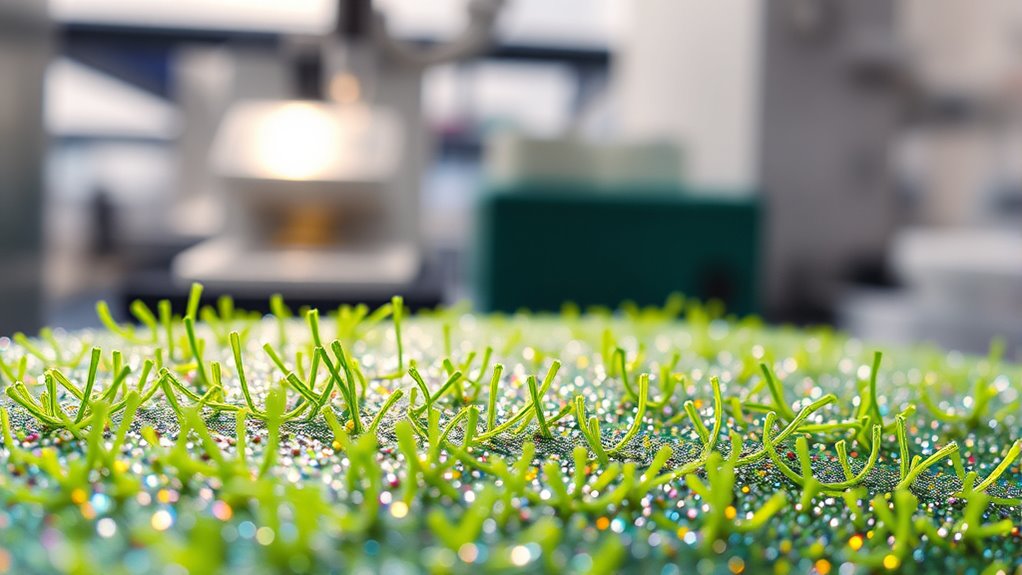
Developing rapid detection tools for environmental monitoring has become essential as nanotechnology-enabled systems increasingly address pollution and public health concerns. You need tools that deliver quick, accurate data to identify contaminants, nanoplastics, and pathogens in complex environments. Here are three key innovations:
Rapid detection tools are vital for nanotech-based environmental monitoring and safeguarding public health.
- Nano-biosensors — These devices use nanomaterials to detect specific pollutants or microplastics with high sensitivity and speed, providing real-time data.
- Chip-based nanocomposites — Portable, miniaturized platforms enable on-site testing for contaminants like PFAS or heavy metals, reducing analysis time.
- Photonic nanomaterials — These systems use light interactions at the nanoscale to identify chemical signatures rapidly, facilitating early warning and intervention.
Additionally, understanding nanoscale interactions helps in designing more effective detection systems that can operate efficiently in complex environmental samples.
Building the Workforce and Public Trust for a Green Nanotech Era

How can we guarantee that the shift to green nanotechnology gains widespread acceptance and responsible implementation? You need a well-trained workforce and public trust. Educate professionals on safety, environmental impact, and ethical practices. Engage communities early, explaining benefits and addressing concerns transparently. Building credibility requires clear communication, safety standards, and demonstrating real sustainability gains.
| Strategy | Outcome |
|---|---|
| Workforce training programs | Skilled workers capable of responsible nanotech use |
| Public outreach campaigns | Increased awareness and trust |
| Regulatory development | Standardized safety and environmental protocols |
Frequently Asked Questions
How Scalable Are Plant- and Microbial-Mediated Nanoparticle Synthesis Methods?
Plant- and microbial-mediated nanoparticle synthesis methods are quite scalable, but challenges remain. You can increase production by optimizing growth conditions and using bioreactors, which help guarantee consistency. However, maintaining reproducibility across batches and controlling reaction parameters at large scales can be tricky. Addressing regulatory standards and standardizing characterization are essential steps to fully scale these green synthesis methods efficiently and reliably, paving the way for broader commercial adoption.
What Standards Exist for Assessing Biodegradability of Nanomaterials?
Imagine trying to judge if a seed will grow—similar to evaluating nanomaterial biodegradability. Currently, standards like ASTM D5988 and OECD tests evaluate biodegradability by measuring CO2 evolution or oxygen demand over time. These protocols help determine if nanomaterials break down under specific conditions, ensuring they’re environmentally friendly. Still, developing universally accepted standards remains essential for consistent, reliable biodegradability assessments across industries.
How Can Nano-Enabled Packaging Meet Regulatory Environmental Safety Requirements?
You can meet regulatory environmental safety requirements for nano-enabled packaging by conducting thorough ecotoxicity and environmental fate assessments, ensuring materials are biodegradable or recyclable, and following harmonized testing protocols. Incorporate safety-by-design principles early in development, utilize predictive toxicology models, and document lifecycle impacts. Engaging with regulators, adopting standardized characterization methods, and demonstrating microplastic reduction and end-of-life management also help guarantee compliance and promote market acceptance.
What Are the Economic Impacts of Replacing Traditional Materials With Nanotech?
Replacing traditional materials with nanotech may seem costly upfront, but it pays off long-term. You’ll reduce waste, lower energy use, and cut costs associated with frequent replacements. Enhanced durability and biodegradability mean fewer environmental cleanup expenses and stronger brand reputation. Plus, as nanotech scales up, prices drop, making sustainable solutions more affordable. In the end, you’ll see economic gains through efficiency, compliance, and consumer trust, creating a positive cycle of benefits.
How Is Public Perception Managed Regarding Nanomaterials’ Safety and Environmental Effects?
You should actively communicate the safety and environmental benefits of nanomaterials through transparent, science-based messaging. Engage with the public via educational campaigns, open forums, and clear labeling to build trust. Address concerns honestly, emphasize safety-by-design principles, and showcase regulatory efforts. By involving communities and stakeholders early, you can dispel misconceptions, demonstrate responsible innovation, and foster positive perception of nanotech’s role in a sustainable future.
Conclusion
By embracing eco-friendly nanotech methods, you can help build a sustainable future without sacrificing innovation. Some might worry about safety or costs, but with proper regulation and collaboration, these barriers fade. Your efforts in adopting green nanotechnology not only protect the environment but also open new markets and opportunities. Together, you can lead the way toward a greener, safer, and more responsible nanotech era—because protecting our planet benefits everyone, now and for generations to come.
Fall Picks
fall essentials
As an affiliate, we earn on qualifying purchases.