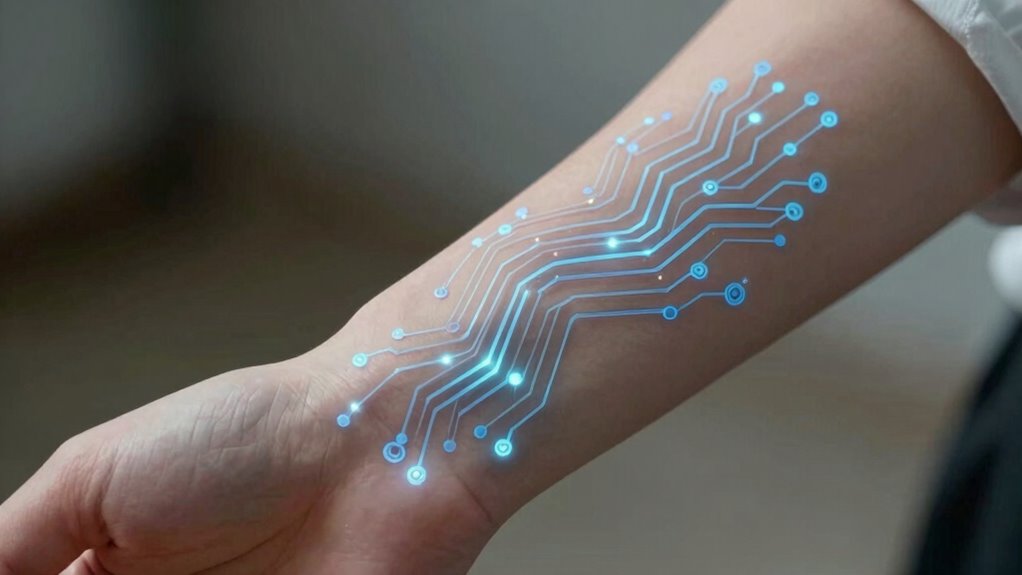

Nanotech is revolutionizing wearable tech with the development of smart tattoos that stick directly to your skin. These devices use flexible nanomaterials like graphene and silver nanowires to monitor health metrics in real-time, offering continuous insights into essential signs, sweat, and metabolic changes. Advanced manufacturing methods guarantee durability, comfort, and safety for long-term use. If you want to discover how these innovations could transform your daily routine and healthcare, there’s more to explore ahead.
Key Takeaways
- Nanotechnology enables ultra-thin, flexible sensors for seamless, skin-like integration in smart tattoos.
- Conductive nanomaterials like graphene and silver nanowires enhance sensor sensitivity and durability.
- Manufacturing techniques such as printing and embedding nanomaterials allow scalable, personalized wearable devices.
- Smart tattoos can monitor vital signs and biochemical markers in real-time, supporting proactive health management.
- Advances in nanotech-driven materials and fabrication suggest smart tattoos are poised to become a key wearable technology.
iHealth Track Smart Upper Arm Blood Pressure Monitor with Wide-Range Cuff
- Clinically Accurate: Easy operation, no calibration needed
- Large Multi-Color Display: Oversized numbers with color-coded readings
- Easy Management: Track up to 99 readings on device
As an affiliate, we earn on qualifying purchases.
As an affiliate, we earn on qualifying purchases.
The Science Behind Electronic Tattoos
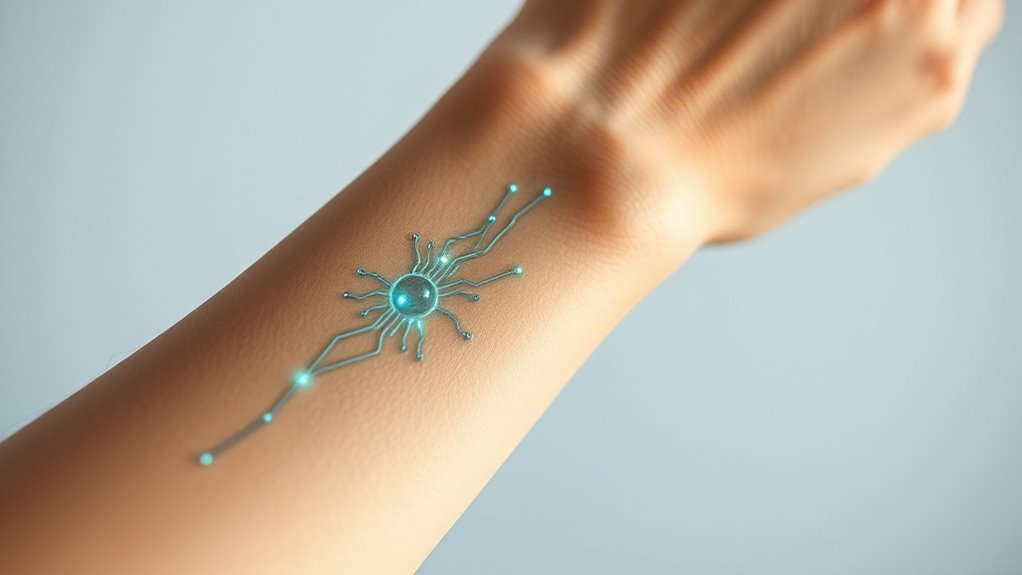
The science behind electronic tattoos combines nanotechnology with flexible electronics to create skin-adherent sensors that seamlessly integrate with your body. These devices use biocompatible materials, allowing them to stick comfortably without causing irritation. Their thin, flexible structures conform to your skin’s contours, enabling real-time health monitoring without bulky equipment. Through nanomaterials like graphene and silver nanowires, these tattoos can sense electrical signals from your body, such as ECG, EMG, or EEG. They transmit data wirelessly via Bluetooth, providing continuous feedback. The manufacturing process involves printing nanoscale circuits and embedding them into flexible layers. This integration ensures durability, flexibility, and low contact impedance, making electronic tattoos a promising innovation that blends body art with advanced technology for health tracking and beyond. Additionally, the development of energy-efficient cloud solutions can support the vast data processing needs of these wearable devices, ensuring secure and sustainable data management. Advances in nanomaterial fabrication are driving improvements in device performance and longevity, which are crucial for widespread adoption. For instance, innovations in biocompatible materials are enhancing the comfort and safety of long-term wear.

Philips Norelco i9000 Prestige Electric Shaver, Adriatic Blue
- Close Shave Technology: Up to 0.00mm skin-level closeness
- Flexible Heads: 360° precision for hard-to-shave areas
- Efficient Cutting: 150,000 cuts per minute for quick shaves
As an affiliate, we earn on qualifying purchases.
As an affiliate, we earn on qualifying purchases.
Key Materials Powering Wearable Sensors
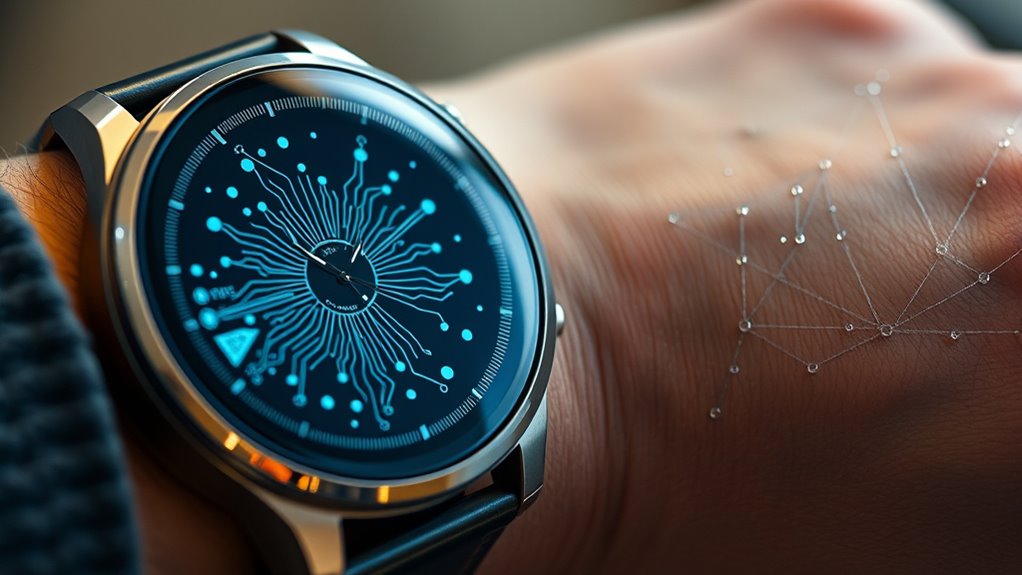
Key materials such as graphene nanosheets, silver nanowires, and MXene nanosheets form the foundation of advanced wearable sensors. Graphene’s high conductivity and flexibility make it ideal for low-impedance skin-electrode interfaces, ensuring accurate signal detection. Silver nanowires provide excellent electrical conductivity and stretchability, enabling sensors to conform comfortably to your skin while maintaining performance during movement. MXene nanosheets, combined with cellulose nanofibers, create robust, mixed-dimensional networks that enhance sensor durability and sensitivity. Polyaniline microparticles boost conductivity in curved tattoo designs, while biocompatible inks allow for biochemical sensing like glucose or pH levels. These materials work together to develop sensors that are thin, flexible, and responsive, making wearable sensors more efficient, comfortable, and capable of delivering real-time health data seamlessly integrated with your body. Material compatibility is crucial for ensuring these sensors can withstand everyday use without degradation. Additionally, ongoing research into sensor durability is vital to improve long-term performance in real-world conditions.

Mast Tattoo Fold Pro Wireless Tattoo Pen Machine – Professional Rotary Tattoo Gun for Lining Shading, Mcore-C3 Motor, 2Pcs 3000mAh Battery, 2.4-4.2mm Stroke, Complete Tattoo Kit
- Complete Tattoo Kit: Includes machine, batteries, ink, needles, and accessories
- Professional Mcore-C3 Motor: Delivers 10,000 RPM with minimal vibration
- Thermal Management System: Keeps pen cool during extended use
As an affiliate, we earn on qualifying purchases.
As an affiliate, we earn on qualifying purchases.
Manufacturing Techniques for Skin-Adherent Devices
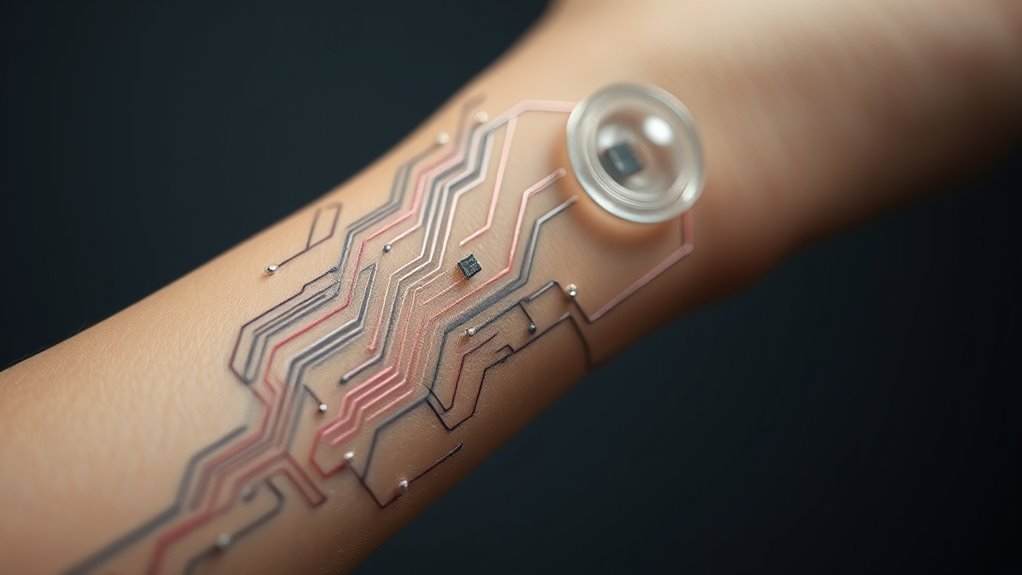
You can create skin-adherent devices by printing nanomaterials like graphene and silver nanowires directly onto the skin using specialized inks. Flexible circuit integration involves embedding thin, bendable components that conform seamlessly to body contours. To guarantee these devices last, encapsulation techniques like roller coating protect them from moisture and wear, enhancing durability and performance. Additionally, local automation can be integrated into wearable tech to enable personalized and efficient device control. Incorporating durability strategies rooted in water-resistant encapsulation methods ensures long-term functionality in various environments. Leveraging industry insights from Gold IRA markets can provide innovative approaches to optimizing the longevity and reliability of these advanced wearable devices, especially considering the latest top rated vacuums of 2024 that demonstrate the importance of reliability and efficiency in high-performance products. Furthermore, understanding biocompatibility is essential to ensure that skin-adherent devices are safe and comfortable for extended wear.
Printing Nanomaterials on Skin
Printing nanomaterials on skin involves advanced manufacturing techniques that enable the creation of flexible, biocompatible wearable devices. You can accomplish this through various methods:
- Use conductive inks containing nanomaterials like graphene or silver nanowires, which are cured at low temperatures to guarantee skin safety.
- Employ inkjet or aerosol jet printing to deposit precise patterns directly onto the skin or temporary substrates.
- Embed nanomaterials such as carbon nanotubes or MXene nanosheets into thin layers, forming conductive pathways.
- Integrate sensors and antennas during printing to facilitate physiological data collection and wireless communication.
- Incorporate Free Floating landscaping techniques to ensure that wearable devices blend seamlessly with natural skin textures and contours.
- Leveraging scalable manufacturing methods helps produce these devices efficiently for widespread use.
- Optimizing printing resolution is essential to achieve detailed and reliable device features on complex skin surfaces. Additionally, implementing quality control processes ensures consistent device performance and safety.
- Advances in material compatibility are crucial to prevent skin irritation and improve device longevity, making wearable tech safer and more effective.
These techniques allow for customizable, skin-conforming electronics that combine durability with biocompatibility, paving the way for advanced wearable health monitors and smart tattoos.
Flexible Circuit Integration Methods
Flexible circuit integration techniques are essential for creating skin-adherent wearable devices that combine durability with comfort. You can use methods like printing, layering, and embedding nanomaterials to develop circuits that bend and stretch with your skin. Printing techniques apply conductive inks directly onto flexible substrates, ensuring seamless integration. Embedding nanomaterials like graphene or silver nanowires into thin films enhances conductivity and flexibility. Layering involves stacking multiple ultra-thin circuits to optimize performance without sacrificing comfort. These methods enable devices to stay attached during movement while maintaining signal integrity. Below is a table summarizing key techniques:
| Technique | Description |
|---|---|
| Printed Electronics | Conductive inks on flexible substrates |
| Thin-Film Deposition | Applying nanomaterials via vapor or solution methods |
| Embedding | Incorporating nanostructures into layers |
| Laminating | Bonding multiple flexible layers |
| Roll-to-Roll Fabrication | Mass production of circuits on flexible materials |
Encapsulation for Durability
Encapsulation plays a crucial role in enhancing the durability of skin-adherent nanotech devices by protecting sensitive electronic components from environmental factors like moisture, sweat, and mechanical stress. You can achieve this through various manufacturing techniques:
- Roller Coating – Applies uniform water-resistant layers, boosting device lifespan.
- Parylene Deposition – Creates a thin, conformal barrier that shields electronics from moisture and chemicals.
- Encapsulating Polymers – Use biocompatible polymers like PDMS to provide flexibility and protection.
- Laminating Layers – Add protective films that resist abrasion while maintaining skin conformity.
These methods ensure your wearable device remains functional, comfortable, and reliable during daily wear, even in challenging conditions. Proper encapsulation techniques are key to turning lab prototypes into practical, long-lasting skin-integrated electronics.

Wearable Biosensing in Medicine and Healthcare
As an affiliate, we earn on qualifying purchases.
As an affiliate, we earn on qualifying purchases.
Capabilities and Sensing Functions of Smart Tattoos
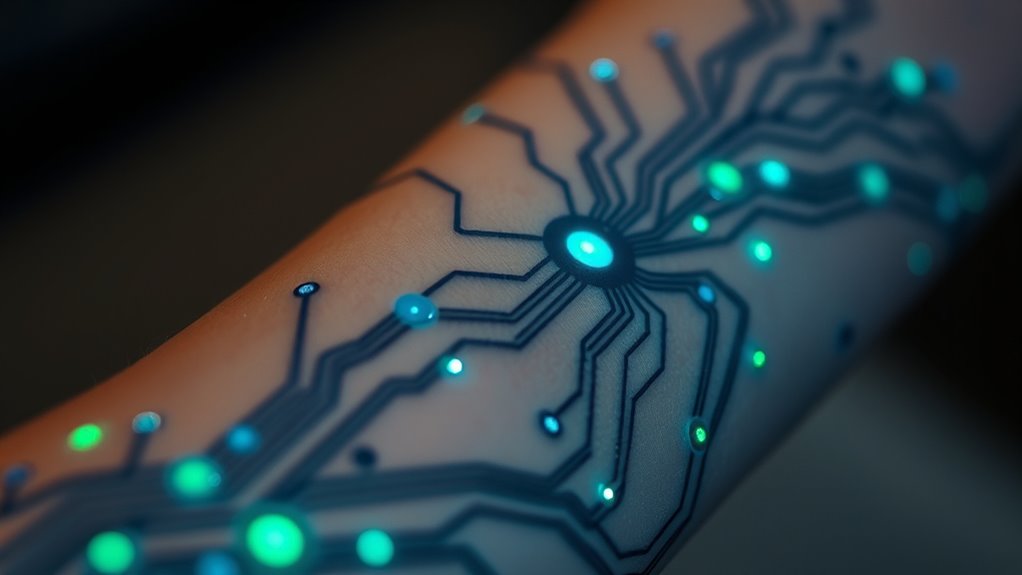
Smart tattoos leverage nanomaterials and advanced sensor technology to provide real-time physiological data directly from your skin. You can monitor critical signs like ECG, EEG, and EMG signals, giving you instant insights into your body’s electrical activity. They also track temperature, hydration levels through sweat analysis, and metabolic markers such as glucose and pH. These sensors measure blood pressure, heart rate, and muscle strain, offering detailed feedback on your health and physical performance. Their low contact impedance ensures accurate readings over 24 hours, outperforming traditional electrodes. By seamlessly integrating into your skin, these tattoos can detect subtle changes, alerting you to potential health issues early. This capability makes them powerful tools for continuous health monitoring without bulky equipment or invasive procedures. Additionally, their reliable data collection makes them a valuable resource for healthcare providers to track health trends over time. Ongoing research aims to improve the durability and biocompatibility of these sensors, which is crucial for ensuring safe long-term use in daily life. Advances in nanomaterial stability are also helping to enhance their longevity and performance in daily wear.
Practical Uses in Healthcare and Wellness
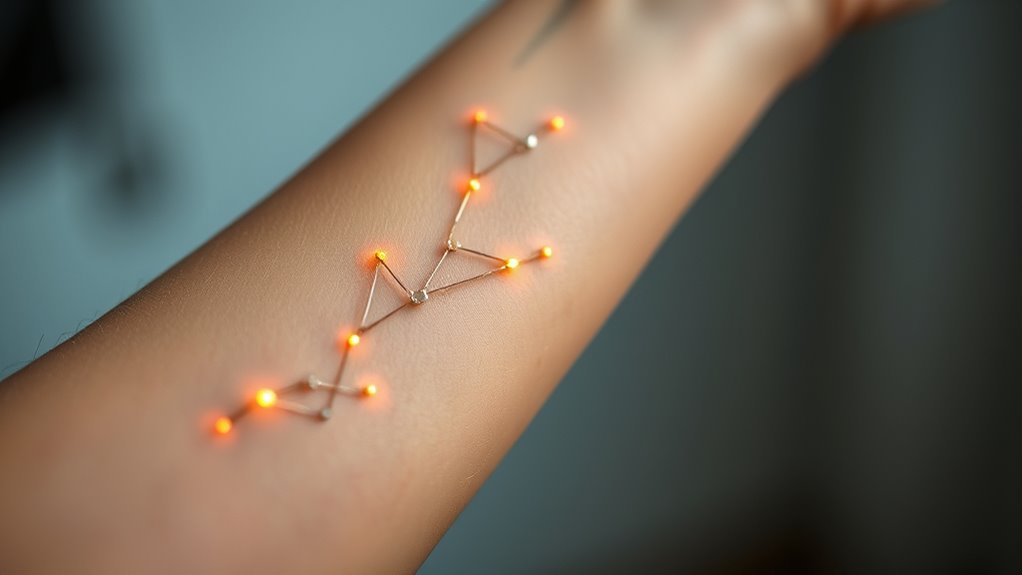
Nanotech-enabled wearable tattoos allow you to monitor your health continuously, providing real-time insights on essential signs and biochemical changes. These devices track everything from heart rate to hydration levels, helping you stay proactive about wellness. By offering personalized data, they empower you to make informed decisions about your health every day. Additionally, understanding sensor durability helps in maintaining consistent performance and prolongs their lifespan, especially as advances in materials engineering improve their resilience and longevity. Recognizing the importance of biocompatible materials is crucial for ensuring these tattoos are safe and comfortable for long-term wear, and staying informed about installation and maintenance ensures optimal functionality over time.
Continuous Health Monitoring
Continuous health monitoring has become an essential tool in healthcare and wellness, allowing you to track vital signs and physiological data in real time. With nanotech-enabled smart tattoos, you can effortlessly keep tabs on your health without bulky devices. Here’s what they can do:
- Detect ECG, EMG, and EEG signals for heart, muscle, and brain activity.
- Monitor body temperature, hydration levels, and sweat composition.
- Track blood pressure, glucose levels, and heart rate continuously.
- Measure pH balance, electrolytes, and muscle strain for performance insights.
These sensors provide 24/7 data with lower contact impedance, ensuring accuracy and comfort. They help identify health issues early, improve chronic disease management, and support athletic performance—all through seamless, skin-adherent technology that blends into your daily routine.
Real-Time Biochemical Tracking
Biochemical monitoring on the skin opens new possibilities for personalized healthcare and wellness. With smart tattoos, you can track essential biochemical markers like glucose, pH, and electrolyte levels in real time without invasive procedures. These thin, flexible sensors adhere comfortably to your skin, providing continuous data that helps manage chronic conditions or optimize fitness. For example, glucose-sensitive inks can alert you to changes in blood sugar levels, supporting diabetes management. Sweat analysis can reveal hydration status and metabolic activity, giving insights into your overall health. These sensors communicate wirelessly with your devices, delivering instant feedback and enabling prompt adjustments. By integrating nanomaterials like graphene and nanowires, these tattoos ensure high sensitivity and durability, making real-time biochemical tracking practical and accessible for everyday wellness and medical applications.
Personalized Wellness Insights
Personalized wellness insights from wearable nanotech devices allow you to monitor your health proactively and make informed decisions. These tattoos provide real-time data tailored to your body’s needs, helping you optimize performance and prevent issues. With these devices, you can:
- Track essential signs like heart rate, blood pressure, and body temperature continuously.
- Detect hydration levels and metabolic changes through sweat analysis.
- Monitor biochemical markers such as glucose and pH for early health alerts.
- Assess muscle activity and strain to improve workout routines and prevent injuries.
Innovations Driving Future Wearable Technologies

Innovations in nanotechnology are propelling wearable devices into a new era of seamless integration and advanced functionality. You’ll see ultrathin, flexible electronics that conform to your skin, enabling real-time health monitoring without discomfort. Breakthroughs like nanomaterial-embedded sensors and printed circuits make devices more durable and biocompatible. These innovations facilitate continuous data collection, from ECG signals to sweat analysis, enhancing health insights. The table below highlights key nanomaterials shaping future wearables:
| Material | Functionality | Benefits |
|---|---|---|
| Graphene | Conductive films | Low impedance, flexibility |
| Silver nanowires | Strain sensing, conductivity | Robust, stretchable |
| MXene nanosheets | Biochemical detection | Sensitive, versatile |
| Polyaniline | Conductivity enhancement | Curved tattoo compatibility |
These advancements are redefining wearable technology’s potential.
Challenges in Developing and Deploying Electronic Tattoos
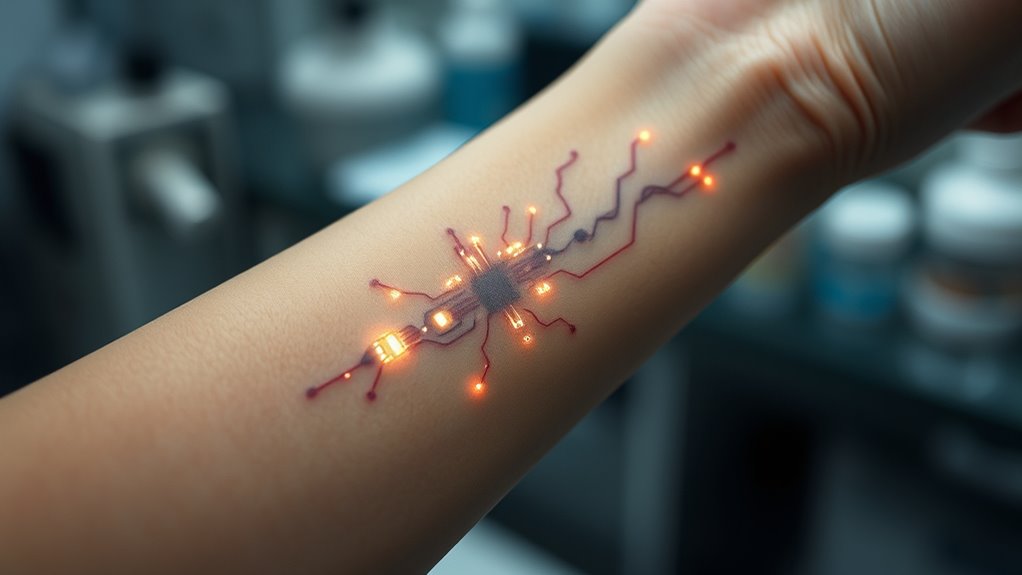
Developing and deploying electronic tattoos presents several significant challenges that must be addressed before widespread adoption is possible. First, ensuring durability is vital because these tattoos need to withstand daily skin movements, sweat, and washing. Second, biocompatibility remains a concern; materials must not cause irritation or toxicity over time. Third, achieving consistent signal quality requires overcoming skin impedance variability across individuals and conditions. Fourth, manufacturing processes must be scalable and cost-effective to produce reliable, high-quality devices. These issues complicate the path from lab prototypes to real-world use. Addressing durability, biocompatibility, signal stability, and scalable manufacturing will determine whether electronic tattoos can reach their full potential in healthcare, sports, and personal tech applications.
Regulatory and Safety Considerations
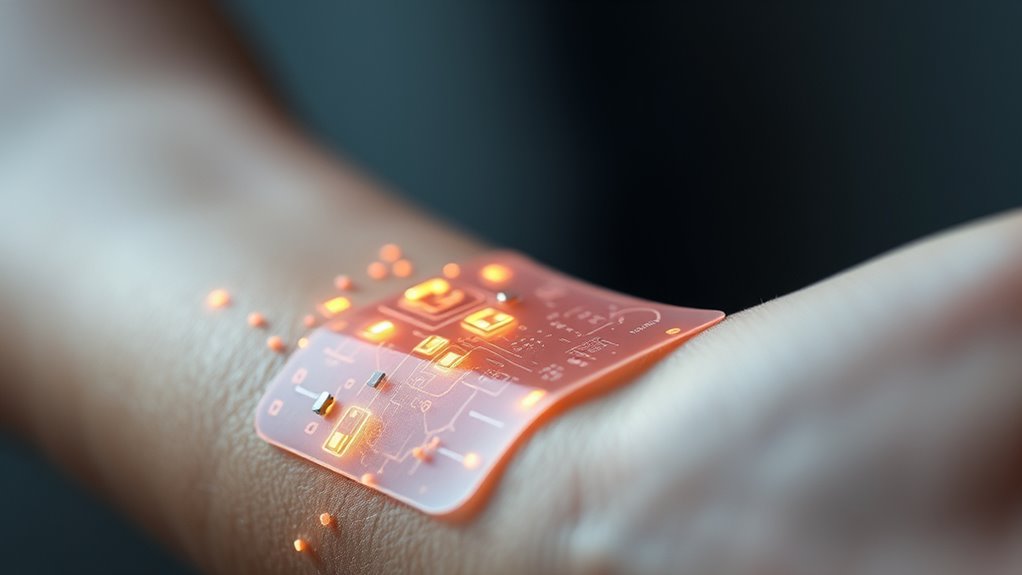
Ensuring electronic tattoos are safe and effective for widespread use requires maneuvering complex regulatory frameworks. You need to consider safety standards for biocompatible materials, ensuring they don’t cause skin irritation or toxicity over time. Regulatory agencies like the FDA will require rigorous testing and human trials to verify device accuracy, durability, and safety. Data privacy is also critical; you must protect sensitive health information transmitted through Bluetooth or wireless communication. Manufacturers must adhere to strict manufacturing practices to prevent contamination or malfunction. Clear labeling, user instructions, and post-market surveillance are essential to address potential adverse effects. Navigating these regulations can be challenging, but they’re essential to gaining consumer trust and ensuring that these innovative devices truly benefit users without compromising safety.
The Potential Impact on Daily Life and Industry

Nanotech-enabled wearable tattoos are poised to transform daily life and various industries by offering seamless, real-time health monitoring and interactive capabilities. You’ll experience more personalized healthcare, with continuous data on heart rate, hydration, and glucose levels directly from your skin. In industries, expect innovations such as:
- Medical diagnostics becoming more accessible and less invasive.
- Sports and fitness improving with precise, ongoing performance feedback.
- Fashion merging with technology through customizable, expressive tattoos.
- Human-computer interaction advancing via intuitive touch interfaces and biometric signals.
These innovations make daily routines more efficient and proactive. They could reduce hospital visits, enhance athletic training, and introduce new ways to connect with technology—all by integrating nanotech into your skin effortlessly.
Frequently Asked Questions
How Long Do Electronic Tattoos Typically Last Before Needing Replacement?
Electronic tattoos usually last between a few days to a week before needing replacement. Your skin’s natural shedding, sweat, and movement can cause the tattoo to fade or peel over time. To maintain their functionality, you might need to reapply or touch up the tattoos regularly. Proper care, like avoiding excessive friction or water exposure, can extend their lifespan, but they’re designed to be temporary for safety and comfort.
Are There Any Known Health Risks Associated With Nanomaterials in Tattoos?
While nanomaterials in tattoos are generally safe, some people worry about potential subtle effects. You might not notice, but tiny particles like silver nanowires or graphene could cause minor skin irritation or be absorbed over time. Researchers are working to minimize these risks with biocompatible, low-toxicity materials. Still, it’s wise to stay informed and wait for thorough testing, especially before long-term or widespread use.
Can Electronic Tattoos Be Customized for Individual Biometric Needs?
Yes, electronic tattoos can be customized for your biometric needs. You can select specific sensors to monitor your essential signs, like heart rate or hydration levels, and tailor the material or design to fit your skin and preferences. Advances in printing techniques and nanomaterials allow for personalized configurations, ensuring the device accurately tracks what matters most to you. This customization enhances your health monitoring and comfort, making wearable tech more effective and user-centric.
What Is the Cost Comparison Between Electronic Tattoos and Traditional Sensors?
Electronic tattoos are like a sleek sports car compared to traditional sensors’ bulky truck—they often cost more upfront due to advanced nanomaterials and manufacturing processes. However, over time, their durability, comfort, and continuous data collection can reduce long-term expenses. While traditional sensors may be cheaper initially, electronic tattoos offer a seamless, reusable solution that can be more economical and efficient with ongoing use.
How Do Electronic Tattoos Perform in Extreme Environmental Conditions?
You’ll find that electronic tattoos perform well in extreme conditions like high temperatures, moisture, and physical stress, thanks to nanomaterials and flexible, durable designs. They resist water and sweat, maintaining accurate readings during intense activity or exposure. However, prolonged exposure to harsh environments can degrade materials over time. To guarantee longevity, manufacturers are continually improving water resistance and durability through advanced coatings and robust materials.
Conclusion
Imagine a future where your skin becomes a vibrant canvas of glowing, flexible sensors, seamlessly blending technology with your daily life. With advances in nanotech and smart tattoos, you’ll wear your health and connections effortlessly, like a second skin. As these tiny marvels become more integrated and unobtrusive, they’ll transform how you monitor wellness, communicate, and even enhance your abilities. This is the dawn of a new era—where your body itself becomes the ultimate wearable.