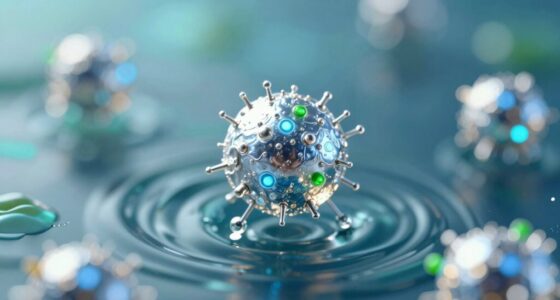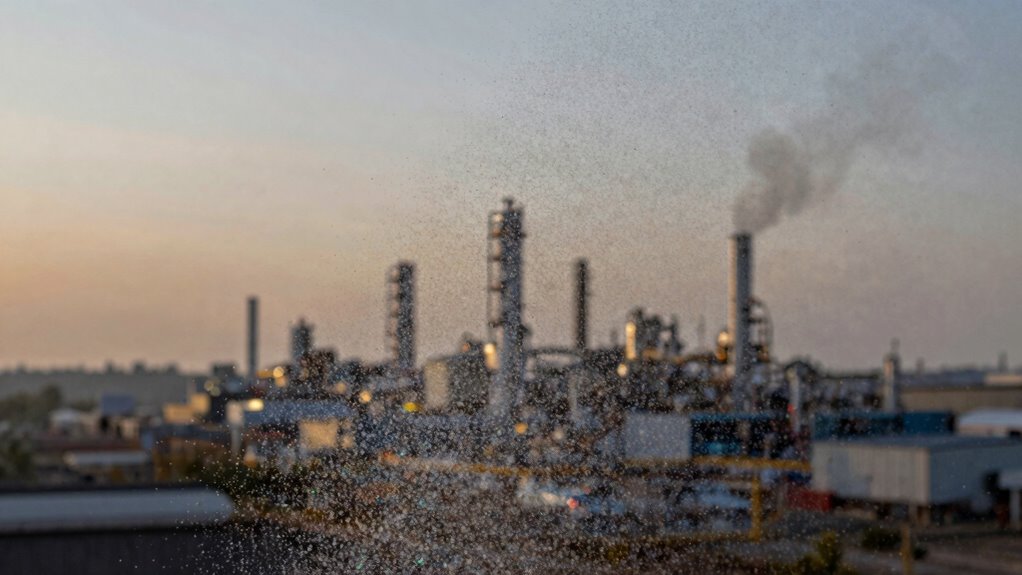

Nanopollution is a growing concern because nanoparticles from manufacturing, consumer products, and waste can enter ecosystems through air, water, and soil. These tiny particles can harm wildlife, disrupt ecosystems, and pose health risks to humans via inhalation or ingestion. They transform, bioaccumulate, and persist in the environment, making detection and regulation challenging. If you’re curious about how this impacts us and what can be done, stay with us to explore the details.
Play games included with Prime
Start a Prime free trial and play with Amazon Luna on your devices.
As an affiliate, we earn on qualifying purchases.
Key Takeaways
- Nanopollution arises from manufacturing, consumer use, and disposal, leading to environmental accumulation and potential long-term impacts.
- Engineered nanoparticles can disrupt ecosystems, bioaccumulate, and cause toxicity in plants, animals, and microorganisms.
- Human exposure occurs mainly through inhalation, ingestion, and skin contact, raising health concerns, especially for respiratory and systemic effects.
- Detection and regulation are challenging due to nanoparticles’ small size, environmental transformations, and limitations of current analytical methods.
- Ongoing research highlights potential risks, emphasizing the need for monitoring, regulation, and safer nanotechnology practices to prevent planetary poisoning.
As an affiliate, we earn on qualifying purchases.
How Do Nanoparticles Enter the Environment?

Nanoparticles enter the environment through multiple pathways associated with their production, use, and disposal. During manufacturing, emissions occur from synthesis, milling, cutting, and high-energy processes, especially if waste isn’t properly managed. Consumer products containing nanoparticles, such as cosmetics, coatings, and textiles, release particles during use or through abrasion. Disposal of nano-enabled items, often ending up in landfills, leads to leachate that carries nanoparticles into soil and water. These pathways collectively contribute to the widespread distribution of nanoparticles across ecosystems. Understanding environmental pathways helps in assessing potential impacts of nanopollution. Moreover, environmental persistence of nanoparticles can lead to long-term accumulation in various habitats, raising concerns about their ecological effects. The toxicity of nanoparticles depends on their size, shape, and chemical composition, which influences their interactions within biological systems. Additionally, the mobility of nanoparticles in soil and water facilitates their dispersion over large areas, increasing the likelihood of ecological exposure.
air quality monitor for nanoparticles
As an affiliate, we earn on qualifying purchases.
As an affiliate, we earn on qualifying purchases.
Pathways and Routes of Exposure to Nanopollutants

Exposure to nanopollutants occurs through multiple direct and indirect pathways, depending on their source and environmental fate. You can encounter nanoparticles in the air you breathe, the water you drink, the soil where food grows, and products you use daily. These pathways include:
- Inhalation of airborne nanoparticles from vehicle exhaust, construction dust, or manufacturing emissions.
- Ingestion through contaminated water, food, or soil, often from wastewater effluents or landfill leachate.
- Skin contact with consumer products like cosmetics, textiles, or coatings that release nanoparticles during use.
- Trophic transfer in aquatic systems, where plankton, invertebrates, and fish absorb nanoparticles, then move up the food chain.
- The horsepower of electric dirt bikes illustrates how advanced technologies can produce significant energy outputs, which may contribute to nanopollution through manufacturing and operational emissions.
Understanding these routes helps identify where nanopollutants enter your environment and potentially affect your health and ecosystems.
water testing kit for nanoparticles
As an affiliate, we earn on qualifying purchases.
As an affiliate, we earn on qualifying purchases.
Transformations and Fate of Nanoparticles in Nature

Once nanoparticles enter the environment, their behavior and stability are shaped by various transformation processes. They tend to aggregate or agglomerate, changing their size and mobility, which affects how they interact with organisms and surfaces. Dissolution releases ions like Ag+ or Zn2+, driving toxicity through chemical effects rather than particles alone. Surface modifications, such as eco-corona formation with natural organic matter, influence transport, bioavailability, and persistence. Redox reactions, photochemical processes, and biological activity can further alter nanoparticles, creating new, sometimes more toxic species. Sedimentation causes particles to settle and accumulate in soils and sediments, concentrating them in terrestrial and benthic environments. These transformations determine the fate, distribution, and potential risks of nanoparticles in nature. Additionally, environmental factors like pH, temperature, and the presence of natural organic matter play crucial roles in influencing the transformation processes and overall stability of nanoparticles in ecosystems.
As an affiliate, we earn on qualifying purchases.
The Impact of Nanoparticles on Ecosystems and Wildlife

You need to consider how nanoparticles can pose toxicity risks to ecosystems and wildlife, affecting plants, animals, and microbes alike. These tiny particles can bioaccumulate in organisms and disrupt food webs, leading to long-term environmental impacts. Understanding how nanoparticles influence microbial communities is essential, as they play an important role in maintaining ecosystem health and nutrient cycling. Additionally, the potential for nanoparticles to alter solar energy absorption and distribution within ecosystems may have further implications for environmental stability.
Ecosystem Toxicity Risks
Nanoparticles released into the environment can pose significant risks to ecosystems and wildlife by disrupting key biological processes. These tiny particles can interfere with natural functions and threaten biodiversity. You might see:
- Microbial community shifts, affecting soil health and nutrient cycling.
- Reduced growth or reproduction in aquatic organisms like fish and algae.
- Oxidative stress causing DNA damage and cell death in plants and animals.
- Accumulation in sediments, leading to long-term contamination of terrestrial and aquatic habitats.
- Environmental persistence of nanoparticles can lead to prolonged exposure and cumulative effects in ecosystems.
These effects can cascade through food webs, impacting species survival and ecosystem stability. The complexity of nanoparticle interactions makes it difficult to predict outcomes, but evidence suggests that environmental toxicity risks are real and increasing as nanoparticle use expands.
Bioaccumulation Concerns
How likely are nanoparticles to accumulate in living organisms and move up the food chain? It depends on their size, shape, and chemistry. Many nanoparticles can be absorbed through inhalation, ingestion, or dermal contact. Once inside an organism, they may persist, particularly if they’re resistant to degradation. Some NPs dissolve into ions, which can bioaccumulate more readily, while others remain as particles. These particles can transfer from smaller organisms like plankton and microbes to larger animals, including fish and birds, through trophic levels. This process, called biomagnification, raises concerns about long-term impacts on ecosystems and wildlife health. While evidence shows uptake occurs, the extent of accumulation and persistence varies widely depending on the nanoparticle type and environmental conditions. Additionally, the filter maintenance and cleaning techniques for air purifiers highlight the importance of proper handling and disposal to prevent unintended environmental release of nanoparticles. Moreover, understanding the environmental fate of these particles is crucial for assessing their overall ecological risks. The potential for nanoparticles to bioaccumulate underscores the need for comprehensive environmental monitoring and regulation. Studies also suggest that certain nanoparticle properties can influence their tendency to bioaccumulate and cause biological effects, emphasizing the importance of detailed characterization.
Microbial Community Effects
Nanoparticles can markedly influence microbial communities in ecosystems, often altering their structure and function. These tiny particles can disrupt microbial diversity, reduce beneficial populations, and shift ecological balances. Such changes may impair nutrient cycling, organic matter breakdown, and soil fertility. You might observe:
- Disruption of microbial diversity, leading to dominance of resistant strains
- Impaired decomposition processes, affecting soil and water health
- Reduced microbial activity, hindering nutrient recycling
- Altered community interactions, impacting plant and animal health
These effects can cascade through food webs, affecting larger organisms and ecosystem stability. Nanoparticles may also induce oxidative stress in microbes, impairing their survival and function. The presence of nanoparticles can also interfere with natural microbial processes, disrupting the foundational biological activities that sustain ecosystems. Understanding these impacts helps you grasp how nanopollution threatens ecosystem resilience and biodiversity.
How Do Nanoparticles Affect Human Health?

You might be exposed to nanoparticles through inhalation, which can increase respiratory risks and lead to inflammation or lung damage. Once inside your body, these particles can circulate and potentially affect other organs, raising concerns about systemic health effects. However, the long-term health impacts remain uncertain, making it essential to monitor and understand nanoparticle exposure better. Additionally, ongoing research is crucial to assess the potential health risks associated with nanopollution.
Respiratory Risks Elevated
Exposure to airborne nanoparticles poses significant respiratory health risks because their small size allows them to penetrate deep into the lungs and reach sensitive tissues. Once inhaled, they can lodge in alveoli, causing inflammation and damage. You might experience:
- Breathing difficulties or persistent coughs as NPs irritate airway linings
- Oxidative stress leading to DNA damage and cell death in lung tissue
- Activation of inflammatory responses that worsen respiratory conditions
- Potential translocation of particles into the bloodstream, spreading effects beyond the lungs
Understanding nanoparticle behavior is essential for assessing their full health impact. For example, particle size influences how deeply nanoparticles can penetrate into the respiratory system, affecting their potential harm. Additionally, their ability to bypass natural defenses increases the likelihood of long-term health issues.
Systemic Organ Effects
Inhaled nanoparticles can breach lung defenses and enter the bloodstream, enabling them to reach various internal organs. Once inside, they can accumulate in the liver, spleen, brain, and heart, potentially disrupting normal functions. These particles may induce oxidative stress, causing DNA damage and cell apoptosis in essential tissues. Nanoparticles like silver, titanium dioxide, and silica can trigger inflammatory responses, leading to tissue damage and impaired organ performance. Certain particles can translocate across biological barriers, affecting the nervous system and contributing to neurotoxicity. Because of their small size and ability to move through the body, nanoparticles pose unique risks that extend beyond initial exposure sites, warranting careful evaluation of their systemic effects. Nanoparticle toxicity is an emerging area of concern, highlighting the need for ongoing research to fully understand their health impacts.
Long-Term Health Uncertain
Understanding the long-term health impacts of nanoparticles remains challenging because their small size and diverse behaviors make it difficult to predict how they persist and accumulate in the body over time. You might be exposed through inhalation, ingestion, or skin contact, but the full effects are uncertain. Nanoparticles can:
- Accumulate in organs like the liver or brain, potentially causing unknown damage.
- Generate reactive oxygen species, leading to DNA damage and cell death.
- Translocate from lungs or gut into bloodstream, reaching secondary organs.
- Persist or transform over time, altering their toxicity and biological interactions.
- Research efforts are ongoing to better understand how nanoparticles interact with biological systems and what long-term health effects they may pose.
Because of these unknowns, long-term risks aren’t fully understood. Ongoing research aims to clarify whether prolonged exposure might cause chronic health issues or contribute to diseases down the line.
Challenges in Detecting and Monitoring Nanopollution

Detecting and monitoring nanopollution presents significant challenges because nanoparticles are inherently difficult to identify and quantify in complex environmental matrices. Their tiny size, diverse shapes, coatings, and tendency to agglomerate make standard detection methods unreliable. Environmental samples like soil, water, or air contain a mixture of natural particles and other pollutants, complicating the isolation of engineered NPs. Additionally, nanoparticles can transform through aggregation, dissolution, and surface interactions, which alter their detectability and bioavailability. Current analytical techniques often lack the sensitivity or specificity needed for accurate measurements at environmental concentrations. Furthermore, the detection limitations hinder comprehensive understanding of nanopollution’s true scope. The complexity of environmental matrices further complicates efforts to accurately identify and quantify nanoparticles amidst natural background particles. As a result, understanding the true extent of nanopollution remains limited, hindering risk assessment and effective policymaking. Overcoming these detection hurdles is essential to better evaluate nanopollution’s environmental and health impacts. Developing more advanced and targeted detection methods is crucial for improving measurement accuracy and expanding our knowledge of nanopollution’s impact.
Current Strategies for Mitigation and Remediation

Effective mitigation and remediation strategies are essential for reducing nanopollution’s environmental impact. You can implement source-control measures like engineering controls, closed processes, and better waste handling to minimize nanoparticle releases during manufacturing and disposal. Designing safer nanomaterials—such as biodegradable options or surface modifications—helps reduce persistence and bioavailability. Advanced treatment methods like filtration, adsorption, and nano-enabled remediation techniques can capture or neutralize nanoparticles before they enter ecosystems. Additionally, developing standardized monitoring methods and industry stewardship programs allows you to track nanoparticle presence and manage risks effectively. These strategies collectively aim to limit environmental release, prevent bioaccumulation, and protect ecosystems from nanopollution’s harmful effects. Staying proactive with regulations and best practices ensures ongoing improvement in nanopollution management. Incorporating emerging trends in nanoscience can further enhance your mitigation efforts and adapt to new challenges.
Regulatory Efforts and Policy Gaps Surrounding Nanoparticles

Regulatory efforts to manage nanopollution are advancing as scientific evidence highlights potential environmental and health risks, but significant policy gaps remain. Many countries lack specific regulations tailored to nanoparticles, relying instead on general chemical or environmental laws that don’t account for their unique behaviors. This creates inconsistencies in safety standards, testing protocols, and permissible exposure limits. Industry self-regulation varies widely, often falling short of precautionary principles. Monitoring methods are still developing, making it difficult to establish baseline concentrations or enforce compliance. Moreover, the rapid pace of nanotechnology innovation outstrips the capacity of current policies to adapt. Harmonized regulations are essential for establishing consistent safety standards globally. Without extensive, Harmonized regulations, nanopollution risks continue to grow unchecked, leaving gaps in environmental protection and public health safeguards. Developing standardized testing protocols is critical for accurately assessing nanoparticle exposure and effects across different regions.
Moving Forward: Towards Safer Nanotechnology Practices

As awareness of nanopollution risks grows, shifting focus toward safer nanotechnology practices becomes imperative. You can help by supporting approaches that reduce environmental release and toxicity. Key strategies include:
- Implementing engineering controls and closed processes during manufacturing to minimize emissions.
- Designing biodegradable and lower-toxicity nanomaterials to lessen persistence and bioavailability.
- Developing advanced filtration and remediation technologies to capture nanoparticles before they reach ecosystems.
- Establishing standardized monitoring methods and life-cycle assessments to inform safer design and regulation.
Frequently Asked Questions
Are There Safe Levels of Nanoparticle Concentrations in the Environment?
There aren’t established safe levels of nanoparticle concentrations in the environment yet. You should know that current research hasn’t determined clear thresholds, partly because of detection challenges and knowledge gaps. As a result, regulators and scientists recommend precaution, reducing emissions, and developing safer nanomaterials. Until more data is available, it’s best to follow guidelines and support efforts to monitor and manage nanoparticle pollution to protect ecosystems and human health.
How Long Do Nanoparticles Persist Once Released Into Ecosystems?
You can’t judge a book by its cover, and similarly, nanoparticles can persist longer than expected. Once released, their lifespan varies depending on environmental conditions, surface chemistry, and transformation processes. They can settle in soils, sediments, or remain suspended in water for months or even years. Factors like aggregation, dissolution, and natural interactions influence their persistence, making it hard to predict exact durations without thorough, context-specific studies.
Can Nanoparticles Bioaccumulate and Biomagnify in Food Webs?
Yes, nanoparticles can bioaccumulate and biomagnify in food webs. When you’re exposed, NPs can enter organisms like plankton, fish, and invertebrates, accumulating in their tissues. As predators consume these organisms, NPs transfer up the food chain, potentially increasing in concentration. This process can lead to biomagnification, posing risks to ecosystems and human health, especially if nanoparticles persist and build up over time in organisms and environments.
What Are the Most Effective Methods to Detect Nanoparticles in Complex Samples?
Did you know that detecting nanoparticles in complex samples remains a significant challenge, with less than 30% of environmental tests yielding conclusive results? You can use advanced techniques like electron microscopy (TEM, SEM) for high-resolution imaging, combined with spectroscopy methods such as ICP-MS or X-ray diffraction for precise identification. Combining these approaches enhances detection accuracy, helping you monitor nanoparticle presence effectively despite the complexity of environmental matrices.
How Do Different Environmental Conditions Influence Nanoparticle Toxicity?
Environmental conditions like pH, temperature, and the presence of natural organic matter considerably influence nanoparticle toxicity. You’ll find that acidic or alkaline pH levels can increase dissolution, releasing more toxic ions. Higher temperatures may accelerate transformation processes, altering nanoparticle behavior. Natural organic matter can either stabilize particles or promote aggregation, affecting mobility and bioavailability. These factors collectively determine how nanoparticles interact with organisms and ecosystems, impacting their overall toxicity.
Conclusion
You should know that over 60% of manufactured nanoparticles eventually escape into the environment, posing risks to ecosystems and human health. As nanopollution grows, it’s vital to stay informed and advocate for stricter regulations and safer practices. By understanding how nanoparticles enter and transform in nature, you can help push for smarter policies. Only through combined efforts can we minimize the potential harm and protect our planet from unseen nanopollution threats.
Fall yard work Picks
leaf blowers
As an affiliate, we earn on qualifying purchases.