
TL;DR
Gyeonggi Province held a forum and networking event in Suwon on the 25th, bringing together companies, researchers and public officials to discuss quantum-sector development and links with semiconductors. Five companies presented projects supported through the province’s 2026 quantum-semiconductor R&D programme; Gyeonggi says it is providing KRW 3 billion this year for quantum companies and talent development.
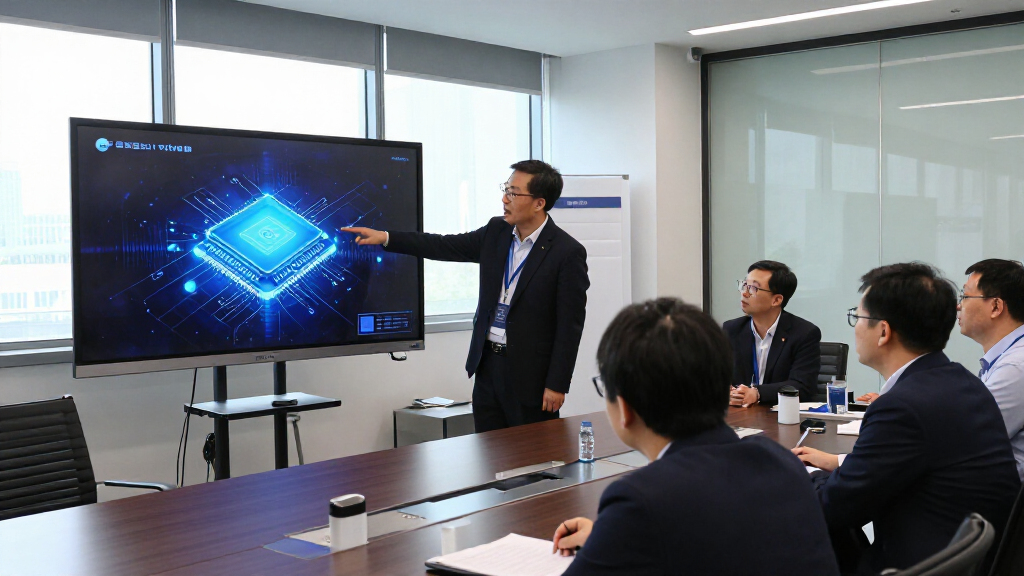
Gyeonggi Province held a quantum-industry forum and networking event at the Novotel Ambassador Suwon on the 25th, bringing companies, researchers and government representatives together to discuss commercialisation and cooperation with the semiconductor sector. Five firms in the province’s 2026 Quantum-Semiconductor Convergence R&D Support Programme presented project results, while the province said it is providing KRW 3 billion this year for quantum-related companies and talent development.

Get the latest gadgets delivered free with Prime
- Fast, free delivery on millions of items
- Prime Video, Amazon Music and more included
- Member-only deals all year
The event, titled the Gyeonggi Quantum Innovation Forum and 2026 Gyeonggi Quantum-Semiconductor Convergence Industry Networking Day, was hosted by Gyeonggi Province and the Gyeonggi Business and Science Accelerator. Sungkyunkwan University’s Anchor Project Group and the Korea Nanotechnology Institute organised it. Attendees included provincial officials, lawmakers, university and research representatives, supported companies and other organisations connected to the region’s quantum ecosystem.
The forum’s first programme included presentations and a panel discussion on industry, talent and cooperation among industry, universities and research institutions. Speakers included representatives from LG Electronics, Korea University and the Korea Institute of Science and Technology Information. A panel chaired by Sungkyunkwan University’s Q-GAIA Centre director brought together representatives of Samsung SDS, IBM, IonQ, Pasqal and Quandela to discuss strategies for the sector.
According to the event account, panel participants highlighted the need for workers able to apply and validate quantum technologies in industrial settings, including through links with supercomputing and artificial intelligence. They also discussed project-based education that draws on Gyeonggi’s semiconductor and advanced-industry infrastructure, international cooperation and connections between quantum chips and supply chains. The account does not provide a formal set of agreed actions or commitments from the discussion.
Gyeonggi connects quantum research with semiconductor industry
A Suwon forum brought companies, researchers and public officials together to discuss commercialisation, talent and industrial links.
Five projects, varied applications
The presentations covered sensing, inspection, positioning and specialised equipment.
EpiSolution
Reported validated SPAD epitaxial wafers, KRW 2.5 billion in investment and a technology transfer.
XDOTZ
Presented a quantum current sensor inspection system and reported field demonstrations and a CES 2027 Innovation Award.
Wooshin Engineering
Reported local production of high-vacuum chambers, three patent applications and entry into a national project supply chain.
Everhen
Said its disaster-response positioning platform passed accredited testing and reduced costs by 83%.
Hot & Cool
Presented a heating jacket rated to 600°C and said it is pursuing customer demonstrations.
What businesses need next
The discussion focused on translating quantum research into industrial use.
Participants highlighted workers who can apply and validate quantum technologies in industry.
Ideas included links with supercomputing, AI, semiconductor infrastructure and supply chains.
Demonstrations, customer adoption and sustained sales remain to be established.
Support and open questions
The forum offered expert consultations on commercialisation, intellectual property, management, legal matters and taxation.
- Company-reported testing, investment and technology transfer
- Some projects linked to field demonstrations
- How the KRW 3 billion will be allocated
- Which projects will gain customers or recurring revenue
- No formal panel commitments or deadlines were listed
How Gyeonggi Is Building Quantum Links
The event brought the province’s quantum research, businesses and semiconductor capabilities into the same programme, with an emphasis on moving projects toward industrial use. That matters because the showcased work spans more than quantum computing itself: it includes sensing, inspection, positioning and specialised equipment. These applications may connect quantum research to existing industrial needs, although the presentations alone do not establish commercial scale or market performance.
Gyeonggi’s stated KRW 3 billion support allocation gives the forum a policy and funding dimension. The province says its approach combines support for companies and talent with its established advanced-industry base. For businesses, the event also offered expert consultations on commercialisation, intellectual property, management, legal matters and taxation. The source describes those sessions as support for follow-up work, but does not report how many companies received consultations or what agreements resulted.
The discussion of industry-ready skills and supply-chain links points to a practical challenge: developing quantum technologies is not the same as integrating them into production or customer operations. The forum’s focus on validation, demonstrations and equipment localisation reflects that gap. Whether the projects can generate sustained sales, investment or wider adoption remains to be seen.
Popular right now

Breville Barista Pro Espresso Machine with Built-In Grinder, Brushed Stainless Steel

Dyson Cyclone V10 Origin Cordless Vacuum

Sony 65 Inch BRAVIA 3 LED 4K HDR Smart Google TV (K-65S30)
As an affiliate, we earn on qualifying purchases.
Five Projects Across Quantum Applications
The five participating companies reported different kinds of progress under the 2026 Quantum-Semiconductor Convergence R&D Support Programme. EpiSolution said it developed and validated SPAD epitaxial wafers for long-distance quantum sensing, secured KRW 2.5 billion in investment and completed a technology transfer. XDOTZ said it developed a non-destructive semiconductor inspection system using quantum current sensors, received a CES 2027 Innovation Award and linked the work to field demonstrations.
Wooshin Engineering reported localising production of ultra-extreme high-vacuum chambers for quantum computers, filing three patent applications and entering the supply chain for a national flagship project. Everhen said its quantum inertial-enhanced positioning platform for disaster response and firefighting passed all items in accredited testing and reduced costs by 83%. Hot & Cool presented a high-precision heating jacket rated to 600°C for quantum-device processing equipment and said it is pursuing demonstrations with prospective customers.
These outcomes are company-reported achievements in the supplied event material, not independently verified performance assessments. The province has also described work to develop quantum fabrication facilities, and a Korea Nanotechnology Institute researcher presented an overview of related support programmes. The source gives no facility schedule, operating capacity or further funding breakdown.
““As the quantum industry is a key driver of future growth, the Provincial Council will support the expansion of policy and institutional measures and cooperation frameworks.””
— Kim Tae-hyung, chairman of the Gyeonggi Provincial Council’s Future Science and Cooperation Committee
Commercial Results Still To Come
The event account does not identify the event’s calendar month or year beyond its reference to the 25th, so the precise date cannot be established from the supplied material. It also does not specify how the KRW 3 billion allocation is divided among companies, talent programmes or other activities, or provide eligibility and application details.
Several outcomes—including investment, technology transfer, award recognition, testing results, cost reduction and supply-chain entry—are reported by the companies or in the event release. The material does not include independent assessments, contract values, customer names or evidence of recurring commercial revenue. It is also unclear which projects have completed field demonstrations and which are still pursuing them. No formal decisions, deadlines or binding partnerships from the panel discussions are listed.
Follow-Up on Funding and Demonstrations
The immediate next steps described at the event are company follow-up and further partnership building. Expert consultations and networking were arranged to connect firms with specialists in commercialisation, intellectual property, management, legal affairs and taxation. Hot & Cool said it is pursuing customer demonstrations, while XDOTZ reported linking its inspection work to field demonstrations; the source does not give schedules or name the participating customers.
Further developments to watch include details of how Gyeonggi’s quantum funding will be delivered, progress on the quantum fabrication facilities, and whether the five projects secure additional testing, customers or supply-chain agreements. The event account does not announce dates for another forum or a new programme milestone.
Key Questions
What did Gyeonggi Province announce or hold?
Gyeonggi Province and partner organisations held a quantum-industry forum and networking event in Suwon on the 25th. The programme focused on cooperation, commercialisation and connections between quantum technology and semiconductors.
How much funding is the province providing?
The source says Gyeonggi Province is providing KRW 3 billion this year to support quantum-related companies and talent development. It does not explain how the allocation is divided or provide application details.
Which companies presented projects?
EpiSolution, XDOTZ, Wooshin Engineering, Everhen and Hot & Cool presented work through the 2026 Quantum-Semiconductor Convergence R&D Support Programme. Their projects covered sensing materials, semiconductor inspection, vacuum chambers, positioning and heating equipment.
Were the reported project results independently verified?
The supplied event material reports the companies’ stated achievements, including testing, investment and cost results, but does not provide independent verification or detailed supporting data. Those results should be understood as reported claims rather than independently assessed findings.
What happens after the forum?
The event included expert consultations and networking intended to support companies’ commercialisation work and partnerships. The source does not give specific follow-up deadlines, customer demonstration dates or formal agreements arising from the discussions.
Source: thequantuminsider.com