
Tiny plastic particles, including microplastics and nanoplastics, pose a significant environmental threat due to their size and behavior. Nanoplastics are especially tricky because they stay suspended longer, can penetrate biological membranes, and often escape traditional filtration. Innovative approaches like advanced filtration systems, chemical treatments, and biological methods are being developed to tackle this tiny pollution. Exploring these emerging solutions can reveal how science and technology are working to clean up the tiniest threats in our environment.
Key Takeaways
- Advanced filtration methods like nanofiltration and membrane technologies can effectively capture nanoplastics and microplastics.
- Emerging nanomaterial-based adsorbents and catalysts show promise for degrading or removing tiny plastics.
- Biological treatments using microbes and enzymes are being explored to break down nanoplastics, complementing physical cleanup.
- Standardized detection protocols and sensitive analytical techniques are essential for monitoring tiny plastic pollution.
- Integrating physical, chemical, and biological strategies offers the most effective approach to cleaning up micro- and nanoplastic pollution.
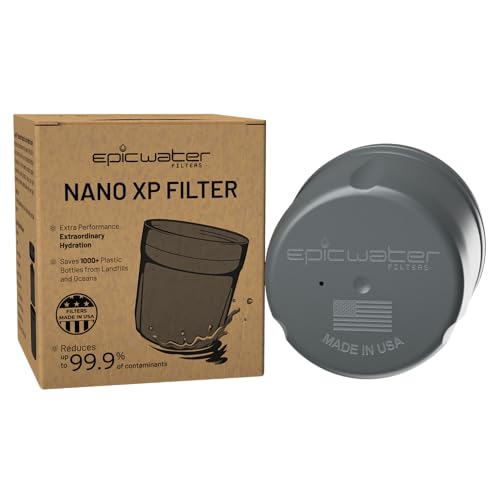
Epic Water Filters REPLACEMENT FILTER for Epic Nano XP Water Filter Pitcher or Dispenser. Nanofiltration Removes Bacteria, Virus, Cyst, Lead, Chromium 6, PFOS, PFOA, Heavy Metals, Pesticides
The Nano Filter sets a new standard for clean and safe drinking water. Say goodbye to contaminants, including…
As an affiliate, we earn on qualifying purchases.
As an affiliate, we earn on qualifying purchases.
Understanding the Tiny World of Plastics: Micro vs. Nano

Understanding the tiny world of plastics begins with recognizing the differences between microplastics and nanoplastics, both of which originate from human activities but behave distinctly in the environment. Microplastics range from 100 nanometers to 5 millimeters, often coming from consumer products like exfoliants, textiles, or industrial pellets. Nanoplastics are smaller than 100 nanometers and primarily form when larger plastics break down through weathering and mechanical wear. Their size influences how they move and interact; nanoplastics stay suspended longer and exhibit higher surface reactivity. Additionally, their small size allows nanoplastics to penetrate biological membranes, increasing their potential for biological harm. You’ll find nanoplastics harder to detect because they require advanced methods. Both types can accumulate in ecosystems, but nanoplastics pose unique risks due to their tiny size, high reactivity, and ability to penetrate biological membranes more easily. The size and behavior of nanoplastics significantly affect their environmental impact and detection challenges.
microplastics detection kit
As an affiliate, we earn on qualifying purchases.
As an affiliate, we earn on qualifying purchases.
Environmental Pathways and Distribution of Micro- and Nanoplastics
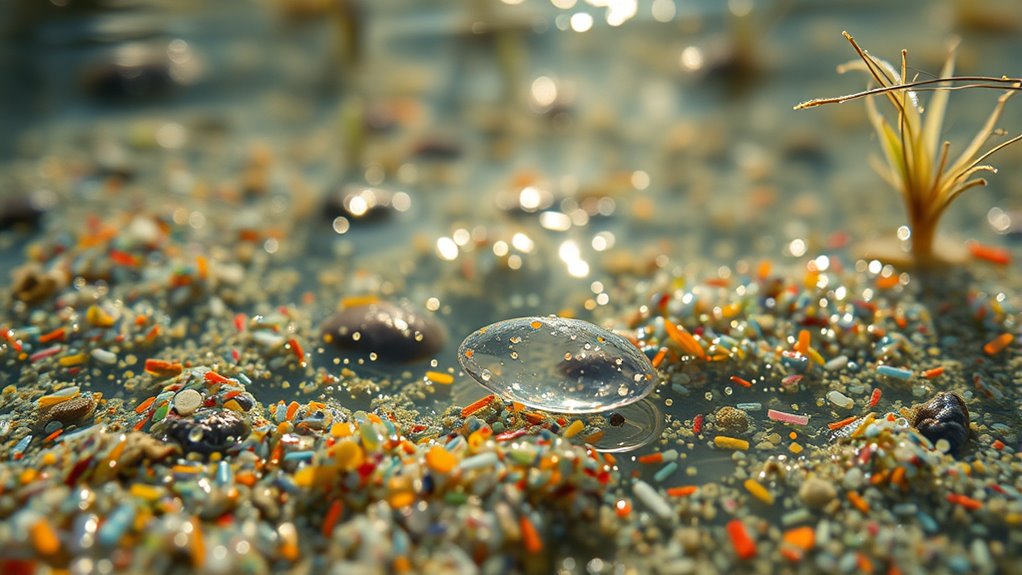
Micro- and nanoplastics enter the environment through multiple pathways, spreading across ecosystems and challenging detection efforts. You might find them in ocean waters, sediments, air, and even biota, traveling far from their original sources. Wastewater treatment plants catch some microplastics but often let nanoplastics slip through, contaminating effluents and biosolids. Atmospheric transport disperses tiny particles over vast distances, depositing them across remote areas. The table below shows how different pathways impact various environments:
| Pathway | Impacted Environment | Particle Size Effect | Detection Challenge | Long-Range Spread |
|---|---|---|---|---|
| Water runoff | Rivers, lakes, oceans | Both micro and nano | Difficult for nanoplastics | Wide dispersal |
| Atmospheric transport | Air, remote regions | Primarily nanoplastics | Advanced techniques needed | Global distribution |
| Wastewater effluent | Marine and coastal areas | Microplastics dominate | Limited nanoplastic detection | Long-distance travel |
| Sediment deposition | Seafloor, riverbeds | Microplastics settle easily | Hard to quantify nanoplastics | Local accumulation |
| Biota uptake | Fish, plankton | Both sizes, bioaccumulation | Complex detection | Trophic transfer |
Additionally, emerging detection methods are improving our ability to identify nanoplastics in complex environmental matrices. These advancements are crucial for comprehensive environmental assessments, providing better insights into pollution sources and impacts. Understanding distribution patterns helps in assessing the full environmental impact of these tiny pollutants. Recent research also emphasizes the importance of tracking particle pathways to develop effective mitigation strategies.
nanoplastics removal filter
As an affiliate, we earn on qualifying purchases.
As an affiliate, we earn on qualifying purchases.
The Unique Challenges of Detecting and Monitoring Nano-sized Plastics
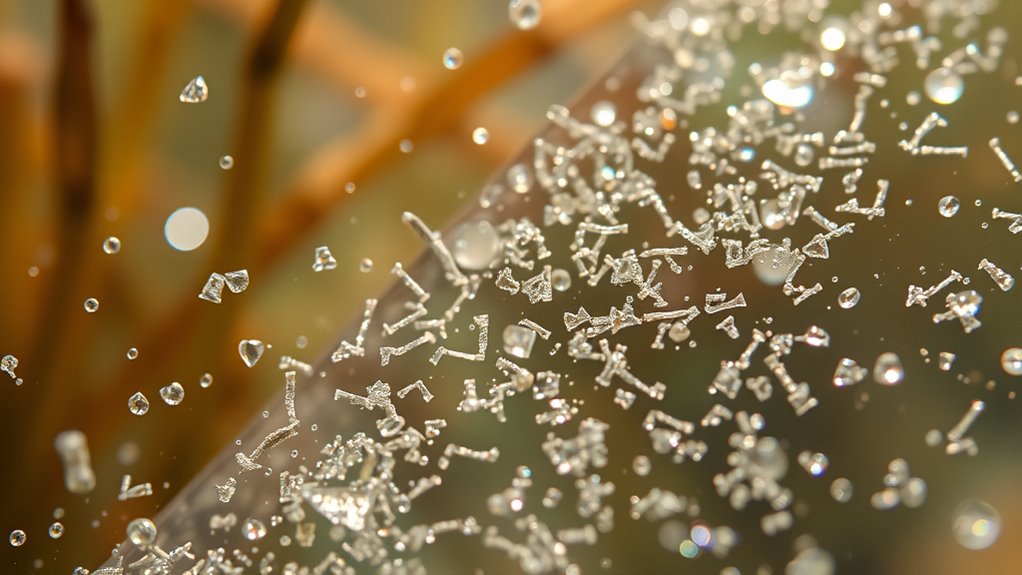
Detecting nanoplastics is difficult because it requires advanced, resource-intensive techniques like electron microscopy and spectroscopy. Sample preparation can introduce artifacts, such as aggregation or contamination, making accurate measurement even harder. Without standardized protocols, comparing results across studies remains a significant challenge.
Detection Method Limitations
Detecting nanoplastics presents unique challenges because their tiny size requires advanced, high-resolution techniques that are often resource-intensive and complex to implement. Standard microscopy or spectroscopy methods struggle with the limits of resolution and sensitivity needed at the nanoscale. You need specialized equipment like electron microscopes or nanoparticle tracking analysis, which demand expert operation and significant costs. Sample preparation adds further complications; processes like filtration or centrifugation can cause aggregation or contamination, skewing results. Additionally, the lack of standardized protocols and reference materials makes it difficult to compare data across studies. Environmental matrices—sediment, water, or biota—further hinder detection efficiency, often leading to underestimations of nanoplastic presence and complicating efforts to accurately monitor their distribution.
Sample Preparation Artifacts
Sample preparation for nanoplastics can inadvertently introduce artifacts that compromise detection accuracy. When you handle samples, particles may aggregate or disaggregate, making them appear larger or smaller than they are naturally. Contamination from lab environments or equipment can lead to false positives, skewing results. Filtration processes might cause nanoplastics to stick to filters or clump together, reducing recovery rates. Additionally, chemical treatments used to isolate nanoplastics can alter their surface chemistry, affecting identification and quantification. These artifacts obscure true environmental concentrations and characteristics, complicating efforts to monitor nanoplastics effectively. Because of these challenges, ensuring rigorous, standardized sample preparation protocols is crucial for reliable detection and accurate assessment of nanoplastic pollution. Proper sample handling is essential to minimize these issues and obtain trustworthy data. Furthermore, implementing quality control measures can help identify and reduce the impact of preparation artifacts on analytical results. Incorporating advanced analytical techniques can also improve detection accuracy and help differentiate true nanoplastics from artifacts, especially when combined with sophisticated calibration methods that account for potential sample preparation distortions.
Lack of Standardized Protocols
The absence of standardized protocols for nanoplastic detection presents a significant obstacle to consistent monitoring and risk assessment. Without agreed-upon definitions, size ranges, or reporting units, comparing data across studies becomes nearly impossible. You face challenges in selecting appropriate analytical techniques, as methods like electron microscopy or nanoparticle tracking require specialized equipment and expertise. Sample preparation often introduces artifacts, leading to inaccurate quantification. Environmental matrices such as sediment, water, and biota further complicate detection, reducing recovery rates and skewing results. The lack of reference materials and interlaboratory standards hampers validation and reproducibility. Consequently, policymakers and scientists struggle to assess true nanoplastic concentrations, delaying regulatory action and hindering effective mitigation strategies. Establishing universal protocols is essential for advancing research and safeguarding environmental and human health. Effective storytelling can also be a powerful tool in raising awareness and driving collaborative efforts toward developing these standards.
biological plastic degradation enzymes
As an affiliate, we earn on qualifying purchases.
As an affiliate, we earn on qualifying purchases.
Emerging Technologies and Methods for Removing Tiny Plastic Particles
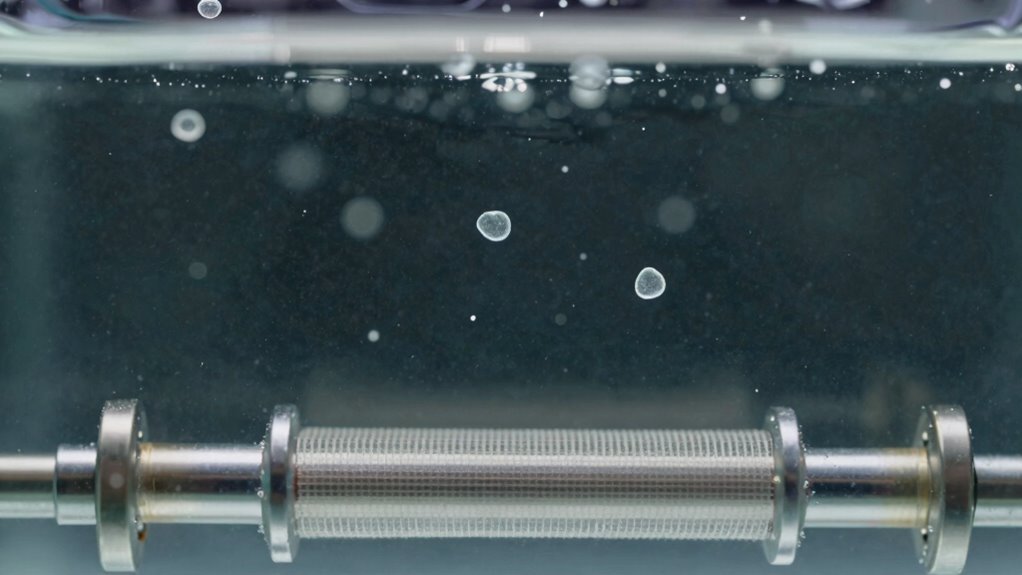
Emerging technologies are showing promise in tackling the challenge of removing tiny plastic particles, especially nanoplastics that evade conventional filtration. Advanced filtration methods like membrane, ultrafiltration, and nanofiltration can capture nano-sized particles but face issues like membrane fouling, high energy use, and disposal concerns. Researchers are exploring engineered nanomaterials and adsorbents that bind or degrade nanoplastics, as well as electrocoagulation and advanced oxidation processes to aggregate or break down particles. Biological treatments, including microbial degradation and enzyme-based methods, offer potential but are still in early stages and limited by slow rates and specificity. Combining physical, chemical, and biological approaches—known as treatment trains—shows the most promise, though pilot studies and lifecycle assessments are needed to confirm effectiveness and scalability. Net worth of key individuals involved in environmental innovations can influence funding and research priorities, further advancing these technologies. Additionally, scalability remains a critical factor in transitioning laboratory successes to real-world applications, requiring further research and development. Innovative filtration techniques are being developed to improve efficiency and reduce environmental impact, which could accelerate adoption of these methods. Moreover, ongoing research into environmental impact assessments helps ensure that new cleanup methods do not inadvertently cause additional ecological harm. Researchers are increasingly focusing on cost-effective solutions to ensure these technologies can be widely adopted without prohibitive expenses.
Addressing Knowledge Gaps: Research and Policy Priorities

Addressing the significant knowledge gaps in micro- and nanoplastics research requires prioritizing the development of standardized definitions, methodologies, and reference materials. Without these, data remain inconsistent, making risk assessments unreliable. You need thorough long-term ecotoxicological studies focused on realistic concentrations, mixtures, and transformation products. Additionally, pilot-scale evaluations of treatment technologies and their by-products are essential. Policy efforts should target source reduction, improved waste management, and product design to minimize fragmentation. To support these priorities, you should foster interdisciplinary collaboration linking environmental monitoring, human exposure, and toxicology. This approach ensures evidence-based regulation, better public health protection, and a clearer understanding of tiny plastic pollution. Developing comprehensive detection & monitoring protocols is also critical to accurately track and assess these pollutants over time. Moreover, establishing standardized testing methods can improve data comparability across studies and regions. Incorporating advanced analytical techniques will further enhance detection sensitivity and specificity. Recognizing the importance of indigenous holistic health practices can inspire innovative approaches to tackling environmental health challenges, including plastic pollution. Furthermore, emphasizing public awareness campaigns can help promote responsible consumer behaviors and reduce plastic waste at its source.
Can Innovation Turn the Tide on Micro- and Nanoplastic Pollution?

Innovative technologies and approaches offer promising pathways to combat the persistent challenge of micro- and nanoplastic pollution. Advanced filtration methods, like membrane and ultrafiltration, can capture tiny particles, though issues like fouling and high costs remain. Emerging strategies, including engineered nanomaterials and chemical treatments, show potential to aggregate, degrade, or transform nanoplastics but need further testing. Biological methods, such as microbial degradation, hold promise for breaking down polymers, yet scalability and speed are hurdles. Combining physical, chemical, and biological treatments could enhance efficiency, but extensive pilot studies and life-cycle assessments are necessary. Leveraging these innovations, along with stricter regulations and improved waste management, can help turn the tide and reduce the environmental and health impacts of micro- and nanoplastics. Vetted Additionally, ongoing research into nanomaterial-based filtration systems demonstrates potential for more effective removal at a microscopic scale. New advanced filtration techniques are being developed to improve efficiency and reduce costs in removing these tiny pollutants.
Frequently Asked Questions
How Effective Are Current Cleanup Methods Specifically for Nanoplastics?
Current cleanup methods for nanoplastics are only partially effective. Conventional wastewater treatments remove some microplastics but struggle with nanoplastics, which often pass through filters. Advanced filtration techniques like nanofiltration can capture nanoplastics but face issues like fouling and high costs. Emerging methods, such as engineered nanomaterials and biological treatments, show promise but need more development and scaling to reliably remove nanoplastics from the environment.
What Are the Long-Term Health Effects of Nanoplastic Exposure in Humans?
You might face long-term health effects from nanoplastic exposure, such as oxidative stress, inflammation, and cellular damage, due to their high bioavailability and ability to penetrate tissues. These particles can carry adsorbed pollutants and additives, increasing toxicity. Although research is ongoing, you should be aware that potential risks include immune system disruption and impacts on organs. Reducing exposure through improved water quality, safer products, and policy measures can help mitigate these health concerns.
How Can Standard Detection Techniques Be Improved for Environmental Nanoplastics?
You can improve detection techniques for environmental nanoplastics by developing standardized protocols that combine high-resolution methods like electron microscopy and spectroscopy with automated, reproducible sample preparation. Incorporate reference materials and interlaboratory calibration to guarantee consistency. Investing in portable, cost-effective sensors and enhancing sensitivity for low concentrations will help. Regularly updating detection standards and promoting collaboration across research groups will also strengthen the reliability and comparability of nanoplastic measurements.
Are Biodegradable Plastics a Viable Solution to Reduce Nanoplastic Formation?
Biodegradable plastics could help reduce nanoplastic formation, but only if properly managed. Studies show that many biodegradable plastics break down into microplastics, which can further fragment into nanoplastics, especially under environmental weathering. You need to be cautious because improper disposal or composting can still contribute to tiny plastic pollution. To truly minimize nanoplastics, biodegradable options must be part of an all-encompassing waste management strategy and designed for complete degradation.
What Policies Are Most Effective in Preventing Micro- and Nanoplastics Entering Ecosystems?
You should prioritize policies that reduce plastic production and improve waste management. Implement bans on microbeads and single-use plastics, promote product redesign for durability, and enforce extended producer responsibility. Supporting recycling programs and public awareness campaigns also help prevent plastics from entering ecosystems. These strategies cut down on plastic fragmentation at the source, minimizing micro- and nanoplastic pollution before it reaches the environment, making them most effective long-term solutions.
Conclusion
Imagine tackling a vast, tangled web spun by tiny invisible spiders. Micro- and nanoplastics are those elusive threads, slipping through your grasp. But with emerging tools and determined research, you’re starting to see the web’s pattern. By understanding and innovating, you hold the key to unraveling this miniature maze. Keep pushing forward—each discovery is a step closer to clearing the world’s smallest, yet most persistent, pollution.