TL;DR

Get the latest gadgets delivered free — and shop member deals
- Fast, free delivery on millions of items
- Access to Prime Big Deal Days deals on October 6–7
- Prime Video, Amazon Music and more included
Green Mountain Power has assembled more than 5,500 home battery systems into a virtual power plant that it can draw on to support the grid. Customers lease batteries for $55 a month, with some reporting uninterrupted service during storms; the utility says the program is part of a broader effort to improve reliability.
Green Mountain Power has linked more than 5,500 home battery systems into a virtual power plant that can support Vermont’s electric grid and provide backup electricity during outages. The utility says the aggregated resource has become the state’s largest power source, while participating households lease batteries for $55 a month under a 10-year agreement.
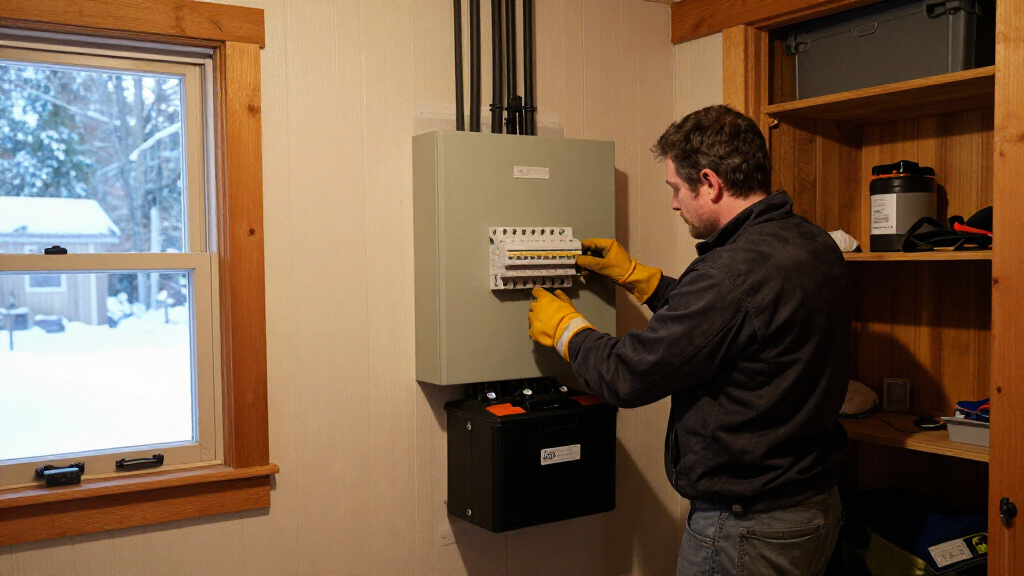
The program combines batteries installed in customers’ homes with other resources, including electric vehicle batteries, commercial demand response and several utility-scale batteries. Software coordinates when the utility can draw on participating devices. Customers retain a reserve of battery power for their own use, particularly during outages. Virtual power plants do not generate electricity themselves; they manage energy and reduce demand when the grid needs support. Some participating homes also have rooftop solar, which can generate electricity.
Pollyanna Bladyka, who lives in Springfield, said she joined after repeated outages made her consider buying a gas generator. The batteries cost her $55 per month, compared with the $12,000 purchase price she had anticipated for a generator. Since her system was installed in 2024, she says, she has not lost power. The report says her home could be powered for about two days if she limits uses such as laundry and dishwashing.
Megan Browning, a northern Vermont resident with rooftop solar and two batteries, also said she had not lost power since installation about a year before the report. During a recent severe windstorm, a nearby power line came down and other homes lost electricity; Browning said she “didn’t even notice a flicker.” These accounts describe individual experiences and do not establish how often batteries prevent outages across the full program.
Batteries Add Backup Across Vermont
The program brings household backup power and grid support together. In rural parts of Vermont, where winter cold can make extended outages especially serious, a home battery can keep electricity available for a limited period. Aggregated across thousands of homes, stored energy and managed demand can also reduce pressure on the wider grid at times of high need.
Green Mountain Power serves more than 75% of Vermont and has set a goal of eliminating all power outages by 2030. The battery program is one part of that effort, alongside measures such as putting power lines underground. The utility’s description of the virtual plant as the state’s largest power source does not mean the batteries generate electricity continuously: the system coordinates stored power and demand, and solar panels provide generation where installed.
How Green Mountain Power Built the Program
Green Mountain Power began its battery program as a pilot in 2017. Enrolment rose after state regulators lifted a program cap in 2023; the utility says more than 2,500 customers have enrolled since then, with participation continuing to grow. The report describes the overall program as having more than 5,500 customers with home battery systems.
Virtual power plants group distributed resources—such as home batteries, rooftop solar, smart thermostats and electric vehicle batteries—and coordinate them as part of the grid. The idea has existed for decades, but has drawn more interest as electricity demand rises and more energy devices connect to power networks. Kate Peters, a virtual power plant expert at consultancy The Brattle Group, said Green Mountain Power’s program may be among the largest battery programs in the United States.
““I didn’t even notice a flicker.””
— Megan Browning, Green Mountain Power battery-program customer
Limits and Results Still Need Detail
The available report does not specify the virtual power plant’s total storage capacity, how much electricity it supplies during grid events, or how often the utility activates customer batteries. It also does not provide an independently measured estimate of the program’s effect on outage frequency, emissions or electricity costs. Customer accounts show what some households have experienced, but they do not establish results for every participant.
It is also unclear how many customers rely on batteries without rooftop solar, how the program’s costs compare with alternatives over the full 10-year lease, or whether the utility’s 2030 outage goal will be met. Green Mountain Power says customers retain reserve power, but the report does not detail the reserve levels or the conditions under which the utility draws on stored energy.
Expansion and Reliability Goals
Green Mountain Power says enrolment has continued to grow and expects the battery program to remain part of its work toward eliminating outages by 2030. The utility can also draw on other resources in its virtual plant, including electric vehicle batteries, commercial demand response and utility-scale batteries.
The next measures to watch are the program’s size, how frequently it is dispatched and whether the utility publishes data linking it to fewer or shorter outages. The report does not give a timetable for further enrollment milestones or an independent evaluation of the program’s performance.
Key Questions
What is Vermont’s virtual power plant?
It is a network of customer and utility energy resources coordinated by Green Mountain Power. The program includes home batteries and other resources that software can manage to support the grid.
Do the batteries generate electricity?
No. Batteries store electricity for later use, and the virtual power plant manages stored energy and demand. Rooftop solar at some participating homes can generate electricity.
How much does the home battery program cost?
The report says customers lease batteries for $55 per month under a 10-year agreement. It does not provide a full comparison of total lease costs with other options.
How long can the batteries run a home during an outage?
Bladyka said her system should power her home for about two days if she limits electricity use, including laundry and dishwashing. Backup time will depend on the home’s system and its energy use.
Has the program eliminated outages across Vermont?
No such result is established in the report. Some customers say they have not lost power since installation, and Green Mountain Power has a goal of eliminating outages by 2030. Program-wide outage results are not provided.
Source: hn
Fall Picks
fall essentials
As an affiliate, we earn on qualifying purchases.