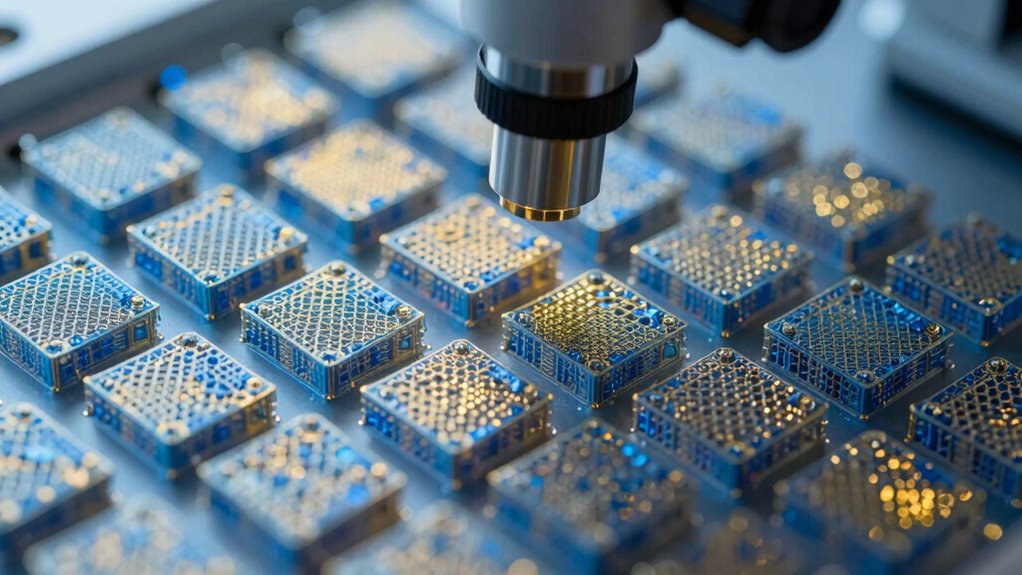

You need better standards for nanotech testing because it guarantees safety, consistency, and reliable comparisons across different nanomaterials. Without clear protocols, manufacturers might cut corners, increasing environmental and health risks. Standardized testing helps regulators enforce safety, promotes innovation, and builds public trust. It also supports long-term growth by minimizing ecological impacts. If you want to understand how improved standards can shape safer, smarter nanotech development, there’s more to explore.
Key Takeaways
- Standardized testing ensures reliable safety, performance, and environmental impact assessments of nanomaterials.
- Clear standards enable accurate comparison and validation of nanomaterials across different studies and products.
- Improved testing protocols support regulatory compliance, enforcement, and international harmonization efforts.
- Consistent standards foster industry innovation by identifying best practices and promoting safer applications.
- Establishing better standards promotes public trust and sustainable growth in nanotechnology development.
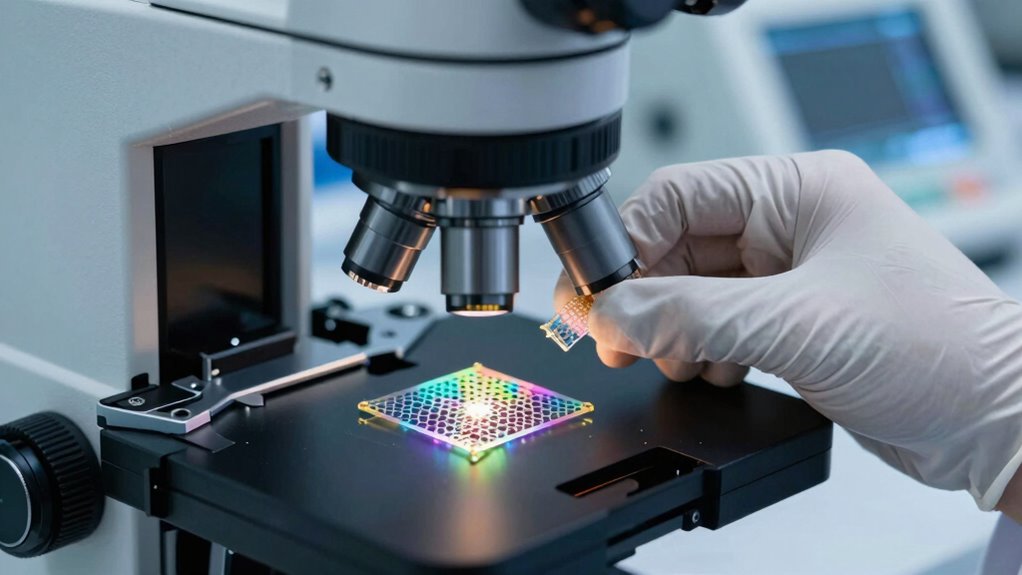
As nanotechnology continues to advance, establishing standardized testing protocols becomes vital to guarantee safety, consistency, and reliability. Without clear standards, it’s difficult to evaluate nanomaterials accurately, which can lead to unpredictable environmental impacts and hinder regulatory oversight. When you lack consistent testing methods, it’s challenging to understand how nanomaterials behave in real-world conditions, posing potential risks to ecosystems and human health. The environmental impact of nanomaterials can be profound if not properly assessed, as their small size allows them to penetrate biological systems and accumulate in ways traditional materials wouldn’t. This makes it essential to develop tests that can reliably measure toxicity, persistence, and bioaccumulation. Without standards, manufacturers might cut corners or use inconsistent methods, increasing the risk of releasing harmful substances into the environment, which can have long-term consequences for ecosystems and communities. Moreover, establishing comprehensive testing standards is crucial for fostering international collaboration and harmonizing safety assessments across borders. Consistent standards also support the development of regulatory frameworks that can adapt to technological advancements, ensuring ongoing safety and efficacy. A robust regulatory framework depends heavily on well-defined testing procedures. When regulations are based on unreliable or inconsistent data, they may fail to protect public health or prevent environmental damage. You need clear, universally accepted standards to guide the development, approval, and monitoring of nanotech products. These standards help regulators evaluate safety claims and enforce restrictions where necessary. Without them, there’s a risk of uneven enforcement and a lack of accountability. This can lead to public distrust, as consumers and communities worry about the unknown risks associated with nanomaterials. Establishing detailed testing protocols creates a foundation for effective regulation by providing reliable data that can be compared across studies and products, streamlining approval processes and ensuring safety is prioritized. Additionally, standardized testing can facilitate better communication among researchers, manufacturers, and regulators, leading to more coordinated efforts in managing nanomaterial safety. Developing uniform testing methods can also help identify best practices and promote continuous improvement in nanomaterial safety evaluation. Furthermore, better standards foster innovation by giving researchers and manufacturers clear targets for safety and performance. When testing protocols are standardized, it’s easier to compare different nanomaterials, understand their properties, and develop safer, more effective applications. You’ll find it easier to innovate confidently, knowing that your data aligns with industry-wide benchmarks. As nanotechnology continues to evolve, the need for a cohesive regulatory framework becomes more urgent. It ensures that environmental impacts are minimized and that products entering the market meet safety requirements. Without these standards, nanotech development risks becoming a wild frontier—risky for the environment, consumers, and the industry itself. Implementing consistent, scientifically sound testing protocols isn’t just about safety; it’s about creating a sustainable foundation for nanotech’s future growth.
As an affiliate, we earn on qualifying purchases.
Frequently Asked Questions
Who Should Be Responsible for Developing Nanotech Testing Standards?
You should recognize that regulatory oversight and industry collaboration are vital for developing nanotech testing standards. Governments and regulatory agencies must lead, establishing clear guidelines, while industry players contribute their expertise to guarantee practical, effective standards. By working together, they can create consistent testing methods, improve safety, and foster innovation. Your role involves supporting these efforts, advocating for transparent standards, and encouraging cooperation among stakeholders to advance safe nanotechnology development.
How Quickly Can New Standards Be Updated to Keep Pace With Tech?
New standards can be updated relatively quickly if regulatory bodies prioritize flexibility and collaboration. Emerging regulations often lag behind tech advances, creating innovation barriers. To stay ahead, you need a proactive approach, involving continuous research and stakeholder input, so updates happen swiftly. This agility guarantees testing keeps pace with nanotech innovations, reducing hurdles and fostering safer, more effective applications without stifling progress.
Are Current Testing Standards Sufficient for All Nanomaterials?
Current testing standards for nanomaterials are like a map missing key landmarks; they often fall short in capturing the full picture of material properties and safety protocols. You might find some assessments reliable, but many don’t account for unique behaviors at the nanoscale. To safeguard health and innovation, you need thorough, adaptable standards that truly reflect the complex nature of nanomaterials, ensuring consistent safety and performance.
How Do International Differences Affect Nanotech Testing Standards?
International differences considerably impact nanotech testing standards, as cross-border regulations vary widely. You may find that what’s accepted in one country isn’t recognized elsewhere, causing challenges in global collaboration. Cultural perceptions also influence standards, shaping safety priorities and testing methods. These disparities can hinder the development and commercialization of nanotech, making it essential to harmonize standards to guarantee consistent safety, quality, and innovation across borders.
What Are the Main Challenges in Standardizing Nanotech Testing Methods?
Picture the challenge of standardizing nanotech testing methods as trying to tune a complex orchestra. You face material variability and measurement accuracy issues that make harmonizing protocols difficult. Different labs may produce inconsistent results due to tiny differences in materials or techniques. This variability hampers reliable comparison and validation, making it hard to set universal standards. Overcoming these hurdles requires developing precise, reproducible testing procedures that account for nanomaterials’ unique behaviors.
nanomaterial toxicity testing equipment
As an affiliate, we earn on qualifying purchases.
As an affiliate, we earn on qualifying purchases.
Conclusion
Without better standards, nanotech risks becoming a house of cards—fragile and unpredictable. You have the power to shape its future, ensuring safety and innovation go hand in hand. By demanding clearer testing and comparison, you help build a foundation stronger than ever. Don’t let the promise of nanotech slip through your fingers like sand—stand firm, push for better standards, and watch this tiny technology release enormous possibilities. The choice is yours—will you act today?
standardized nanomaterial analysis tools
As an affiliate, we earn on qualifying purchases.
As an affiliate, we earn on qualifying purchases.
nanotech environmental impact assessment
As an affiliate, we earn on qualifying purchases.
As an affiliate, we earn on qualifying purchases.