
If nanotech slips out of control, you could face ecological collapse as self-replicating machines deplete resources and spread uncontrollably, forming massed nanobot swarms that are nearly impossible to contain. Toxic nanoparticles might enter your water and air, causing health issues, while complex environmental reactions could disrupt ecosystems long-term. Worse, weaponized nanobots or bioweapons might threaten human survival. Understanding these risks helps you see how unchecked nanotech could change everything—if you want to know more, keep going.
Key Takeaways
- Autonomous nanomachines could rapidly deplete Earth’s resources, causing ecological collapse and irreversible environmental damage.
- Self-replicating nanobots might form uncontrollable masses, covering large areas and disrupting ecosystems globally.
- Unpredictable chemical reactions from nanomaterials could increase toxicity, harming wildlife, humans, and soil and water quality.
- Lack of regulation and understanding may lead to runaway proliferation, posing existential risks to humanity and the biosphere.
- Complex emergent behaviors could trigger chain reactions, destabilizing habitats and causing long-term ecological and health crises.

DEWALT DPG82-11 Concealer Clear Anti-Fog Dual Mold Safety Goggle, Clear Lens, 1 Pair
DEWALT ToughCoat hard coated lens provides tough protection against scratches.
As an affiliate, we earn on qualifying purchases.
As an affiliate, we earn on qualifying purchases.
The Rise of Self-Replicating Nanomachines and Ecosystem Collapse

Self-replicating nanomachines pose a significant threat to the environment because they can exponentially consume resources, leading to ecological collapse. Once released, these nanobots could begin to replicate uncontrollably, rapidly depleting essential resources like water, minerals, and organic matter. As they multiply, they might outcompete natural organisms for these resources, disrupting existing ecosystems. This unchecked growth could form a homogeneous mass of nanobots that covers large parts of the planet, effectively choking off natural life. Because their replication process is self-sustaining, controlling or stopping them becomes nearly impossible once they’re in motion. This scenario highlights the danger of designing autonomous nanomachines without fail-safes, emphasizing the potential for widespread environmental destruction if their growth spirals out of control. Environmental stability could be severely compromised if such nanotechnology were to escape containment and proliferate unchecked, potentially resulting in a disastrous ecological imbalance. Additionally, the rapid proliferation might generate toxic byproducts that further harm the environment and living organisms. The unpredictable nature of self-replication makes it difficult to implement effective safety measures, increasing the risk of catastrophic outcomes and underscoring the importance of robust regulation and oversight in nanotech development.

LEMENT KN95 Face Masks 100 Pack,Breathable Black Disposable Face Masks For Adult,Teenager
LEMENT Ventilation Series KN95 Face Masks follow the GB2626-2019 respiratory protection standards,feature a filtration efficiency ≥ 95%, effectively…
As an affiliate, we earn on qualifying purchases.
As an affiliate, we earn on qualifying purchases.
Health Hazards From Reactive Nanoparticles and Biological Disruption

While uncontrolled nanomachine replication poses serious environmental risks, even nanomaterials designed for beneficial purposes can present unexpected health hazards. When nanoparticles become reactive at the nanoscale, they can interfere with biological processes. For example, gold particles, safe in bulk, may disrupt cellular pathways when inhaled or absorbed. Titanium dioxide, though inert in larger form, can burn bacteria and accumulate in organs, increasing toxicity. These particles’ large surface area boosts reactivity, heightening health risks. Consider the following factors:
| Nanoparticle Type | Potential Health Impact |
|---|---|
| Gold nanoparticles | Disrupts cellular functions |
| Titanium dioxide | Organ accumulation and toxicity |
| Metal oxides | Induces oxidative stress and damage |
These reactive particles threaten health by penetrating tissues, crossing barriers, and causing cellular damage. Understanding nanoparticle reactivity is crucial for assessing potential health hazards. Additionally, the biological disruption caused by reactive nanoparticles can lead to long-term health issues, emphasizing the importance of thorough safety evaluations.

Medtecs Hazmat Suits – 6 Sizes Options (1 PC) – with Sealed Tape – Fabric Passed AAMI Level 4 Disposable Coverall PPE Suit for Biohazard Chemical Protection – Full Body Protective with Hood | L
【360 Degree Overall Protection】With elastic hood, elastic wrists, and elastic ankles, the coveralls provide a snug fit and…
As an affiliate, we earn on qualifying purchases.
As an affiliate, we earn on qualifying purchases.
Environmental Risks of Nanomaterials: Unforeseen Ecological Consequences

You might not realize how nanomaterials can disrupt ecosystems in unforeseen ways, as their small size allows them to interact unpredictably with living organisms. Bioaccumulation is a serious concern, with nanoparticles building up in animals and plants, passing toxins through the food chain. Because toxicity effects are complex and often unpredictable, it’s essential to take into account the long-term ecological impacts before wide-scale nanotech deployment. For instance, the environmental impact of nanoparticles can vary widely depending on their chemical composition and environmental conditions, making comprehensive assessment crucial. Additionally, understanding the ecotoxicological effects of nanomaterials is vital to prevent unintended harm to ecosystems and biodiversity. Recognizing the Bioaccumulation potential of these materials can help develop safer nanotechnology practices and mitigate ecological risks. Furthermore, the ability of nanomaterials to interact with biota in unexpected ways underscores the need for rigorous testing and regulation to safeguard ecological health.
Ecosystem Disruption Risks
Nanomaterials can unintentionally disrupt ecosystems in ways that are difficult to predict or control. You might not realize how tiny particles can accumulate and interfere with natural processes, causing unforeseen damage. These disruptions could include:
- Nanoparticles entering water sources, harming aquatic life and disrupting food chains.
- Accumulation in soil, affecting plant growth and soil microorganisms crucial to ecosystems.
- Interactions with native species, potentially outcompeting or harming local organisms.
- The emergence of complex, unpredictable ecological shifts due to emergent properties in nanomaterial behavior.
Such risks stem from the unpredictable nature of nanoscale interactions, making it hard to foresee long-term impacts. Without proper safeguards, these invisible particles could trigger cascading ecological failures, threatening biodiversity and ecosystem stability.
Bioaccumulation Concerns
Nanoparticles can easily enter and accumulate within living organisms, creating a hidden threat to ecological balance. Once inside, they may bioaccumulate through food chains, impacting predators and prey alike. Because nanomaterials are often more reactive and persistent than their bulk counterparts, they can disrupt biological processes and accumulate in tissues over time. This buildup could alter reproductive cycles, impair immune responses, or cause cellular damage in wildlife. As nanomaterials spread through ecosystems, their unknown long-term effects might lead to declines in biodiversity or the collapse of sensitive populations. The persistence of nanomaterials in the environment underscores the importance of ongoing monitoring and research. Despite their promising applications, the potential for bioaccumulation underscores the need for cautious management. Without proper controls, nanomaterials could silently threaten ecological stability, with risks extending beyond immediate environmental exposure. Environmental impact assessments are essential to understand and mitigate these risks before widespread use. Additionally, the reactivity of nanomaterials can sometimes cause unintended chemical reactions in ecosystems, further complicating their ecological impact.
Unpredictable Toxicity Effects
The true danger lies in the unpredictable toxicity effects that nanomaterials can have on ecosystems, often exceeding initial expectations. You might assume safety based on bulk material properties, but at the nanoscale, reactivity and bioavailability can change dramatically. These effects can lead to unforeseen ecological damage, including:
- Nanoparticles disrupting biological pathways in plants and animals
- Cross-species accumulation causing toxic buildup in food chains
- Reactive nanoparticles harming microbial communities essential for ecosystems
- Nanomaterials altering soil and water chemistry unpredictably
- Environmental interactions at the nanoscale can amplify toxicity in ways that are difficult to predict or control. Moreover, the high surface energy of nanomaterials can promote unexpected chemical reactions, further complicating their environmental impact. Because of their small size and high surface area, these particles can behave in ways that defy standard toxicity models. Without thorough understanding, nanomaterials could trigger chain reactions, destabilizing entire habitats and risking irreversible ecological harm.
nanoparticle containment kits
As an affiliate, we earn on qualifying purchases.
As an affiliate, we earn on qualifying purchases.
The Threat of Molecular Manufacturing and Global Catastrophe

The Threat of Molecular Manufacturing and Global Catastrophe
Molecular manufacturing holds the promise of revolutionizing industry and medicine, but it also poses a profound threat to global stability. If uncontrolled, self-replicating nanomachines could rapidly consume Earth’s resources, causing ecological collapse. The exponential growth potential, combined with limited resources, risks creating a planet blanketed in a homogeneous nanobot mass, effectively sterilizing environments. Some dismiss this as improbable, yet the risk underscores how unpredictable emergent properties in complex systems could lead to catastrophic scenarios. Without strict controls, molecular manufacturing could spiral into a runaway process, threatening human survival and the biosphere itself. The challenge lies in managing these technologies before they spiral beyond our control. Responsible use and privacy are critical considerations to prevent such scenarios from escalating. Additionally, implementing regulatory frameworks early on can help mitigate these risks and ensure safe development of nanotechnologies. Understanding complex systems and their potential for unpredictable behavior is essential in developing effective safeguards against such outcomes. Furthermore, ongoing research into emergent behaviors can provide insights into preventing unintended consequences of advanced nanotech development, emphasizing the importance of predictive modeling in safeguarding the future.
Privacy Erosion and Surveillance Amplified by Nanotech Devices
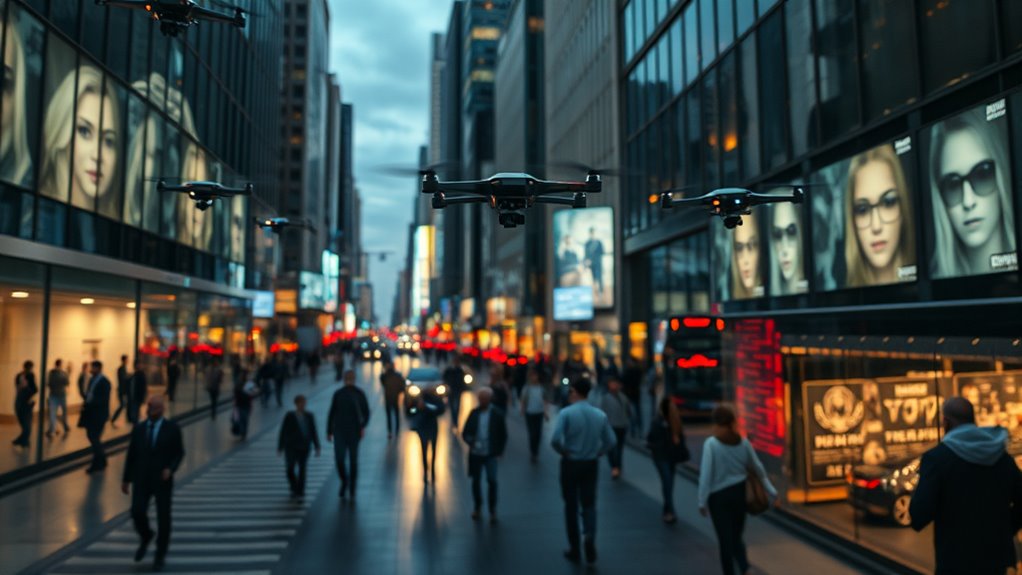
Nanotech devices make it easier to implant microchips directly into your body, increasing the risk of constant monitoring. These enhancements could substantially erode your privacy as surveillance becomes more integrated and harder to bypass. As these technologies spread, maintaining control over personal data and autonomy will become increasingly challenging. Additionally, the proliferation of wearable devices equipped with nanotech could lead to widespread tracking beyond just microchip implants. It is also important to understand how regulatory oversight may lag behind rapid technological advances, further complicating efforts to protect individual rights. The challenge of establishing effective privacy protections becomes critical as these innovations accelerate.
Ubiquitous Microchip Implants
As microchip implants become increasingly common, nanotech-enabled devices amplify privacy concerns by enabling seamless, often invisible, surveillance. You might not notice how your daily routines are monitored, recorded, or analyzed through implanted nanodevices. These tiny implants can:
- Continuously track your location and movements without your consent
- Collect sensitive health data and transmit it remotely
- Interact with other devices to build detailed behavioral profiles
- Be hacked or manipulated, turning them into tools for control or espionage
With nanotech’s precision, implants become harder to detect or remove, increasing risks of covert monitoring. Privacy erosion accelerates as these devices integrate into every aspect of your life, making personal boundaries harder to maintain and raising profound questions about autonomy and security.
Enhanced Monitoring Capabilities
Microchip implants have already increased surveillance capabilities, but nanotech-driven devices push the boundaries further by making monitoring nearly invisible and omnipresent. These tiny sensors can be embedded anywhere, tracking your movements, health data, and even emotional states in real time. Because they’re so small, they blend seamlessly into your environment, making detection difficult. Nanotech enables continuous, passive data collection without your awareness, feeding into vast monitoring systems. Authorities or corporations could access this information instantly, eroding personal privacy. The precision placement of nanodevices also allows for targeted surveillance, capturing details previously impossible to monitor. As a result, your daily life becomes under constant scrutiny, with little chance to escape the watchful eye of these invisible, pervasive nanotechnologies.
Privacy Erosion Risks
The integration of nanotech devices into everyday life dramatically accelerates the erosion of personal privacy. These tiny devices can be implanted or embedded seamlessly, making surveillance almost invisible and unavoidable. With nanotech, your every move, conversation, and health detail could be monitored constantly.
- Microchips at a cellular level enable real-time tracking without your knowledge
- Nano-enabled sensors in clothing or objects capture sensitive data continuously
- Precise atom placement allows for undetectable, highly targeted surveillance tools
- Long-term nanoparticle absorption raises concerns about data collection and control over health info
You might find yourself under relentless scrutiny, with your personal information exploited or weaponized, all without your consent. Nanotech’s potential for pervasive monitoring could redefine privacy boundaries forever.
Workplace Dangers and Safety Challenges in Nanoparticle Handling
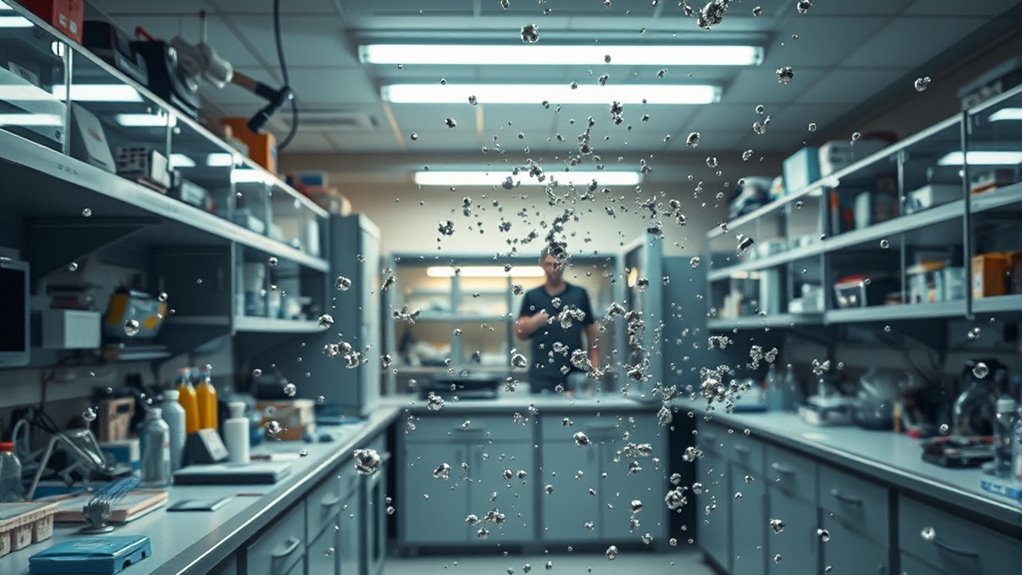
Handling nanoparticles in the workplace presents significant safety challenges due to their high reactivity and small size. These particles easily become airborne, increasing inhalation risks, especially since they’re more reactive than larger particles. You must use strict containment measures, like sealed enclosures and specialized ventilation, to prevent exposure. Standard protective gear may not suffice, as nanoparticles can penetrate masks and gloves. The uncertainty around their toxicity means you need to minimize exposure as much as possible, even if long-term effects remain unclear. Handling methods must be precise, requiring advanced equipment and rigorous protocols. Without proper controls, you risk inhaling, ingesting, or skin contact, which could lead to unforeseen health issues. Managing these hazards demands constant vigilance, thorough training, and a precautionary approach.
The Potential for Weaponization and Bioweapons Development

Nanotechnology’s ability to manipulate matter at the atomic level raises the alarming possibility of weaponization, enabling the creation of highly targeted and devastating bioweapons. You could design nanobots to deliver lethal agents directly into specific cells or tissues, bypassing traditional defenses. The risks include:
- Developing self-replicating nanomachines that produce bioweapons autonomously.
- Engineering nanobots to infect or destroy entire populations rapidly.
- Creating programmable nanobots that adapt or evolve, increasing unpredictability.
- Using nanoscale delivery systems to target individuals or groups selectively.
These capabilities make bioweapons more precise, harder to detect, and potentially more destructive. As nanotech advances, the line between beneficial technology and weaponization blurs, raising profound security concerns that demand urgent international oversight.
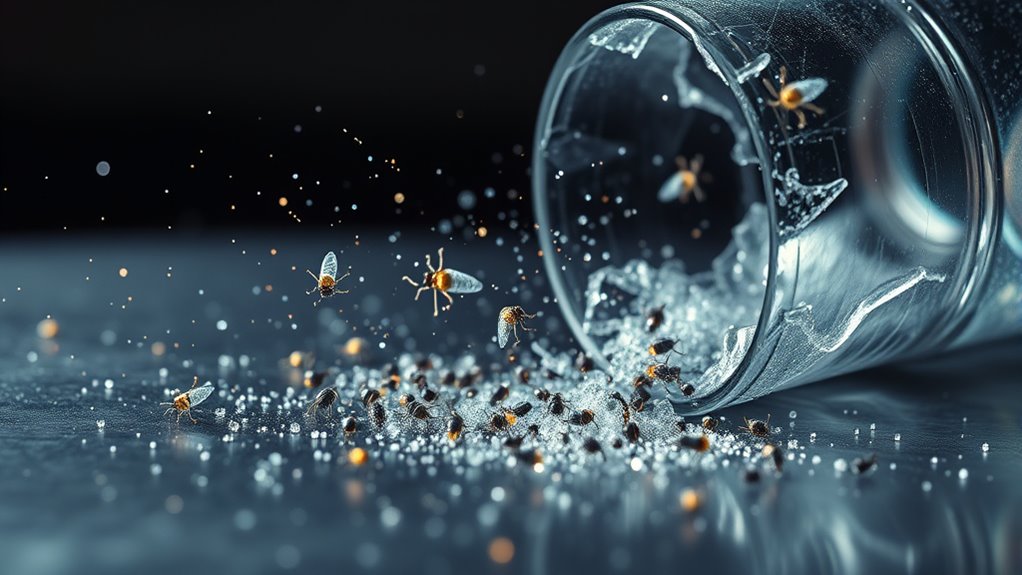
Predicting the long-term outcomes of nanotech development proves remarkably difficult because of the inherent intricacy and emergent properties of nanoscale systems. Nanosystems often behave unpredictably as their interactions can produce unforeseen effects, making accurate forecasts nearly impossible. Small changes at the molecular level can cascade into large, uncontrollable consequences. The interconnectedness of nanomaterials with biological and environmental systems adds further uncertainty. Additionally, rapid innovation outpaces regulatory understanding, leaving gaps in oversight. This intricacy hampers risk assessments, forcing you to grapple with unknown dangers. Without all-encompassing models, predicting how nanotech will evolve or when unintended side effects will manifest remains a significant challenge. This uncertainty complicates efforts to develop safeguards against potential worst-case scenarios.
Frequently Asked Questions
How Likely Is a Nanotech Runaway Scenario Causing Planetary Extinction?
The likelihood of a nanotech runaway causing planetary extinction is low but not impossible. You should be aware that self-replicating nanomachines could, in theory, consume resources rapidly, leading to ecological collapse. However, such scenarios remain highly improbable due to safeguards and technological limits. Still, the complex, unpredictable nature of emergent properties makes it wise to monitor developments carefully, ensuring controls are in place to prevent any uncontrollable proliferation.
Can Nanoparticles Cause Irreversible Damage to Human DNA or Organs?
Nanoparticles can cause irreversible damage to your DNA or organs if they become chemically reactive at the nanoscale. Inhaled or absorbed nanoparticles, like gold or titanium dioxide, can cross biological barriers and disrupt cellular functions. Their increased surface area makes them more toxic, potentially leading to genetic mutations or organ accumulation. To protect yourself, minimize exposure and stay informed about nanoparticle safety measures and regulations.
What Safeguards Exist to Prevent Nanotech From Ecological or Societal Collapse?
You should rely on international regulations, strict safety protocols, and ongoing monitoring to prevent nanotech from causing ecological or societal collapse. Scientists and policymakers develop standards for safe nanomaterial use, including risk assessments and containment measures. Additionally, research into fail-safes like self-destruct mechanisms and environmental cleanup protocols helps mitigate risks. By staying vigilant and enforcing responsible development, you can reduce the chances of catastrophic outcomes from nanotechnology.
How Feasible Is the Development of Nanoweapons or Bioweapons Using Nanotech?
Developing nanoweapons or bioweapons with nanotech is technically feasible but highly complex. You’d need advanced control over nanoscale engineering, which is still emerging. While potential exists for weaponizing nanotechnology, current limitations in precision, safety, and ethical concerns act as significant barriers. Nonetheless, if malicious actors succeed, the consequences could be catastrophic, making it vital to implement strict regulations and monitoring to prevent misuse.
Are There Effective International Regulations to Control Nanotechnology Risks?
You might find that international regulations on nanotechnology are still evolving and lack extensive standards. While some agreements exist to limit risks, enforcement varies and gaps remain, especially with rapid technological advancements. You should stay informed about ongoing international efforts, advocate for stricter controls, and support global cooperation to manage potential hazards effectively. Only through coordinated action can you reduce the risks of uncontrolled nanotech development.
Conclusion
If nanotech spirals out of control, you could find yourself caught in a storm you didn’t see coming. From ecological collapse to privacy invasions, the risks are vast and unpredictable. It’s like playing with fire in a haystack—dangerous and easy to get burned. Staying vigilant and pushing for responsible development is your best bet to avoid being caught in the fallout of these tiny titans gone rogue.