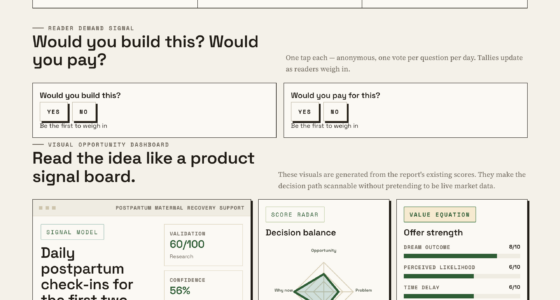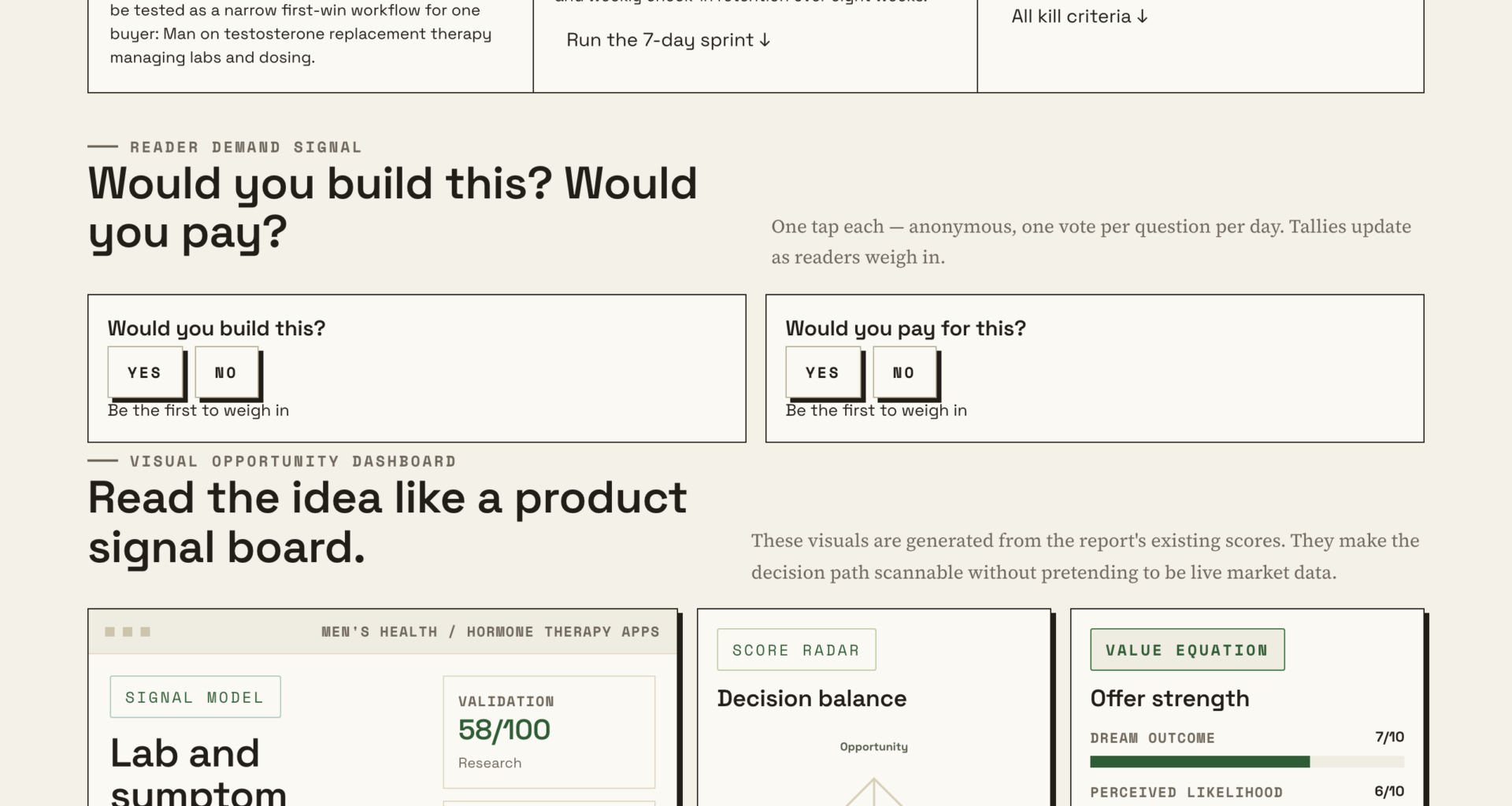

📊 Full opportunity report: A Personal Health Log For TRT Labs And Symptoms on IdeaNavigator AI — validation score, market gap, and execution plan.

Get the latest gadgets delivered free — and shop member deals
- Fast, free delivery on millions of items
- Access to Prime Big Deal Days deals on October 6–7
- Prime Video, Amazon Music and more included
TL;DR
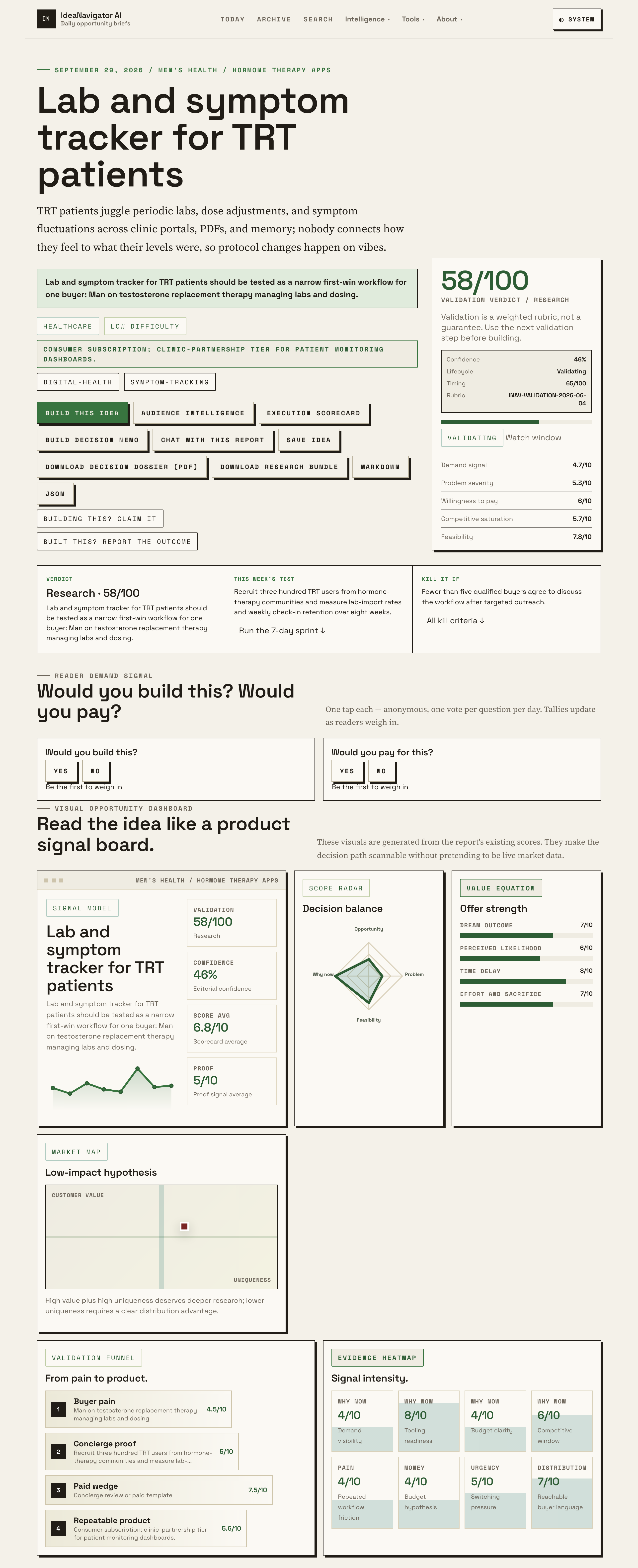
IdeaNavigator AI has published a product concept for a lab and symptom tracker aimed at men on testosterone replacement therapy (TRT). The proposed app would import lab PDFs, chart hormone panels against dose changes and daily symptom check-ins, and generate visit summaries, but it remains an unvalidated idea.
IdeaNavigator AI has published a product proposal for a personal health log for men on testosterone replacement therapy (TRT), designed to connect lab results, dose changes, and daily symptoms in a single app. The concept targets a growing population of self-managing TRT patients whose care is spread across clinic portals, PDF lab reports, and memory. No product has been built or launched; the document is a validation plan for what its authors describe as a narrow first-win workflow.
According to the proposal, the app would serve one specific buyer: a man on TRT managing periodic labs and dosing. The core problem it identifies is that TRT patients juggle lab results, dose adjustments, and symptom fluctuations across disconnected systems, and that “nobody connects how they feel to what their levels were, so protocol changes happen on vibes,” in the proposal’s wording.
The minimum viable product outlined in the document would have four functions: importing lab PDFs, charting hormone panels over time against dose changes and daily symptom check-ins, generating trend summaries for clinic visits, and flagging values drifting outside target ranges. The revenue model is a consumer subscription, with an additional clinic-partnership tier offering patient-monitoring dashboards for providers. The target market is men’s health and hormone therapy apps.
The proposal includes a concrete validation plan: recruit 300 TRT users from hormone-therapy communities and measure two metrics over eight weeks — lab-import rates and weekly check-in retention. According to IdeaNavigator AI, the timing argument rests on a surge in TRT prescriptions and telehealth clinics, which has created a large self-managing patient population whose care is fragmented across providers.
Why Fragmented TRT Care Matters
If validated, the concept addresses a real gap in how hormone therapy is monitored. TRT typically requires regular blood work — hormone panels drawn every few months — and dose adjustments based on both lab values and how the patient reports feeling. When those data points live in separate clinic portals and PDFs, patients and clinicians make decisions with incomplete information.
The proposal’s emphasis on a single narrow user group reflects a common argument in product development: focused tools for one well-defined buyer tend to succeed where broad health trackers fail. The clinic-partnership tier also points to a possible second market among telehealth providers seeking visibility into patient progress between visits.
However, the concept sits in a crowded and sensitive category. Health apps that handle lab data face privacy obligations and medical-device questions depending on the features they ship, and the proposal does not address regulatory or data-security considerations.
The Rise of Self-Managing TRT Patients
Testosterone replacement therapy has moved increasingly into telehealth over the past several years, with online clinics prescribing TRT after remote lab work and consultations. According to the IdeaNavigator AI analysis, this shift has produced patients who change providers, order their own lab panels, and adjust their own understanding of dosing — a population the proposal describes as fragmented “by design.”
General-purpose health trackers exist for medication reminders and symptom logging, but the proposal argues none connect hormone panel trends to dose changes and symptom reports in a way tailored to TRT protocols. That gap is the stated basis for building a category-specific tool rather than a general journaling app.
What the Proposal Leaves Untested
No app has been built, and the validation plan — 300 recruited users tracked over eight weeks — has not been run. It is not yet clear whether TRT patients will reliably import lab PDFs or sustain weekly symptom check-ins, the two metrics the proposal itself identifies as the test of viability.
The document also leaves open how lab PDF parsing would handle the varied formats used by different laboratories, how target ranges would be set for individual patients, and whether the flagging feature would require clinical oversight. Pricing, privacy safeguards, and any regulatory assessment are not addressed. Whether telehealth clinics would pay for the partnership tier is likewise untested.
The Eight-Week Validation Test
According to the proposal, the next step is recruiting 300 TRT users from hormone-therapy communities and running an eight-week measurement of lab-import rates and weekly check-in retention. Those two numbers would determine whether the concept advances to a built product.
Readers interested in the underlying analysis can review the full proposal, which covers the problem framing, MVP scope, revenue model, and validation methodology in detail. Any launch, partnership announcements, or funding would represent later developments not covered by the current document.
Source: IdeaNavigator AI
Key Questions
Is this TRT tracker app available now?
No. The document from IdeaNavigator AI is a product concept and validation plan. No app has been built, launched, or dated.
What would the app actually do?
Per the proposal, it would import lab PDFs, chart hormone panels against dose changes and daily symptom check-ins, generate trend summaries for clinic visits, and flag values drifting outside target ranges.
How would the app be validated?
The plan calls for recruiting 300 TRT users from hormone-therapy communities and measuring lab-import rates and weekly check-in retention over eight weeks.
How would it make money?
The proposal describes a consumer subscription model plus a clinic-partnership tier offering patient-monitoring dashboards for providers.
Does the proposal address privacy or medical regulation?
No. The document does not cover data-security obligations, lab-PDF format handling, how target ranges would be set, or whether any features would require clinical oversight or regulatory review.
Source: IdeaNavigator AI
Fall Picks
fall essentials
As an affiliate, we earn on qualifying purchases.