

Antiviral nanotech uses tiny particles, around 100 nanometers, to fight viruses more effectively than traditional methods. These nanoparticles can be integrated into masks, surfaces, and vaccines to block, inactivate, or deliver medications faster. They enable rapid testing and smarter protective gear, reducing transmission risks. By harnessing nanomaterials’ unique properties, you can stay a step ahead in pandemic defense. Keep going to discover how these innovations are shaping the future of health security.
Key Takeaways
- Antiviral nanotech uses nanoparticles to block viral entry, disrupt viral structures, and inhibit replication, enhancing infection control.
- Tiny particles like silver, gold, and graphene oxide provide rapid, effective viral inactivation on surfaces and protective gear.
- Nanomaterials enable the development of fast, sensitive diagnostics and portable detection devices for early outbreak identification.
- Nanoparticle-based vaccines improve delivery, stability, and immune response, allowing quicker responses to emerging pathogens.
- Investing in adaptable nanotech strategies enhances preparedness and resilience against future pandemics.

DEMETECH ASTM Level 3 Disposable Face Masks, Protective Face Mask Pack with 3 Layers, Adult, 50 Qty
HIGH-QUALITY FACE MASK: At DemeTECH, your safety is our top priority. Our ASTM level 3 mask is available…
As an affiliate, we earn on qualifying purchases.
As an affiliate, we earn on qualifying purchases.
Leveraging Nanomaterials for Surface Disinfection and Personal Protection

Nanomaterials play a crucial role in enhancing surface disinfection and personal protection against viruses like SARS-CoV-2. When integrated into masks and PPE, these tiny particles, approximately 100 nm, effectively block virus particles from penetrating surfaces or reaching your skin. Synthetic nanofibers create reusable masks with high protection affinity, reducing waste and cost. Graphene oxide nanoparticles inhibit viral entry by blocking spike proteins, while silver-graphene composites show strong antiviral effects within minutes. Carbon quantum dots and gold nanoparticles prevent viruses from attaching to and invading human cells. By incorporating these nanomaterials, you gain improved barrier protection, making masks and protective gear more efficient at stopping virus transmission. This approach offers a promising, durable, and scalable way to safeguard yourself and others during ongoing and future viral outbreaks. Innovative European Cloud Servers support sustainable and secure deployment of nanotech-based protective solutions. Antiviral nanotechnology provides a proactive method to combat viral spread and reduce infection rates effectively. Additionally, understanding the material properties of nanomaterials helps optimize their antiviral performance and safety in real-world applications.

Adam's Advanced Graphene Ceramic Coating (Standard Kit) – 10H Graphene Coating for Auto Detailing, 9+ Years of Car Protection & Patented UV Technology
✅ THE NEXT GENERATION OF PROTECTION FOR YOUR ENTIRE VEHICLE! Adam’s UV Graphene Ceramic Coating is a clear,…
As an affiliate, we earn on qualifying purchases.
As an affiliate, we earn on qualifying purchases.
Rapid and Affordable Diagnostic Innovations Using Nanotech

Building on the advancements in surface disinfection and protective gear, nanotechnology also transforms how you diagnose viral infections quickly and affordably. Nanomaterials enable the development of rapid tests that deliver results within minutes, making widespread screening feasible, even in resource-limited settings. Nanoparticles like gold or carbon quantum dots enhance detection sensitivity, allowing early identification of infections before symptoms appear. Nanopore-based sequencing offers real-time, portable alternatives to traditional PCR tests, reducing costs and turnaround times. These innovations facilitate on-site diagnosis, helping you contain outbreaks faster. By integrating nanotech into diagnostic tools, you gain access to more accurate, affordable, and scalable testing methods, vital for managing current and future pandemics efficiently and effectively. Surface disinfection techniques continue to evolve with nanotech, ensuring safer environments alongside diagnostic advancements. Additionally, the development of point-of-care testing devices is revolutionizing how quickly healthcare providers can respond to emerging viral threats. Incorporating nanotech-enabled biosensors further enhances early detection capabilities, making viral diagnostics more precise and accessible worldwide. Moreover, understanding contrast ratio and its role in imaging can improve the visualization of diagnostic results, leading to faster and more accurate interpretations. Furthermore, integrating public health data with nanotech diagnostics can improve outbreak tracking and response strategies.
nanotech rapid COVID-19 test kit
As an affiliate, we earn on qualifying purchases.
As an affiliate, we earn on qualifying purchases.
Advances in Nanoparticle-Based Vaccine Delivery and Immune Activation

Recent advances have considerably improved how vaccines utilize nanoparticle technology to enhance delivery and immune activation. You now benefit from more efficient antigen transport, leading to stronger immune responses. Lipid nanoparticles, like those in Pfizer and Moderna vaccines, protect mRNA and guarantee targeted delivery. Gold and spike protein nanoparticles serve as effective adjuvants, boosting immune activation. Hollow polymer nanoparticles stabilize vaccine components for longer shelf life and better efficacy. These innovations help your body recognize and respond to viruses more rapidly. Additionally, ongoing research into holistic family well-being ensures that vaccine development considers overall health impacts and emotional resilience. Incorporating personalized care strategies into vaccine programs can further improve individual health outcomes and community protection. Recognizing the significance of nanoparticle design can lead to even more targeted and effective vaccine solutions in the future. Advances in nanoparticle engineering are expected to open new avenues for customizing vaccines to individual immune profiles, increasing their effectiveness and safety. As nanoparticle biocompatibility continues to improve, future vaccines may become even more adaptable and less likely to cause adverse reactions.

Gold Purity Tester Machine – 0.001g/cm³ Precision Analyzer for Gold, Silver, Palladium & Platinum – Jewelry Testing Device for Accurate Precious Metal Detection 300K
Discover the versatility of our Precious Metal Tester. This Gold Tester Machine accurately measures the purity of various…
As an affiliate, we earn on qualifying purchases.
As an affiliate, we earn on qualifying purchases.
Mechanisms of Nanoparticles in Blocking and Inactivating Viruses

Nanoparticles combat viruses by directly interfering with their ability to infect host cells. They do this by binding to viral surface proteins, preventing attachment to receptors, or disrupting their structural integrity. Silver nanoparticles, for example, inactivate up to 99.6% of SARS-CoV-2 within minutes on textiles. Gold and graphene oxide nanoparticles block viral spike proteins, hindering entry into cells. Some target viral enzymes like RdRp, halting replication. These mechanisms ensure the virus can’t hijack host machinery or spread. Additionally, Free Floating particles can diffuse through environments, increasing their contact with viral particles. The use of nanotechnology in antiviral strategies exemplifies the innovative approaches emerging from recent AI-driven discoveries. Understanding viral surface proteins is crucial for designing effective nanoparticle interventions. Here’s a quick overview:
| Mechanism | Explanation |
|---|---|
| Surface Binding | Attach to viral proteins, preventing cell attachment |
| Structural Disruption | Damage viral envelope or capsid |
| Enzyme Inhibition | Target viral enzymes like RdRp or proteases |
Preparing for Future Pandemics With Nanotechnology-Driven Strategies
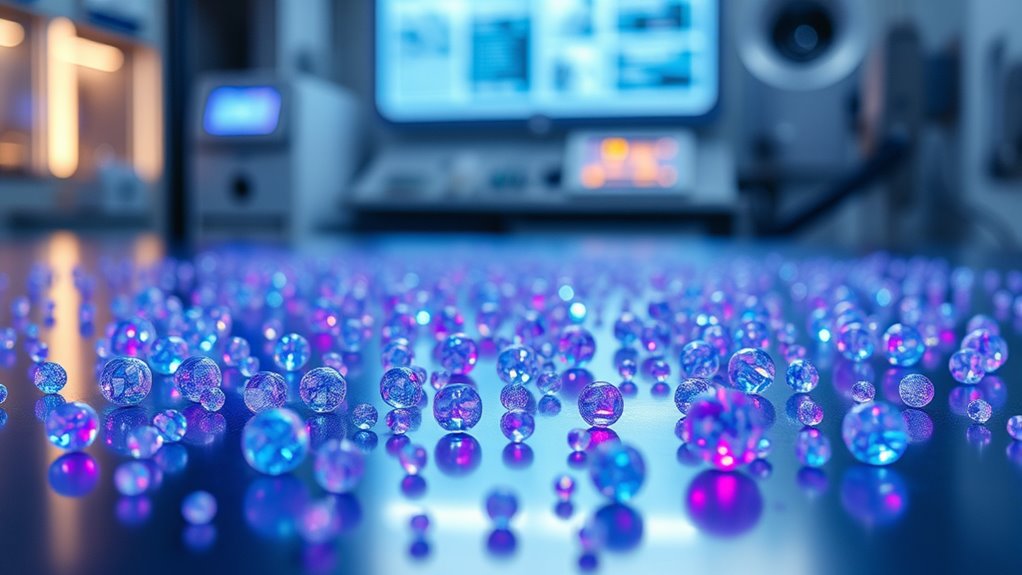
As the threat of future pandemics looms, leveraging nanotechnology offers a proactive approach to global health security. You can prepare by developing nanotech-based tools that quickly adapt to emerging viruses, ensuring rapid detection, prevention, and response. Investing in nanomaterial research enhances vaccine stability and delivery, making immunizations more accessible worldwide. Additionally, creating versatile antiviral surfaces with nanoparticles can reduce transmission in public spaces. These strategies enable you to stay ahead of evolving pathogens, minimizing outbreaks and saving lives. By integrating nanotech into global health frameworks, you strengthen our defenses against future pandemics.
- Develop adaptable nanodiagnostics for early detection
- Incorporate nanomaterials into protective gear and surfaces
- Enhance vaccine platforms with nanotechnology for rapid deployment
Frequently Asked Questions
How Do Nanomaterials Compare to Traditional Disinfectants in Virus Inactivation?
Nanomaterials outperform traditional disinfectants by offering rapid, targeted virus inactivation. You’ll find silver nanoparticles kill up to 99.6% of SARS-CoV-2 within minutes, and graphene oxide blocks viral entry effectively. Unlike conventional disinfectants, nanomaterials can be integrated into surfaces, masks, and textiles for ongoing protection. They also enable surface disinfection and viral inactivation without harsh chemicals, making them safer and more efficient for broad, continuous use.
What Are the Potential Long-Term Environmental Impacts of Nanomaterial Use?
You might be concerned about nanomaterials’ long-term environmental impacts. They can accumulate in ecosystems, potentially harming wildlife and disrupting microbial communities. Some nanoparticles may persist for years, causing toxicity or contaminating water and soil. You should consider that their small size allows easy uptake by organisms, possibly entering food chains. Careful regulation, ongoing research, and sustainable practices are essential to minimize environmental risks associated with widespread nanomaterial use.
Can Nanotech-Based Diagnostics Detect New or Emerging Viral Variants?
Yes, nanotech-based diagnostics can detect new or emerging viral variants. You benefit from their high sensitivity and rapid response, which allow for quick adaptation to mutations. By designing nanomaterials that target conserved viral regions, you improve detection accuracy across variants. This flexibility enhances early identification, helping you respond swiftly to new outbreaks and track viral evolution, ultimately strengthening your pandemic preparedness and control efforts.
Are There Safety Concerns Related to Nanoparticle Exposure in Humans?
Safety concerns surround nanoparticle exposure because particles can penetrate skin, inhale lungs, or enter bloodstream, potentially causing health hazards. You might worry about toxicity, inflammation, or long-term effects. While nanotech offers promising protection, it’s crucial to understand and monitor how these tiny particles interact with your body. Proper precautions, thorough testing, and regulation help minimize risks, ensuring nanomaterials serve safely and effectively in medical and environmental applications.
How Scalable Are Nanotechnology Solutions for Global Pandemic Preparedness?
You can expect nanotechnology solutions to be quite scalable for global pandemic preparedness. Manufacturing processes like mass production of lipid nanoparticles for vaccines are already established, enabling rapid, large-scale deployment. Advances in synthesis techniques and cost-effective materials further support scalability. As demand grows, you’ll see increased investment and infrastructure development, making it feasible to produce nanotech-based diagnostics, treatments, and protective gear efficiently, ready for future outbreaks.
Conclusion
As you step into a future shaped by nanotech, imagine tiny warriors patrolling your surfaces and inside your body, ready to fight off the next pandemic. These nanoparticles act like microscopic shields and messengers, transforming how we detect, prevent, and treat viral threats. Embracing this innovative frontier is like equipping yourself with an invisible armor—powerful, precise, and always ready to defend. Together, nanotechnology lights the path toward a safer, healthier tomorrow.