
Nanotech promised a revolution with self-replicating nanobots and atomic assembly, but those visions remain unrealized. Early hype, driven by scientists like Drexler, fueled hopes of a future where matter could be programmed at the atomic level. However, scientific debates, technical challenges, and shifting priorities led to focus on practical applications like medicine and materials rather than the revolutionary assemblers. If you’re curious about how these failed predictions shaped today’s nanotech landscape, there’s more to uncover.

Get the latest gadgets delivered free with Prime
- Fast, free delivery on millions of items
- Prime Video, Amazon Music and more included
- Member-only deals all year
Key Takeaways
- Fully functional, self-replicating nanobots and universal assemblers remain science fiction; they have not materialized despite early predictions.
- The anticipated nanotech revolution, including “grey goo” scenarios, has not occurred; progress has focused on incremental applications.
- Public fears of uncontrollable nanobots and runaway self-replication have been largely unfounded, with research shifting toward safe, practical uses.
- Market hype and media portrayals exaggerated nanotech capabilities, causing crashes when predictions failed to materialize.
- Current nanotech advancements center on improved materials, drug delivery, and environmental solutions, not revolutionary, autonomous nanomachines.
As an affiliate, we earn on qualifying purchases.
The Origins of Nanotech Promises
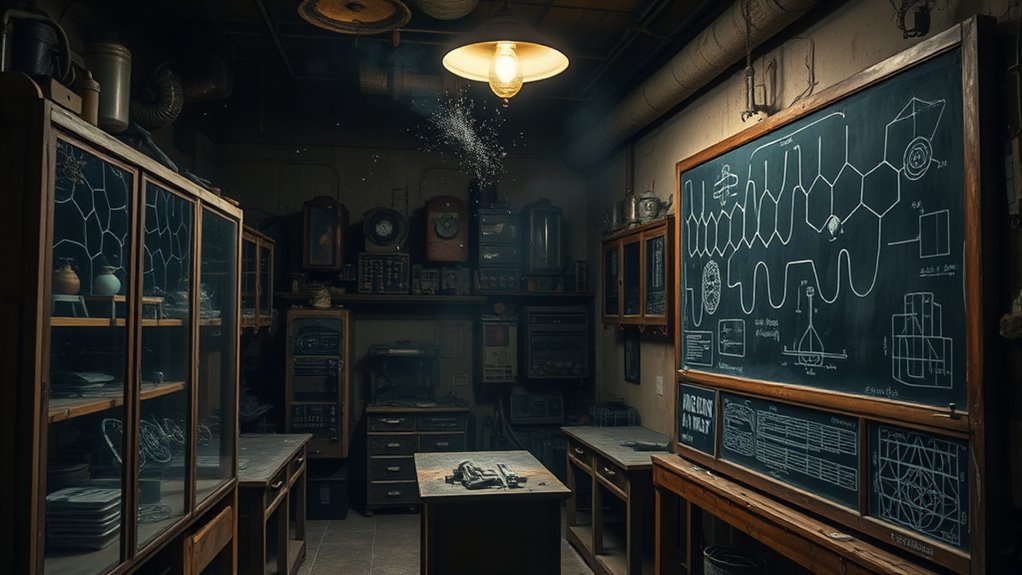
The origins of nanotech promises trace back to visionary ideas in the 1980s, when scientists like K. Eric Drexler imagined a future where materials could be manipulated at the atomic level. He proposed programming matter to grow into complex objects, such as food or spacecraft, using computer-controlled single-atom chemistry. Drexler’s concept of molecular nanotechnology envisioned tiny machines—assemblers—that could replicate themselves and build anything you wanted. His ideas gained attention during congressional hearings and sparked widespread excitement. You might have heard about these predictions as the dawn of a revolutionary technology. However, this vision was ambitious, relying on breakthroughs that hadn’t yet occurred. While inspiring, Drexler’s ideas set the stage for ongoing debates and scientific disputes that continue today. Additionally, the development of European cloud innovation and energy-efficient data centers reflects a modern commitment to sustainable technology, although it differs significantly from the original nanotech visions. The technological challenges involved in achieving Drexler’s molecular machinery remain significant, and many experts remain skeptical about the near-term feasibility of such advanced nanotechnology. Furthermore, these early promises often overlooked the complexity of atomic manipulation and the significant hurdles in scaling nanomachines, which have slowed progress toward these futuristic goals.
advanced materials nanotechnology
As an affiliate, we earn on qualifying purchases.
As an affiliate, we earn on qualifying purchases.
The Clash of Visions: Drexler vs. Smalley

You can see how the clash between Drexler and Smalley shaped nanotech’s trajectory, with Drexler dreaming of self-replicating assemblers and Smalley emphasizing practical chemistry limits. This debate sparked fierce scientific and public discussions about what nanotechnology could achieve and how realistic those visions were. This ongoing debate influenced research priorities, funding, and public perception of nanotech’s potential, especially considering the limitations imposed by chemical reactivity and material properties. Ultimately, their differing visions influenced research priorities, funding, and public perception of nanotech’s potential. The ongoing influence of these contrasting perspectives continues to inform current nanotech development.
Divergent Nanotech Visions
Divergent visions in nanotechnology stem from fundamentally different beliefs about what can be achieved at the molecular level. You see, Drexler envisioned a future where computer-controlled molecular assemblers could build anything—from food to spacecraft—by precisely manipulating individual atoms. His approach relies on the idea of programmable, self-replicating nanomachines capable of exponential manufacturing. In contrast, Smalley and many scientists believed such assemblers were impossible due to the inherent complexities of chemistry, like the “fat fingers” and “sticky fingers” problems. Instead, they focused on advancing nanomaterials like buckyballs and atomic microscopy, emphasizing practical, incremental progress. This fundamental disagreement shaped the field, influencing funding, research directions, and public perception, ultimately steering nanotech development away from Drexler’s visionary assemblers toward more achievable, materials-based applications. Additionally, scientific skepticism regarding the predictive power of nanotech played a significant role in shaping research priorities and public expectations. The debate also underscored the importance of technological feasibility, which remains a core consideration in evaluating futuristic visions. Moreover, the ongoing discussion about scientific limitations continues to influence the pace and direction of nanotechnology research.
Scientific and Public Debate
The clash between K. Eric Drexler and Richard Smalley shaped the scientific and public debate over nanotech’s future. You should know these key points:
- Drexler’s vision of precise molecular assemblers faced skepticism due to physical and chemical limitations.
- Smalley argued that chemistry’s complexity prevents the creation of atomic-scale machines, calling Drexler’s ideas science fiction.
- The debate influenced government funding, favoring materials science over assembler development.
- Public perception shifted as hype faded, with concerns about risks like toxic nanoparticles replacing apocalyptic scenarios.
This clash highlighted fundamental disagreements about nanotech’s potential. Today, research aligns more with Smalley’s practical approach, and the idea of self-replicating nanomachines remains speculative.
environmental nanotech solutions
As an affiliate, we earn on qualifying purchases.
As an affiliate, we earn on qualifying purchases.
Predictions That Never Materialized
You might have believed that molecular assemblers would soon revolutionize manufacturing, but that revolution never happened. Despite early hype, these assembly machines remain a science fiction concept, not a reality. Instead, nanotech development has shifted toward materials science and toxicology, leaving those initial predictions unfulfilled. Today, connected home fitness technologies exemplify practical applications of nanotech principles, emphasizing health and wellness over manufacturing breakthroughs. The ongoing focus on safety protocols has also prioritized responsible development in nanotechnology to mitigate potential risks. As research continues, the paranormal phenomena associated with unseen nanomaterials have yet to manifest in any verified way, keeping such speculations firmly in the realm of mystery. Additionally, efforts to understand the ethical considerations of nanoscale interventions aim to guide responsible innovation. Advances in support breakfast options demonstrate how nanotech is making a tangible impact in areas beyond manufacturing, such as food safety and preservation.
Assembly Machines Remain Fiction
Despite early promises, the idea of fully functional assembly machines remains firmly in the domain of fiction. You won’t find machines that can assemble complex objects atom-by-atom as envisioned. Instead, current nanoscience focuses on incremental progress. Here’s what’s relevant:
- No true assemblers exist: Molecular-level machines capable of self-replication or building anything remain theoretical.
- Focus shifted to materials science: Researchers develop nanoparticles and nanostructures for specific purposes, not autonomous assemblers.
- Chemical limitations: Precise atom-by-atom control faces enormous hurdles, like the “sticky fingers” problem.
- Real-world progress: Advances involve microscopy and nanoparticle manipulation, but not the self-replicating machines imagined decades ago.
Predicted Revolution Did Not Occur
Many of the bold predictions about a nanotech revolution have simply not come true. You might have expected nanotechnology to transform industries overnight, but that didn’t happen. The vision of self-replicating nanomachines or “grey goo” scenarios proved overly optimistic. Instead, progress aligned with materials science, focusing on nanoparticles and molecular engineering, not autonomous assemblers. Despite intense hype in the early 2000s, searches, stocks, and investments declined sharply. Venture capitalists and startups failed to deliver on revolutionary breakthroughs, shifting priorities to practical applications like drug delivery and materials enhancement. No evidence exists of self-replicating nanobots or revolutionary manufacturing. The anticipated revolution remains a concept rather than reality, with nanotech’s current role limited to incremental advances rooted in existing chemistry and physics.
As an affiliate, we earn on qualifying purchases.
The Rise and Fall of Investment Hype
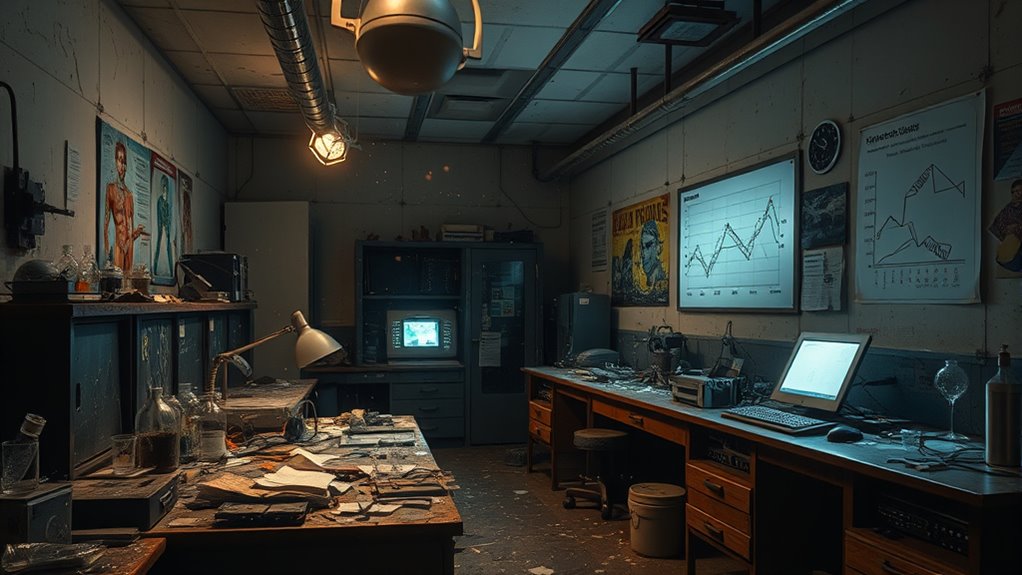
The investment hype surrounding nanotechnology surged in the early 2000s, fueled by promises of revolutionary breakthroughs and lucrative opportunities. You might have seen venture capital flowing into startups claiming to develop revolutionary nanomachines or self-assembling robots. However, the reality didn’t match the hype. Here’s what happened:
- Most nanotech startups failed to deliver on their ambitious promises within the promised timelines.
- Stock prices for nanotech firms like Harris & Harris and Arrowhead plummeted, often falling below 10% of their peaks.
- Major funds, such as Invesco’s PowerShares Lux Nanotech ETF, liquidated after years of underperformance.
- The focus shifted from revolutionary assemblers to incremental advances in materials science, dampening the hype’s momentum.
- The initial excitement faded as practical limitations became clear, especially when considering the challenges of Free Floating in nanotech applications.
- These limitations underscored the importance of understanding the technological barriers that hindered nanotech’s real-world implementation. Additionally, ongoing research revealed fundamental issues related to scalability, which further constrained real-world applications of nanotech innovations. A deeper understanding of manufacturing complexities is also essential to overcoming these hurdles.
Scientific Progress in a Different Direction
Instead, research now emphasizes creating stronger, lighter materials, improving drug delivery systems, and developing advanced catalysts. Materials science plays a crucial role in these advancements, enabling the development of innovative composites and structural components. Nanoparticles are engineered for targeted therapies and environmental cleanup, addressing real-world problems without relying on the concept of universal assemblers. This shift reflects a pragmatic approach, prioritizing achievable goals over speculative visions. Enhanced materials engineering techniques have enabled the development of innovative composites and structural components. As a result, nanoscience has become integrated into mainstream chemistry and engineering, delivering tangible benefits while the dream of self-replicating nanobots remains unfulfilled. Additionally, eco-friendly innovations are increasingly incorporated into nanotechnology research, aligning scientific progress with sustainability goals. Advances in nanoparticle design also contribute to these practical applications, making nanotech more effective and accessible. Furthermore, sustainable nanotech development ensures that environmental considerations are central to ongoing innovations, fostering a responsible approach to scientific progress.
Public Perception and Media Hype

Has media hype shaped how you perceive nanotechnology? Absolutely. The buzz created in the early 2000s painted nanotech as revolutionary, promising a future of radical breakthroughs. But this hype often exaggerated reality, leading to misconceptions. Here’s how it influenced perceptions:
Media hype in the early 2000s painted nanotech as revolutionary, but often exaggerated reality and fueled misconceptions.
- Overestimation of capabilities – Many believed nanotech would instantly lead to self-replicating machines or “grey goo.”
- Fear-mongering – Media fueled fears of uncontrollable nanobots threatening humanity.
- Ignoring scientific limits – Public often overlooked the technical challenges scientists face, including scientific limitations, which slowed practical development. Additionally, the complexity of AI and content creation tools underscores how challenging technological realization can be. Furthermore, the technological development process itself is inherently gradual and requires rigorous testing before widespread adoption.
- Hype-driven investments – Stock markets and startups surged on optimism, then crashed when predictions failed.
- Misunderstanding of technical challenges – The complex scientific limits involved in developing practical nanotech applications were often downplayed or misunderstood.
This media-driven narrative shaped expectations, but reality proved more cautious and incremental. Your perception was often based more on headlines than scientific progress.
The Current State of Nanotechnology
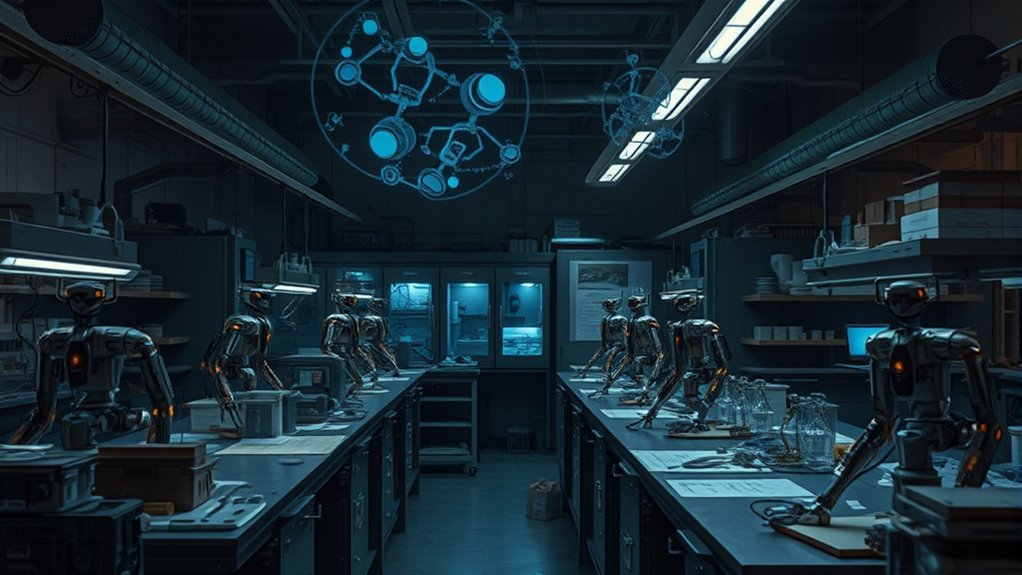
Although the ambitious visions of early nanotech pioneers have not materialized, current advancements focus on practical applications rooted in materials science rather than speculative self-replicating machines. Today, nanotechnology primarily involves manipulating nanoparticles and molecules to enhance materials, improve medical treatments, and develop better sensors. You won’t find evidence of autonomous, self-replicating nanomachines or universal assemblers, as initially envisioned. Instead, research emphasizes understanding nanoparticle toxicity, environmental impacts, and safe manufacturing processes. Techniques like atomic microscopy and advanced chemistry drive these developments, enabling precise control at the atomic level without creating science fiction scenarios. Overall, nanotech progress now aligns with realistic, incremental innovations that address real-world problems, rather than chasing the futuristic visions that once dominated early predictions.
Frequently Asked Questions
What Are Molecular Assemblers, and How Are They Supposed to Work?
Molecular assemblers are hypothetical nanomachines designed to position atoms precisely, building complex objects like food or spacecraft. You’d think they’d work by selectively choosing and attaching individual atoms, almost like tiny robotic hands. However, many scientists doubt this is possible due to the complexity of chemistry and physical limitations, such as the “fat fingers” problem. Instead, current research focuses on nanoparticle science and molecular engineering without relying on these futuristic assemblers.
Why Did Smalley’s Criticisms Challenge Drexler’s Nanotechnology Vision?
Smalley’s criticisms challenge Drexler’s nanotech vision because he argues that molecular assemblers are impossible due to issues like the “fat fingers” and “sticky fingers” problems, which make precise atom placement unfeasible. You see, Smalley believed chemistry can’t achieve the control Drexler envisioned. His arguments, backed by scientific evidence, shifted focus away from assemblers toward more realistic, materials-based nanotech, undermining Drexler’s ambitious predictions.
Have Any Self-Replicating Nanomachines Been Successfully Developed so Far?
You won’t find any successful development of self-replicating nanomachines today. Researchers have yet to create autonomous, functional nanobots capable of self-replication like Drexler envisioned. Most progress focuses on nanoparticle production and materials science, not self-replicating systems. Concerns about safety, practical challenges, and lack of technological breakthroughs have kept true self-replicating nanomachines in the domain of theory and science fiction, not reality.
What Caused the Decline in Public and Investor Interest in Nanotech?
You might be surprised to learn that nanotech interest has dropped to 15-20% of its peak, according to Google Trends. This decline happened because early hype promised revolutionary breakthroughs that didn’t materialize, leading to skepticism. Investors lost confidence after startups failed to deliver on visions of self-replicating nanomachines, and concerns shifted to nanoparticle risks rather than groundbreaking assembler technology, causing both public and investor interest to wane over time.
How Has Nanoscience Advanced if Not Through Drexler’s Predicted Assemblers?
You see that nanoscience has advanced mainly through practical materials science rather than Drexler’s predicted assemblers. Researchers now focus on nanoparticles, atomic microscopy, and molecular engineering techniques that improve materials and medical applications. This shift allows for real-world innovations without the need for self-replicating nanomachines. You can observe progress in understanding nanoscale properties and developing safer, more effective nanomaterials, even if the ambitious assembler concept remains unrealized.
Conclusion
You’ve watched as nanotech dreams sparkled brightly, only to fade like distant stars. The promises once painted a future of limitless cures and tiny robots, but reality held a different story. Like explorers chasing a mirage, you see how hype and hope blurred the truth. Yet, amid the setbacks, tiny breakthroughs quietly shape tomorrow. The future may be delayed, but it’s never fully lost—just hidden beneath layers of unmet promises.
Fall Picks
fall essentials
As an affiliate, we earn on qualifying purchases.