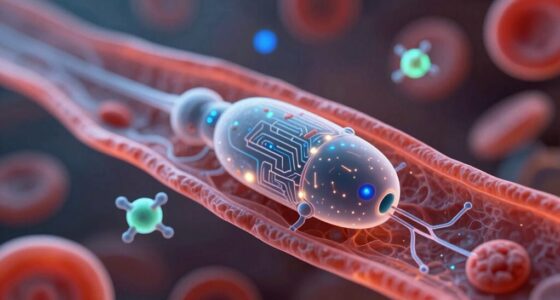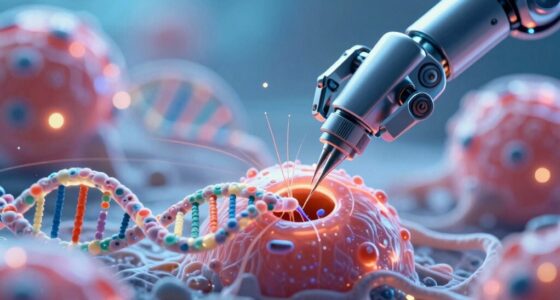

Nanotech offers exciting possibilities for fighting aging by enhancing skin delivery, targeting senescent cells, boosting mitochondrial health, and reprogramming genes. However, many innovations are still experimental, with safety and regulatory hurdles to overcome. While some breakthroughs show promise, others may be overhyped. Whether nanotech is a miracle or a mirage depends on future validations and rigorous testing. If you want to understand what’s real and what’s not, keep exploring.
Key Takeaways
- Nanotech enhances delivery and stability of anti-aging ingredients, improving skin absorption and cellular rejuvenation.
- Emerging nanomedicine strategies target cellular senescence and boost tissue repair, showing promising anti-aging potential.
- Safety, toxicity, and regulatory challenges currently limit widespread clinical adoption of nanotech anti-aging therapies.
- Scientific validation remains limited; many innovations lack long-term studies confirming efficacy and safety.
- Future advancements like quantum computing and personalized nanotherapies may revolutionize aging interventions.
nanocarrier skincare products
As an affiliate, we earn on qualifying purchases.
As an affiliate, we earn on qualifying purchases.
The Science Behind Nanocarriers in Skincare

Nanocarriers revolutionize skincare by enhancing the delivery and stability of active ingredients. When you use products with nanocarriers, you get better penetration of key compounds like vitamin C, vitamin E, and plant extracts. These tiny carriers, such as lipid nanoparticles, polymeric carriers, and nanoemulsions, protect active ingredients from degradation and improve their bioavailability. This means your skin absorbs more of the beneficial compounds, leading to more noticeable anti-aging effects. They also enable controlled release, ensuring ingredients work over time rather than all at once. As a result, antioxidants and rejuvenating extracts penetrate deeper, addressing signs of aging more effectively. Scientific studies back this up, confirming that nanocarrier-based formulations deliver superior results compared to traditional skincare options. Nanocarrier technology enhances the stability and targeted delivery of active ingredients, making skincare products more effective. Additionally, ongoing research continues to explore advanced nanotechnology to further optimize anti-aging benefits.

NAD+ Retinol Collagen Serum for Face: Anti-Aging Peptide Serum, Tightens Skin, Reduces Wrinkles & Fine Lines, Hydrating Serum for Radiant Glow 1.7 fl.oz
Firming, Hydrating & Visible Lift – This premium NAD+ face serum helps improve the look and feel of…
As an affiliate, we earn on qualifying purchases.
As an affiliate, we earn on qualifying purchases.
Breakthroughs in Mitochondrial Nanoflowers for Cell Rejuvenation

Recent advances in mitochondrial nanoflowers have opened new avenues for cell rejuvenation by directly enhancing mitochondrial function. These nanostructures, composed of molybdenum disulfide, increase the number of mitochondria in donor cells, restoring energy production in aging or damaged cells without genetic modification. They help rejuvenate cells, making them more resistant to stressors like chemotherapy, and improve robustness. This cutting-edge approach also boosts stem cell therapy potential, aiding tissue regeneration across different systems. Unlike traditional approaches, mitochondrial nanoflowers offer targeted, efficient support for cellular energy needs. Their ability to promote healthier, more resilient cells positions them as promising tools in reversing age-related decline, with potential applications ranging from skin health to organ function. Additionally, these breakthroughs are supported by European cloud innovation, ensuring secure and sustainable data management for clinical research and development. Moreover, ongoing research emphasizes the importance of cellular bioenergetics in understanding aging processes and developing effective therapies. These breakthroughs mark a significant step forward in mitochondrial medicine for aging, with innovative nanotechnology paving the way for future advancements.

Life Extension Mitochondrial Energy Optimizer with PQQ – Energy Supplement for Healthy Mitochondria – With Taurine, Vitamin B, Pyrroloquinoline Quinone – Gluten-Free, Non-GMO – 120 Vegetarian Capsules
Supercharge your cellular energy—Mitochondria are the power suppliers of every cell in your body! Encourage the healthy function…
As an affiliate, we earn on qualifying purchases.
As an affiliate, we earn on qualifying purchases.
Targeting Cellular Senescence: New Strategies and Therapies

As cellular senescence increasingly emerges as a key driver of aging and age-related diseases, scientists are developing innovative strategies to target and eliminate these dysfunctional cells. One promising approach involves gamma delta T cells, which can recognize and destroy senescent cells, improving outcomes in models of pulmonary fibrosis. Senolytic drugs specifically target pathways that keep senescent cells alive, clearing them to reduce inflammation and tissue damage. Researchers are also exploring biochemical pathways in skin cells that lead to senescence, aiming to develop targeted therapies. Hyperbaric therapy is another strategy that suppresses senescence signals, boosting collagen and aiding recovery. Additionally, activating lysosomes helps remove progerin, a protein linked to premature aging. These strategies aim to reduce the harmful effects of senescent cells and restore tissue health. Incorporating cellular pathways into research can help identify new targets for intervention and enhance the effectiveness of anti-aging therapies.

Healing with Red Light Therapy: How Red and Near-Infrared Light Can Manage Pain, Combat Aging, and Transform Your Health
As an affiliate, we earn on qualifying purchases.
As an affiliate, we earn on qualifying purchases.
Epigenetic Reprogramming: Reversing the Aging Clock
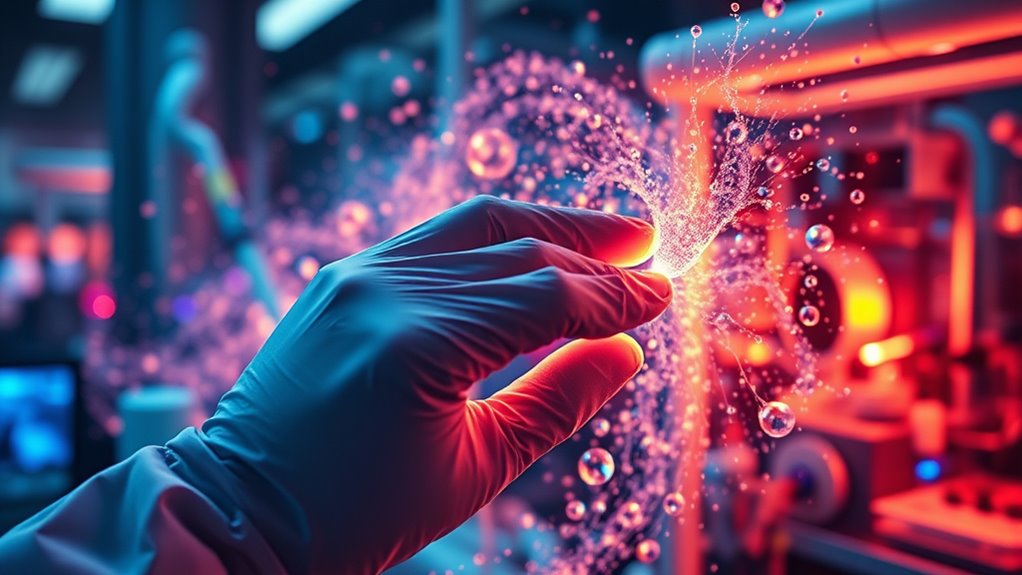
Epigenetic reprogramming offers a promising approach to reversing the biological signs of aging by directly modifying gene expression patterns. By resetting the epigenetic markers, you can potentially restore youthful cell functions and improve tissue health. This process involves techniques like CRISPR-based editing, single-cell genomics, and machine learning to identify and target key aging genes. You might see:
- Reversal of age-related gene expression changes in cells and tissues
- Activation of regenerative pathways to enhance tissue repair
- Potential to treat age-associated diseases like neurodegeneration
These advances suggest a future where aging might be slowed or even reversed at the molecular level, offering hope for healthier, longer lives. As research progresses, epigenetic reprogramming could become a cornerstone of anti-aging therapies.
Navigating Safety and Regulatory Hurdles in Nanotechnology

Nanotechnology holds great promise for advancing anti-aging treatments, but maneuvering safety and regulatory hurdles remains a significant challenge. You need to guarantee nanomaterials are thoroughly tested for toxicity, as their small size can cause unexpected biological effects. Regulatory frameworks lag behind technological advancements, making approval processes complex and uncertain. You must also address concerns about long-term safety and environmental impact, which require extensive research and standardized testing protocols. Clear guidelines for manufacturing, labeling, and dosages are essential to protect consumers and build trust. Collaborating with regulators early on can streamline approval and mitigate setbacks. Additionally, understanding the principles of South – These Fifty States can help in designing safer nanomaterials. Ultimately, balancing innovation with safety will determine whether nanotech’s potential in anti-aging becomes a reliable, widely accepted reality, or remains a distant mirage.
The Role of Lysosomes in Combating Premature Aging

Lysosomes are vital for maintaining cellular health by breaking down damaged proteins and organelles. Enhancing their function can help clear aging-related proteins that contribute to cellular decline. Targeting lysosomes with nanotechnology offers a promising way to combat premature aging at the molecular level. Supporting cellular health through innovative nanotech approaches may revolutionize age management strategies. Additionally, research into lysosomal autophagy mechanisms is shedding light on how to optimize their activity for better health outcomes. The development of targeted nanomaterials can further improve the delivery and efficacy of treatments aimed at boosting lysosomal functionality, ultimately supporting cellular cleanup processes essential for healthy aging.
Lysosomal Function Enhancement
Enhancing lysosomal function plays a crucial role in fighting premature aging by improving the cell’s ability to recycle and clear damaged proteins and organelles. When lysosomes work efficiently, your cells maintain healthier, more youthful functions. Nanotechnology offers promising strategies to boost this process, such as delivering targeted compounds directly to lysosomes. Incorporating targeted delivery systems can further optimize the effectiveness of these interventions. You can look forward to advancements like: – Nanocarriers that improve delivery of activating agents to lysosomes – Nanomaterials that increase lysosomal stability and efficiency – Controlled release systems for enzymes that break down cellular waste. Additionally, Vetted wave and wind technologies can be utilized to enhance the stability and control of nanocarrier systems in biological environments. These innovations aim to restore lysosomal health, reduce cellular debris, and slow aging signs. Strengthening lysosomal function via nanotech could be a game-changer in extending cellular vitality and combating age-related decline.
Clearing Aging Proteins
Building on the idea that boosting lysosomal function helps maintain youthful cells, focusing on clearing aging proteins offers a targeted approach to combat premature aging. Nanotechnology enhances lysosomes’ ability to identify and break down harmful proteins like progerin, which accumulate in aging cells. Nanocarriers can deliver enzymes directly to lysosomes, increasing their efficiency in removing damaged proteins. This process helps restore cellular health, reduces inflammation, and prevents the cellular dysfunction linked to aging. By improving lysosomal clearance, you can slow down the buildup of toxic proteins that drive premature aging signs. Additionally, optimizing watering tips for indoor plants can improve overall cellular health by maintaining an environment that supports regenerative processes. Such strategies may also protect tissues from degeneration, supporting overall well-being. Furthermore, advances in nanotech delivery systems are making targeted therapies more feasible and effective. As research advances, nanotech-driven clearance of aging proteins could become a cornerstone in anti-aging therapies, offering a promising avenue for extending healthspan. Efficient cellular cleanup is essential for maintaining tissue function and preventing age-related decline, highlighting the importance of ongoing research in nanomedicine. Incorporating targeted nanocarriers can further enhance the precision of these interventions, leading to better outcomes.
Emerging Nanomedicine Techniques for Tissue Regeneration
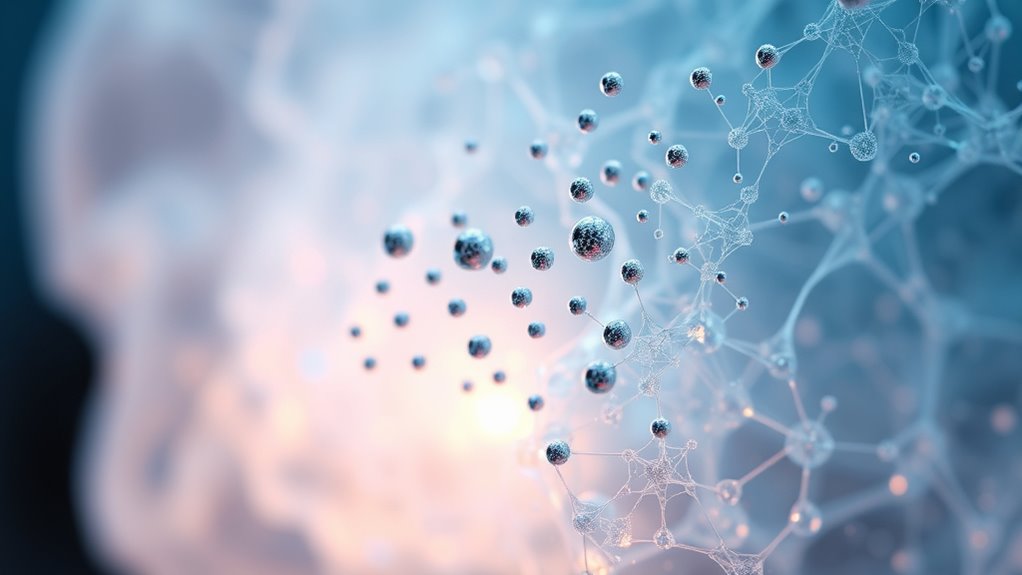
Emerging nanomedicine techniques are revolutionizing tissue regeneration by enabling precise delivery of therapeutic agents and fostering cellular repair. You can now target damaged tissues with nanocarriers that improve bioavailability and control release, enhancing healing efficiency. These advancements include:
- Nanocarriers like lipid nanoparticles, dendrimers, and nanoemulsions that penetrate deep into tissues.
- Mitochondrial nanoflowers boosting energy production and rejuvenating aging cells without genetic modification.
- Cell-targeting strategies, such as senolytic nanoparticles and immune cells, to eliminate dysfunctional cells and promote regeneration.
These techniques allow you to address tissue damage more effectively, accelerating recovery and restoring function. By focusing on targeted delivery and cellular support, nanomedicine holds the potential to transform regenerative therapies, making tissue repair more precise and less invasive. safe installation practices New developments in targeted delivery are continually improving the efficiency and safety of these innovative treatments. Advances in nanocarrier design are also enhancing the specificity and effectiveness of these therapeutic approaches. Additionally, ongoing research into biocompatibility ensures these nanotechnologies can be safely integrated into clinical practice.
Future Directions: Quantum Computing and Machine Learning in Aging Research

Quantum computing and machine learning are transforming aging research by speeding up drug discovery and improving data analysis. You can leverage these technologies to identify new anti-aging compounds and understand complex biological patterns more accurately. Embracing these advances will help you predict aging processes and develop targeted interventions more effectively.
Accelerating Drug Discovery
How might quantum computing and machine learning transform aging research? They speed up drug discovery by analyzing complex biological data faster and more accurately. These technologies help identify promising compounds, predict their effects, and optimize formulations quickly. You can leverage machine learning algorithms to screen vast chemical libraries, narrowing down candidates with potential anti-aging properties. Quantum computing allows for simulating molecular interactions at an unprecedented scale, revealing insights impossible with traditional methods. This accelerates the development of targeted therapies.
- Rapid identification of rejuvenation compounds through AI-driven screening
- Precise modeling of drug-target interactions with quantum simulations
- Optimization of delivery systems for enhanced bioavailability and efficacy
Enhancing Data Analysis
Advancements in quantum computing and machine learning are revolutionizing data analysis in aging research by enabling you to process and interpret complex biological datasets more efficiently. Quantum algorithms can handle vast, multidimensional data, revealing subtle patterns that traditional methods might miss. Machine learning models, especially deep learning, automate feature extraction and predictive modeling, accelerating discoveries. These technologies allow you to analyze genomics, proteomics, and epigenetic data with unprecedented accuracy. As a result, you can identify aging biomarkers, understand molecular pathways, and predict individual aging trajectories more precisely. Enhanced data analysis also supports personalized interventions, guiding targeted therapies. Incorporating advanced computational techniques allows for even more detailed and scalable analysis of aging data. Overall, integrating quantum computing and machine learning transforms how you approach aging research, making it faster, more extensive, and more capable of deciphering the secrets behind aging processes.
Predicting Aging Patterns
The integration of machine learning and quantum computing is transforming your ability to predict aging patterns with greater accuracy. These technologies analyze vast datasets, revealing hidden biomarkers and aging trajectories. This allows for early intervention and personalized treatments. With quantum algorithms, you can process complex biological interactions faster than ever before. This synergy accelerates understanding of how genetics, environment, and lifestyle influence aging.
- Identifying novel aging biomarkers with higher precision
- Developing predictive models for individual health trajectories
- Accelerating discovery of targeted anti-aging therapies
Promising Nanotech Solutions for Age-Related Diseases

Could nanotechnology also enable the development of quantum dots for more precise imaging and targeted therapy in aging tissues? It’s already showing promise through innovative approaches like nanocarrier delivery systems. These carriers enhance the stability and bioavailability of antioxidants such as coenzyme Q10, turmeric, and resveratrol, improving skin and tissue health. Mitochondrial nanoflowers boost cell energy by increasing mitochondria, helping damaged cells recover without genetic modification. Additionally, targeting cellular senescence with nanotech—using senolytic drugs, gamma delta T cells, or lysosome activation—can clear harmful cell buildup that accelerates aging. These advances aim to restore cellular function and reduce inflammation. While still in development, these nanotech solutions offer hope for more effective, targeted therapies against age-related conditions, potentially transforming how we approach aging and its diseases.
Assessing the Reality: Are These Technologies Miracles or Mirage?

You need to consider whether the current nanotech solutions for aging are backed by solid scientific evidence or just promising theories. Safety and regulatory issues raise questions about their readiness for widespread use. As you evaluate these innovations, it’s vital to recognize the gaps that still exist before they become reliable, proven therapies.
Scientific Validation Gaps
Although nanotechnology offers promising breakthroughs in anti-aging treatments, many of these innovations still lack exhaustive scientific validation. You need robust, peer-reviewed studies to confirm their effectiveness and safety before widespread use. Without this, claims remain speculative, and risks are uncertain. You should watch for the following validation gaps:
- Limited long-term clinical trials verifying safety and efficacy.
- Inconsistent results across different studies and populations.
- Insufficient understanding of how nanomaterials behave inside the body over time.
These gaps make it difficult to determine whether nanotech solutions are genuine breakthroughs or just unproven hype. Until comprehensive research is available, caution remains essential when considering such treatments. Rushing ahead without solid evidence risks unintended health consequences.
Safety and Regulation Concerns
While nanotechnology in anti-aging offers exciting possibilities, safety and regulatory concerns cast doubt on its immediate viability. You must consider potential toxicity, long-term effects, and the lack of exhaustive standards. Without proper regulation, risks include unintended side effects and environmental impact. This uncertainty fuels public apprehension and delays clinical approval. The table below highlights key safety issues:
| Concern | Impact | Action Needed |
|---|---|---|
| Toxicity of nanomaterials | Potential health risks | Rigorous testing and standards |
| Long-term effects | Unknown in chronic use | Extensive clinical trials |
| Regulatory gaps | Delays in approval | Clear guidelines and oversight |
| Environmental safety | Pollution and bioaccumulation | Eco-friendly development protocols |
| Standardization | Inconsistent quality | Industry-wide manufacturing norms |
Addressing these concerns is essential to transform promising science into safe and effective anti-aging solutions.
Frequently Asked Questions
Are Nanocarriers Safe for Long-Term Human Use?
Nanocarriers’ long-term safety remains uncertain because extensive studies are still underway. You should stay cautious, as regulatory approval and standardized testing are essential before widespread use. While they improve delivery and stability of bioactive compounds, potential toxicity, immune reactions, and environmental impacts need thorough investigation. It’s wise to follow ongoing research and wait for conclusive safety data, especially for prolonged use, to ensure these nanocarriers won’t pose future health risks.
Can Mitochondrial Nanoflowers Fully Reverse Aging in Humans?
Mitochondrial nanoflowers show promise, but they can’t fully reverse aging yet. Imagine a patient with damaged cells receiving nanoflowers that boost mitochondria, restoring energy. While initial studies, like in lab settings, indicate improved cell function, complete reversal remains a future goal. You should see these as a step forward, but more research is needed before they can truly reverse aging in humans.
How Effective Are Senolytic Drugs in Age-Related Disease Treatment?
Senolytic drugs are showing promising results in treating age-related diseases by targeting and eliminating senescent cells that contribute to inflammation and tissue dysfunction. You might notice improvements in conditions like pulmonary fibrosis or skin aging, as these drugs help restore cellular health. While they’re not a cure-all yet, ongoing research indicates they could become key tools in extending healthspan and reducing age-related decline.
What Are the Regulatory Challenges for Nanomedicine Approval?
You face regulatory challenges for nanomedicine approval, including proving long-term safety and efficacy due to limited data. You must navigate complex standards for toxicity, biocompatibility, and manufacturing consistency. Regulatory bodies require extensive testing and standardization to guarantee consumer safety. Keeping up with evolving guidelines and demonstrating clear benefits over existing therapies can be demanding, but addressing these hurdles is essential for bringing innovative nanomedicine solutions to market successfully.
Will Quantum Computing Accelerate Aging Therapy Development?
Quantum computing could accelerate aging therapy development by unleashing complex biological mysteries, much like revealing hidden pathways in a tangled maze. With its immense processing power, you can simulate molecular interactions and genetic modifications faster than ever before. This rapid insight allows you to design targeted treatments, optimize nanocarrier delivery, and refine therapies in record time, turning scientific dreams into tangible solutions that could slow or reverse aging processes more effectively.
Conclusion
As you explore the world of nanotech and aging, remember that while these innovations promise to revolutionize your future, they’re not magic spells. Think of nanotechnology as a tiny army capable of rewriting the aging story—yet, it’s still in its infancy, facing hurdles and uncertainties. Stay hopeful, but keep your eyes open—what seems like a miracle today might just be the dawn of a new era in fighting time itself.