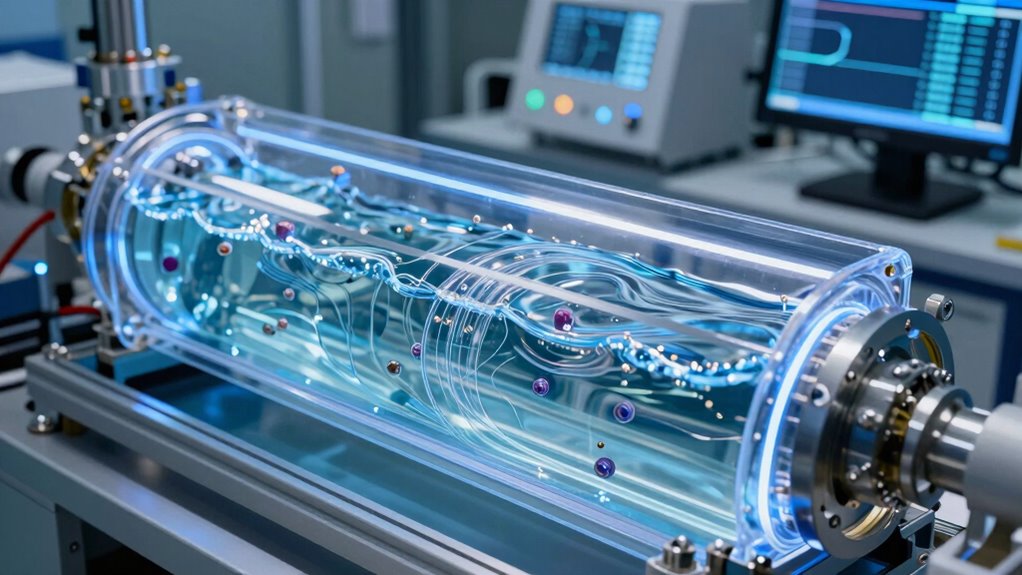

The big opportunity in nano-enabled water desalination lies in creating highly efficient membranes that increase water flow while blocking salts and contaminants. These advanced membranes reduce energy use, cut costs, and can operate at lower pressures, making large-scale and decentralized solutions feasible. They also extend membrane lifespan and lower environmental impacts. If you want to explore how these innovations can transform global water access and sustainability, there’s much more to discover ahead.
Key Takeaways
- Nano-engineered membranes significantly improve filtration efficiency and selectivity, enabling more effective desalination processes.
- Enhanced energy efficiency reduces operational costs and environmental impact, making large-scale desalination more sustainable.
- Compact, decentralized systems facilitated by nanomaterials expand access to clean water in remote or underserved areas.
- Longer-lasting membranes lower maintenance costs and waste, promoting environmentally friendly water treatment solutions.
- Ongoing research and innovation unlock new potentials for addressing global water scarcity challenges efficiently.
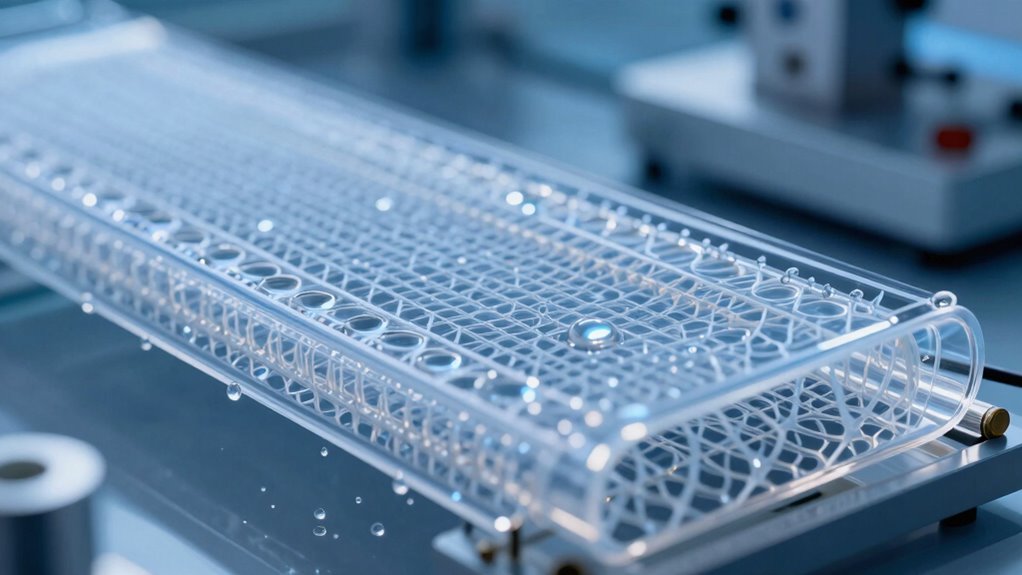
Have you ever wondered how nanotechnology is revolutionizing water purification? It’s transforming the way we approach desalination, making the process faster, cleaner, and more sustainable. One of the key advancements lies in the development of nano-engineered membranes. These membranes considerably boost membrane efficiency by allowing water molecules to pass through more quickly while blocking salts and contaminants more effectively. Unlike traditional membranes, which often struggle with clogging and slow filtration rates, nanomaterials create a more selective barrier that maintains high throughput. This means you can produce more clean water with less energy, which directly impacts energy consumption. Reduced energy requirements are crucial because desalination is typically energy-intensive, often relying on fossil fuels that contribute to greenhouse gases. With nano-enabled membranes, energy consumption drops because the process becomes more efficient, requiring less pressure and power to push water through the membrane. This not only cuts operational costs but also makes desalination more accessible and environmentally friendly.
In practical terms, these nano-enhanced membranes can operate at lower pressures without sacrificing filtration quality, which is a game-changer. You’ll notice a decrease in the overall energy needed, making large-scale desalination plants more feasible in regions where energy resources are limited or costly. Additionally, advancements in nanomaterials contribute to improved membrane durability and performance. This efficiency also means smaller, more compact systems, allowing for decentralized water treatment solutions. As a result, communities can access clean water with fewer infrastructure investments, boosting water security in arid and developing areas. Moreover, the durability of nano-engineered membranes extends their lifespan, reducing maintenance needs and waste. This longevity not only cuts costs but also lessens the environmental footprint of membrane disposal and replacement. Additionally, the integration of nanomaterials enhances membrane selectivity and permeability, further optimizing filtration performance.
Furthermore, ongoing research into nanostructured materials is expected to unlock even more innovative membrane designs in the future.
The integration of nanomaterials into water purification systems also opens doors for innovative designs that optimize membrane performance. You benefit from faster filtration rates, lower energy bills, and more sustainable operations. As research continues, we’re likely to see even more sophisticated nano-enabled membranes that further improve membrane efficiency and decrease energy consumption. Overall, this technological leap offers a compelling opportunity to address global water scarcity challenges more effectively. It’s a future where clean, affordable water is within reach for more people, driven by the power of nanotechnology to make desalination smarter, greener, and more efficient.
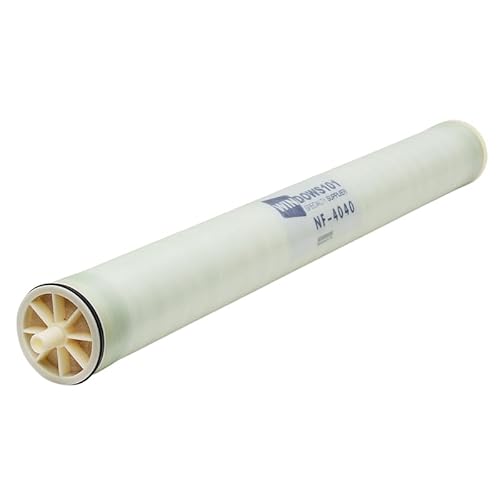
RO Nano Membrane – 40in
- Optimized for Low Pressure: Ideal for low-pressure water applications
- Universal Compatibility: Fits most 40-inch RO filter housings
- Versatile Performance: Handles challenging feed water efficiently
As an affiliate, we earn on qualifying purchases.
As an affiliate, we earn on qualifying purchases.
Frequently Asked Questions
What Are the Environmental Impacts of Nano-Enabled Desalination?
You should consider that nano-enabled desalination can reduce environmental footprint by conserving energy, but it also poses risks to ecosystems. Nanomaterials might leach into water sources, potentially harming aquatic life and disrupting ecosystem effects. While these technologies aim to improve water quality, you need to evaluate their environmental impacts carefully, ensuring proper management of nanomaterials to minimize negative consequences on the environment and maintain ecological balance.
How Does Nano Technology Compare Cost-Wise to Traditional Methods?
You might think nano technology costs a fortune, but surprisingly, it often offers better cost efficiency than traditional methods, thanks to recent technological advancements. While initial investments can be higher, the long-term savings from reduced energy consumption and increased efficiency make it a smart choice. So, if you’re looking to save money while quenching the world’s thirst, nano-enabled desalination might just be the budget-friendly miracle you need.
Are Nano Materials Safe for Long-Term Water Use?
Nano materials can be safe for long-term water use if their nano toxicity is carefully assessed and managed. Material durability plays a key role, ensuring the nanoscale components withstand water conditions without degrading or releasing harmful particles. You should prioritize research on nano toxicity to prevent potential health risks, and choose durable nanomaterials that maintain their integrity over time, making them safer and more effective for sustained water filtration applications.
What Are the Scalability Challenges for Nano-Enabled Desalination?
Coincidentally, scaling nano-enabled desalination faces hurdles like membrane fouling and maintaining energy efficiency at larger sizes. You’ll find that preventing fouling requires advanced materials and cleaning protocols, which complicate manufacturing. Additionally, ensuring energy efficiency becomes more challenging as systems grow, demanding innovations in membrane design and energy recovery. Overcoming these issues is essential for commercial viability, but it’s a complex journey that needs smart engineering and sustained investment.
How Soon Can These Technologies Be Commercially Available?
You can expect nano-enabled desalination technologies to become commercially available within the next 5 to 10 years. However, regulatory hurdles and market adoption will influence their speed to market. As governments develop standards and industry stakeholders recognize their benefits, adoption will accelerate. Staying informed about technological advancements and policy changes is essential, so you can anticipate when these innovative solutions will be accessible and impactful in addressing water scarcity.

BW-4040, 4" x 40" RO Membrane for Desalination of Brackish Water, 99.5% Desalination Rate, 2400 GPD, 2000-5000PPM, BW-4040 Reverse Osmosis Membrane for Groundwater, Municipal, NSF Certified
- High Water Yield: 2400 GPD with 99.5% desalination rate
- Optimal Operating Pressure: 225 psi (150-400 psi)
- Effective Impurity Removal: Removes rust, particles, chlorine, organics
As an affiliate, we earn on qualifying purchases.
As an affiliate, we earn on qualifying purchases.
Conclusion
So, now you see that nano-enabled desalination isn’t just a fancy term for cutting-edge tech; it’s your ticket to turning salty water into drinkable bliss. Who needs natural resources when tiny particles can do all the heavy lifting? Before you get too excited, just remember: with great nano-power comes great responsibility—and perhaps a pinch of irony about how tiny solutions might just solve our ocean of problems, one nanometer at a time.

INTELLIGENT WATER DESALINATION SYSTEMS: membrane optimization and energy efficient purification
As an affiliate, we earn on qualifying purchases.
As an affiliate, we earn on qualifying purchases.

Point-of-Use/Point-of-Entry for Drinking Water Treatment
As an affiliate, we earn on qualifying purchases.
As an affiliate, we earn on qualifying purchases.