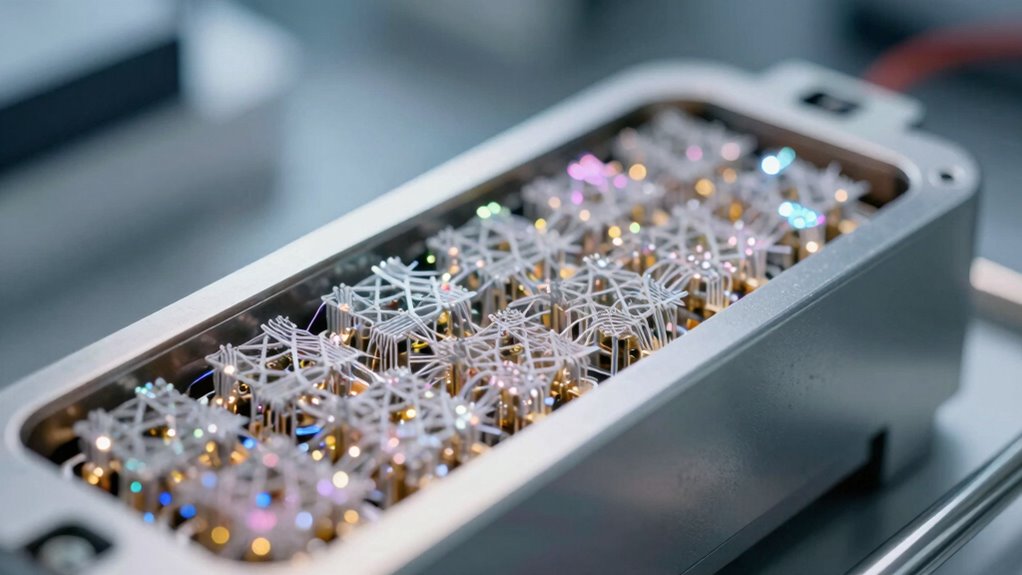
Nanomaterials like quantum dots and graphene are rapidly advancing energy storage systems by offering higher surface areas, faster electron transfer, and improved stability. You’ll see them used to boost battery capacity, speed up charging, and enhance device longevity in applications like electric vehicles and solar energy. These innovations are revealing new performance levels and efficiency. Keep exploring to discover how these cutting-edge materials are shaping the future of energy storage technologies.
Key Takeaways
- Nanomaterials like quantum dots and graphene enhance energy storage by increasing surface area and facilitating faster electron transfer.
- Integration of nanomaterials improves battery charge capacity, speed, stability, and lifespan under extreme conditions.
- They enable more efficient photovoltaic cells, supercapacitors, and advanced energy conversion devices.
- Ongoing innovations tailor nanomaterials for specific applications, expanding their role in commercial energy storage systems.
- Sustainable development practices focus on reducing environmental impacts while deploying nanomaterials in energy technologies.
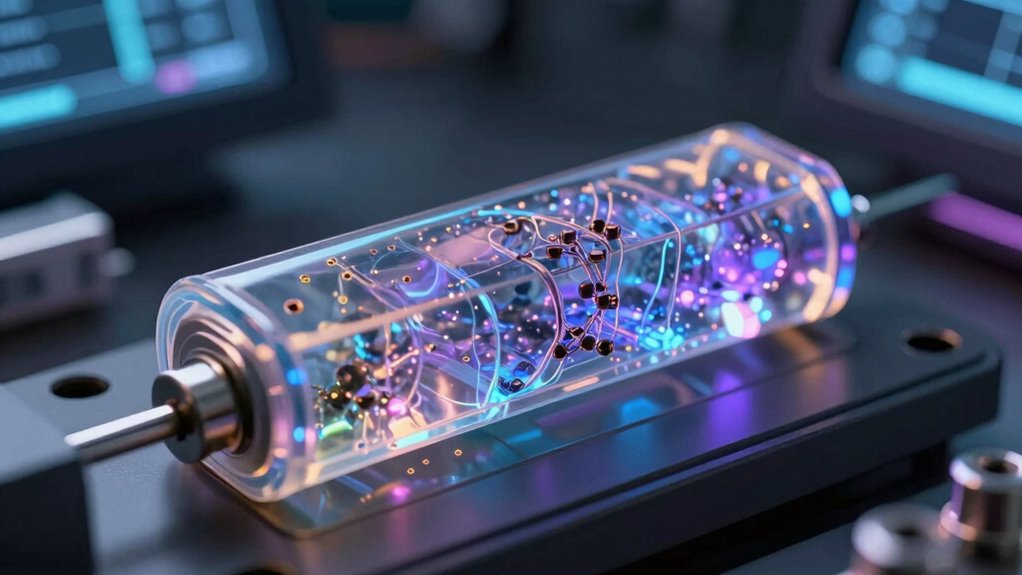
Have you ever wondered how advancements in nanomaterials are transforming energy storage technologies? The answer lies in the incredible properties of materials like quantum dots and graphene composites. These tiny structures are revolutionizing how we store and manage energy, making devices more efficient, durable, and versatile. Quantum dots, which are semiconductor nanoparticles, possess unique optical and electronic properties because of their quantum confinement effects. When integrated into energy storage systems, they can markedly enhance charge capacity and improve the speed at which batteries charge and discharge. Their small size allows for a larger surface area, which facilitates faster electron transfer, leading to higher energy densities. This means you can expect batteries that last longer and recharge quicker, all thanks to quantum dots’ ability to optimize energy flow within the system.
Meanwhile, graphene composites have emerged as a game-changer in the field of energy storage. Graphene, a single layer of carbon atoms arranged in a hexagonal lattice, is renowned for its exceptional electrical conductivity, mechanical strength, and flexibility. When combined with other materials to form graphene composites, it creates a highly conductive network that dramatically boosts the performance of storage devices. For instance, in supercapacitors and lithium-ion batteries, graphene composites provide a pathway for rapid electron transport, which considerably increases charging rates and overall capacity. Their lightweight nature also helps reduce the weight of energy storage systems, making them ideal for portable electronics, electric vehicles, and large-scale renewable energy projects. These nanomaterials also contribute to material stability and can reduce the degradation of storage components over time. Additionally, ongoing research into nanomaterial integration continues to unlock new possibilities for improving energy storage solutions. Furthermore, the environmental impact of nanomaterials is an important consideration as their use becomes more widespread, emphasizing the need for sustainable development in this field.
You’ll find that these nanomaterials aren’t just improving existing technologies—they’re opening new avenues for innovation. Quantum dots can be tailored to absorb specific wavelengths of light, enabling solar energy conversion and storage within photovoltaic cells that are more efficient than ever before. Similarly, graphene composites can be engineered to enhance the stability and lifespan of batteries, even under extreme conditions. The integration of these nanomaterials into commercial systems is accelerating, driven by their ability to address key limitations like slow charging, low energy density, and material degradation.

EXPLORING QUANTUM BATTERIES: UNLEASHING THE POWER OF QUANTUM MECHANICS IN ENERGY STORAGE
As an affiliate, we earn on qualifying purchases.
As an affiliate, we earn on qualifying purchases.
Frequently Asked Questions
How Do Nanomaterials Improve Battery Lifespan?
Nanomaterials improve battery lifespan by enhancing electrode stability and enabling electrode enhancement. Their tiny size allows for better accommodation of charge and discharge cycles, reducing material degradation. This prevents capacity loss over time and increases durability. You benefit from longer-lasting batteries that maintain high performance longer, thanks to nanomaterials’ ability to strengthen electrodes and improve overall stability, making your energy storage systems more reliable and efficient.
Are Nanomaterials Safe for Large-Scale Energy Storage?
Nanomaterials can be safe for large-scale energy storage if properly managed, despite concerns about environmental impact and regulatory challenges. You might worry about toxicity, but ongoing research guarantees safer designs and disposal methods. Regulations are evolving to address potential risks. With proper oversight and advances in eco-friendly nanomaterials, large-scale storage can be both effective and safe, helping you trust their role in sustainable energy solutions.
What Are the Cost Implications of Using Nanomaterials?
Using nanomaterials can initially be costly due to complex manufacturing and supply chain challenges. However, their ability to improve energy storage efficiency leads to cost reduction over time, as longer-lasting and more efficient batteries decrease replacement and maintenance expenses. As production scales up and supply chains optimize, costs are likely to decrease further, making nanomaterials more economically viable for large-scale energy storage systems, ultimately benefiting both consumers and manufacturers.
How Scalable Is Nanomaterial Production for Commercial Use?
You might worry about the scalability of nanomaterial production, but it’s progressing steadily. Manufacturing challenges, like ensuring uniformity and cost-effectiveness, are being addressed through advanced techniques. However, regulatory hurdles remain, as authorities need to evaluate safety and environmental impact. While large-scale production is feasible, ongoing research and strict regulations could influence how quickly nanomaterials become commercially widespread in energy storage systems.
Can Nanomaterials Be Recycled or Reused Effectively?
Yes, nanomaterials can be recycled and reused effectively, but it depends on the recycling techniques used. You should consider their environmental impact, as some methods may generate waste or release harmful substances. Advanced recycling techniques, like chemical or thermal processes, help recover nanomaterials efficiently, reducing environmental harm. With ongoing research, you’ll find that improving these techniques can make nanomaterial recycling more sustainable and practical for energy storage applications.

Graphene Oxide in Enhancing Energy Storage Devices
As an affiliate, we earn on qualifying purchases.
As an affiliate, we earn on qualifying purchases.
Conclusion
As nanomaterials weave into energy storage, they’re like tiny architects building a brighter future. Imagine your devices fueled by a swarm of microscopic pioneers, tirelessly working to store and deliver power with unprecedented efficiency. With each atom working in harmony, this revolution paints a vibrant picture of innovation and sustainability. Embrace this nanoscopic dance—where the smallest changes spark the biggest leaps toward a cleaner, more energized world.

Cat® 18V 1 FOR ALL 5Ah Graphene Battery – GXB5
[LET’S DO THE WORK] 18V CAT Cordless Power Tools utilize innovative battery technology to maximize performance and power,…
As an affiliate, we earn on qualifying purchases.
As an affiliate, we earn on qualifying purchases.

Samsung 65-Inch Class QLED Q8F 4K UHD Smart TV (2025 Model) Q4 AI Processor, 100% Color Volume with Quantum Dot, AirSlim Design + Samsung B-Series Soundbar HW-B750F 5.1 ch Subwoofer (2025 Model)
POWERS DRAMATICALLY CLEAR COLOR AND SOUND: Enjoy your movies and shows in stunning 4K, regardless of the source…
As an affiliate, we earn on qualifying purchases.
As an affiliate, we earn on qualifying purchases.