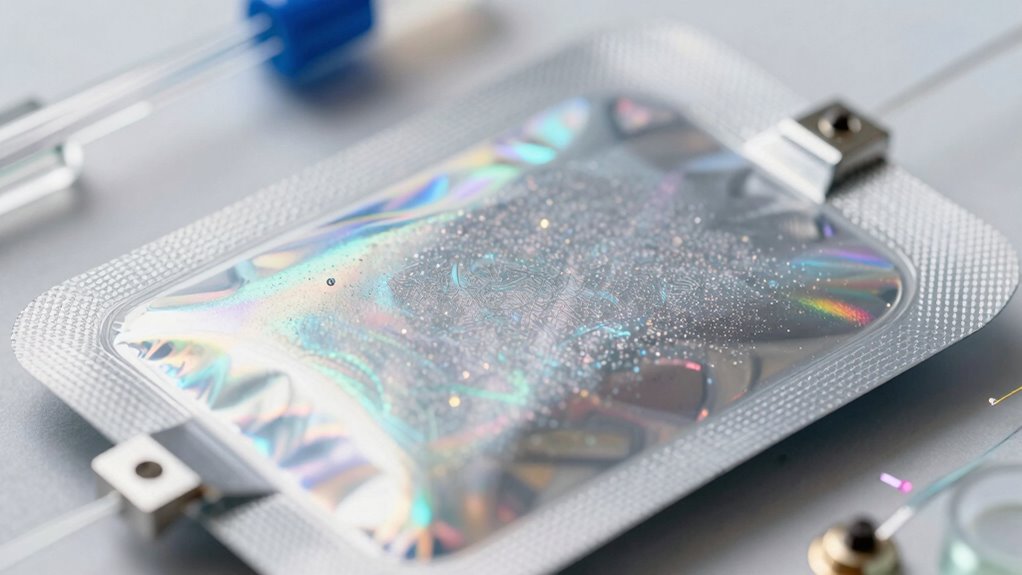

Nanomaterials are revolutionizing smart packaging by making it stronger, more durable, and resistant to damage during transit. They enable the creation of sensors that detect spoilage, temperature changes, or contamination, giving you real-time info about product safety. Additionally, nanomaterials enhance barriers against oxygen, moisture, and light, helping preserve products without extra preservatives. They also add antimicrobial features to inhibit bacteria growth. If you keep exploring, you’ll discover how these tiny innovations drive a safer, smarter packaging future.
Key Takeaways
- Nanomaterials enable sensors that detect spoilage, temperature changes, and contamination in real-time.
- They facilitate antimicrobial packaging, actively inhibiting bacterial growth to extend shelf life.
- Nanomaterials improve barrier properties against oxygen, moisture, and light, preserving product freshness.
- Researchers develop biodegradable nanomaterials that combine safety, durability, and environmental sustainability.
- Integration of nanomaterials allows packaging to communicate product information and enhance user interaction.
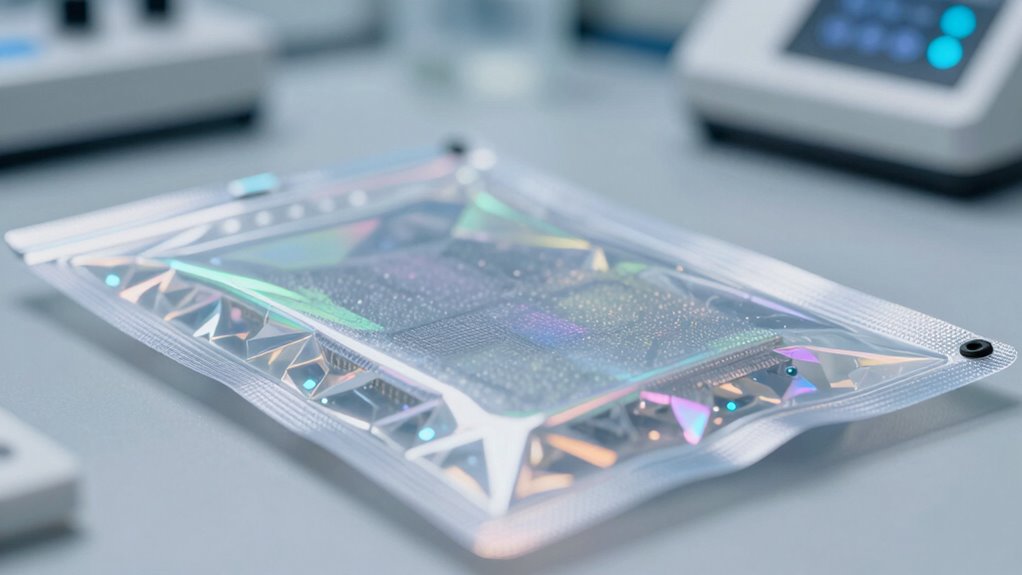
Have you ever wondered how packaging can do more than just hold your products? With advancements in nanotechnology, nanomaterials are transforming packaging into a smart, multifunctional tool. These tiny materials, often just a few nanometers in size, can enhance the durability of packaging while maintaining safety standards. When incorporated into packaging materials, nanomaterials considerably improve their strength, flexibility, and resistance to wear and tear. This increased durability means your products are better protected during transit and storage, reducing waste and damage. Nanomaterials can reinforce packaging films, making them less prone to punctures or tears, which is especially useful for fragile or sensitive items. At the same time, the safety of nanomaterials is a key concern in their application. Researchers focus on guaranteeing these tiny particles don’t pose health risks to consumers or the environment. Extensive testing and regulation help certify that nanomaterials used in packaging are safe, non-toxic, and environmentally friendly. This safety aspect is critical because nanomaterials can sometimes behave differently from their larger counterparts, with potential implications for human exposure or ecological impact.
Nanomaterials boost packaging strength and safety, ensuring better product protection while minimizing health and environmental risks.
In addition to durability and safety, nanomaterials enable packaging to have intelligent features. For example, incorporating nanomaterials into packaging layers can create sensors that detect spoilage, temperature fluctuations, or contamination. These sensors provide real-time information, helping consumers and retailers ensure product freshness and safety. The integration of nanomaterials also allows for active packaging solutions, such as antimicrobial properties that inhibit bacterial growth, extending shelf life without relying on chemical preservatives. This combination of durability, safety, and intelligent functionality makes nanomaterials a cornerstone of innovation in smart packaging. Moreover, the unique properties of nanomaterials can be tailored to meet specific packaging needs, which is why ongoing research is exploring advanced nanotech solutions.
Furthermore, nanomaterials can improve the barrier properties of packaging, preventing oxygen, moisture, or light from reaching the product. This enhances preservation and reduces the need for additional preservatives or packaging layers, leading to more sustainable solutions. The development of environmentally friendly nanomaterials is advancing rapidly, with scientists exploring biodegradable options that don’t compromise durability or safety. These eco-friendly options are increasingly being designed to ensure that nanomaterials are both effective and eco-conscious, reducing potential environmental impacts. Additionally, research into regulatory frameworks is essential to ensure safe deployment and public acceptance of nanomaterials in packaging. As research advances, scientists are exploring eco-friendly nanomaterials that combine high performance with minimal environmental impact. They are developing biodegradable options that don’t compromise durability or safety, aligning with global efforts to reduce plastic waste. Incorporating sustainable nanomaterials is crucial for reducing the environmental footprint of packaging and supporting environmentally friendly practices.
Ultimately, nanomaterials in smart packaging are shaping a future where your products are safer, longer-lasting, and more connected. You benefit from packaging that not only protects but also communicates crucial information, all thanks to the tiny yet powerful innovations at the nanoscale.
smart packaging sensors for spoilage detection
As an affiliate, we earn on qualifying purchases.
As an affiliate, we earn on qualifying purchases.
Frequently Asked Questions
Are Nanomaterials Eco-Friendly in Packaging Applications?
Nanomaterials in packaging aren’t always eco-friendly, as biodegradability concerns and environmental impact vary. You should consider that some nanomaterials may persist in the environment, potentially harming ecosystems. While they offer benefits like improved barrier properties, their long-term effects aren’t fully understood. It’s essential to weigh these factors carefully and prioritize sustainable, biodegradable options when developing eco-conscious packaging solutions with nanomaterials.
How Cost-Effective Are Nanomaterials for Large-Scale Packaging?
Think of nanomaterials as a double-edged sword for large-scale packaging—initial costs may seem steep, but they cut long-term expenses like a sharp blade. Your cost analysis reveals they can be cost-effective, especially as production scales up. Yet, scalability challenges loom, making widespread adoption tricky. Still, with innovation, these tiny materials could revolutionize packaging, turning small investments into big, sustainable returns.
What Are the Safety Regulations for Nanomaterials in Packaging?
You need to follow strict safety regulations for nanomaterials in packaging, focusing on regulatory compliance and risk assessment. Authorities like the FDA and EPA require thorough evaluations of nanomaterials’ potential health and environmental impacts before approval. You must conduct detailed risk assessments, ensuring that nanomaterials are safe for consumers and the environment. Staying updated on evolving regulations helps you maintain compliance and avoid legal or safety issues in your smart packaging products.
Can Nanomaterials Be Recycled or Reused in Packaging?
You can recycle or reuse nanomaterials in packaging, but it depends on their durability and biodegradability. If nanomaterials are highly durable, they might resist degradation, making recycling feasible, though it can be challenging. Conversely, nanomaterials with good biodegradability break down more easily, enabling safer reuse or recycling processes. However, specific methods are still under development, and safety regulations must be followed to prevent environmental or health risks.
How Do Nanomaterials Impact Product Shelf Life?
Like a modern-day Icarus, nanomaterials soar in impact, notably extending product shelf life. Their durability ensures packaging withstands environmental stresses, while their transparency allows consumers to see the product clearly. By preventing spoilage and contamination, nanomaterials enhance freshness and safety. Your products stay fresher longer, thanks to these innovative materials that combine strength and clarity, ultimately reducing waste and increasing consumer satisfaction.
antimicrobial nanomaterial packaging films
As an affiliate, we earn on qualifying purchases.
As an affiliate, we earn on qualifying purchases.
Conclusion
You might think nanomaterials make packaging too complex or expensive, but their benefits outweigh these concerns. They enhance packaging by improving durability, barrier properties, and even sensing capabilities, which can extend product freshness and ensure safety. As technology advances, costs decrease, making smart packaging more accessible. Embracing nanomaterials means you’ll enjoy smarter, safer packaging that benefits both consumers and the environment—so don’t let misconceptions prevent you from innovative solutions.
biodegradable nanomaterials for packaging
As an affiliate, we earn on qualifying purchases.
As an affiliate, we earn on qualifying purchases.
nanotech barrier films for food preservation
As an affiliate, we earn on qualifying purchases.
As an affiliate, we earn on qualifying purchases.