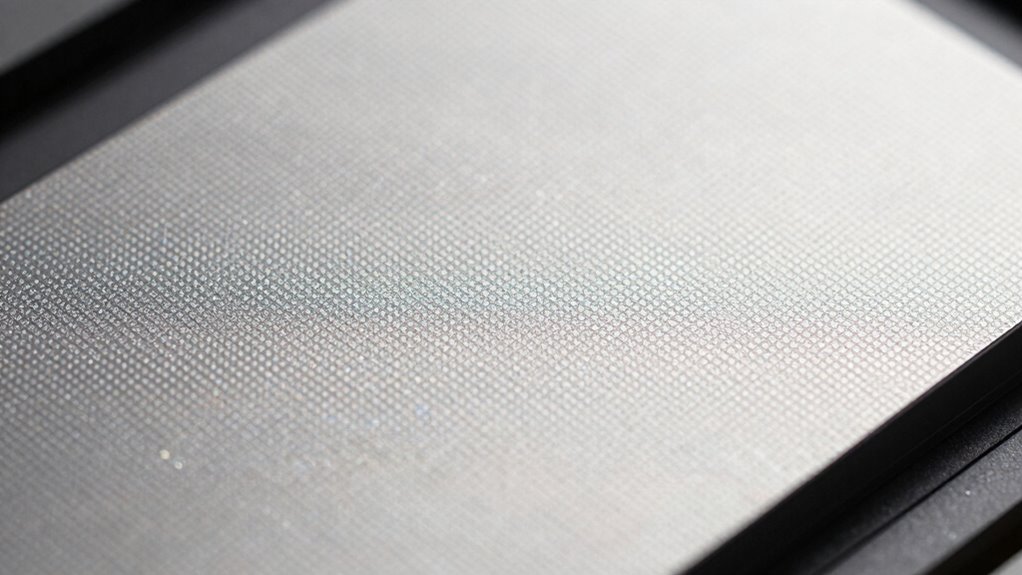

Nanostructured coatings improve sensor stability by creating resilient, tailored surfaces that resist environmental damage, corrosion, and fouling. They enhance durability, helping sensors withstand extreme temperatures, chemicals, and mechanical wear. These coatings also provide better signal clarity and prevent contamination buildup, ensuring reliable performance over time. By customizing surface properties, you can extend sensor lifespan and maintain accuracy in challenging conditions. If you want to learn how these coatings can further boost sensor reliability, keep exploring the details.
Key Takeaways
- Nanostructured coatings create robust, protective barriers that prevent environmental damage and mechanical wear, enhancing sensor durability.
- They improve signal stability by resisting fouling and contamination, ensuring consistent performance over time.
- The coatings enable sensors to operate reliably under extreme conditions like high temperatures and chemical exposure.
- Customizable surface properties reduce environmental interference, maintaining accurate readings in diverse environments.
- Enhanced surface activity facilitates quicker, more precise detection of environmental changes, supporting long-term sensor reliability.
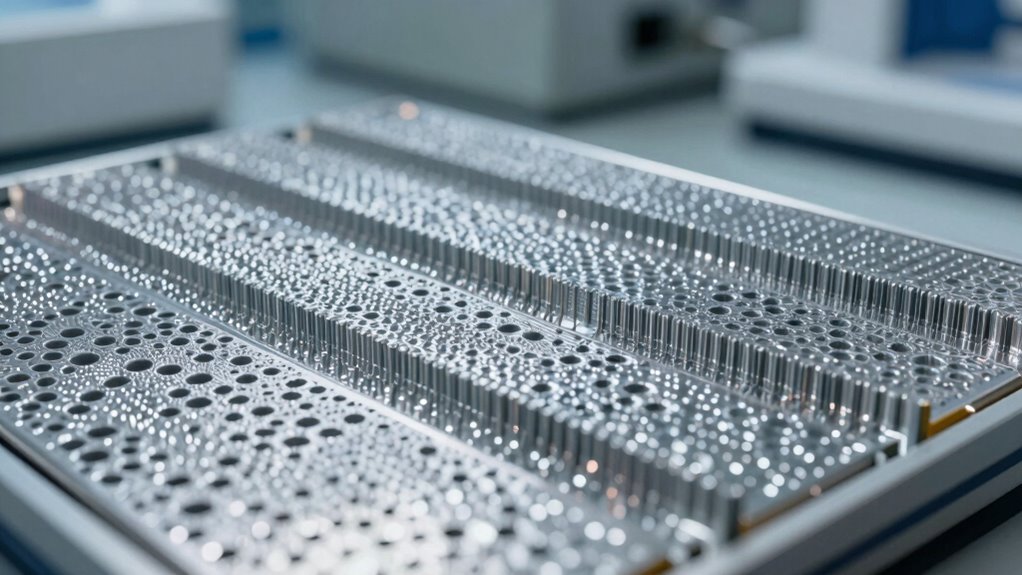
Nanostructured coatings have revolutionized sensor technology by enhancing sensitivity, selectivity, and response times. They do this by offering unique surface properties that improve how sensors interact with target molecules or environmental factors. When you incorporate nanostructured coatings, you’re effectively modifying the sensor surface at a microscopic level, which can markedly boost performance. Surface modification through nanostructuring creates a more active and reactive interface, allowing your sensor to detect even minute changes more reliably. This enhanced interaction translates into better signal clarity and faster response, essential for applications where precision and speed matter.
One of the key advantages of nanostructured coatings is their ability to improve material durability. Traditional sensors often suffer from degradation over time due to exposure to harsh conditions, chemical corrosion, or mechanical wear. But with nanostructured coatings, you add a protective layer that maintains the integrity of the sensor’s core material. This coating acts as a barrier, shielding the sensor from environmental stressors while still permitting the necessary interactions for detection. As a result, your sensor becomes more resistant to corrosion, temperature fluctuations, and physical damage, extending its operational lifespan. Additionally, surface modification techniques can be employed to further customize the nanostructured coatings for specific applications. Moreover, the development of eco-friendly materials for nanostructured coatings aligns with sustainable practices in sensor manufacturing. Incorporating these environmentally conscious options can also enhance the overall sensor sustainability.
Furthermore, surface modification with nanostructured coatings enhances the stability of sensor signals. Because these coatings can be tailored to resist fouling and contamination, they prevent unwanted buildup that could distort readings. This means your sensor remains dependable over extended periods, reducing the need for frequent recalibration or replacement. The nanostructured surface also promotes uniformity across the sensor, which helps in maintaining consistent performance even after prolonged use. Additionally, understanding the material properties at the nanoscale enables engineers to optimize coatings for specific environmental challenges, further improving sensor reliability.
Material durability isn’t just about resistance; it’s also about maintaining the sensor’s functional integrity under extreme conditions. Nanostructured coatings can withstand high temperatures, chemical exposure, and mechanical stress better than traditional coatings. When you apply these coatings, you’re essentially future-proofing your sensor, making it suitable for demanding environments like industrial processes, environmental monitoring, or biomedical applications. Additionally, the surface properties of nanostructured coatings can be engineered to further enhance resistance and performance.
In essence, nanostructured coatings serve a dual purpose: they modify the sensor surface to improve sensitivity and selectivity, and they bolster the material’s durability to guarantee long-term stability. This combination means your sensors can operate more accurately and reliably over time, even in challenging conditions. By embracing nanostructuring, you’re investing in sensors that aren’t just more effective today but remain dependable in the future, ultimately enhancing your ability to gather precise data consistently.
As an affiliate, we earn on qualifying purchases.
Frequently Asked Questions
How Do Nanostructured Coatings Affect Sensor Response Time?
Nanostructured coatings can considerably reduce your sensor’s response time by increasing surface roughness, which enhances interaction with target molecules. The improved coating adhesion guarantees durability and consistent performance, preventing degradation that could slow responses. As a result, your sensor reacts faster and maintains accuracy over time, thanks to the optimized surface features and strong coating adhesion that facilitate quicker detection and reliable operation.
Are Nanostructured Coatings Cost-Effective for Large-Scale Sensor Production?
Nanostructured coatings can be cost-effective for large-scale sensor production if you carefully analyze the cost benefits versus manufacturing challenges. While initial expenses might be higher due to complex fabrication processes, the improved durability and sensor performance can lead to reduced maintenance and longer lifespan, ultimately saving costs. By conducting a thorough cost analysis and addressing manufacturing challenges early, you can determine whether scaling up with nanostructured coatings makes economic sense for your application.
Can Nanostructured Coatings Be Applied to All Sensor Types?
Think of nanostructured coatings as a universal shield for sensors, but they can’t fit all types like a one-size-fits-all suit. Material compatibility plays a vital role; some sensor materials may not bond well or withstand manufacturing challenges. You must carefully consider the specific sensor’s design and material properties to determine if applying nanostructured coatings is feasible without compromising performance or durability.
How Do Nanostructured Coatings Impact Sensor Calibration Procedures?
Nanostructured coatings streamline your sensor calibration by enhancing surface adhesion and coating durability. They create a more stable, uniform surface, reducing the need for frequent recalibrations caused by surface degradation. With better surface adhesion, the coatings withstand environmental factors, maintaining sensor accuracy over time. This leads to more reliable calibration procedures, minimizes downtime, and extends sensor lifespan, making your measurements consistently precise and reducing maintenance efforts.
What Environmental Factors Influence Nanostructured Coating Stability?
Imagine your sensor as a delicate garden, vulnerable to harsh weather. UV degradation acts like relentless sunlight, breaking down nanostructured coatings over time. Humidity effects, akin to relentless rain, can cause corrosion or swelling, compromising stability. These environmental factors threaten the integrity of your coatings, reducing sensor lifespan. To protect your “garden,” you need robust, weather-resistant nanostructured coatings designed to withstand UV rays and moisture, ensuring long-lasting sensor performance.
sensor protective coatings for harsh environments
As an affiliate, we earn on qualifying purchases.
As an affiliate, we earn on qualifying purchases.
Conclusion
By applying nanostructured coatings, you can markedly enhance sensor stability, ensuring more reliable readings over time. These coatings can boost durability by up to 50%, reducing sensor degradation in harsh environments. As you explore these advanced materials, you’ll discover how nanostructuring not only prolongs sensor lifespan but also improves sensitivity. Embracing this technology means you’ll stay ahead in creating more robust, accurate sensors for a variety of applications.
corrosion resistant sensor coatings
As an affiliate, we earn on qualifying purchases.
As an affiliate, we earn on qualifying purchases.
temperature resistant sensor coatings
As an affiliate, we earn on qualifying purchases.
As an affiliate, we earn on qualifying purchases.