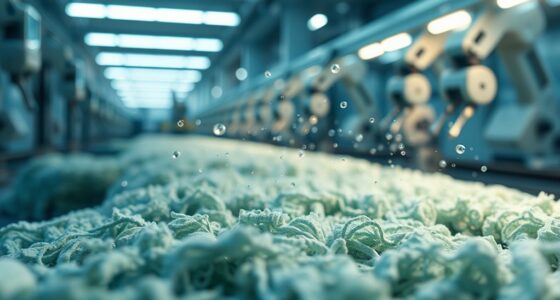
The future of bio-based nanomaterials is promising as they become key drivers in sustainable innovation. You’ll see more eco-friendly production methods, such as enzyme-driven processes and microbial fermentation, reducing environmental impact. These materials will likely transform industries like packaging, medicine, and energy storage by offering lightweight, strong, and biocompatible options. As research advances, you’ll discover how these natural-inspired solutions can help create a greener, more responsible world—if you keep exploring, more exciting developments await.
Key Takeaways
- Advancements in green synthesis techniques will enable large-scale, eco-friendly production of bio-based nanomaterials.
- Integration of bio-based nanomaterials into sustainable energy, healthcare, and environmental applications will expand significantly.
- Development of novel, biodegradable nanostructures will enhance compatibility and reduce environmental impact.
- Increased regulatory support and consumer demand will drive adoption of eco-friendly, bio-inspired nanotechnologies.
- Ongoing research will focus on optimizing cost-efficiency and functionality, ensuring commercial viability and sustainability.
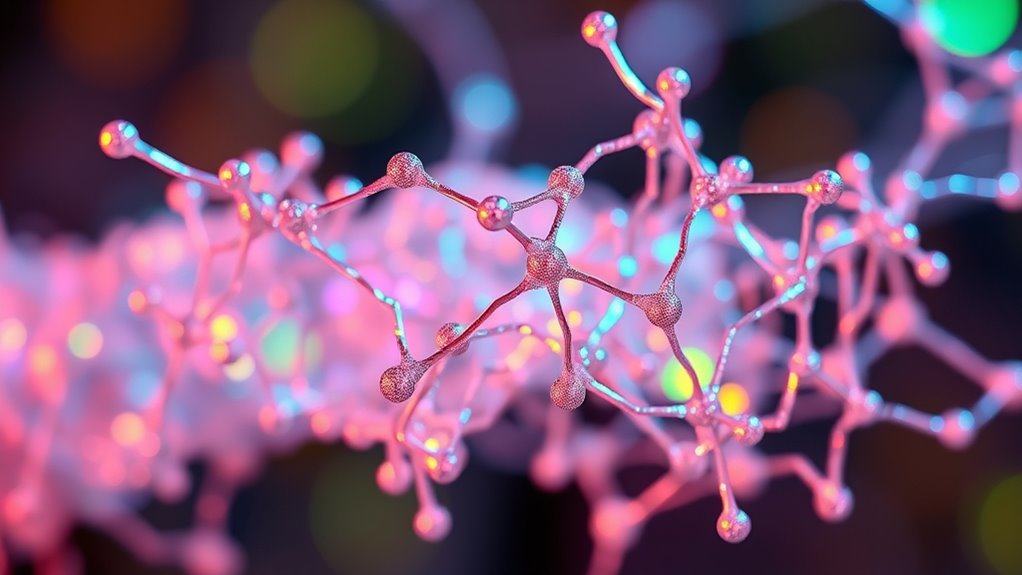
Have you ever wondered how nature-inspired materials are transforming technology? Bio-based nanomaterials stand at the forefront of this revolution, offering innovative solutions rooted in the intrinsic efficiency of natural systems. These materials are derived from renewable biological sources, making them inherently sustainable and environmentally friendly. As you explore their potential, you’ll notice that sustainable synthesis plays a vital role in their development, ensuring that production methods minimize waste, reduce energy consumption, and avoid toxic chemicals. This approach not only preserves ecosystems but also aligns with global efforts to promote eco-friendly applications across various industries.
Nature-inspired bio-based nanomaterials promote sustainable, eco-friendly innovations through green synthesis and renewable resources.
In the domain of bio-based nanomaterials, sustainable synthesis involves harnessing natural processes—like enzymatic reactions, microbial fermentation, or plant-based extraction—to create nanostructures. By mimicking nature’s own methods, scientists can produce these materials with a markedly lower carbon footprint. For example, cellulose nanocrystals extracted from plant fibers can be transformed into high-strength, lightweight composites used in packaging, construction, or electronics. These eco-friendly applications demonstrate how bio-based nanomaterials can replace conventional, petroleum-derived counterparts, leading to less environmental impact and fostering a circular economy.
As you consider their future, you’ll find that bio-based nanomaterials are poised to revolutionize sectors like medicine, energy, and environmental remediation. Their biocompatibility makes them ideal for drug delivery systems, wound dressings, and tissue engineering, where safety and biodegradability are paramount. In energy storage, bio-derived nanomaterials could lead to more efficient batteries and supercapacitors, thanks to their unique electrical properties and sustainable origins. Additionally, their ability to adsorb pollutants makes them valuable for water purification and pollution control, further emphasizing their role in eco-friendly applications.
Furthermore, ongoing research is focused on optimizing synthesis techniques to scale up production while maintaining eco sustainability. This includes developing greener solvents, reducing energy requirements, and implementing waste recycling strategies. The goal is to make bio-based nanomaterials commercially viable without compromising environmental integrity. As regulations tighten and consumer awareness grows, industries will increasingly favor sustainable, bio-inspired solutions that align with eco-friendly principles.
In the end, your engagement with bio-based nanomaterials signifies a shift toward more responsible innovation. They embody a future where technology harmonizes with nature, leveraging natural processes for sustainable development. As research progresses, and manufacturing techniques become more efficient, these materials will undoubtedly play a pivotal role in creating a cleaner, greener, and more sustainable world. Recognizing the importance of sustainable synthesis will be key to advancing their widespread adoption.

Metal-Organic Framework-Based Nanomaterials for Energy Conversion and Storage (Micro and Nano Technologies)
As an affiliate, we earn on qualifying purchases.
As an affiliate, we earn on qualifying purchases.
Frequently Asked Questions
What Are the Current Limitations of Bio-Based Nanomaterials?
You face limitations with bio-based nanomaterials, including biocompatibility concerns that may restrict their medical applications. Additionally, their structural stability can be compromised under various environmental conditions, affecting performance and durability. These issues hinder widespread adoption and scalability. Overcoming biocompatibility concerns and enhancing structural stability are vital steps toward making bio-based nanomaterials more viable for diverse industrial and biomedical uses.
How Do Bio-Based Nanomaterials Compare Cost-Wise to Traditional Materials?
You’ll find that bio-based nanomaterials often have higher initial costs due to cost analysis and production scale challenges. However, their market competitiveness improves over time because of sustainability benefits and lower environmental impact. As technology advances and demand increases, prices are expected to decrease, making them more comparable or even cheaper than traditional materials. So, while initially pricier, bio-based nanomaterials hold strong potential for long-term cost benefits.
What Regulatory Challenges Exist for Commercializing Bio-Based Nanomaterials?
Guiding the regulatory maze is like steering through a dense forest of hurdles. You face regulatory hurdles and lengthy approval processes that can slow your journey to market. Ensuring safety, environmental impact, and standardization makes the path complex. You must stay vigilant, adapt to evolving standards, and collaborate with regulators. Overcoming these challenges requires patience and persistence, but it’s essential to turn bio-based nanomaterials from promising concepts into commercial realities.
How Scalable Are the Production Methods for Bio-Based Nanomaterials?
You’ll find that the scalability of bio-based nanomaterial production faces significant challenges, mainly in maintaining production efficiency at larger scales. As you try to increase output, issues like process consistency and resource supply can arise, affecting overall scalability. Overcoming these challenges requires optimizing manufacturing methods and developing cost-effective, sustainable techniques to guarantee that large-scale production remains feasible and efficient.
What Are the Environmental Impacts of Synthesizing Bio-Based Nanomaterials?
Synthesis of bio-based nanomaterials is like walking a tightrope—balancing benefits and environmental impacts. You’ll want to contemplate their life cycle analysis to assess total ecological footprint, from raw material extraction to disposal. While generally greener than traditional methods, some processes may still produce waste or consume energy. Being mindful of these impacts helps you minimize ecological harm and ensure sustainable development of eco-friendly nanomaterials.

Advanced Nanomaterials for Biological, Nutraceutical, and Medicinal Applications
As an affiliate, we earn on qualifying purchases.
As an affiliate, we earn on qualifying purchases.
Conclusion
Imagine bio-based nanomaterials as tiny seeds with the power to grow into a sustainable future. By harnessing nature’s building blocks, you can cultivate innovations that are eco-friendly and versatile. These nanomaterials are the compass guiding you toward greener solutions, transforming industries one nano-particle at a time. Embrace this emerging frontier, and watch as your efforts blossom into a healthier planet—proof that small things can have a monumental impact.

Functional Nanomaterials and Nanocomposites for Biodegradable Food Packaging (Smart Nanomaterials Technology)
As an affiliate, we earn on qualifying purchases.
As an affiliate, we earn on qualifying purchases.

Nanomaterials: Green Synthesis, Characterization and Applications
As an affiliate, we earn on qualifying purchases.
As an affiliate, we earn on qualifying purchases.